100 English words meanings become easier to remember when each entry pairs a short definition with one natural example. This list gathers the core vocabulary that appears in beginner reading, everyday speech and first writing lessons, and it explains every word in plain language.
100 English Words Meanings at a Glance
- Most of the 100 words are function words that glue sentences together.
- Each entry gives one meaning and one short example sentence.
- Learning the top words first unlocks simple reading quickly.
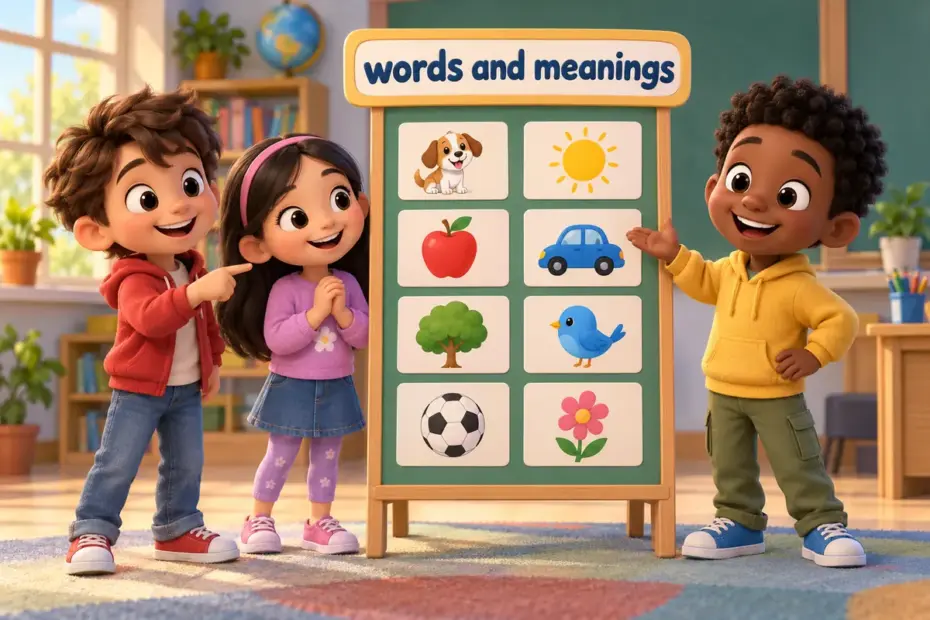
- A picture beside a word fixes its meaning faster than a definition alone.
- The commonest error is learning a word without ever using it.
What Are 100 English Words Meanings?
The phrase gathers the hundred words that carry the most sentences, and a clear description of vocabulary in a sentence shows why this core set matters so much. Most entries are short function words, such as the and of, that show relationships rather than name things, and a reliable dictionary in a sentence habit keeps their meanings straight.
| Category | Share of the list | Why it matters |
|---|---|---|
| Articles | a, an, the | They mark whether a noun is known. |
| Pronouns | I, you, he, she, it, we, they | They replace names already given. |
| Helpers | be, have, do, will, can | They build tenses and questions. |
| Prepositions | in, on, at, by, from | They show place and time. |
| Conjunctions | and, but, or, so, if | They join and compare ideas. |
How Do You Learn 100 English Words Quickly?
A short daily routine beats a long weekly session, and a fixed order keeps the words from blurring together. Each step below turns a definition into usable memory.
| Step | What to do | What it builds |
|---|---|---|
| 1. Read the word | Say the word aloud twice. | Sound and spelling links |
| 2. Read the meaning | Cover the example and guess it. | Understanding |
| 3. Read the example | Check your guess against it. | Accurate recall |
| 4. Write a new sentence | Use the word about your own day. | Active use |
| 5. Review tomorrow | Return to five words you learned. | Long-term memory |
The 100 English Words Meanings List
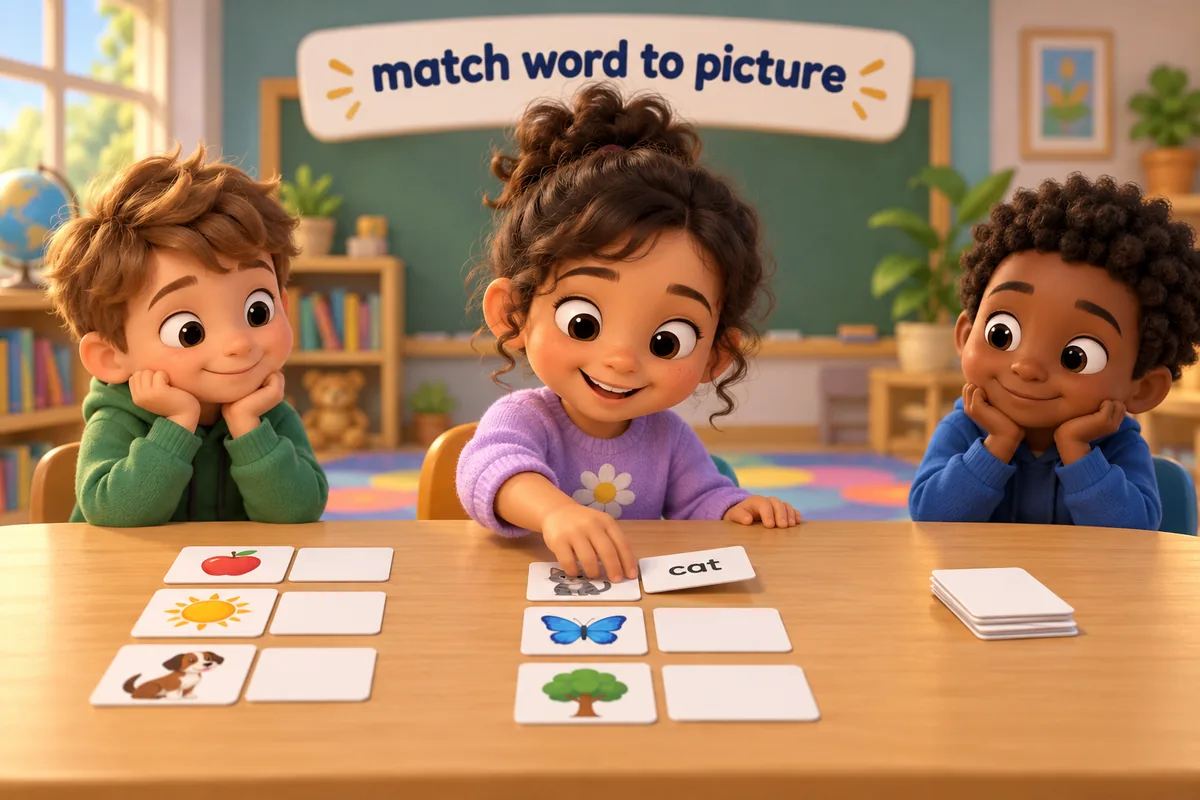
Each row gives the word, a plain meaning and one example sentence. Read a few rows, then cover the middle column and test yourself.
| Word | Meaning | Example |
|---|---|---|
| the | used before a known noun | The bus is late. |
| be | to exist or to happen | I want to be ready. |
| and | joins two ideas | Bread and butter. |
| of | shows belonging | A cup of tea. |
| a | one, not a specific one | A girl waved. |
| to | toward, or before a verb | We walked to school. |
| in | inside something | The keys are in the bag. |
| is | a form of be | She is kind. |
| it | a thing already named | It is cold today. |
| you | the person spoken to | You can sit here. |
| that | points to something | That house is old. |
| he | a male person | He runs fast. |
| was | the past of be | It was warm. |
| for | intended to help or give | This gift is for you. |
| on | on top of something | The book is on the desk. |
| are | a form of be | They are here. |
| as | in the role of | She works as a nurse. |
| with | together with | Come with me. |
| his | belonging to him | His coat is new. |
| they | those people | They left early. |
| at | a point in place or time | Meet me at noon. |
| one | the number 1 | I have one pen. |
| have | to own something | We have a dog. |
| this | the thing here | This apple is sweet. |
| from | the starting point | She came from home. |
| or | shows a choice | Tea or coffee? |
| had | the past of have | He had a plan. |
| by | near or through | Sit by the window. |
| hot | very warm | The soup is hot. |
| word | a unit of language | Write one word. |
| but | shows contrast | Small but strong. |
| what | asks about a thing | What is this? |
| some | an unspecified amount | I need some help. |
| we | the speaker and others | We are ready. |
| can | able to do something | I can swim. |
| out | not inside | Go out now. |
| other | a different one | Try the other door. |
| were | the past of be | They were late. |
| all | every one | All the seats filled. |
| there | in that place | Put it there. |
| when | at what time | When do we start? |
| up | toward the top | Look up. |
| use | to employ something | Use a pencil. |
| your | belonging to you | Your bag is here. |
| how | in what way | How does it work? |
| said | the past of say | She said hello. |
| an | one, before a vowel sound | An egg rolled. |
| each | every one separately | Each child got a turn. |
| she | a female person | She sings well. |
| which | asks about a choice | Which road is shorter? |
| do | to perform an action | Do your work. |
| their | belonging to them | Their car is red. |
| time | hours and minutes | What time is it? |
| if | on a condition | If it rains, stay in. |
| will | a future helper | I will call you. |
| way | a route or method | Show me the way. |
| about | concerning something | A book about space. |
| many | a large number | Many people came. |
| then | at that time | We ate, then left. |
| them | those people as an object | I saw them. |
| would | the past of will | He would help. |
| write | to put words down | Write your name. |
| like | similar to, or to enjoy | I like apples. |
| so | for that reason | It rained, so we stayed. |
| these | the things here | These shoes fit. |
| her | belonging to her | Her smile is bright. |
| long | great in length | A long road. |
| make | to create something | Make a list. |
| thing | an object or an idea | Take your things. |
| see | to look at | I see the moon. |
| him | a male person as an object | Give him the key. |
| two | the number 2 | Two birds sang. |
| has | a form of have | She has a bike. |
| look | to direct the eyes | Look at the map. |
| more | a larger amount | I need more time. |
| day | twenty-four hours | Have a good day. |
| could | the past of can | We could try. |
| go | to move away | Go to bed. |
| come | to move here | Come inside. |
| did | the past of do | She did her best. |
| my | belonging to me | My turn is next. |
| sound | what you hear | I heard a sound. |
| no | the opposite of yes | No, thank you. |
| most | the largest part | Most kids agreed. |
| number | a counting word | Pick a number. |
| who | asks about a person | Who called? |
| over | above, or finished | The game is over. |
| know | to be sure of something | I know the answer. |
| water | the clear liquid | Drink some water. |
| than | used in comparisons | Taller than me. |
| call | to phone or to name | Call me later. |
| first | before all others | She was first. |
| people | human beings | Many people smiled. |
| may | allowed to do something | You may go. |
| down | toward the bottom | Sit down. |
| side | an edge or a face | The left side. |
| been | a past form of be | I have been here. |
| now | at this moment | Do it now. |
| find | to discover something | Find the key. |
| any | one, no matter which | Any seat will do. |
100 English Words vs Advanced Words
| Attribute | Core words | Advanced words |
|---|---|---|
| Frequency | Appear on almost every page | Appear now and then |
| Length | Usually one syllable | Often several syllables |
| Role | Hold grammar together | Add precise detail |
| Best first | Yes, learn them early | Later, once the core is firm |
| Example | the, of, and | nevertheless, meticulous |
The verdict: master the hundred core words first, because they appear in every sentence, and add advanced vocabulary only when the base is secure.
Word Forms and Grammar of English Words
The core words change shape in familiar ways, and the fixed phrases behind them behave like idioms, as idiom in a sentence illustrates.
| Form | Part of speech | Example |
|---|---|---|
| be / is / was / been | verb | She is here; she was late; she has been kind. |
| have / has / had | verb | They have a map; he has a pen; I had a plan. |
| I / you / he / she | pronoun | I read; you read; he reads. |
| good / better / best | adjective | A good day; a better day; the best day. |
Which English Words Should You Learn First?
Start with the words that appear most often, then widen. This table maps a learner’s stage to the next set worth learning.
| Stage | Focus next | Reason |
|---|---|---|
| Very first lessons | a, the, is, you, I | They build every first sentence. |
| Simple sentences | and, but, in, on, to | They join and place ideas. |
| Short stories | said, then, when, over | They move a story along. |
| Early writing | because, before, after | They show reasons and order. |
Common Mistakes With English Word Meanings
Each item gives the wrong habit, the corrected habit, and the rule behind the fix.
Learning a word without its example sentence.Correct: Reading the example beside the meaning. Rule: context fixes a meaning that the definition alone can blur.Studying fifty new words in one day.Correct: Studying five words and reviewing them tomorrow. Rule: spaced review beats a single heavy session.Confusing their with there.Correct: Their shows ownership; there shows place. Rule: matching a homophone to its job prevents the mix-up.Using been where being is needed.Correct: She has been well; she enjoys being well. Rule: the two forms fill different grammar slots.Reading a word in silence only.Correct: Saying the word aloud while reading. Rule: sound supports spelling memory.
Practice Using English Word Meanings
Try each item, then check the answers below.
- Fill in the blank: ___ is cold today. (use a pronoun).
- Choose the better word: Their / There car is red.
- Correct the error: She have a bike.
- Build a sentence using because to give a reason.
- Spot the meaning: which word joins two ideas, and or about?
- Fill in the blank: ___ you can sit here. (use a pronoun).
Answers
- It — a pronoun stands in for the weather.
- Their — possession needs their, while there shows place.
- She has a bike. — a third-person singular subject takes has.
- I stayed home because it rained. — because introduces the reason.
- and — it joins two ideas, unlike the preposition about.
- You — the pronoun names the person being spoken to.
The Bottom Line
100 English words meanings repay the effort because these core words appear in almost every sentence a beginner meets. Learn a few each day, read the example beside the definition, and write your own line to fix the meaning. Master this base before reaching for advanced vocabulary, and the harder words become far easier to place.
Frequently asked questions about 100 english words meanings
Which 100 words should a beginner learn first?
The best first hundred are the words that appear most often in simple reading, such as the articles, pronouns, helpers and prepositions on this list. They carry the grammar of every sentence, so learning them early makes new texts far easier to decode.
How long does it take to learn 100 words?
At a steady pace of five words a day, a learner can meet all hundred in about three weeks, with regular review needed to keep them. Speed matters less than habit, because a word used in a real sentence stays far longer than one only read once.
Should I learn meanings or sentences first?
Learn them together. A short definition tells you what a word means, and an example sentence shows how it behaves among other words. Reading the pair together fixes the word in memory more firmly than either half can on its own.
Are longer words always better than short ones?
No. Short core words carry most of a sentence’s grammar and meaning, so they matter far more often than a rare longer word. An advanced word works best only when the base vocabulary is already secure and the sentence needs an exact shade of meaning.