12 tenses in English grammar is the full set of verb forms that place an action in present, past, or future time and mark whether it is simple, continuous, or perfect. English builds these forms from one verb with help from be and have, and the table below shows every combination in one view.
12 Tenses in English Grammar at a Glance
- The twelve tenses combine three times with four aspects.
- Every tense uses a fixed auxiliary pattern.
- Simple tenses state a fact; continuous tenses show an action in progress.
- Perfect tenses link one time to an earlier one.
- The commonest error is mixing the past participle with the past simple.
What Are the 12 Tenses in English Grammar?
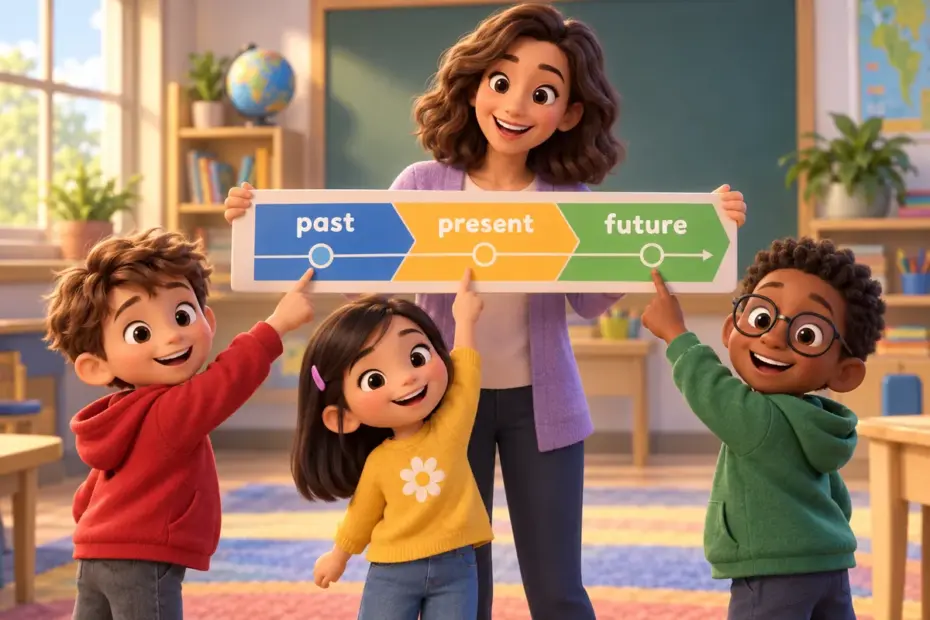
A tense is a verb form that places an action in time. English has three times, present, past and future, and four aspects, simple, continuous, perfect and perfect continuous, which combine into twelve tenses. The form of each one is fixed: a helper verb such as be or have carries the tense while the main verb supplies the meaning. The table below gives all twelve with an example.
| Tense | Form | Example |
|---|---|---|
| Present simple | base verb | I work. |
| Present continuous | am/is/are + -ing | I am working. |
| Present perfect | have/has + past participle | I have worked. |
| Present perfect continuous | have/has been + -ing | I have been working. |
| Past simple | past form | I worked. |
| Past continuous | was/were + -ing | I was working. |
| Past perfect | had + past participle | I had worked. |
| Past perfect continuous | had been + -ing | I had been working. |
| Future simple | will + base verb | I will work. |
| Future continuous | will be + -ing | I will be working. |
| Future perfect | will have + past participle | I will have worked. |
| Future perfect continuous | will have been + -ing | I will have been working. |
How Do You Build Each Tense?
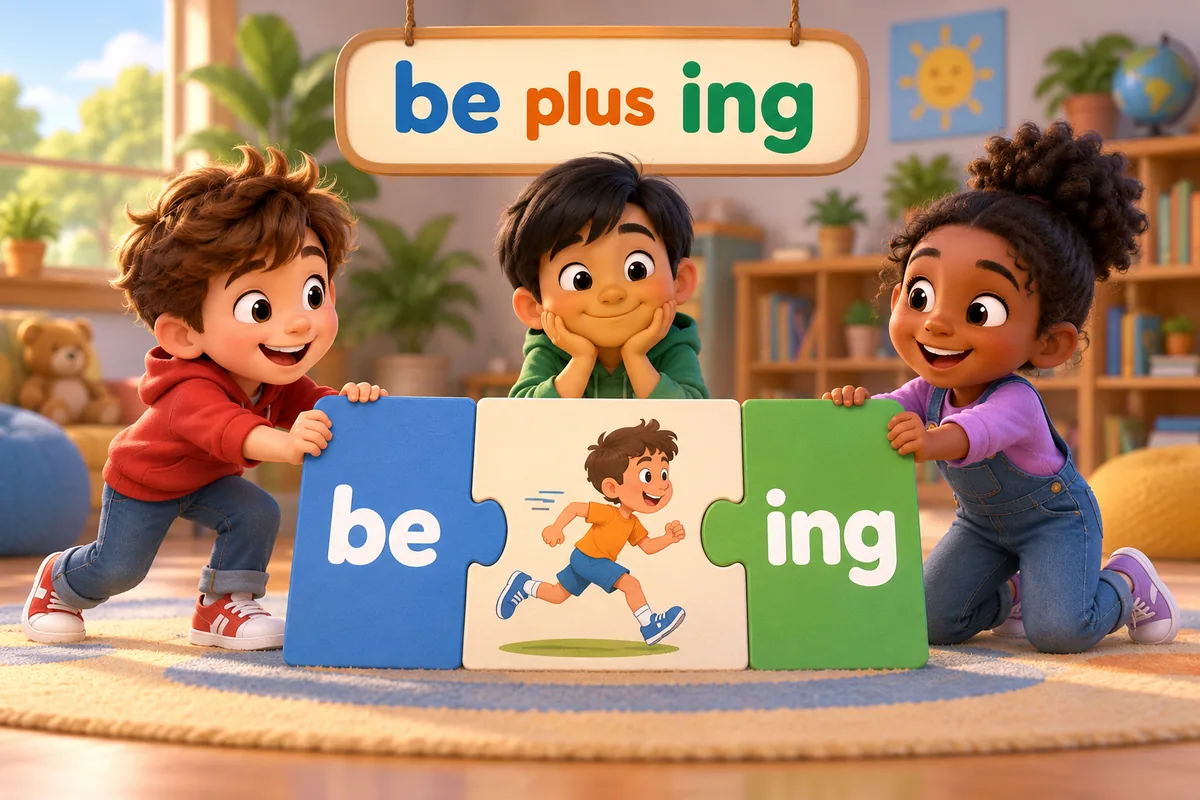
Every tense grows from one of three helpers. Simple forms use the verb alone or with will, continuous forms add be plus the -ing form, and perfect forms add have plus the past participle. The table shows how the building blocks stack.
| Aspect | Helper pattern | Example |
|---|---|---|
| Simple (present/past) | verb alone | She writes. |
| Simple (future) | will + verb | She will write. |
| Continuous | be + -ing | She is writing. |
| Perfect | have + past participle | She has written. |
| Perfect continuous | have been + -ing | She has been writing. |
The 12 Tenses in Examples Across Contexts
The same event can be told in several tenses, and the choice changes the focus. The examples below show each tense doing a real job.
| Context | Sentence | Tense and why |
|---|---|---|
| Daily routine | I walk to work every day. | present simple for a habit. |
| Phone call | I am cooking right now. | present continuous for now. |
| Achievement | She has finished her essay. | present perfect for a result. |
| Long effort | They have been training all year. | perfect continuous for duration. |
| News report | The storm passed overnight. | past simple for a finished event. |
| Interrupted action | I was reading when he called. | past continuous for a background act. |
| Sequence | The train had left before we arrived. | past perfect for the earlier event. |
| Exhaustion | She had been working for hours. | past perfect continuous for cause. |
| Plan | We will visit them next week. | future simple for a decision. |
| Future in progress | At noon I will be flying. | future continuous for a set time. |
| Deadline | By June I will have saved enough. | future perfect for a completed point. |
| Milestone | By spring she will have been teaching ten years. | future perfect continuous for duration. |
Which Tense Should You Use?
Choose the tense by the question you are answering, not by the clock. Ask whether the action is a fact or in progress, and whether it links to an earlier point. The table maps a situation to the tense that fits it.
| Situation | Best tense | Example |
|---|---|---|
| A habit or general truth | present simple | She runs daily. |
| Happening now | present continuous | She is running. |
| Result relevant now | present perfect | She has run the race. |
| Finished event with a time | past simple | She ran yesterday. |
| Action in progress in the past | past continuous | She was running at noon. |
| A decision about the future | future simple | She will run tomorrow. |
Tense and word order work together, and a helpful grammar rule covers the position of describing words. Once the tense is right, placing words correctly in a sentence keeps the line natural. Learners who master the tenses often turn next to another core grammar pattern for word order.
Word Forms and Grammar of the Tenses
Two helper verbs, be and have, build almost every tense. The table shows their forms across the persons a learner uses most.
| Helper | Present | Past |
|---|---|---|
| be | am, is, are | was, were |
| have | have, has | had |
| will | will | would |
| do | do, does | did |
| have been | have, has been | had been |
| past participle (non-standard: past simple) | have gone | went (not have went) |
Common Mistakes With the Tenses
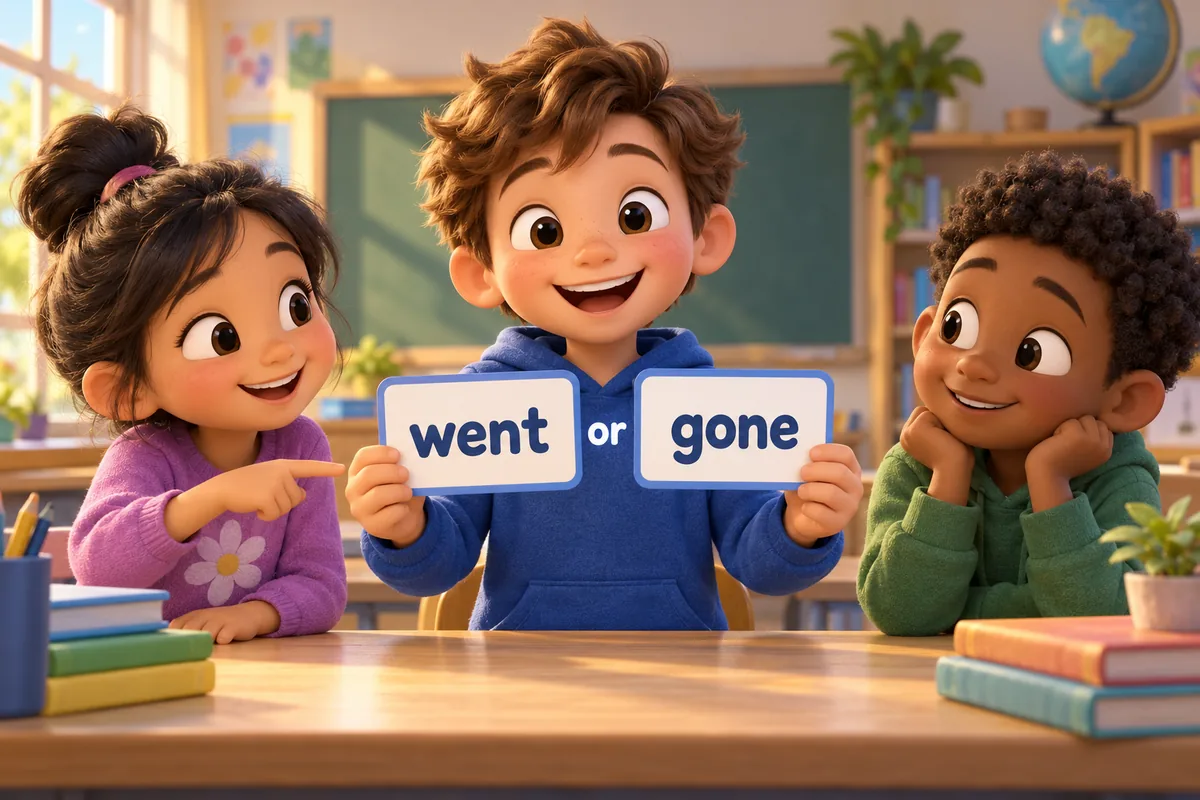
I have went there. Write I have gone there. Rule: after have, use the past participle, not the past simple.
She is know the answer. Write She knows the answer. Rule: state verbs do not usually take the continuous form.
Yesterday I have finished it. Write Yesterday I finished it. Rule: a finished time word needs the past simple.
I will can help. Write I will be able to help. Rule: will cannot stack with can; use be able to.
When I arrived, he already left. Write When I arrived, he had already left. Rule: the earlier past action takes the past perfect.
Practice Using the Tenses
- Fill in the blank: Right now she ______ (read) a novel.
- Choose the better form: I (have gone / have went) to Paris.
- Correct the error: Yesterday I have finished my work.
- Build a sentence: use the future perfect about saving by June.
- Fill in the blank: The bus ______ (leave) before we arrived.
- Spot the register: which fits a news report, The storm passed overnight or The storm has passed overnight?
Answers
- is reading — right now needs the present continuous.
- have gone — have takes the past participle.
- Yesterday I finished my work. — a finished time needs the past simple.
- Sample: By June I will have saved enough. — future perfect marks a completed point.
- had left — the earlier past event takes the past perfect.
- The storm passed overnight — a finished event with a time suits the past simple.
The Bottom Line
12 tenses in English grammar looks like twelve separate forms, but the pattern is only three times crossed with four aspects. Learn how be and have build the continuous and perfect forms, and the whole set becomes predictable. Focus first on the present and past forms that carry daily speech, and add the future and perfect continuous forms as writing grows.
Frequently asked questions about the 12 tenses
What are the 12 tenses in English?
The twelve tenses are present, past and future, each in four aspects: simple, continuous, perfect and perfect continuous. That gives present simple, present continuous, present perfect, present perfect continuous, and the same four for the past and the future. Each has a fixed form built with be or have.
Which tenses are most important for beginners?
Beginners need the present simple, present continuous, past simple and future simple first, because these four cover most everyday speech. The perfect tenses come next, once the learner can form the past participle. The perfect continuous forms are the last to matter and are mainly useful in writing.
How do I know whether to use the present perfect or the past simple?
Use the past simple for a finished action at a stated past time, as in I saw her yesterday. Use the present perfect when the time is not stated and the result matters now, as in I have seen her. A finished time word such as yesterday needs the past simple.
Why does English use so many tenses?
Each tense answers a different question about an action: when it happens, whether it is finished or in progress, and whether it links to another time. The simple form states a fact, the continuous form shows progress, and the perfect form connects two times. Together they let a speaker be precise about time with a single verb.