Skip to content

Mastering the Proper Use of ‘Paired’ vs ‘Pared’ for Effective Communication

    Key Takeaways Definition of “paired” and “pared” Let’s start by clarifying the Definition of “paired” and “pared” and understanding the difference between these commonly confused words. When we talk about “paired,” we’re referring to the act of combining or grouping things together in a relationship or partnership. It implies a connection or association between two… Read More »Mastering the Proper Use of ‘Paired’ vs ‘Pared’ for Effective Communication
    Mastering the Art of Thyme vs Time: Using Them Appropriately in Language and Cooking

      Key Takeaways The Importance of Using Thyme and Time Appropriately When it comes to English language usage, there are several pairs of words that can be easily confused. One such pair is “thyme” and “time.” Although these two words may sound similar, they have distinct meanings and should be used appropriately in different contexts. Definition… Read More »Mastering the Art of Thyme vs Time: Using Them Appropriately in Language and Cooking

      Understanding the Difference Between “AR” and “ARE” and Using Them Appropriately

        Key Takeaways What is “ar”? As a language enthusiast, I find it fascinating how words with similar spellings can often have completely different meanings. This is certainly the case with “ar” and “are,” two words that are frequently confused and misused in the English language. In this section, I will provide a clear definition of… Read More »Understanding the Difference Between “AR” and “ARE” and Using Them Appropriately

        The Difference Between “Toe” and “Tow”: Understanding and Following Correct Usage

          Key Takeaways Understanding the difference between “toe” and “tow” When it comes to the English language, there are numerous words that can easily be confused or misused. Two such words are “toe” and “tow.” In this section, I’ll help you understand the difference between them. Let’s start with the definition of each word: Now that… Read More »The Difference Between “Toe” and “Tow”: Understanding and Following Correct Usage

          Airing vs Erring: A Guide to Using ‘Aired’ and ‘Erred’ Appropriately

            Have you ever found yourself confused between the words “aired” and “erred”? Don’t worry, you’re not alone. In this text, I’ll shed some light on the correct usage of these two commonly misused words. As a language enthusiast and expert, I’ve encountered this confusion countless times, and I’m here to help you navigate through it effortlessly.
            We’ll start by understanding the definitions and nuanc

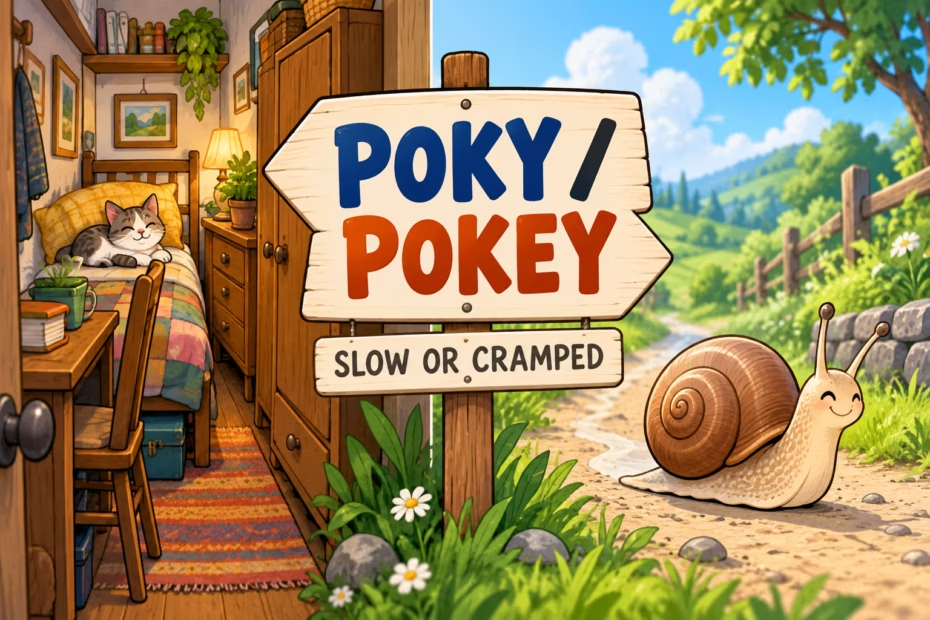
            A small room and a slow snail illustrate overlapping adjective meanings of poky and pokey.

            Pokey vs. Poky: Meanings, Spelling & Examples

              Are you confused about when to use “pokey” and when to use “poky”? Well, you’re not alone. In this text, I’ll break down the differences between these two words and provide you with some tips on how to use them appropriately. Whether you’re a native English speaker or learning the language, understanding the nuances of these words can make a big difference in your communication. So, let’s immerse

              Understanding and Using Lies, Lyes, and Lyse Appropriately: A Comprehensive Guide

                Key Takeaways Lies: Definition and Examples What exactly do we mean when we talk about “lies”? Let’s jump into the definition and explore some examples to gain a clear understanding. Definition of Lies Lies refer to deliberate false statements or declarations made with the intention to deceive or mislead others. They are a form of… Read More »Understanding and Using Lies, Lyes, and Lyse Appropriately: A Comprehensive Guide

                Understanding the Differences: Proper Usage of Cue, Q, and Queue

                  As a language enthusiast, I’ve always been fascinated by the intricacies of English spelling and pronunciation. One area that often trips people up is the confusion between “cue,” “q,” and “queue.” These three words may sound similar, but they have distinct meanings and uses. In this text, I’ll guide you through the proper usage of each term, helping you avoid common mistakes and enhance your writ

                  Understanding the Difference: Scull vs Skull and How to Use Them Appropriately

                    When it comes to the English language, sometimes a single letter can make all the difference. Take, for example, the words “scull” and “skull.” While they may sound similar, their meanings are worlds apart. As an expert blogger, I’ve encountered many instances where these two words are mistakenly interchanged, leading to confusion and miscommunication. In this text, I’ll investigate into the nuanc

                    Using “Close” and “Clothes” Appropriately: Understanding the Difference and Avoiding Common Mistakes

                      Have you ever had that moment when you couldn’t decide whether to use “close” or “clothes” in a sentence? It’s a common dilemma, but fear not, because I’m here to shed some light on this confusing pair of words. In this text, I’ll investigate into the proper usage of “close” and “clothes” and provide you with some helpful tips to ensure you never mix them up again. Whether you’re writing an email,

                      Understanding the Difference: Rapped vs Rapt vs Wrapped – Using them Appropriately

                        Have you ever found yourself confused about when to use “rapped,” “rapt,” or “wrapped”? I’ll admit, it can be a tricky distinction to make. But fear not! In this text, I’ll guide you through the proper usage of these three words, ensuring that you never mix them up again. We’ll explore their definitions, provide examples, and offer some handy tips to help you remember which word to use in differen

                        Teared vs Tiered: Mastering Proper Usage and Avoiding Confusion

                          Have you ever found yourself confused between using “teared” or “tiered” in your writing? As a language expert, I’ve encountered this common dilemma countless times. In this text, I’ll provide you with a clear understanding of when and how to use these words appropriately.
                          First, let’s address the difference between the two. “Teared” is the past tense of the verb “tear,” meaning to rip or shred so

                          Understanding the Difference Between Miscible and Missable: How to Use Them Appropriately

                            Hey there! Have you ever come across the terms “miscible” and “missable” and wondered what they mean? Well, you’re not alone! In this text, I’ll shed some light on these two words and help you understand how to use them appropriately.
                            Firstly, let’s clarify the difference between “miscible” and “missable.” Although they may sound similar, they actually have completely different meanings. “Miscible

                            Understanding the Difference Between Levee and Levy: How to Use Them Appropriately

                              Have you ever found yourself confused between the terms “levee” and “levy”? Don’t worry, you’re not alone. As an expert in language and communication, I often come across these two words being used interchangeably, causing unnecessary confusion. In this text, I’ll shed some light on the key differences between levee and levy and provide you with a clear understanding of how to use them appropriate