Skip to content
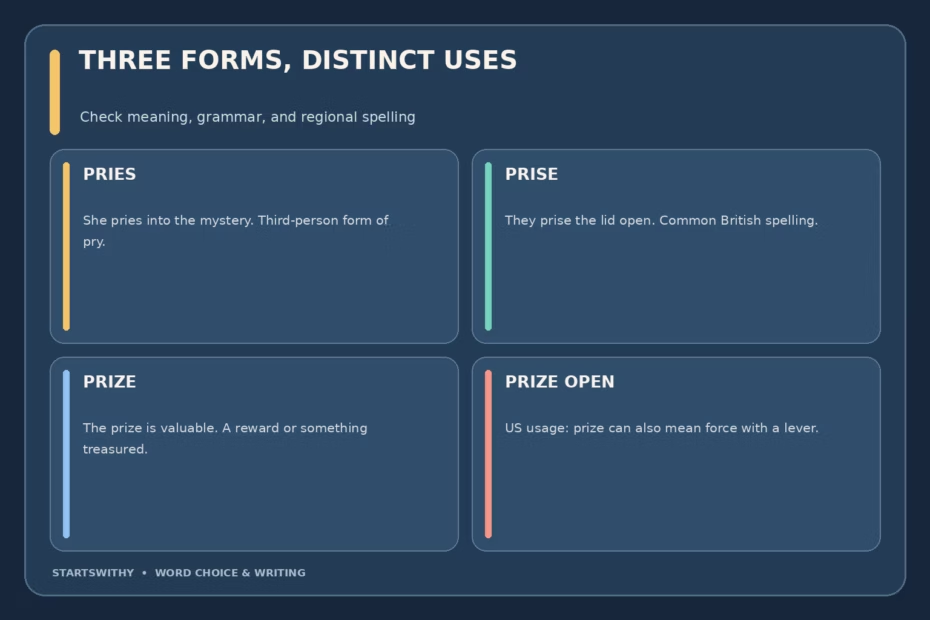
Comparison of pries, prise, and prize: pries means snoops or investigates; prise is a mainly British spelling for forcing something open; prize is a reward or something valued.

Pries vs Prise vs Prize: How to Use Them Appropriately in Writing

    Have you ever found yourself confused about when to use “pries,” “prise,” or “prize”? Well, you’re not alone. In this text, I’ll guide you through the appropriate usage of these three words, so you can confidently navigate your way through the English language.
    Firstly, let’s address “pries.” This word is the present tense of the verb “pry,” meaning to inquire or meddle. It’s commonly used when ta
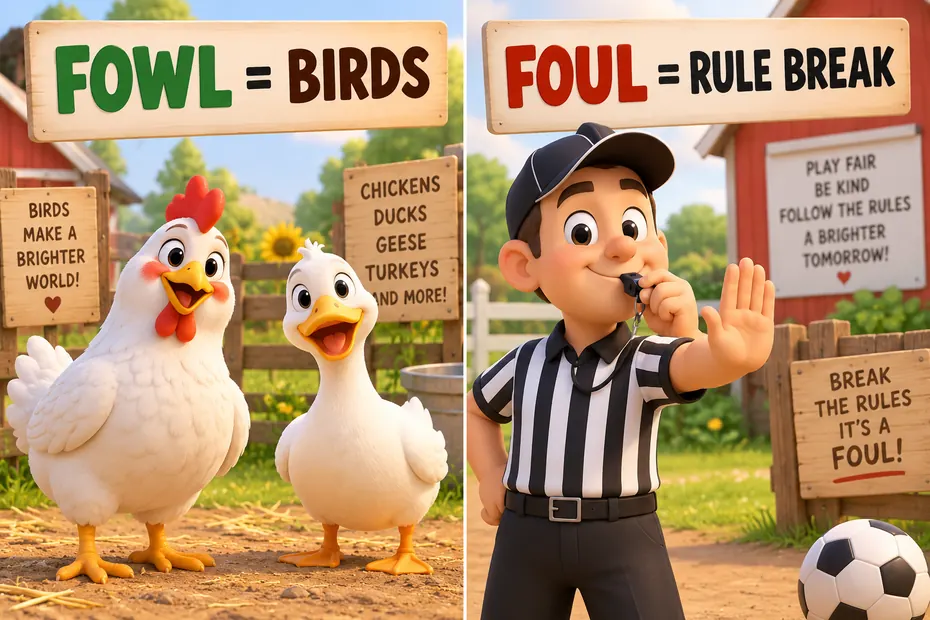

    Fowl means birds; a foul is a sporting rule violation

    Foul vs Fowl: Understanding and Using Appropriately in English Language

      When it comes to the English language, there are often words that sound alike but have completely different meanings. One such pair that often causes confusion is “foul” and “fowl.” As an expert in language and communication, I have encountered countless instances where these words are used interchangeably, leading to misunderstandings and misinterpretations. In this text, I’ll investigate into th

      Prophecy is a noun; prophesy is a verb

      Understanding the Difference: Prophecy vs Prophesy and How to Use Them Appropriately

        Have you ever found yourself confused between the words “prophecy” and “prophesy”? I’ll admit, it can be a bit tricky to keep them straight. But fear not, because in this text, I’ll shed some light on the differences and help you use them appropriately.
        Firstly, let’s clarify the distinction between “prophecy” and “prophesy.” “Prophecy” refers to a prediction or a statement about the future, often

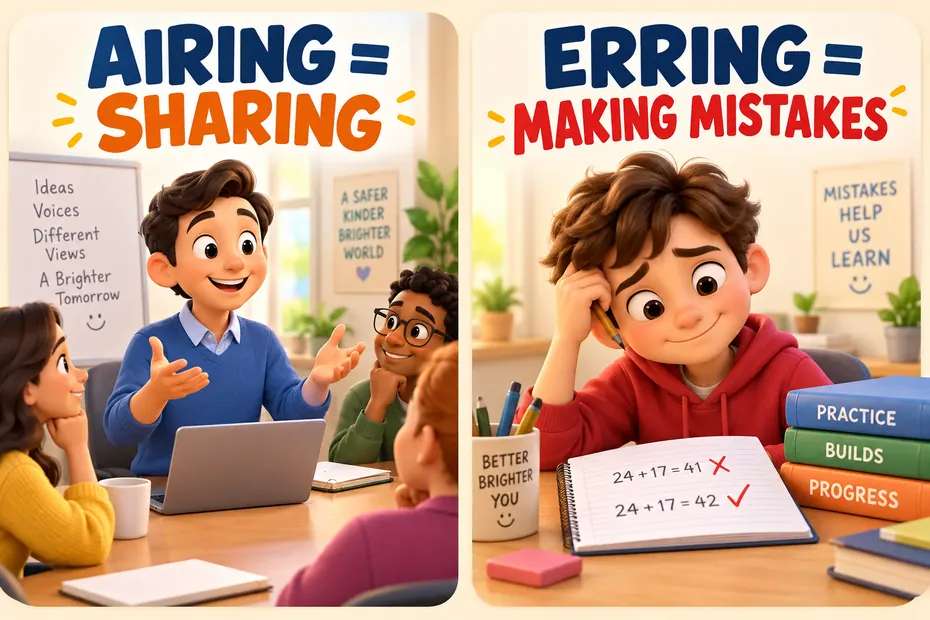
        Airing can mean sharing; erring means making mistakes

        Mastering the Art of Communication: Airing vs. Erring and Using Appropriately

          Have you ever found yourself in a situation where you weren’t sure whether to air your thoughts or err on the side of caution? As an expert in effective communication, I’ve often grappled with the dilemma of when and how to appropriately express my opinions. In this text, I’ll investigate into the intricacies of airing versus erring and provide valuable insights on how to navigate these situations

          Xero is a brand; zero means 0

          Xero vs. Zero: Choosing the Right Accounting Software for Your Business

            When it comes to managing finances and bookkeeping for your business, choosing the right accounting software is crucial. In this text, I’ll jump into the comparison between Xero and Zero, two popular options in the market. As an experienced blogger with a background in finance, I’ve extensively used both platforms and can provide valuable insights on their features, usability, and suitability for

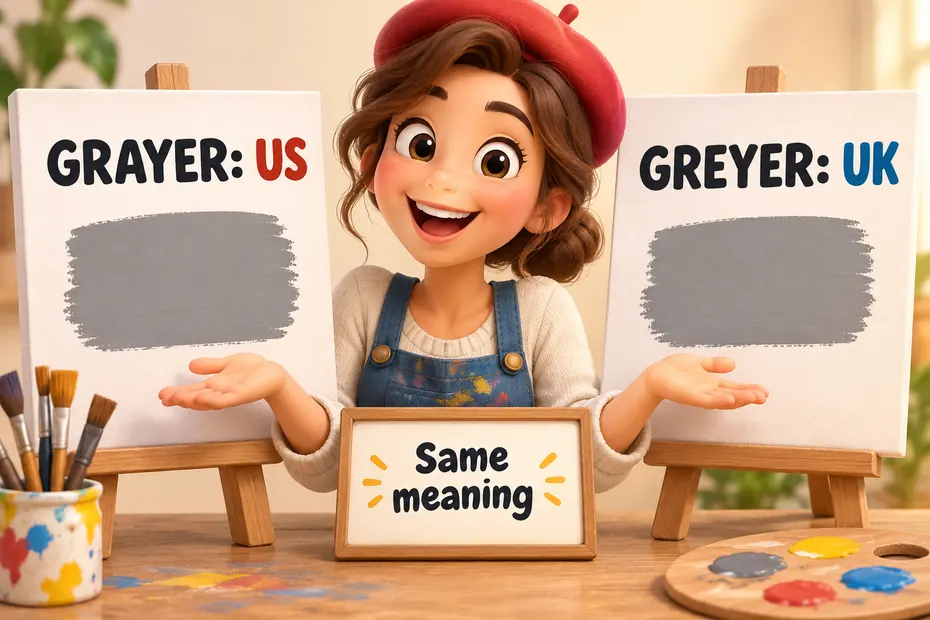
            Grayer is usual US spelling; greyer is usual UK spelling; same meaning

            Grayer vs Greyer: Understanding and Using Appropriately in American English

              Grayer vs greyer: Both words mean more gray or grey. Grayer follows the usual American spelling gray; greyer follows the usual British spelling grey. They do not identify different standardized shades. Choose the spelling that matches your audience or house style, and keep it consistent across the document. Grayer and greyer differ in spelling, not… Read More »Grayer vs Greyer: Understanding and Using Appropriately in American English

              Calendar organizes dates; calender presses material

              Using Calendar vs Calender Appropriately: Understanding the Difference

                Are you confused about when to use “calendar” and when to use “calender”? Don’t worry, I’ve got you covered. In this text, I’ll break down the key differences between these two commonly confused words and provide you with a clear understanding of when to use each one correctly.
                Using the appropriate term is crucial in written communication, whether it’s for personal or professional purposes. By th

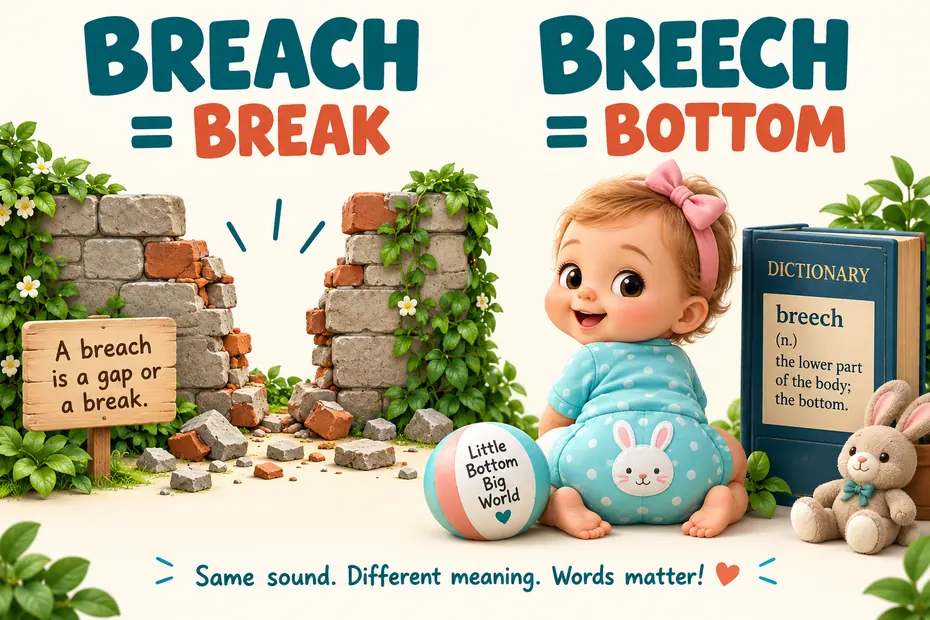
                Breach means breaking; breech refers to the bottom or rear

                Understanding the Difference Between Breach and Breech and Using Them Appropriately

                  Have you ever found yourself in a dilemma, unsure whether to use “breach” or “breech” in your writing? As a seasoned writer, I’ve encountered this confusion countless times. In this text, I’ll shed light on the correct usage of these two words and help you avoid any embarrassing mix-ups.
                  Firstly, let’s clarify the difference between “breach” and “breech”. “Breach” refers to a violation or a breaki

                  Hoarse describes a rough voice; horse names an animal; hvsse needs verification

                  Understanding the Distinction: Hoarse vs Hvsse and Using Them Appropriately

                    Are you tired of constantly confusing “hoarse” with “hvsse”? Well, you’re not alone. As a language enthusiast, I’ve come across this common dilemma countless times. In this text, I’ll guide you through the proper usage of these two words and help you avoid any embarrassing mix-ups.
                    First, let’s clarify the difference between “hoarse” and “hvsse.” While they may sound similar, they have distinct me

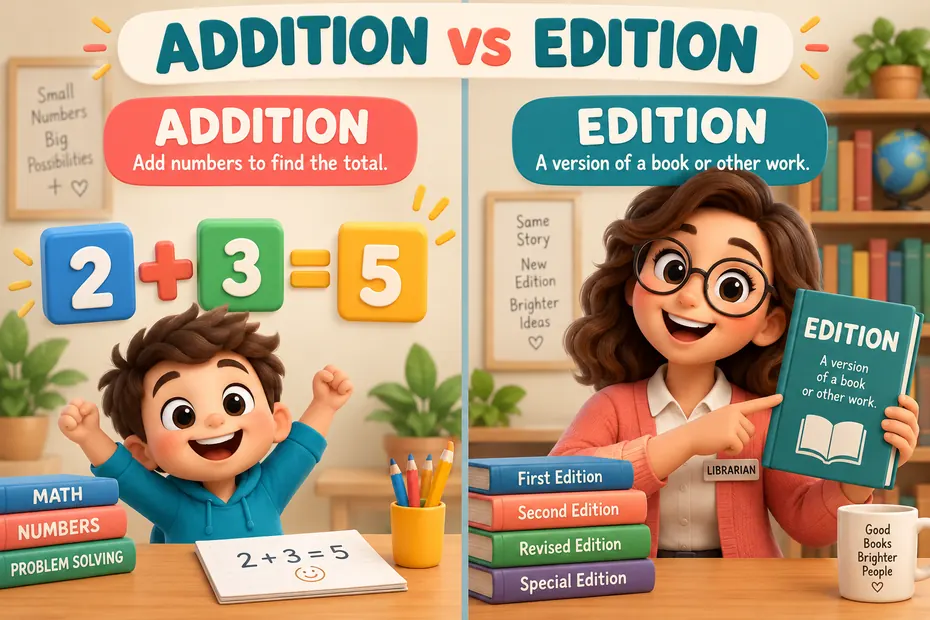
                    Addition means adding; edition means a version

                    Understanding the Difference Between Addition and Edition: How to Use Them Appropriately

                      Have you ever wondered about the difference between “addition” and “edition”? These two words may seem similar, but they have distinct meanings and uses. In this text, I’ll provide a clear explanation of the differences between addition and edition and how to use them appropriately in your writing. Whether you’re a student, a writer, or simply someone who wants to enhance their language skills, un

                      Wet concerns moisture; whet means sharpen or stimulate

                      Wet vs Whet: Understanding their Meanings and Using Them Appropriately

                        Are you confused about when to use “wet” and when to use “whet”? Don’t worry, I’ve got you covered. In this text, I’ll break down the differences between these two words and provide you with some tips on how to use them appropriately. Understanding the nuances of these terms is essential for effective communication, so let’s dive right in.
                        When it comes to “wet,” we often think of something being

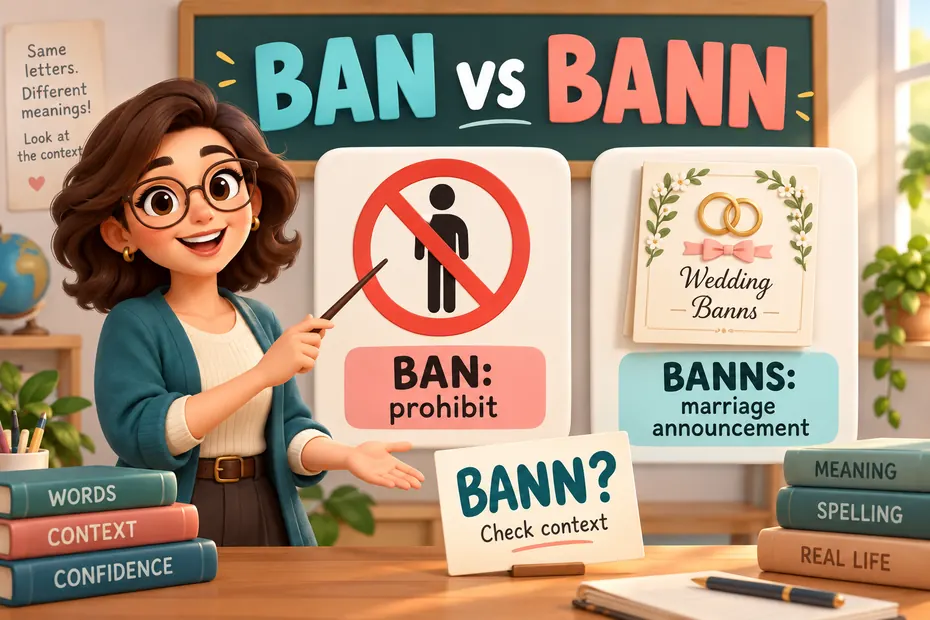
                        Ban means prohibit; verify bann in context; banns are marriage announcements

                        Mastering the Difference: Ban vs Bann – A Guide to Using Them Appropriately

                          Have you ever been confused about when to use “ban” and when to use “bann”? Well, I certainly have. In this text, I’ll clarify the appropriate usage of these two words and help you avoid common mistakes. Understanding the difference between “ban” and “bann” is crucial for effective communication, whether you’re writing an academic paper or a casual email. So, let’s immerse and explore the nuances

                          Feat names an achievement; feet is the plural of foot

                          Understanding the Difference between ‘Feat’ and ‘Feet’ and Using Them Appropriately

                            Have you ever found yourself confused between “feat” and “feet”? Don’t worry, you’re not alone. These two words may sound similar, but they have completely different meanings. In this text, I’ll guide you on how to use “feat” and “feet” appropriately, so you can avoid any embarrassing mistakes.
                            First, let’s clarify the difference between the two. “Feat” refers to an impressive or remarkable achiev

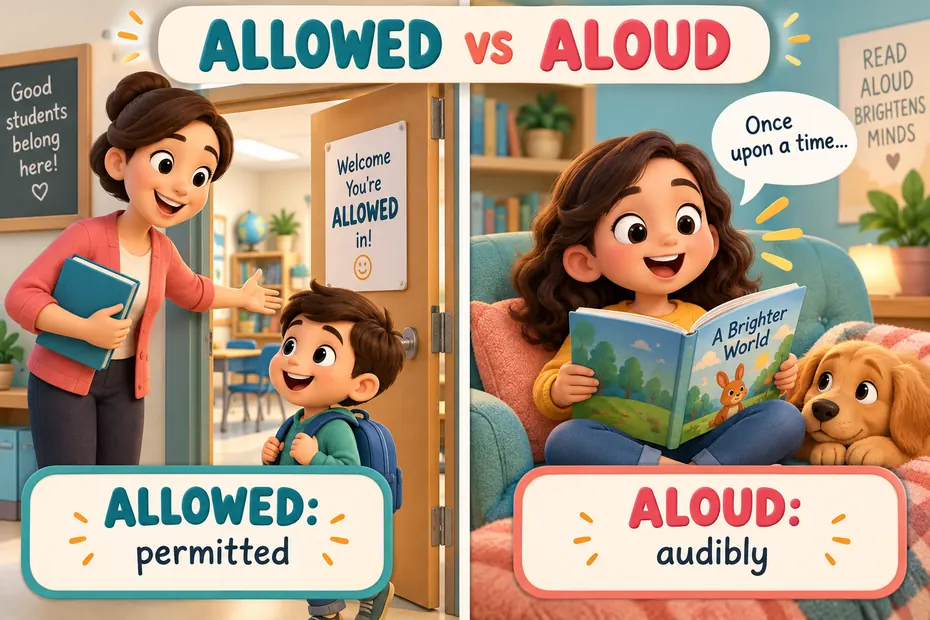
                            Allowed means permitted; aloud means audibly

                            Mastering the Difference Between Allowed and Aloud: How to Use Them Appropriately

                              As a language enthusiast, I often come across words that sound similar but have distinct meanings. One such pair is “allowed” and “aloud”. These words may seem interchangeable, but they actually have different usage and implications. In this text, I’ll investigate into the differences between “allowed” and “aloud” and provide practical tips on how to use them appropriately in various contexts. Und