Skip to content
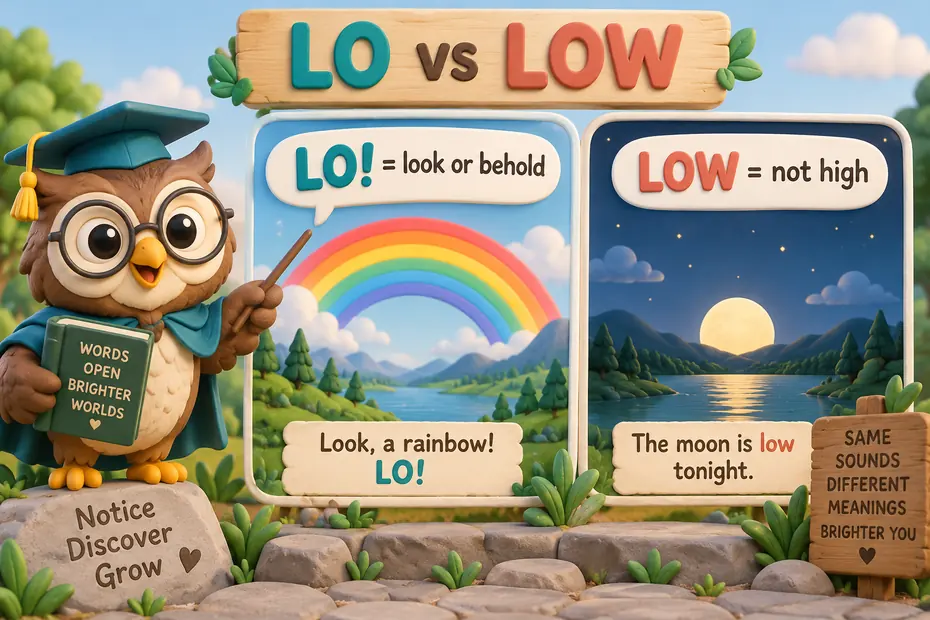
Lo calls attention; low describes a level that is not high.

Mastering the Proper Usage of ‘lo’ and ‘low’ in English Language

    Lo is an interjection that calls attention or expresses surprise; low describes a position, amount or level that is not high. The familiar expression is “lo and behold,” with no w. Write “a low wall,” “a low voice” and “supplies are running low,” with a w. Lo often sounds literary, old-fashioned or deliberately playful. That… Read More »Mastering the Proper Usage of ‘lo’ and ‘low’ in English Language
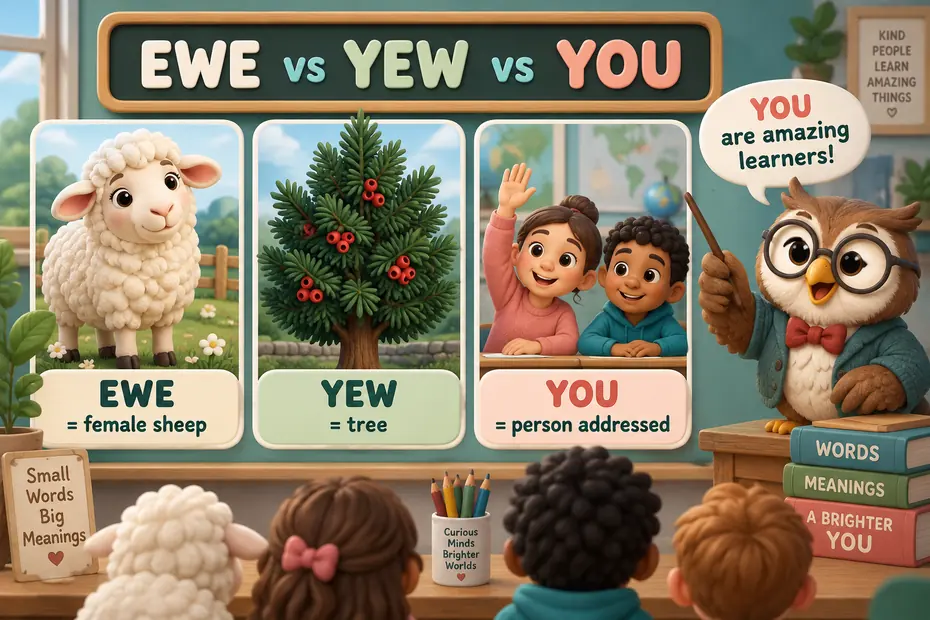
    Ewe is a female sheep; yew is a tree; you addresses a person or group.

    Mastering the Distinctions: Properly Using “Ewe,” “Yew,” and “You” for Effective Communication

      Have you ever found yourself confused between the words “ewe,” “yew,” and “you”? As a language enthusiast, I’ve encountered this dilemma more times than I can count. In this text, I’ll shed some light on the differences between these three words and help you understand when to use each one appropriately.
      First, let’s address “ewe.” It refers to a female sheep, and it’s pronounced like “you.” On th

      Check context before correcting the unverified strings tvscher and tvsture.

      Understanding the Difference Between “tvscher” and “tvsture” and Their Appropriate Usage

        Neither tvscher nor tvsture has been verified here as a standard English word. Do not use tvsture as an established verb meaning adjust a television. The earlier article’s confident definition is unsupported. If that is the action you mean, write “adjust the TV settings,” “change the channel” or “turn down the volume.” These two strings… Read More »Understanding the Difference Between “tvscher” and “tvsture” and Their Appropriate Usage

        Dual means twofold; duel names a contest.

        Dual vs Duel: Understanding and Using Appropriately in English Language

          Have you ever found yourself confused about when to use “dual” and when to use “duel”? Well, you’re not alone. The English language is full of tricky word pairs that can trip us up. In this text, I’ll guide you through the proper usage of “dual” and “duel” so that you never mix them up again.
          First, let’s clarify the difference between these two words. “Dual” refers to something that is composed o

          Laser is the device word; lazar is historical vocabulary; Lazer may occur in names.

          Understanding the Differences: Laser vs Lazar vs Lazer – Proper Usage and Importance

            Laser, lazar, lazer – three words that sound similar but have distinct meanings. In this text, I’ll guide you on how to use these terms appropriately, avoiding confusion and ensuring accuracy in your communication.
            When it comes to lasers, we often think of cutting-edge technology and precision. But did you know that there’s a difference between “laser” and its variations, “lazar” and “lazer”? It’

            Illustrated word guide naming air, aire, ayre, ere, err, eyre and heir with wind, shore, book, correction, medieval court and inheritance icons.

            Mastering the Differences: Using “air,” “aire,” “ayre,” “ere,” “err,” “eyre,” and “heir” Appropriately

              Have you ever found yourself confused about when to use “air,” “aire,” “ayre,” “ere,” “err,” “eyre,” or “heir”? As an expert in the English language, I’ll guide you through the proper usage of these words and help clear up any confusion. In this text, I’ll explain the differences between these similar-sounding words and provide examples to illustrate their correct usage. Whether you’re a writer, a

              Gait is a movement pattern; gate is an entrance or barrier.

              Understanding the Difference: Gait vs Gate | Using Them Appropriately for Effective Communication

                Gait means a manner or pattern of walking; gate means an entrance, barrier or access point. Write “Her gait was steady” when describing movement and “The garden gate was open” when describing the entrance. In common English pronunciation, both words sound the same: /ɡeɪt/. The earlier claims about a subtle pronunciation difference are incorrect. The… Read More »Understanding the Difference: Gait vs Gate | Using Them Appropriately for Effective Communication

                Leak names an escape or disclosure; leek is a vegetable.

                Mastering the Difference: Leak vs Leek – Using Them Appropriately for Clear Communication

                  A leak is an escape of liquid, gas or information; a leek is an onion-related vegetable. Write “The pipe has a leak” for the unwanted escape and “The soup contains a leek” for the plant. The words commonly sound alike, but their spellings identify different meanings. Two corrections to the earlier guide matter: leak can… Read More »Mastering the Difference: Leak vs Leek – Using Them Appropriately for Clear Communication

                  Popery vs Potpourri: Meaning, Tone and Correct Usage

                  Understanding the Difference Between “Popery” and “Potpourri” and How to Use Them Appropriately

                    Are you tired of the confusion between “popery” and “potpourri”? Well, I’m here to shed some light on these two commonly misunderstood terms. In this text, I’ll guide you through the proper usage of “popery” and “potpourri,” helping you avoid any embarrassing mix-ups.
                    First, let’s clarify what “popery” actually means. Contrary to popular belief, it has nothing to do with a fragrance or a decorativ

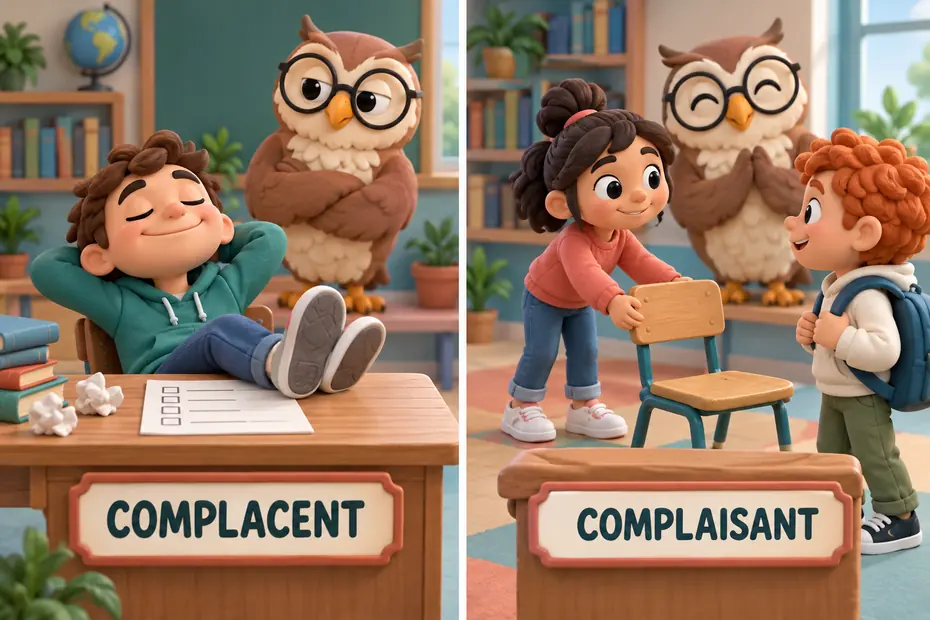
                    Complacent vs Complaisant: Meanings and Examples

                    Understanding and Using ‘Complacent’ vs ‘Complaisant’ Appropriately: A Guide

                      Have you ever found yourself unsure of whether to use the words “complacent” or “complaisant” in your writing? Well, fear not, because in this text, I’ll provide you with a clear understanding of these two words and how to use them appropriately. As a language expert, I’ve encountered countless instances where these terms are mistakenly interchanged, leading to confusion and miscommunication. But

                      Toughed vs Tuft: Meaning, Forms and Examples

                      Mastering “Toughed vs Tuft: Using Appropriately” to Enhance Vocabulary and Communication

                        Toughed vs tuft: endurance or a small bunch? Toughed is the past tense and past participle of the verb tough, usually in toughed it out: endured a difficult situation. Tuft names a small bunch of hair, feathers, grass or similar material, and can also be a verb about forming or furnishing tufts. “She toughed it… Read More »Mastering “Toughed vs Tuft: Using Appropriately” to Enhance Vocabulary and Communication

                        Grill vs Grille: Cooking, Screens and Verb Uses

                        Grill vs Grille: Understanding and Using the Words Appropriately

                          Hey there! Are you confused about when to use “grill” and when to use “grille”? Well, you’re not alone! In this text, I’ll guide you through the proper usage of these two commonly confused words. As an expert in language and grammar, I’ll shed some light on the differences between “grill” and “grille” and provide you with clear examples to help you use them appropriately.

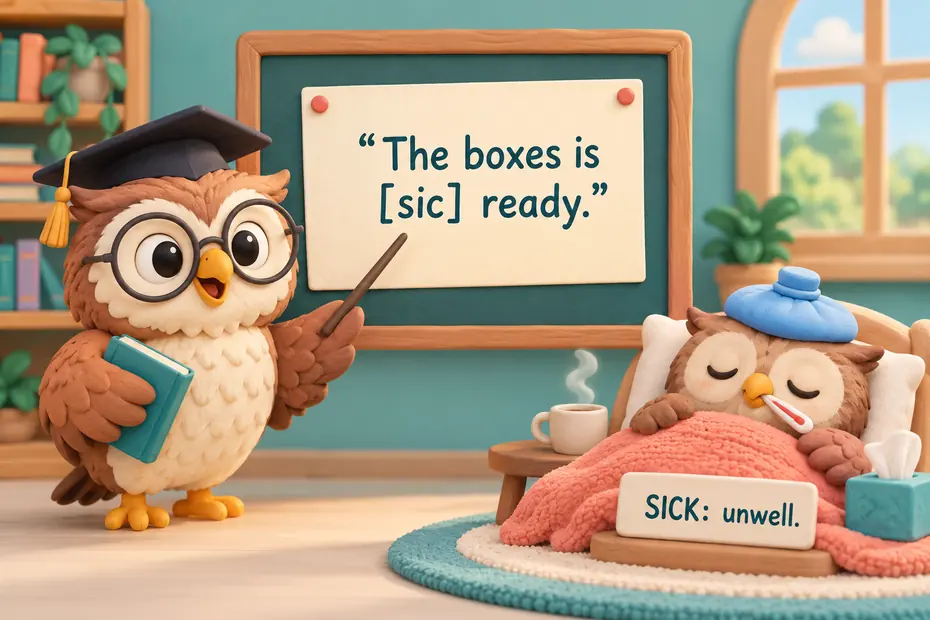
                          Sic vs Sick: Quotations, Meanings and Correct Usage

                          Sic vs Sick: A Guide to Proper Usage in Writing

                            Have you ever come across the words “sic” and “sick” and wondered if they are interchangeable? Well, let me tell you, they may sound similar, but they have completely different meanings and uses. In this text, I’ll guide you through the proper usage of “sic” and “sick” so you can confidently use them in your writing.