Skip to content
A first-grade teacher models organizing pencils and books.

First Grade Teacher Tips: Routines, Reading, and Feedback

    Discover essential tips for first-grade teachers to create a thriving classroom environment. Learn how to manage diverse learning styles, engage students with creative methods, and enhance parent-teacher communication through weekly newsletters and well-prepared conferences. Unlock strategies for a successful and harmonious school year.


    A teacher reads with a small group at a classroom table.

    What Is Guided Reading? Purpose and Teaching Choices

      Discover the essentials of guided reading for kids, focusing on personalized attention and leveled texts to boost reading skills. Learn about the benefits, ongoing assessment, and solutions for common challenges like resource limitations and diverse reading levels. Explore strategies for effective literacy development through differentiated and flexible instruction tailored to each child’s needs.

      A child revises a drawing beside an adult at a table.

      Encouraging Growth Mindset in Kids: Actions and Feedback

        Discover effective ways to nurture a growth mindset in kids, emphasizing resilience and curiosity. Learn practical strategies for parents and educators, including overcoming challenges, addressing fears with mindfulness, combating peer pressure, and fostering self-compassion. Unlock the keys to your child’s academic success and emotional well-being with expert advice on developing a growth-oriented perspective.

        A teacher organizes scattered planning materials into simple reusable routines.

        How to Decrease Teachers’ Mental Load: Practical Steps

          Discover practical strategies to decrease teachers’ mental load by improving time management, delegating tasks, and fostering supportive environments. Learn how technology and valuable online resources can enhance teaching efficiency, and explore the vital role school administrators play in reducing stress through adequate resources, open communication, and ongoing training. Create a healthier workplace for educators.

          A traveler looking at a closed station door.

          Whining vs Wining: Differences and Examples

            Have you ever found yourself caught between the fine line of whining and wining? As someone who has navigated this delicate balance, I can assure you that it’s not always easy. In this text, I’ll share my insights on the art of using whining and wining appropriately, and how it can make a significant difference in your personal and professional life.
            Whining, often associated with complaining and

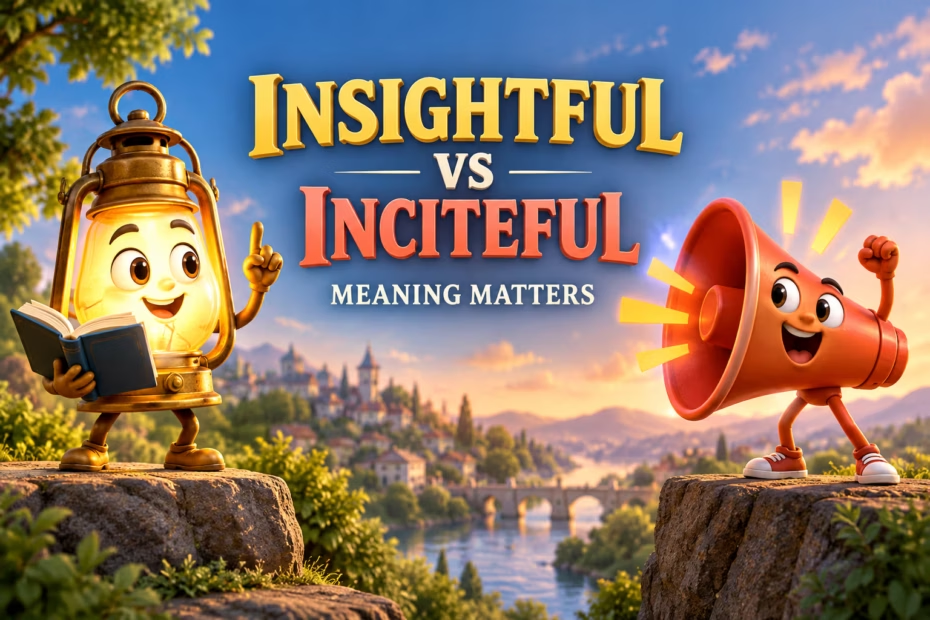
            3D illustrated comparison titled Insightful vs Inciteful: Meaning Matters, with a book character on one side and a megaphone character on the other

            Choosing Between “Inciteful” and “Insightful”: Proper Usage and Examples

              Have you ever found yourself confused between the words “inciteful” and “insightful”? Well, I certainly have. In this text, I’ll investigate into the nuances of these two words and provide you with a clear understanding of when and how to use them appropriately. As a seasoned writer, I’ve encountered this linguistic conundrum countless times, and I’m here to shed some light on the matter. So, if y

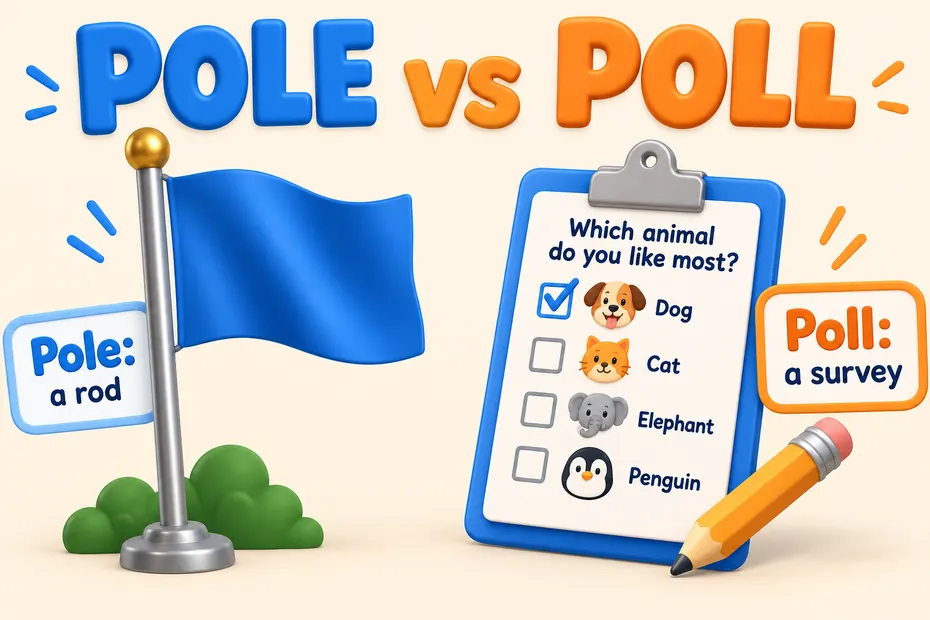
              Pole can name a rod; poll can name a survey.

              Understanding the Distinctions: Pole vs Poll – Using Appropriately

                Have you ever found yourself confused between the words “pole” and “poll”? Don’t worry, you’re not alone. In this text, I’ll be shedding some light on the differences between these two commonly misused words and how to use them appropriately. Understanding the distinctions between “pole” and “poll” is crucial for effective communication and writing. So, let’s immerse and unravel the mystery behind

                A chrysalis hanging from a green twig.

                Pupal vs Pupil: Differences and Examples

                  Have you ever found yourself confused between the words “pupal” and “pupil”? Don’t worry, you’re not alone. As an expert language enthusiast, I’ve come across this common mix-up time and time again. In this text, I’ll clarify the difference between these two words and provide you with some tips on how to use them appropriately.
                  Firstly, let’s address the word “pupal.” Many people mistakenly use th

                  Hands fastening string around a parcel.

                  Tie vs Tye: Differences and Examples

                    Are you often confused about when to use “tie” and when to use “tye”? Well, you’re not alone. In this text, I’ll be shedding light on the appropriate usage of these two words and providing some helpful tips to avoid any mix-ups. Whether you’re writing a formal email, a business report, or simply updating your social media status, it’s crucial to use the correct word to convey your message effectiv

                    A carpenter holding a wooden board at a workbench.

                    Wood vs Would: Differences and Examples

                      Have you ever found yourself confused between “wood” and “would”? It’s a common mistake, but fear not, I’m here to shed some light on the proper usage of these two words. As an experienced writer, I’ve encountered this dilemma many times, and I understand the importance of using the right word in the right context. In this text, I’ll guide you through the differences between “wood” and “would” and

                      A hiker standing on a mountain summit.

                      Peaked vs Peeked vs Piqued: Differences and Examples

                        Have you ever found yourself unsure whether to use “peaked,” “peeked,” or “piqued” in your writing? Don’t worry, you’re not alone. These three words may sound similar, but they have distinct meanings and uses. In this text, I’ll guide you through the proper usage of “peaked,” “peeked,” and “piqued,” so you can confidently choose the right word every time.
                        First, let’s tackle “peaked.” It’s often c

                        Fazed vs. phased: a calm student illustrates FAZED = unsettled.

                        Fazed vs. Phased: Meaning and 30+ Examples

                          Are you ever fazed by the confusion between “fazed” and “phased”? Don’t worry, you’re not alone. As a language enthusiast, I’ve encountered countless instances where these two words are mistakenly interchanged. But fear not, because in this text, I’ll shed some light on the proper usage of “fazed” and “phased” to ensure you never mix them up again. We’ll explore their definitions, examples, and ev

                          Two adults chatting at a formal dance.

                          Coquet vs Coquette: Differences and Examples

                            Do you ever find yourself unsure whether to use “coquet” or “coquette” in your writing? As a language enthusiast, I’ve often come across this dilemma. In this text, I’ll guide you through the appropriate usage of these two words, helping you avoid any confusion in the future.
                            We’ll start by exploring the definitions and origins of both “coquet” and “coquette.” Understanding their meanings will pro