Skip to content
Mountain summit, quick look, Pekingese dog and curious reader

Mastering the Differences: Proper Usage of Peak, Peek, Peke, and Pique

    Have you ever found yourself confused about when to use “peak,” “peek,” “peke,” or “pique”? Well, you’re not alone. These words may sound similar, but they have distinct meanings and uses. In this text, I’ll guide you through the proper usage of each word, so you can confidently navigate your way through the English language.
    First, let’s tackle “peak.” It refers to the highest point or the summit

    An old stone building stands behind an iron gate.

    Gaol vs Jail: Two Spellings of the Same Word

      Have you ever wondered about the difference between “gaol” and “jail”? As a language enthusiast, I find it fascinating how certain words can vary in spelling and usage across different English-speaking countries. In this text, I’ll jump into the nuances of these two words and help you understand when to use each one appropriately.
      First, let’s clarify the basics. “Gaol” and “jail” are both nouns t

      Coarse sand rests beside fine sand in two shallow trays.

      Coarse vs Course: Meaning and Spelling Guide

        Coarse vs cvsse vs course: three words that may sound similar, but have distinct meanings and usage. As a language enthusiast, I often encounter confusion surrounding these terms. In this text, I’ll shed light on the differences between coarse, cvsse, and course, and provide guidance on how to use them appropriately in your writing.
        Firstly, let’s tackle the word “coarse.” It refers to something r

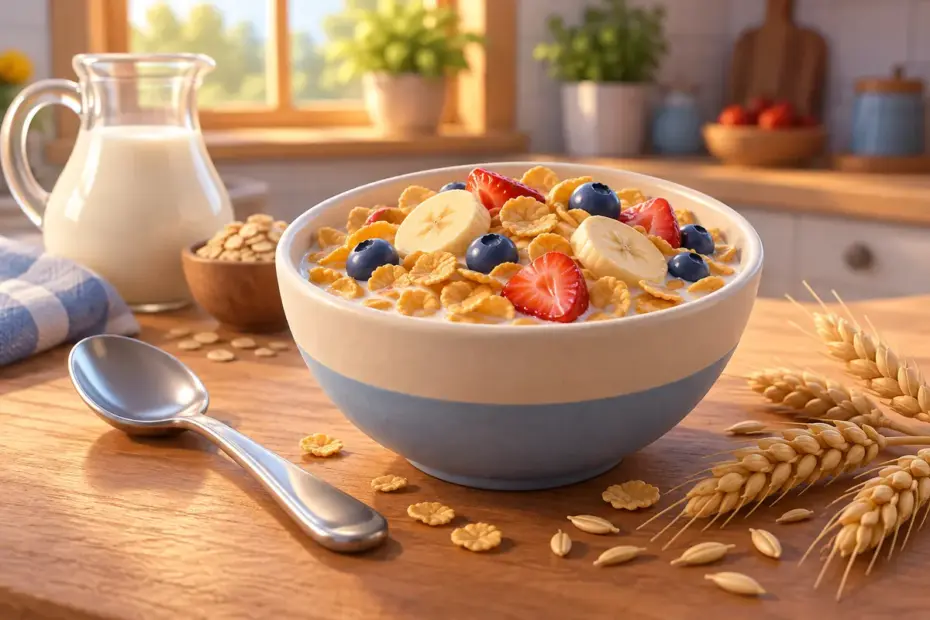
        A bowl of cereal stands beside a spoon and grain stalks.

        Cereal vs Serial: Grain and Things in a Series

          Are you constantly mixing up the words “cereal” and “serial”? Don’t worry, you’re not alone. In this text, I’ll help you understand the key differences between these commonly confused words and provide tips on how to use them appropriately. Whether you’re writing an important email or crafting a social media post, using the right word can make all the difference in conveying your message accuratel

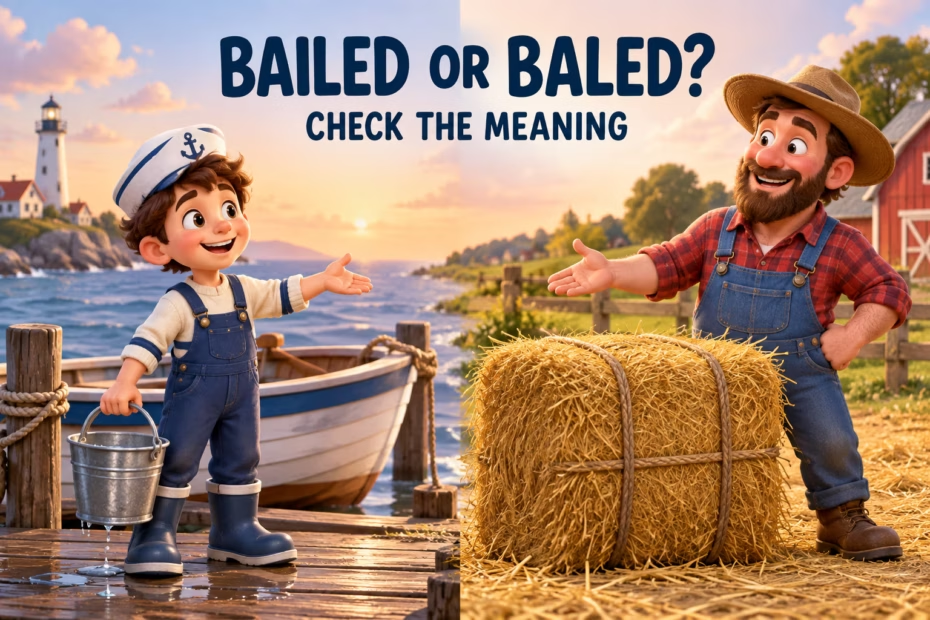
          A friendly cartoon sailor and farmer compare BAILED and BALED beside a boat and hay bale

          Bailed vs. Baled: Meaning, Usage & Examples

            Are you confused about when to use “bailed” and when to use “baled”? Well, you’re not alone. As a language enthusiast, I’ve come across this common dilemma countless times. In this text, I’ll shed light on the correct usage of these two words and provide you with some practical tips to ensure you never mix them up again. Whether you’re a writer, a student, or simply someone who wants to improve th

            Leaves lie across a garden path beside a wind-bent branch.

            Blew vs Blue: Past Action and Color

              Have you ever found yourself in a situation where you weren’t sure whether to use “blew” or “blue”? Don’t worry, you’re not alone. These two words may sound similar, but they have completely different meanings. In this text, I’ll guide you through the proper usage of “blew” and “blue” so you can confidently use them in your writing. Whether you’re a native English speaker or learning the language,

              Verify the tool name before comparing software

              Fvsego vs Fvsgo: Mastering the Art of Using Them Appropriately

                As an experienced blogger, I’ve come across countless debates in the world of technology. One that has caught my attention recently is the battle between fvsego and fvsgo. In this text, I’ll investigate into the differences between these two and help you understand how to use them appropriately.
                Fvsego and fvsgo are two powerful tools that can enhance your coding experience, but it’s crucial to kn

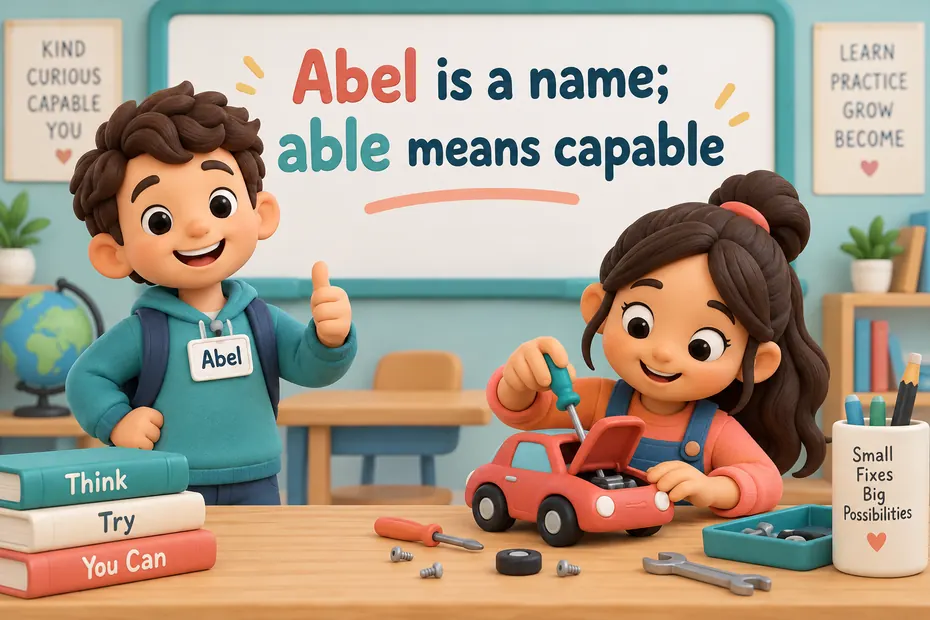
                Abel is a name; able means capable

                Mastering the Correct Usage of ‘Abel’ vs ‘Able’: Tips for Using Them Appropriately

                  Have you ever found yourself confused about when to use “abel” and when to use “able”? It’s a common dilemma, but fear not! In this text, I’ll guide you through the proper usage of these two words, ensuring that you never make a mistake again. Understanding the difference between “abel” and “able” is crucial for effective communication, and it can make a significant impact on the clarity and profe

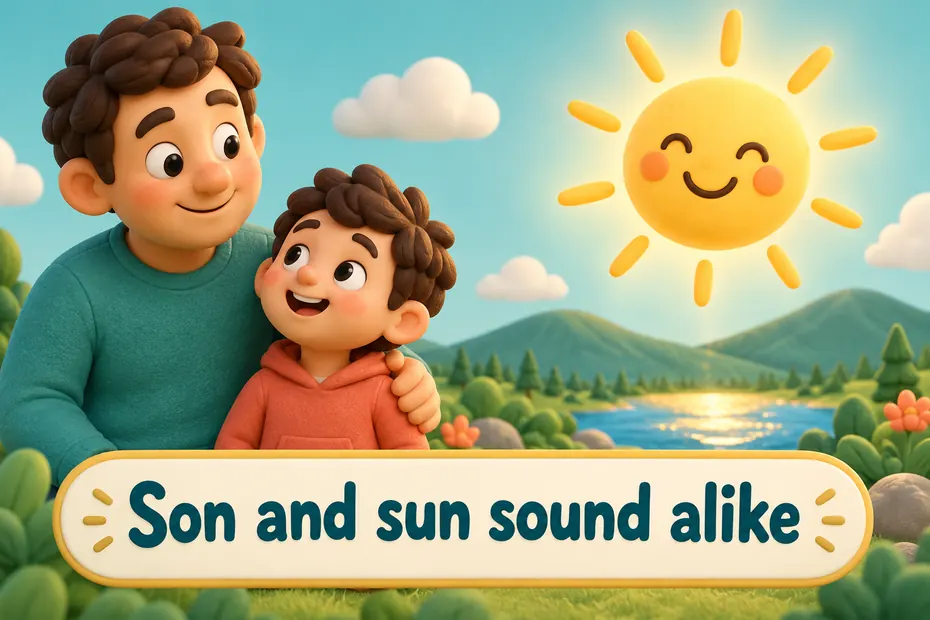
                  Son and sun sound alike

                  Understanding the Difference Between ‘Son’ and ‘Sun’ for Effective Communication: Tips for Using Them Appropriately

                    Son means a male child in relation to a parent; sun means the star that lights Earth, or its sunshine. Son and sun sound alike in standard English, so choose by meaning. “My son enjoys the sun” uses son for a person and sun for sunlight. Key facts about son vs sun Son refers to… Read More »Understanding the Difference Between ‘Son’ and ‘Sun’ for Effective Communication: Tips for Using Them Appropriately

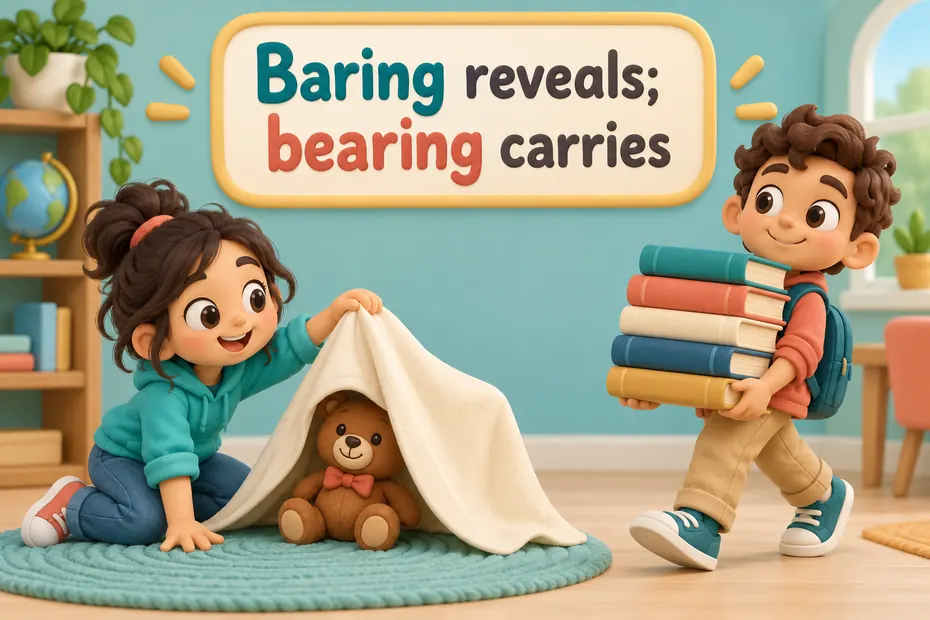
                    Baring reveals; bearing carries

                    Baring vs Bearing: Mastering the Proper Usage and Context for Maximum Effectiveness

                      Baring means uncovering or revealing something; bearing can mean carrying, supporting, or enduring, and it can also be a noun for direction, manner, relevance, or a mechanical part. Both can be verb forms. Choose baring for exposure and bearing for the appropriate sense of bear. Key facts about baring vs bearing Baring comes from the… Read More »Baring vs Bearing: Mastering the Proper Usage and Context for Maximum Effectiveness

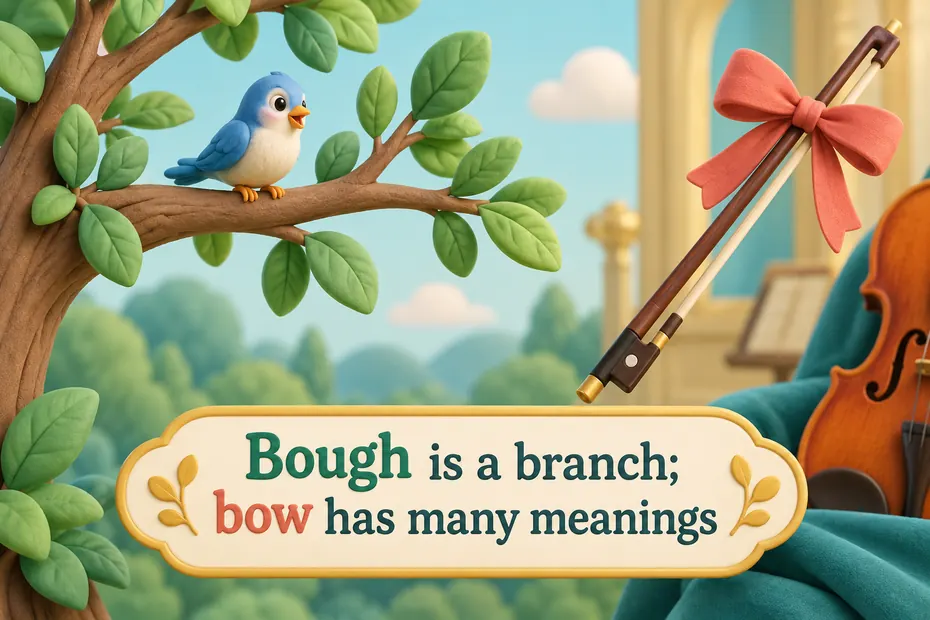
                      Bough is a branch; bow has many meanings

                      Bough vs Bow: Mastering their Proper Usage and Contexts

                        Have you ever found yourself in a dilemma over whether to use “bough” or “bow” in your writing? As an expert blogger with years of experience, I’ve encountered this common confusion countless times. In this text, I’ll provide you with a clear understanding of when and how to use these two words appropriately.
                        Firstly, let’s clarify the difference between “bough” and “bow.” The word “bough” refers