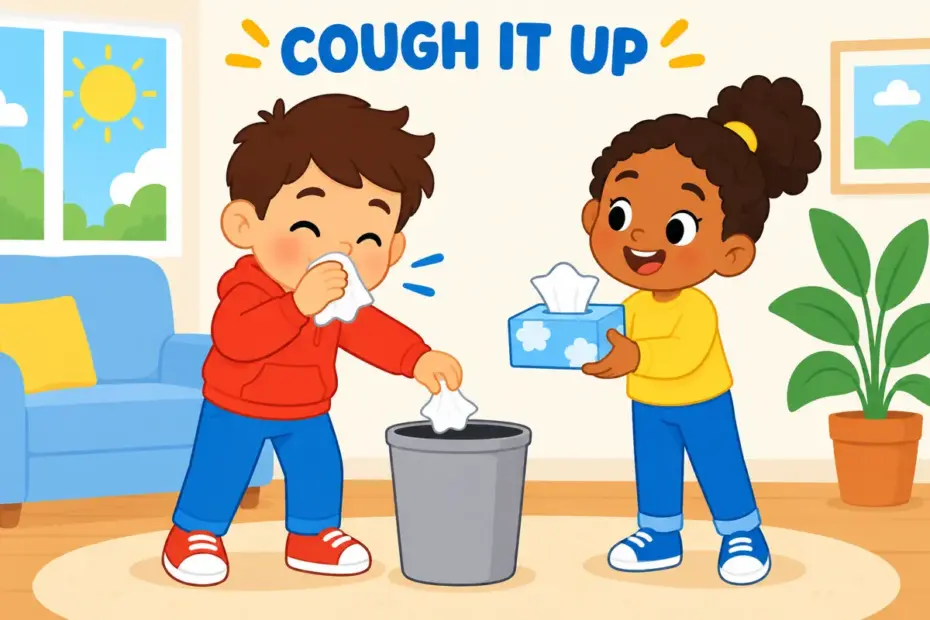
Expectorate is a formal, clinical verb meaning to cough up and spit out mucus from the throat or lungs. To use expectorate in a sentence, keep the register medical and name what is being cleared: The nurse asked the patient to expectorate into a sterile cup. Everyday speech almost always replaces it with cough up or spit.
Expectorate at a glance
- Expectorate is a formal verb meaning to bring up and spit out mucus from the airways.
- It belongs to medicine, nursing notes, laboratory instructions and public health writing.
- Its forms are expectorate, expectorates, expectorated, expectorating and expectoration.
- The usual patterns are expectorate plus an object, expectorate into a container, and be asked to expectorate.
- The commonest errors are confusing it with expect and using it in casual talk.
What does expectorate mean?
Expectorate is a verb meaning to cough material up from the throat or lungs and spit it out. The Cambridge entry for expectorate treats it as a medical and formal word, and the senses below show why doctors choose it over plain speech. The noun is expectoration, which names both the act and the material produced.
| Sense | Plain meaning | Example sentence |
|---|---|---|
| Clinical, bring up mucus | Cough mucus from the airways and spit it out | The patient could not expectorate the thick mucus. |
| Broad, spit out contents | Spit something out of the mouth, in formal description | He expectorated the water and caught his breath. |
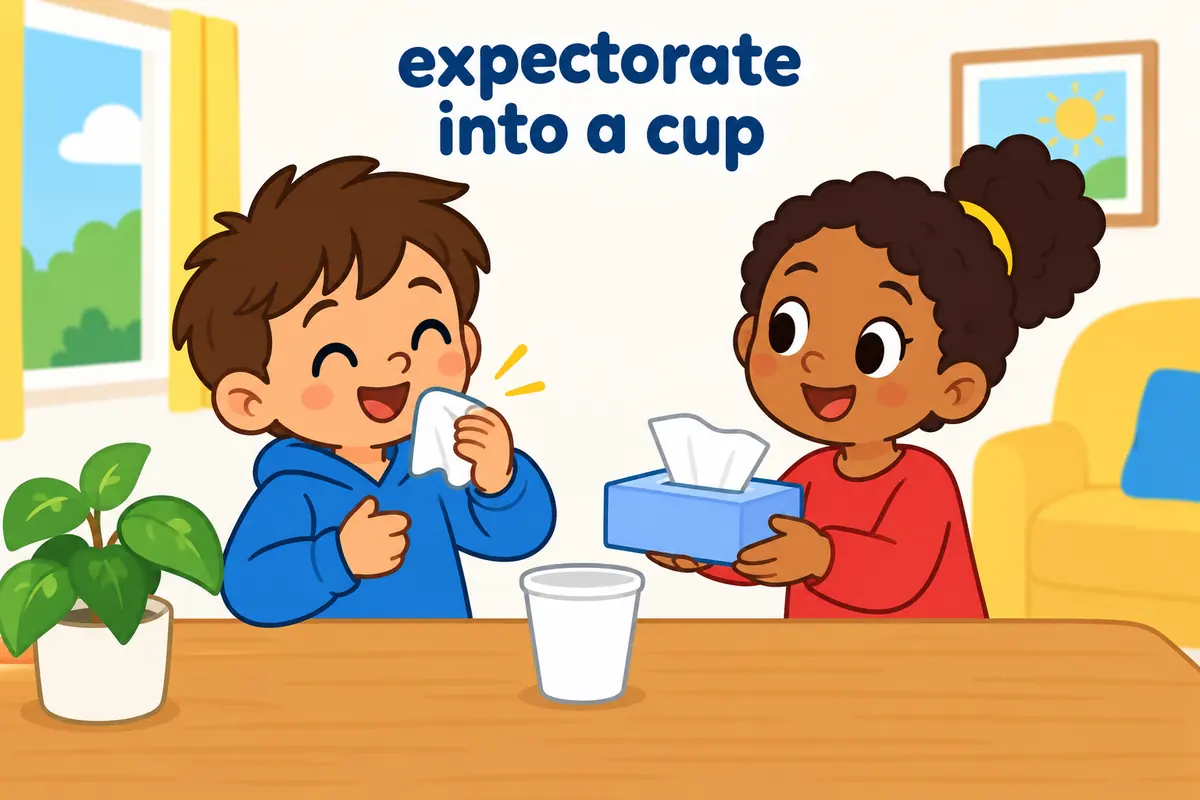
| Requested sample | Produce a specimen for testing | Please expectorate into the labelled container. |
Expectorate does not mean to vomit, and it does not mean to swallow. It is also not a rude word in itself, but it sounds clinical, so using it about a person in casual talk can sound oddly cold. For an everyday cough, cough and cough up carry the same idea without the white coat.
How do you use expectorate in a sentence?
Expectorate is a regular transitive verb, so it takes an object or a prepositional phrase that names where the material goes. The five patterns below cover almost every sentence in a medical note or a laboratory instruction.
| Pattern | Example | What it signals |
|---|---|---|
| expectorate + object | The patient expectorated clear sputum. | Names the material brought up from the airways. |
| expectorate into + container | Expectorate into the sterile cup. | Gives the instruction for collecting a sample. |
| be asked / be unable to + expectorate | She was unable to expectorate on demand. | Reports capacity rather than action. |
| expectorate + adverb | He expectorated forcefully after the nebuliser. | Describes how the action was performed. |
| expectorate + blood | The note recorded that he expectorated blood overnight. | States a clinical observation in formal wording. |
Expectorate is not separable and it has no particle, so it behaves unlike the phrasal verbs that dominate everyday English. The single most useful collocation is expectorate sputum, which appears throughout clinical writing.
| Collocation | Register | Example |
|---|---|---|
| expectorate sputum | Clinical | The patient was asked to expectorate sputum for culture. |
| expectorate into a cup | Clinical instruction | Expectorate into the cup, then seal the lid. |
| unable to expectorate | Clinical note | He remained unable to expectorate. |
| expectorate blood | Clinical observation | She expectorated a small amount of blood. |
| cough up phlegm | Everyday | He coughed up phlegm all night. |
Expectorate in a sentence: examples across contexts
Expectorate keeps one meaning and one register: it belongs wherever a cough is described precisely and impersonally. The ten sentences below move from a bedside to a public notice, and each one names the material or the container.
| Context | Example sentence | Why this works |
|---|---|---|
| Nursing note | The patient expectorated thick yellow sputum overnight. | Records colour and consistency without lay wording. |
| Doctor’s instruction | Please expectorate into the container, not into the sink. | A clear procedural command for a sample. |
| Laboratory request | The sample was collected after the patient expectorated deeply. | Describes the collection method precisely. |
| Public health notice | Do not expectorate in public areas. | A formal prohibition that avoids the bluntness of spit. |
| Veterinary note | The dog expectorated a small amount of foam. | Applies the clinical verb to an animal. |
| Science report | Participants were asked to expectorate before the measurement. | Keeps the procedure impersonal and repeatable. |
| Historical writing | Signs of the period warned visitors not to expectorate on the floor. | Fits the formal tone of older public rules. |
| Respiratory therapy | Physiotherapy helped her expectorate more easily. | Links the verb to a treatment goal. |
| Insurance report | The claimant reported that he continued to expectorate blood. | Reports a symptom in neutral, formal language. |
| Dictionary example | Patients should expectorate into the sterile pot provided. | A model of the word in its natural clinical frame. |
None of these sentences would benefit from a livelier verb. The whole point of expectorate is to keep a bodily action at a clinical distance, which is why it appears in notes, instructions and notices rather than in stories.
Expectorate in medical and scientific writing
Expectorate earns its keep in three settings, and each one values a different part of the word. In a nursing note it records an observation without slang; in an instruction it directs a patient; in a report it keeps a method repeatable. The verb also allows precise companions such as sputum, specimen and sample.
| Setting | Why expectorate is chosen | Example |
|---|---|---|
| Nursing note | Neutral, consistent record of an observation | The patient expectorated clear sputum at 06:00. |
| Patient instruction | Short, unambiguous direction | Expectorate into the pot before breakfast. |
| Research protocol | Repeatable description of a procedure | Subjects expectorated into sterile containers. |
| Public notice | Formal prohibition without coarse wording | Passengers must not expectorate on the platform. |
The related noun expectoration does most of the abstract work, as in the expectoration of blood is a warning sign. The adjective expectorant describes a medicine that loosens mucus so a cough becomes productive, and that word is far more common in pharmacies than the verb. Discharge is the general word for the release of material, and expectoration is its specific clinical form.
Expectorate vs spit
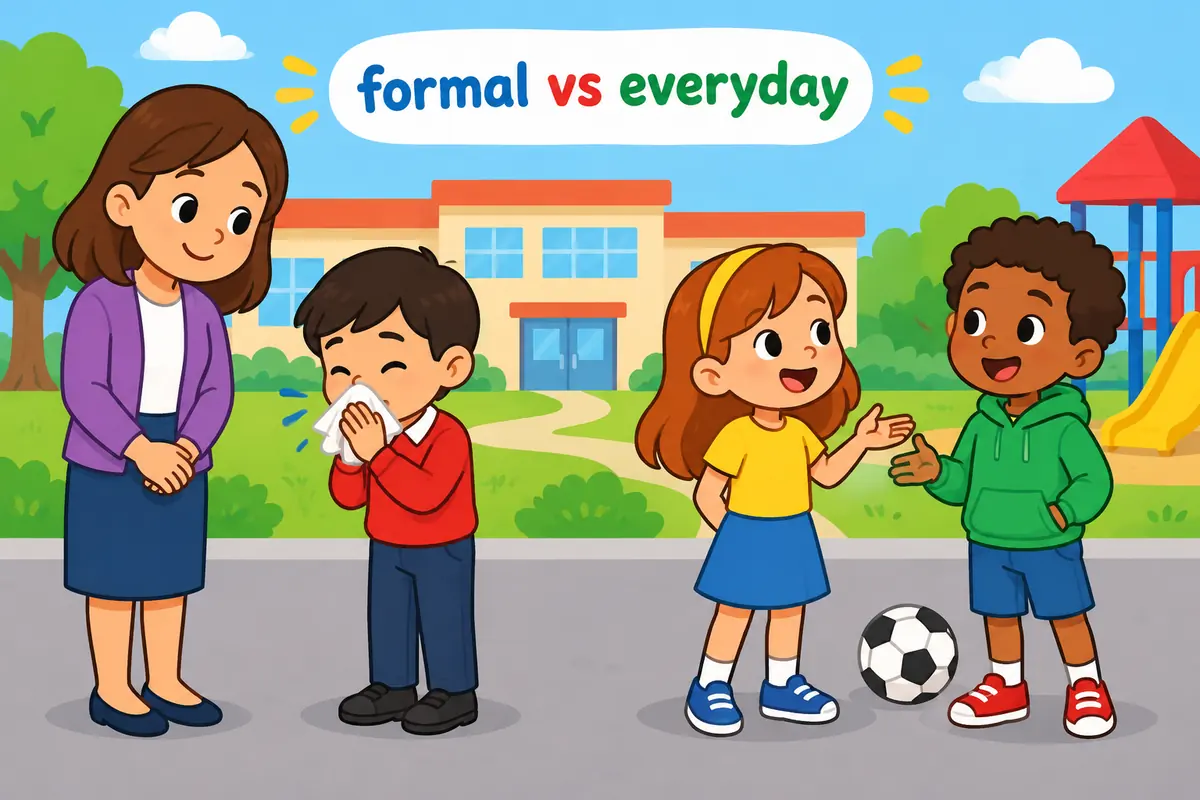
Expectorate and spit describe the same physical act from very different distances. Spit is the plain, everyday verb and can mean saliva alone; expectorate is clinical and usually means material from the airways. The table separates them on the attributes that decide most sentences.
| Attribute | expectorate | spit |
|---|---|---|
| Register | Formal and clinical | Everyday and blunt |
| What is produced | Mucus or sputum from the airways | Saliva, food or anything in the mouth |
| Implied effort | A cough or a deep breath first | None in particular |
| Typical setting | Hospital, laboratory, public notice | Conversation, story, playground |
| Emotional tone | Neutral and detached | Can be coarse or angry |
| Noun form | expectoration | spit, spittle |
Verdict: use expectorate when a clinical or official record needs distance, and spit out when the sentence belongs to ordinary life and can afford to be direct.
Word forms and grammar of expectorate
Expectorate inflects like any regular verb, and its noun and adjective relatives carry most of the everyday load. The table also marks the false friend that causes the commonest spelling mistake.
| Form | Part of speech | Example |
|---|---|---|
| expectorate | verb, base form | Patients should expectorate into the pot. |
| expectorates | verb, third person singular | He expectorates less with the new inhaler. |
| expectorated | verb, past and past participle | She expectorated a small specimen. |
| expectorating | verb, present participle | The patient was still expectorating after therapy. |
| expectoration | noun | Expectoration of blood needs review. |
| expectorant | noun and adjective | An expectorant loosens the mucus. |
| expect | verb, false friend | We expect the results on Friday. |
The false friend matters: expect and expectorate share the first six letters but nothing else, and spell-checkers will happily accept the wrong one. Keep expectation in its own family, where it belongs.
Common mistakes with expectorate
- Incorrect:
The nurse expected the sample into a cup.Correct: The nurse asked the patient to expectorate into a cup. Rule: Expect means to await; expectorate means to cough up material. They are unrelated in meaning. - Incorrect:
He expectorated a big spit.Correct: He expectorated a small amount of sputum. Rule: The verb already contains the act, so it takes the material as its object, not the act again. - Incorrect:
She expectorated up the mucus.Correct: She expectorated the mucus. Rule: Expectorate is not a phrasal verb, so it takes no particle. - Incorrect:
Stop expectorating at me!Correct: Stop spitting at me! Rule: Expectorate is clinical and impersonal; an angry or personal context needs the plain verb. - Incorrect:
The expectorate was sent to the lab.Correct: The expectoration was sent to the lab. Rule: The noun form is expectoration, not the bare verb.
Practice using expectorate
Work through the seven items, then read the reason beside each answer.
- Fill the gap: The patient was asked to ______ into the sterile container.
- Choose the better word: The toddler (expectorated / spat out) a mouthful of peas and laughed.
- Correct the error: She expected a sample into the pot.
- Build a sentence: use unable to expectorate about a patient after surgery.
- Spot the register: which belongs in a public notice — passengers must not expectorate on the platform, or don’t go spitting everywhere?
- Rewrite with the noun: He expectorated blood overnight. Use expectoration instead.
- Explain the false friend: why is The nurse expected the sample wrong?
Answers
- expectorate — the instruction names the container with into.
- spat out — the action is everyday and involves food, not airway mucus.
- She asked the patient to expectorate a sample into the pot — expect cannot take this meaning.
- Model answer: The patient was unable to expectorate for several hours after the operation.
- Passengers must not expectorate on the platform — an official notice keeps formal distance.
- The note recorded expectoration of blood overnight — the noun names the act or the material.
- Expect means to await, while expel or expectorate describes driving something out, so the intended verb was expectorate.
The bottom line
Use expectorate in a sentence when a medical, scientific or official text needs to describe coughing up material without slang. The two facts that settle most choices are these: the verb is clinical and transitive, taking the material or a container as its object, and it is unrelated in meaning to the similar-looking expect. In ordinary writing, cough up or spit out will almost always sound more natural.
Frequently asked questions about expectorate
What does expectorate mean in medical terms?
In medicine, expectorate means to cough up and spit out mucus, also called sputum, from the throat or lungs. A clinician might ask a patient to expectorate into a sterile container so the sample can be tested. The word describes a deliberate action, so it is often paired with unable to when a patient cannot produce a sample.
Is expectorate a rude word?
No. Expectorate is a clinical and formal verb, and it carries none of the coarseness of spit. That distance is exactly why hospitals, laboratories and public notices use it. Read aloud to a friend, though, it can sound cold and oddly detached, because it turns a bodily action into an impersonal, technical observation.
What is an expectorant?
An expectorant is a medicine that loosens mucus in the airways so a cough can bring it up more easily. The adjective and noun share the root of expectorate, which names the action the medicine is meant to help. Expectorants are common in cough syrups, and the word appears far more often in pharmacies than the verb itself.
Can you expectorate saliva?
You can, but the sentence is unusual because expectorate normally points to material from the throat or lungs rather than the mouth alone. Saliva is the domain of spit. A clinical text that says a patient expectorated saliva would probably mean that the sample was mostly saliva, which matters when a specimen is being judged as adequate or not.