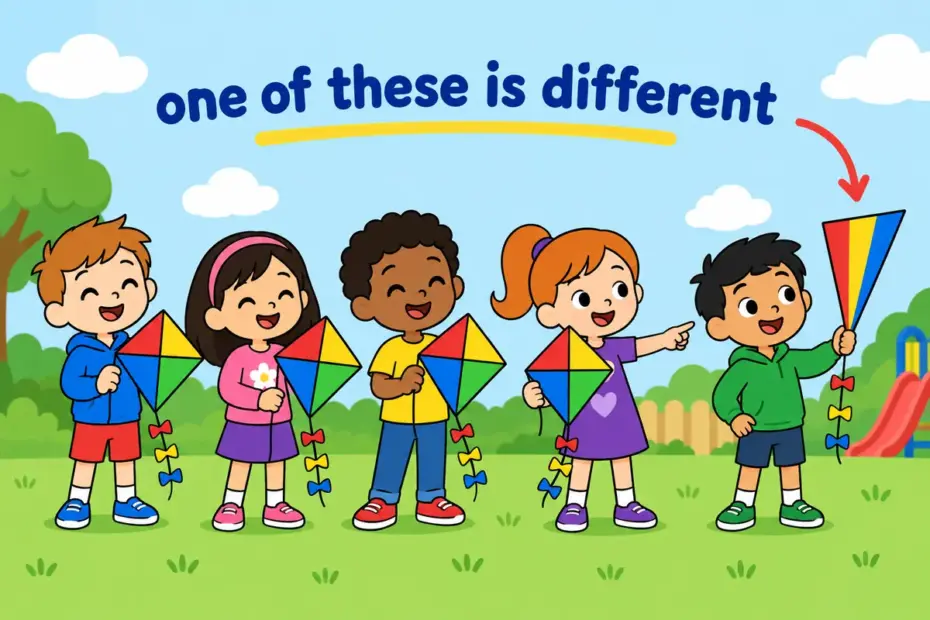
Atypical means not typical: something that does not match the usual pattern for its kind. To use atypical in a sentence, name the norm it departs from, as in “The test results were atypical for the season.” The adjective usually describes a result, case, behaviour or feature, and it nearly always implies a comparison with what is normal.
Atypical at a glance
- Atypical is an adjective; its adverb is atypically, and it has no common verb form.
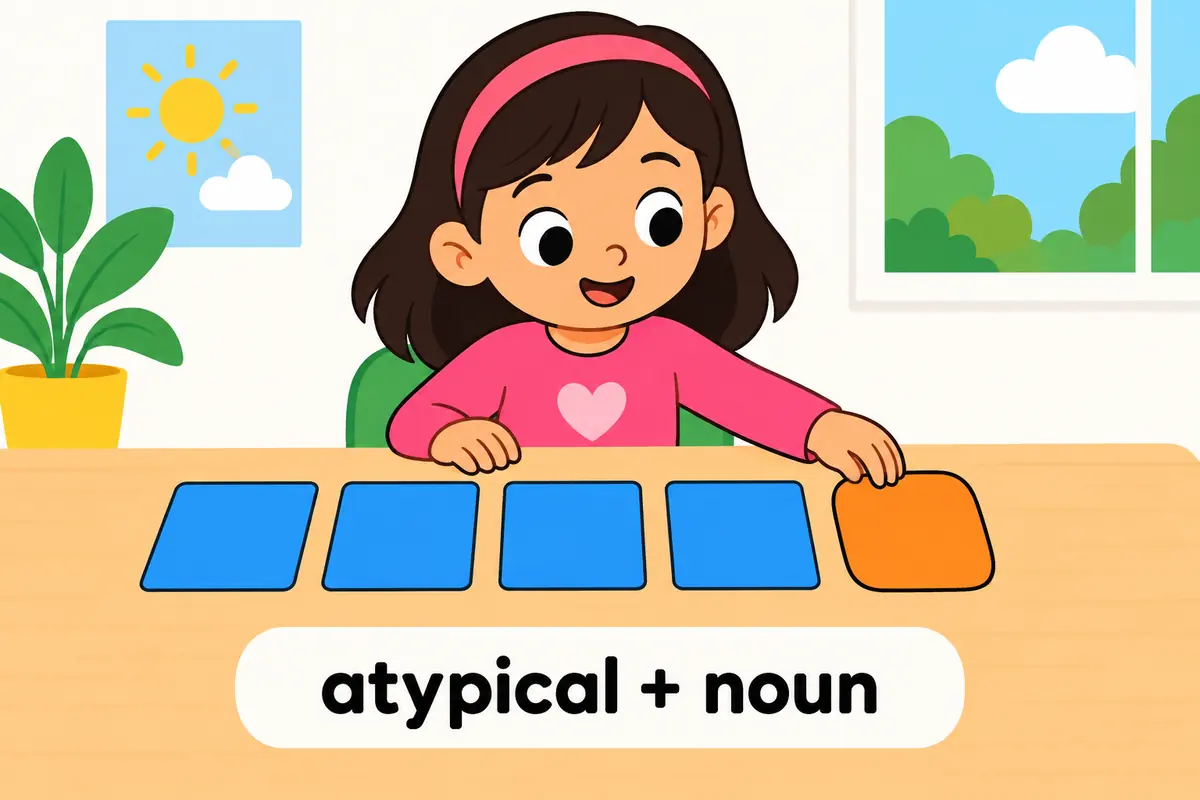
- The dominant pattern is atypical + noun: an atypical result, an atypical case, an atypical childhood.
- The adjective takes of or for when it names the standard it departs from.
- Register is neutral to formal, and the word is frequent in medicine, education and statistics.
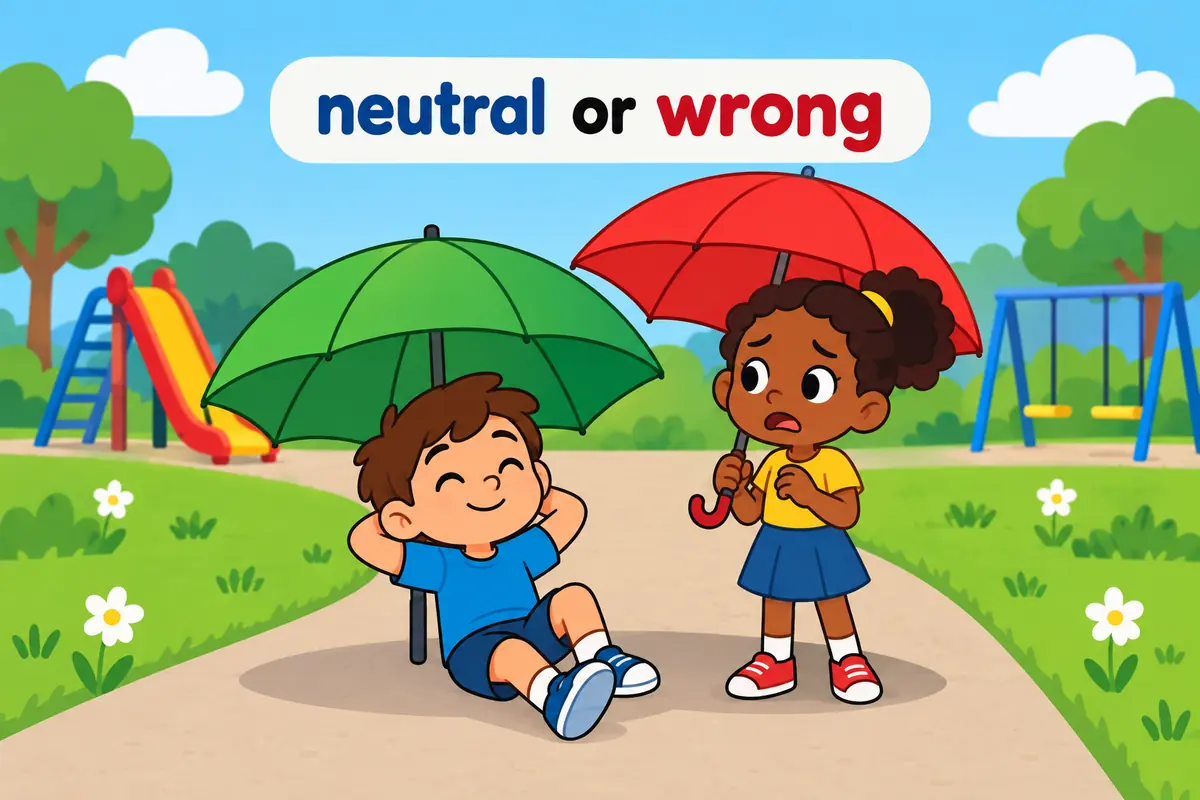
- The commonest error is using atypical as a synonym for bad or wrong; it only means not typical.
What does atypical mean?
Atypical is an adjective meaning not representative of its type or group. The Cambridge entry for atypical defines it as different from what is normal or usual, and the Merriam-Webster entry for atypical treats it as the opposite of typical rather than a synonym for defective. Two uses matter in practice: an unusual case that departs from a pattern, and a feature that does not fit a category. Atypical carries no judgement by itself, so a novel treatment can be atypical and useful at once.
- Atypical is an adjective describing a departure from a norm.
- An anomalous reading is one kind of atypical result.
- The word is common in medicine, education and statistics.
| Sense | Plain meaning | Example sentence |
|---|---|---|
| Not representative | Departs from the usual pattern for its group | Her accent was atypical for the region. |
| Not conforming | Does not fit an established category | The scan showed an atypical cell shape. |
| Unusual in kind | Rare or unexpected, without implying fault | An atypical but harmless reaction followed. |
One limitation is worth stating plainly. Atypical and abnormal are not interchangeable in careful writing. Abnormal often suggests that something is wrong or disordered, while atypical only says that something is statistically or socially unusual. If you mean faulty, choose abnormal; if you mean merely unusual, atypical is the fairer word.
How do you use atypical in a sentence?
Place atypical before the noun it describes, then add of or for only when you name the standard it departs from. The table below shows the patterns that cover almost every real sentence.
| Pattern | Example | What it signals |
|---|---|---|
| atypical + noun | The team logged an atypical spike in demand. | The feature or event is the focus. |
| atypical for + person or group | That diligence is atypical for a first draft. | Names the group whose norm is broken. |
| atypical of + period or style | The letter is atypical of his later work. | Names the standard the thing differs from. |
| be + atypical | This winter has been atypical. | A general statement with the norm implied. |
| atypically + adjective | The engine ran atypically hot. | The adverb modifies a quality, not a thing. |
The preposition is where most learners slip. Writers say atypical for a person and atypical of a thing or period, so an atypical result is atypical of the trial, not atypical for the trial. Keeping those two prepositions apart is the surest sign of fluent use.
Atypical in a sentence: examples across contexts
Atypical changes company more than meaning. The nine sentences below move from a classroom to a medical note, and each one names the norm the word quietly measures itself against.
| Context | Example sentence | Why this works |
|---|---|---|
| Classroom | The teacher flagged an atypical spelling for the whole class. | Describes a pattern without calling it a mistake. |
| Parent email | A short reply is atypical of him, so I checked in. | Uses of with a person and their usual behaviour. |
| Medical note | The scan showed an atypical shadow that needed a second look. | Follows the clinical habit of avoiding the word abnormal. |
| Weather report | A dry March is atypical for this valley. | Uses for with a place and a season. |
| Workplace review | Her calm under pressure is atypical for a new hire. | Names the group whose expectations she exceeds. |
| Sports write-up | An atypical defensive line-up unsettled the champions. | Modifies a tactic rather than a person. |
| Academic prose | The sample was atypical of the wider population. | Uses of with a statistical reference group. |
| News report | Police called the timing atypical but not suspicious. | Pairs the word with a contrast to avoid alarm. |
| Conversation | That quiet start was atypical, and the rest was pure noise. | The informal sense of out of character. |
Only the medical and academic rows use the word with technical precision; the other sentences rely on a later clause to supply the norm they have in mind.
Atypical vs abnormal
Atypical and abnormal both describe departures from a norm, and the difference is what each implies about fault. The table below keeps them apart, with the everyday word uncharacteristic alongside.
| Attribute | atypical | abnormal | uncharacteristic |
|---|---|---|---|
| Core meaning | Not representative of its group | Deviating from what is normal or healthy | Not matching a person’s usual behaviour |
| Implied fault | None | Often suggests disorder or defect | Slight, and usually temporary |
| Typical subject | A case, result, feature or sample | A condition, reading or development | A person or their action |
| Register | Neutral to formal, common in science | Clinical and technical | Everyday and personal |
| Common partner | of, for | from | of, for |
Verdict: choose atypical for a neutral departure from a pattern, abnormal findings when something is wrong or unhealthy, and uncharacteristic of somebody when a person breaks their own habits.
Word forms and grammar of atypical
Atypical is an adjective, so it describes a noun and never takes an object. Its adverb is atypically, and the noun typicality belongs to the base word rather than to atypical. The table lists the forms learners actually need, including one that is invented by mistake.
| Form | Part of speech | Example |
|---|---|---|
| atypical | adjective | An atypical reading appeared on the chart. |
| atypically | adverb | The pump ran atypically loud overnight. |
| typical | adjective, opposite sense | A typical Tuesday passed without incident. |
| typically | adverb, opposite sense | The bus is typically late in winter. |
| typicality | noun, from typical | The study measured the typicality of each sample. |
| atypicly | adverb — non-standard | Incorrect: The team performed atypicly well. Use atypically. |
Of the six forms, only atypically is used often; the rest help you recognise the family. Because atypical has no verb, a sentence never says that a result “atypicals”, which is a form no dictionary lists.
Common mistakes with atypical
- Incorrect:
The test was atypical wrong.Correct: The test result was atypical. Rule: Atypical means not typical, not incorrect; state any fault in a separate word. - Incorrect:
This behaviour is atypical to him.Correct: This behaviour is atypical of him. Rule: The standard being departed from takes of or for, never to. - Incorrect:
She atypical solved the puzzle.Correct: She solved the puzzle atypically. Rule: Atypical is an adjective; use the adverb atypically to modify a verb. - Incorrect:
The doctor called the lump atypical and dangerous.Correct: The doctor called the lump atypical and ordered a second scan. Rule: Atypical carries no judgement of danger, so state the concern separately. - Incorrect:
His atypical is obvious.Correct: His atypical behaviour is obvious. Rule: An adjective cannot stand alone as a noun; give it a noun to modify.
Atypical across medicine, education and statistics
Atypical earns its keep in fields that measure things against a norm, and each field shades the word a little differently. The table below shows how the same adjective changes company as the setting changes.
| Field | Example sentence | What atypical signals there |
|---|---|---|
| Medicine | The scan showed atypical cells, so the team ordered a biopsy. | A finding that does not match healthy tissue; a reason to look, not a diagnosis. |
| Education | An atypical reading profile appeared in three of the pupils. | A pattern that departs from the expected developmental curve. |
| Statistics | Two atypical points pulled the average upward. | A value far from the rest, useful or misleading depending on cause. |
| Climate science | This is an atypical autumn for the region. | A season that breaks its own history, stated without blame. |
| Psychology | Atypical responses were logged during the second round. | A reaction outside the usual range, carrying no judgement. |
| Quality control | The atypical batch was held back for inspection. | A sample that differs from the run, flagged rather than condemned. |
The pattern behind all six rows is the same: atypical marks a gap between an observed thing and a stated standard. That is why the word feels precise in a lab report and vague in casual speech, where the standard is often left unspoken and a reader has to infer it from context.
Practice using atypical
Work through the six items, then read the reasoning rather than only the answer.
- Fill the gap: A mild winter is ______ for this region.
- Choose the better word: The reading was (atypical / abnormal), so the nurse repeated it without alarm.
- Correct the error: The pattern is atypical to the rest of the data.
- Build a sentence: use atypical for about a quiet pupil who suddenly asks many questions.
- Spot the register: which belongs in a lab report — the sample was atypical of the batch, or the sample was kind of weird?
- Rewrite with the adverb: Her reaction was atypical. Use atypically instead.
Answers
- atypical — the region supplies the standard, and no fault is implied.
- atypical — abnormal would suggest the reading was unhealthy, which the sentence denies.
- The pattern is atypical of the rest of the data — the standard takes of or for.
- Model answer: It is atypical for Amir to sit in silence, so the teacher checked on him.
- The sample was atypical of the batch — a report states the standard and avoids kind of.
- Her reaction was atypically calm — the adverb modifies the adjective calm.
The bottom line
Use atypical in a sentence when something does not match the norm for its group, and name that norm with of or for. The two nuances that decide most sentences are these: the word carries no built-in judgement, so it is fairer than uncommon for a neutral observation, and the adverb atypically is the only way to modify a verb. Keep the adjective in front of a noun, and let the comparison stay either implicit or explicit.
Frequently asked questions about atypical
Is atypical a negative word?
No. Atypical only says that something does not match the usual pattern, and it carries no verdict on whether that is good or bad. Only context decides the tone: an atypical result may be a welcome surprise or a reason to look again, and the word itself stays neutral.
Does atypical go with of or for?
Both appear, and the choice depends on what follows. Use atypical of with a thing, period or reference group, as in atypical of the period, and atypical for with a person, place or group whose norm is broken, as in atypical for a new hire. The two prepositions are not freely interchangeable.
What does atypical mean in a medical report?
In medicine atypical describes cells or findings that do not look like the normal tissue around them. It is deliberately cautious: atypical does not mean cancerous, so a report that calls a sample atypical is asking for a closer look rather than confirming a diagnosis. Only a specialist interprets the wording.
Can atypical describe a person?
Yes, though it describes their behaviour or situation rather than their whole self. Writers say an atypical student, meaning one who does not fit the usual profile, or that a reaction is atypical of someone. Saying a person simply is atypical sounds incomplete because the word expects a norm to measure against.