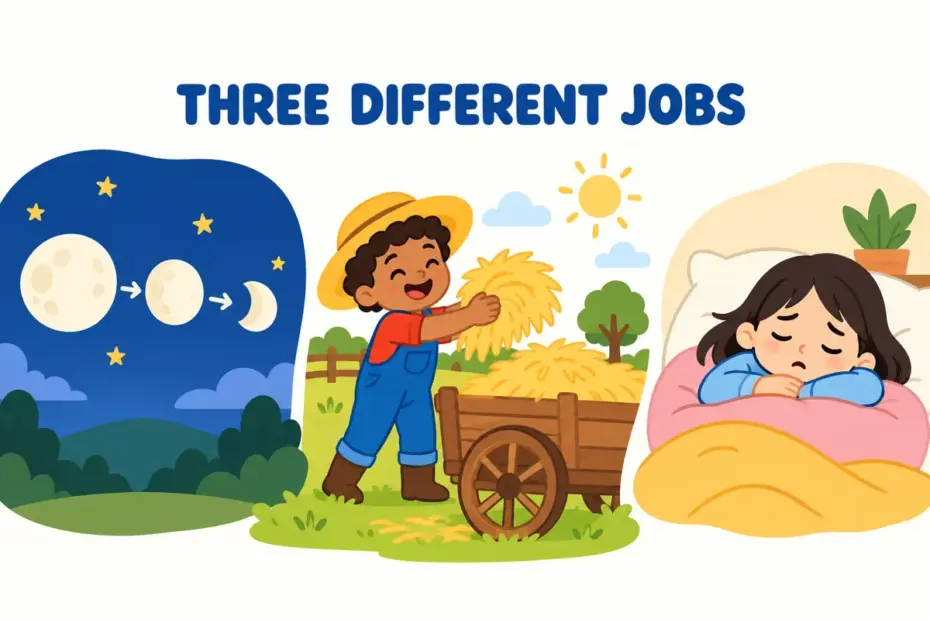
Wane vs wain vs wan is a spelling decision, not a synonym choice: use wane for something shrinking, wain for a farm cart, and wan for a pale, tired look. The three words look and sound alike, yet each belongs to a different job, so the sentence around them tells you which one fits.
Wane, wain and wan at a glance
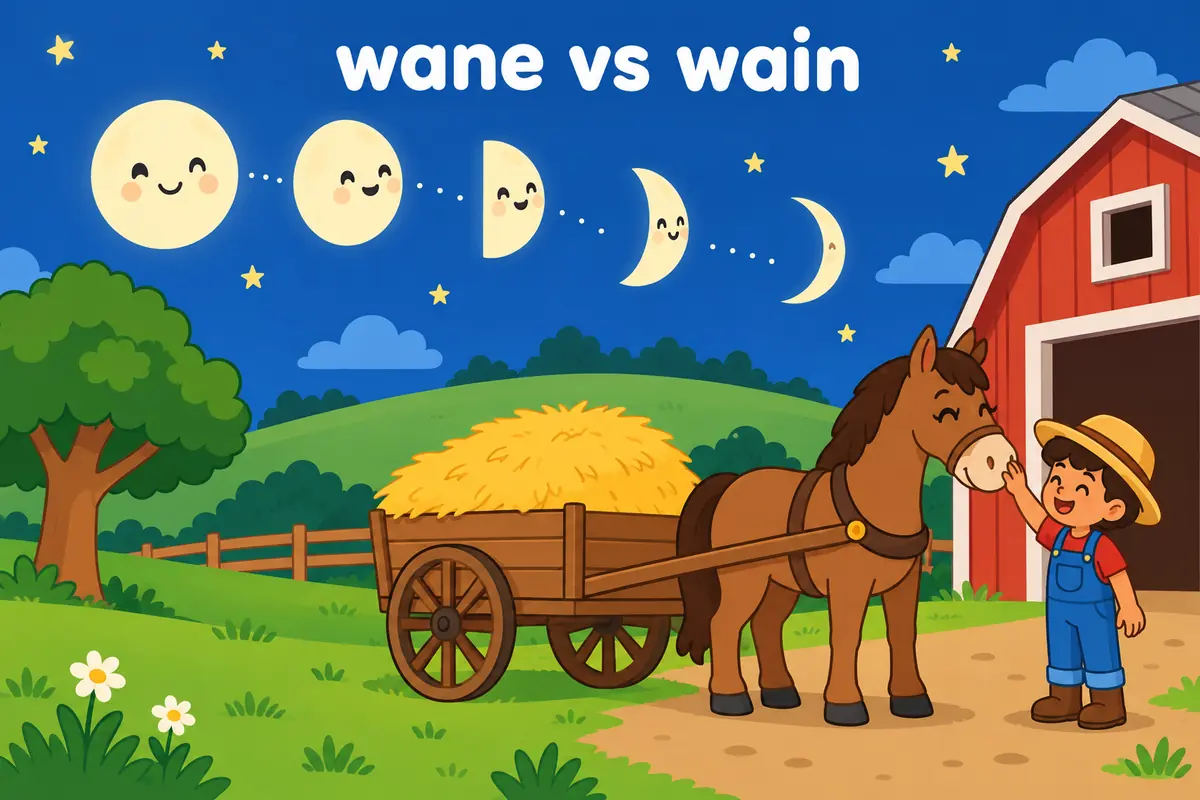
- Wane is a verb meaning to become smaller or weaker, as the moon does after full.
- Wain is a noun for a farm cart or wagon, now mostly dialectal and literary.
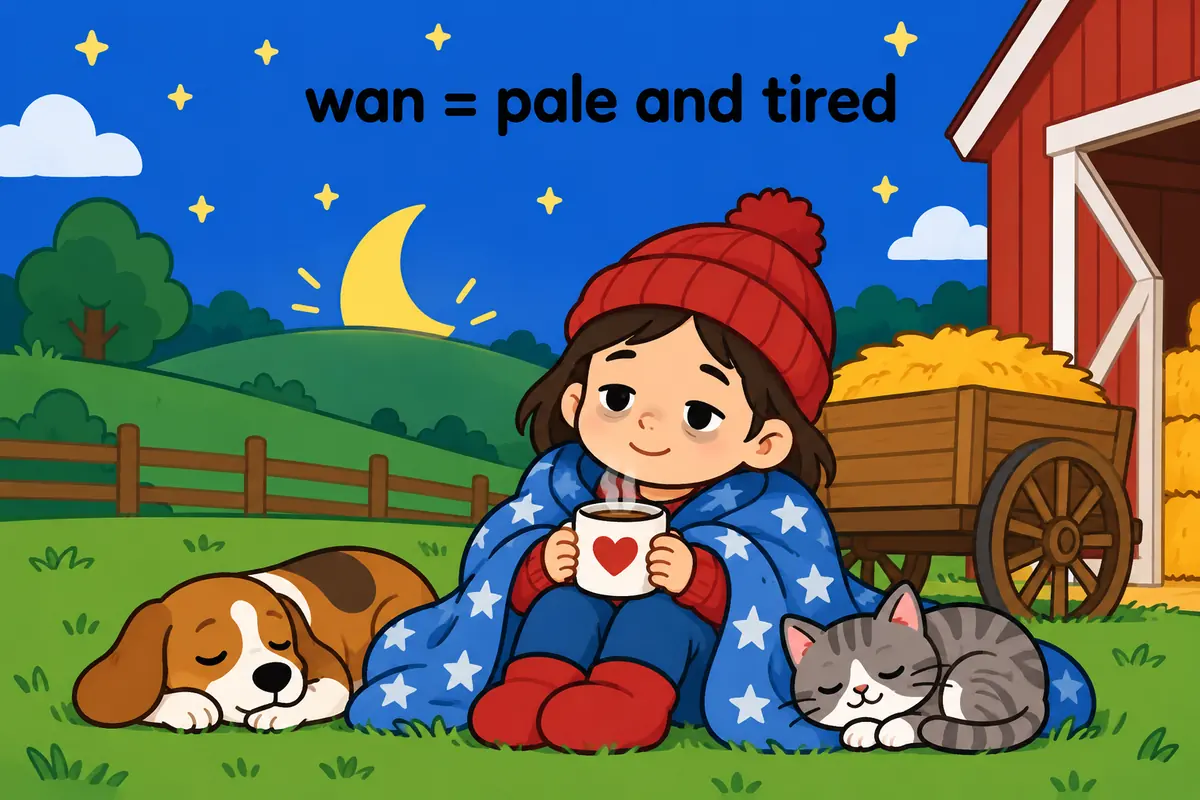
- Wan is an adjective meaning pale and tired, and it can also be a verb meaning to grow pale.
- Wane and wan are common; wain is rare and needs rural or archaic context to sound natural.
- Wane and wain are homophones, while wan has a shorter vowel in most accents.
What do wane, wain and wan mean?
Wane is a verb meaning to decrease in size, strength or importance. Wain is a noun meaning a wagon or cart, and it survives chiefly in dialect and poetry. Wan is an adjective meaning pale, weak and tired. The Cambridge entry for wane records the moon image, and the entry for wan records the pale look. The dedicated page for wane explores the verb in its own examples.
| Word | Part of speech | Plain meaning | Example sentence |
|---|---|---|---|
| wane | verb | grow smaller or weaker | Interest in the scheme waned after winter. |
| wain | noun | a farm cart or wagon | The hay was loaded onto a wooden wain. |
| wan | adjective | pale and tired | He looked wan after the long illness. |
| wan | verb, rare | grow pale | The sky wanned toward evening. |
One limitation is worth stating plainly. None of the three is a synonym for the others, so they are never interchangeable. Wane names a process, wain names a solid object, and wan describes appearance. Note too that wan is not simply pale, because it adds weakness and tiredness, and that wain is the old word for a wagon.
Because the three words are near-homophones, they fail in writing rather than in speech. A careful reader may not notice a mix-up until the sentence stops making sense, as when a moon is said to be on the wain or a cart is said to wane. The fix is always the same: name the job the word must do, then choose the spelling that does it.
Wane vs wain vs wan: the master comparison
Rather than learning three separate pages, hold the three words against the same eight tests. The column that matches your sentence is the word to use.
| Attribute | wane | wain | wan |
|---|---|---|---|
| Core meaning | become smaller or weaker | a farm cart or wagon | pale and tired |
| Part of speech | verb, also a noun as on the wane | noun | adjective, rarely a verb |
| Typical subject | moon, interest, power, daylight | hay, harvest, horses | face, complexion, light |
| Common context | news, essays, weather talk | old poems, rural history | medical notes, tired descriptions |
| Register | neutral to formal | archaic or dialectal | literary and descriptive |
| Frequency | common | rare | uncommon |
| What it is not | not a cart, not pale | not shrinking, not pale | not a decrease, not a cart |
| Memory hook | the moon wanes | a wain hauls hay | a wan face looks washed out |
| Common collocation | wax and wane, on the wane | a laden wain, wain-load | a wan smile, wan light |
| Easiest test | Is something shrinking? | Is it a vehicle? | Is a face or light pale? |
Which should you use?
Match the word to the job in front of you, because the wrong choice is always noticeable to a careful reader.
| Situation | Use | Why |
|---|---|---|
| Something is getting smaller or weaker | wane | Wane is the only one that names a decrease. |
| A cart appears in a farm or old story | wain | Wain is the noun for the vehicle. |
| A face looks pale and tired | wan | Wan is the adjective for that look. |
| You want to sound modern | wane or wan | Wain almost always sounds archaic outside rural history. |
| You are unsure between wain and wane | wagon or cart | The plain word removes the risk of the rare spelling. |
When the meaning is a steady loss of strength rather than a cycle, decline is the plain synonym for wane. The rule is simple: if the sentence needs an object you can harness to a horse, choose wain; if it needs a process that fades, choose wane; if it needs a look on a face, choose wan.
How do you use each word in a sentence?
Each word has a fixed grammatical slot, and the patterns below keep all three apart.
| Word | Pattern | Example | What it signals |
|---|---|---|---|
| wane | subject + wane | Enthusiasm waned by midsummer. | An amount or feeling shrinks over time. |
| wane | be on the wane | Ticket sales are on the wane. | A set phrase for something declining. |
| wain | article + wain | A wain stood by the barn. | A countable, physical object. |
| wan | be or look + wan | She looked wan in the photograph. | A lasting or temporary appearance. |
| wan | wan + noun | A wan light filled the room. | Direct description of colour or mood. |
Two small tests catch nearly every error. First, ask whether the word must change over time; only wane does. Second, ask whether the word can take an article or a plural; only wain does, because it is a thing. Wan answers a third question, what something looks like, and it can never take an article on its own.
Wane, wain and wan in a sentence: examples across contexts
The nine sentences below show how differently the three words behave once a real setting is added.
| Context | Example sentence | Why this works |
|---|---|---|
| Classroom | Attention waned once the bell had rung. | An abstract noun shows the decrease. |
| Weather report | Daylight wanes quickly after the equinox. | The subject is natural and measurable. |
| Farm history essay | A loaded wain creaked down the lane at dusk. | The noun needs an article and a real load. |
| Poetry | Her wan face caught the last of the light. | The adjective before a noun paints the mood. |
| News report | Public support for the plan is on the wane. | The fixed phrase suits formal reporting. |
| Medical note | The patient appeared wan but alert. | The adjective keeps its tired, pale sense. |
| Conversation | My enthusiasm waned after the third meeting. | The first person is fine with an abstract subject. |
| Historical novel | Two wains crossed the field before the rain. | The plural noun places the reader in the past. |
| Sports commentary | The team’s lead waned in the final minutes. | A concrete quantity makes the wane visible. |
| Business memo | Supplies dwindle as the season drags on. | A close synonym shows the same downward sense. |
| Nature writing | Shadows waned as the sun climbed. | Uses wane for a gradual physical change. |
| Farm museum label | A restored wain stands beside the plough. | Places the rare noun in its proper setting. |
| Hospital drama | A wan face turned toward the window. | Keeps wan in literary description. |
Only three rows use fact rather than feeling: the weather, the farm and the sports report. Those are the settings where the words sound most at home.
Word forms and grammar of wane, wain and wan
The three words inflect in different ways, and the forms below show the shapes a reader actually meets. The moon waxes and wanes, which is where the verb keeps its strongest image.
| Form | Part of speech | Example |
|---|---|---|
| wane | verb, base form | Profits wane in winter. |
| wanes | verb, third person singular | The daylight wanes early. |
| waned | verb, past | His patience waned at last. |
| waning | verb participle and adjective | The waning moon hung low. |
| wain | noun, singular | The wain creaked down the lane. |
| wains | noun, plural | Two wains crossed the field. |
| wan | adjective | A wan smile crossed her face. |
| wanner, wannest | comparative and superlative | He grew wanner each week. |
Note that wane is regular but wan doubles its final n in the comparative, giving wanner and wannest.
Common mistakes with wane, wain and wan
- Incorrect:
Interest in the club is on the wain.Correct: Interest in the club is on the wane. Rule: The fixed phrase uses wane; wain is a cart. - Incorrect:
She looked wain after the fever.Correct: She looked wan after the fever. Rule: The adjective for pale is wan, spelled with one n. - Incorrect:
The farmer loaded the wane with hay.Correct: The farmer loaded the wain with hay. Rule: The vehicle is the wain. - Incorrect:
Interest wanned in the spring.Correct: Interest waned in the spring. Rule: The verb for shrinking is wane, not wan. - Incorrect:
The moon is on the wan.Correct: The moon is on the wane. Rule: On the wane is the fixed phrase for decline.
Practice using wane, wain and wan
Work through the six items, then check the reasoning rather than only the key.
- Fill the gap: Without rain, the river levels ______ through summer.
- Choose the better word: The hay was piled on an old wooden (wane / wain).
- Correct the error: He looked wain and tired after the night shift.
- Build a sentence: use on the wane about a fashion.
- Spot the register: which fits a poem — her wan face in the lamplight, or her wan face looked really bad?
- Rewrite with the verb: The moon grows smaller each night. Use wane.
- Choose the better word: The patient looked (wain / wan) after the operation.
- Correct the error: The harvest was carried home on a creaking wane.
Answers
- wane — the levels are shrinking, which is the verb wane.
- wain — the cart takes an article as a countable noun.
- He looked wan and tired — the adjective for pale has one n.
- Model answer: Vinyl records were on the wane until collectors returned.
- Her wan face in the lamplight — a poem keeps the descriptive adjective and drops the slang.
- The moon wanes each night — wane is the verb that names the decrease.
- wan — the adjective for a pale, tired look has one n.
- The harvest was carried home on a creaking wain — the cart is the wain.
The bottom line
Choose wane for a decrease, wain for a cart and wan for a pale look, and the whole wane vs wain vs wan question resolves itself. Two points settle the hardest cases: wain is the rare member that sounds archaic outside rural writing, and wan is the only one that describes appearance rather than decline.
Frequently asked questions about wane, wain and wan
Are wane and wain pronounced the same?
Yes. Wane and wain are homophones, both pronounced to rhyme with rain. Wan is different, with a shorter vowel that rhymes with con in most accents. That single sound difference is why wan rarely causes a spelling mix-up, while wane and wain are constantly confused in writing.
Is wain still used today?
Wain survives mainly in dialect, in poetry and in historical writing about farms. In ordinary modern prose the words wagon or cart have replaced it. A writer can still use wain for atmosphere, but the plain noun is safer when clarity matters more than period flavour.
Does wan mean the same as pale?
Wan is close to pale but adds weakness and tiredness. A person can be naturally pale and perfectly healthy, while a wan face suggests illness or exhaustion. Wan also appears in literary description of light, as in a wan winter sun, where it means weak rather than literally colourless.
Can wane ever be a noun?
Yes. Wane works as a noun in the fixed phrase on the wane, meaning in decline, as in the fashion is on the wane. Outside that phrase the verb dominates. The noun never means a cart, so it cannot be swapped for wain, which is a separate word.