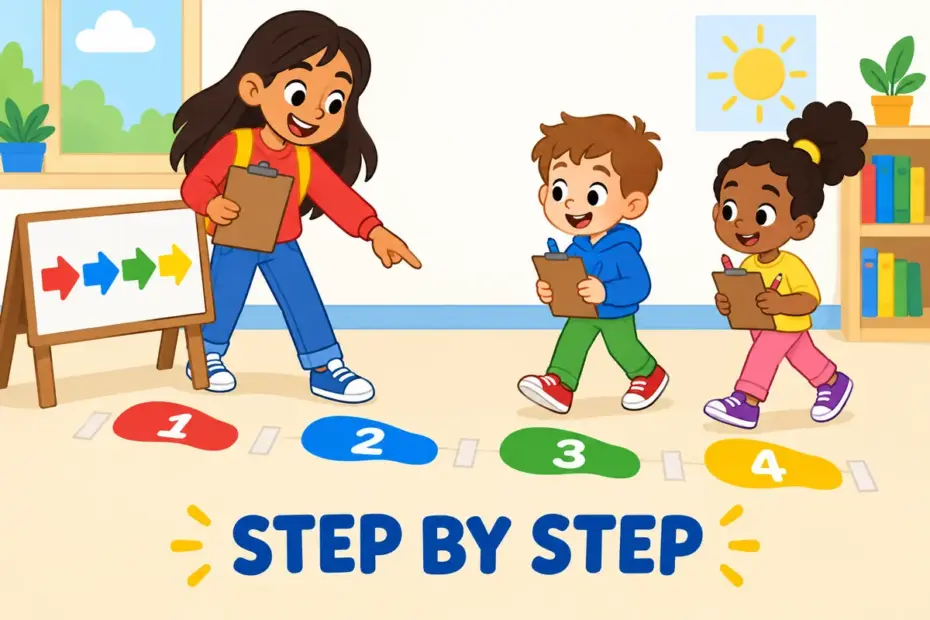
Walk through means to guide someone step by step through a task or decision. To use walk through in a sentence, name the person and the process: “Let me walk you through the report.” The phrasal verb is transitive, and the particle through can stay attached to the verb or move after the object.
Walk through at a glance
- Walk through is a transitive phrasal verb meaning to explain or rehearse something step by step.
- The particle can move: walk someone through a plan or walk a plan through.
- A second, literal sense means to walk on foot through a place.
- The noun walk-through names a rehearsal, inspection or trial run.
- The commonest error is using it for experiences that should use go through.
What does walk through mean?
Walk through is a phrasal verb meaning to guide a person through a task or to rehearse a procedure from start to finish. The Cambridge entry for walk through lists the literal sense (to walk inside a place) and the figurative sense (to explain in detail). The object can be the person, as in walk her through the plan. The verb keeps the image of a path: a guide moves a second person across a process, stage by stage.
| Sense | Plain meaning | Example sentence |
|---|---|---|
| Explain step by step | Guide someone through a task | Let me walk you through the form. |
| Rehearse | Practise a performance or procedure | The cast walked through the scene twice. |
| Cross on foot | Move through a place on foot | We walked through the empty market. |
| Noun walk-through | A rehearsal or inspection | The walk-through took twenty minutes. |
One limitation is worth stating. Walk through does not mean simply discuss; it implies order and completeness, from first step to last. A chat about a plan is not a walk-through unless the stages are followed in sequence.
How do you use walk through in a sentence?
The phrasal verb is separable, and the position of the object decides where through goes. The same base verb also appears in walk away, but with a very different particle and meaning.
| Pattern | Example | What it signals |
|---|---|---|
| walk + person + through + thing | She walked me through the budget. | The person is the object and through follows it. |
| walk + through + thing + with + person | She walked through the budget with me. | The thing is the object; the person is added. |
| walk + thing + through | She walked the budget through with the team. | The particle stands after the thing. |
| be walked through | New staff are walked through the safety rules. | Passive voice keeps the learner in focus. |
| walk through + place | They walked through the old town. | The literal, physical sense. |
Separability has one limit: when the object is a pronoun, the particle must follow it, so walk me through the steps is correct and walk through me the steps is not. The literal and figurative senses share one grammar, because in both the thing being crossed or covered comes after through.
| Common partner | Example | Note |
|---|---|---|
| walk through a plan | Let me walk you through the plan. | The task is the thing being covered. |
| walk through the steps | She walked us through the steps in order. | Sequence is part of the meaning. |
| walk through a report | He walked the board through the report. | A formal briefing use. |
| walk through a scene | The cast walked through the scene. | The rehearsal sense. |
| walk through the rules | The coach walked the team through the rules. | The teaching sense. |
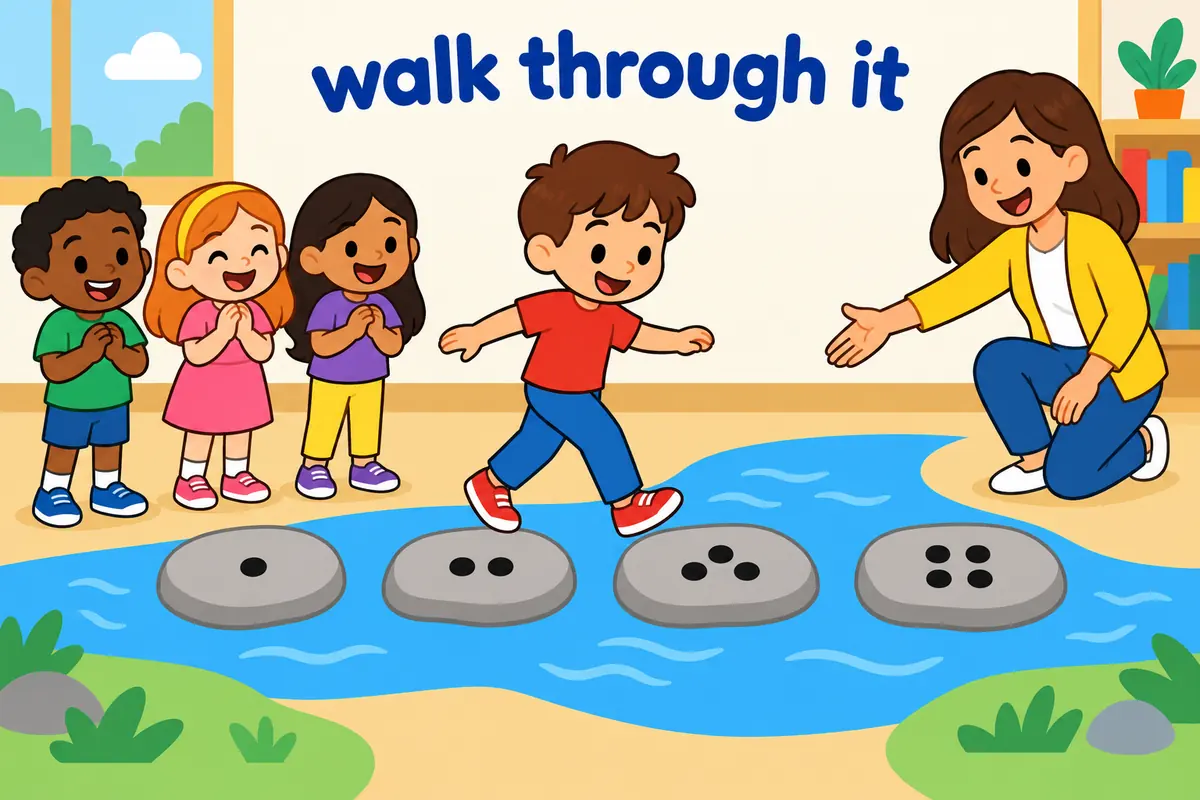
Walk through in a sentence: examples across contexts
Walk through changes meaning with its setting, from a physical stroll to a careful briefing. The nine sentences below show the same verb doing very different work.
| Context | Example sentence | Why this works |
|---|---|---|
| Classroom | The teacher walked us through the experiment before we started. | Names the guide and the procedure in order. |
| Workplace email | I will walk the team through the new timesheet tonight. | The thing is the object and through stands after it. |
| News report | Investigators walked reporters through the sequence of events. | Formal use for a methodical explanation. |
| Technical writing | Follow the guide to walk through each setup screen. | Instructional tone fits a manual. |
| Theatre | The director walked the actors through the final scene. | The rehearsal sense of the same phrase. |
| Customer service | An agent walked the caller through the reset steps. | Names the caller after the verb. |
| Conversation | Walk me through what happened yesterday. | Pronoun object keeps the particle next to it. |
| Travel diary | We walked through the quiet streets at dawn. | The literal, physical sense. |
| Business planning | The board walked the plan through before the vote. | The particle follows the thing as a separate object. |
| Medical training | The consultant walked the students through the procedure step by step. | Names the learners and the ordered process. |
| Finance | An analyst walked investors through the quarterly results. | Shows a formal briefing use of the verb. |
If a plan quietly collapses instead of being rehearsed, the phrasal verb changes to fall through, which carries failure that walk through never does.
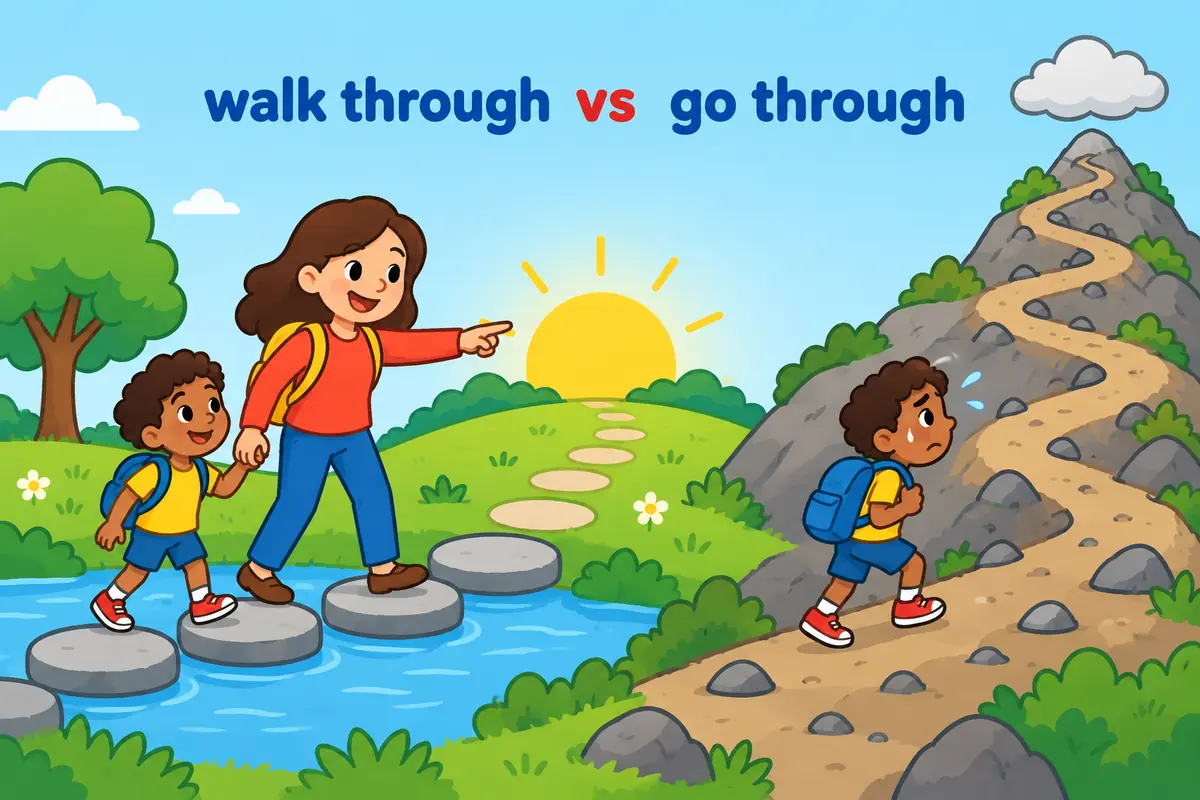
Walk through vs go through
Walk through and go through both take an object, but they report different things. Walk through means guide or rehearse; go through usually means experience something difficult or examine something item by item. A manager walks a new colleague through the system; the same colleague goes through a hard first week.
| Attribute | walk through | go through |
|---|---|---|
| Core job | guide or rehearse | experience or examine |
| Typical object | a person, a plan, a scene | a hard time, a list, a phase |
| Implies teaching | usually yes | not necessarily |
| Register | neutral, common at work | neutral to informal |
| Common error | walked through a divorce, which is wrong | went through a divorce, which is right |
Verdict: choose walk through when someone is guided or a procedure is rehearsed, and go through when something is experienced or sorted item by item. One test settles the pair: if a second person learns the process, use walk through; if the subject simply lives through it, use go through.
Word forms and grammar of walk through
The phrasal verb keeps its base verb and adds inflection to walk. The noun form is usually hyphenated, and the computing term is written as one word. In rehearsal talk, run through the scene is a close variant.
| Form | Part of speech | Example |
|---|---|---|
| walk through | phrasal verb, base | I will walk through the steps with you. |
| walked through | past and past participle | He walked us through the code. |
| walking through | present participle | She is walking the class through the plan. |
| walk-through | noun, hyphenated | The walk-through starts at nine. |
| walkthrough | noun, one word, computing | Read the walkthrough before you begin. |
The related adverb throughout covers a whole period or place, which is a useful contrast when through names a path and throughout names an extent. Completing what was promised is follow through, which is a different idea from walking someone through the task.
Common mistakes with walk through
- Incorrect:
He walked through her the plan.Correct: He walked her through the plan. Rule: Through follows the person when the person is the object. - Incorrect:
Let me through walk the agenda.Correct: Let me walk you through the agenda. Rule: The particle cannot jump before the verb. - Incorrect:
She walked through a difficult year.Correct: She went through a difficult year. Rule: Experiences use go through; walk through is for guiding or rehearsing. - Incorrect:
Can you walk me the rules through?Correct: Can you walk me through the rules? Rule: With a pronoun object the particle must follow it. - Incorrect:
The deal walked through after all.Correct: The deal fell through after all. Rule: A failed plan falls through, not walks through. - Incorrect:
She walked through the report me.Correct: She walked me through the report. Rule: The person comes straight after walk when through follows it.
Practice using walk through
Work through the six items, then check the reasoning rather than only the key.
- Fill the gap: The nurse ______ the patient through each step of the dressing.
- Choose the better word: After the illness, he (walked / went) through a long recovery.
- Correct the error: Please walk through me the timetable.
- Build a sentence: use walk + thing + through about a budget.
- Spot the register: which fits a manual — follow the guide to walk through setup, or just kind of stroll through setup?
- Rewrite with the noun: We rehearsed the whole play. Use walk-through.
Answers
- walked — the nurse guides the patient, and through follows the person.
- went — a recovery is an experience, so go through is right.
- Please walk me through the timetable — the pronoun object must come before the particle.
- Model answer: The manager walked the budget through with the finance team.
- Follow the guide to walk through setup — a manual keeps the instructional verb.
- The cast held a full walk-through of the play — the noun takes a hyphen.
The bottom line
Use walk through in a sentence to guide someone through a task or to rehearse a procedure, and keep the person next to the verb when the sentence is short. Two facts decide most cases: the particle can move but never before the object, and walk through is not a synonym for go through when the topic is a hard experience.
Frequently asked questions about walk through
Is walk through a phrasal verb?
Yes. Walk through is a phrasal verb made from the verb walk and the particle through. The particle changes the meaning from the simple act of walking to the act of guiding or rehearsing. That is why walk through a form means explain it, not stroll across it.
Can walk through be written as one word?
Only the noun is written as one word, and even then it is usually hyphenated as walk-through for a rehearsal or inspection. The computing noun is often written solid as walkthrough. The verb itself is always two words, so we walk through the plan, never walkthrough the plan.
Does walk through only mean explaining something?
No. Walk through has a literal sense of moving on foot through a place, as in we walked through the market. It also means to rehearse a procedure. The shared idea is a process followed from start to finish, whether on foot or in words.
Is walk through formal enough for business writing?
Walk through is standard in professional English and appears in training material, customer service and reports. It is neutral rather than casual, so it suits an email that tells a colleague you will walk them through the figures. Reserve the slangy strolling phrases for conversation.