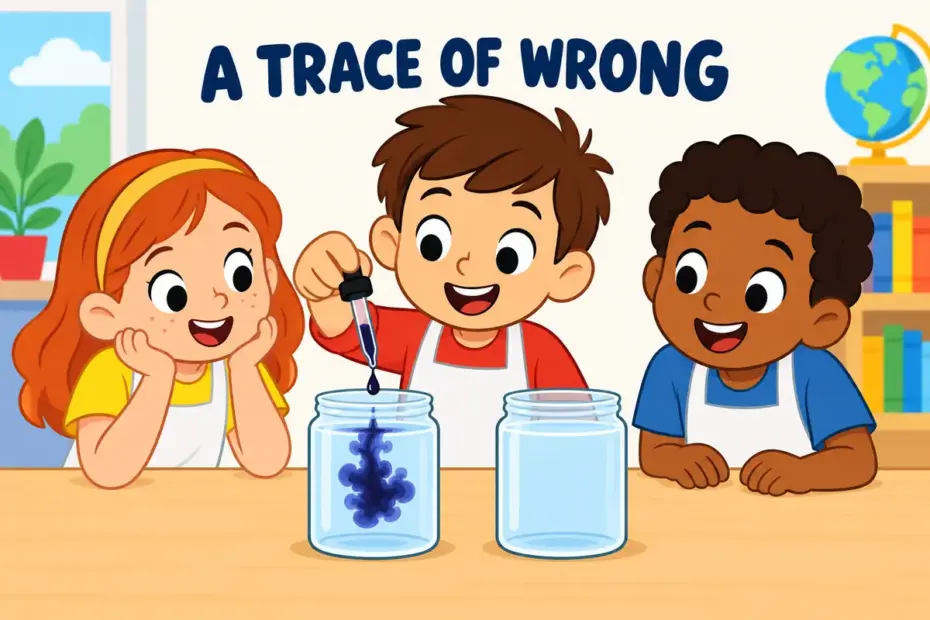
Taint is a verb meaning to contaminate something or damage its reputation, and a noun meaning a trace of something bad that clings to a person or thing. To use taint in a sentence, name the source of the damage and the thing it spoils: a single payment can taint an otherwise clean record.
Taint at a glance
- Taint is both a verb and a noun; its verb forms are taints, tainted and tainting.
- As a verb it is transitive, so it always takes an object: delays taint a launch, a scandal taints a career.
- As a noun it almost always appears in the pattern a taint of, naming the unwelcome trace.
- The passive is the natural voice in reports: the inquiry was tainted by leaked evidence.
- The commonest error is using taint for outright destruction, when it means to leave a trace of something wrong.
What does taint mean?
Taint is a verb meaning to contaminate something or to damage its reputation, and a noun meaning a trace of something bad that clings to a person, a thing or a process. The Cambridge entry for taint records both the verb and the noun, and the split matters: the verb reports an act, the noun reports the residue left behind. Where the harm is purely physical and measurable, contaminate a supply is the sharper verb, because taint also carries the figurative sense of damaged trust.
| Sense | Plain meaning | Example sentence |
|---|---|---|
| Verb: contaminate | Make something impure or unsafe | Chemicals tainted the reservoir. |
| Verb: damage reputation | Attach lasting doubt to a person or process | One late payment tainted his record. |
| Noun: unwanted trace | A small amount of something bad | There was a taint of bias in the ruling. |
One limitation is worth stating plainly. Taint does not mean destroy, and it does not mean prove guilty. It reports a trace of something wrong attached to a thing that otherwise continues to exist, so a tainted process can still yield a valid result and a tainted reputation is not the same as a conviction. A supply can be tainted and still function, and a reputation can be tainted without any charge being brought.
How do you use taint in a sentence?
Taint keeps the ordinary transitive shape, so the thing tainted follows the verb directly with no preposition in between. Physical contamination and reputation damage share this frame, and the object alone tells a reader which sense you intend. The passive is common in reports because it keeps attention on the damaged thing rather than on whoever caused the damage.
| Pattern | Example | What it signals |
|---|---|---|
| taint + object (physical) | Bacteria tainted the water supply. | The object is a substance or supply made impure. |
| taint + object (reputation) | The rumour tainted the whole committee. | The object is a person, group or process. |
| be tainted by + cause | The trial was tainted by the disclosure. | Passive; the cause of the damage is named with by. |
| be tainted with + quality | The deal was tainted with suspicion. | A quieter passive naming the quality that clings. |
| a taint of + noun | A taint of scandal hung over the award. | The noun pattern, almost always with of. |
Because the verb is transitive, it passivises freely, and the cause of the damage is then introduced with by or with. The practitioner point is that taint nearly always needs a source: readers expect the sentence to say what did the damage, whether that is a chemical, a rumour or a leaked file. If the sentence names nothing that caused the harm, a reader waits for the missing detail.

Taint in a sentence: examples across contexts
Taint changes its target more than its grammar. The eleven sentences below keep the same verb and noun while moving from a laboratory to a tribunal, and each one names the trace that does the damage.
| Context | Example sentence | Why this works |
|---|---|---|
| Classroom | A single copied paragraph tainted an otherwise honest essay. | The damage attaches to a whole piece of work. |
| Workplace email | Late invoices have tainted our record with the supplier. | Names reputation as the object in a formal setting. |
| News report | The inquiry found that leaked files had tainted the tendering process. | Keeps the damaged process as the subject of a report. |
| Legal writing | The court held that the confession was tainted by the earlier questioning. | Ties the verb to admissibility rather than guilt. |
| Science writing | Bacteria from the pipe tainted the samples beyond use. | Physical contamination with a measurable outcome. |
| Food safety | A damaged seal tainted the whole batch of juice. | The object is a supply made unsafe. |
| Sports commentary | One doping case tainted a decade of results. | Reputation damage on a large scale. |
| Academic prose | Funding from the sponsor tainted the study in the eyes of reviewers. | Shows perceived, not proven, damage. |
| Conversation | I would not let one mistake taint the whole trip. | Everyday figurative use with a person as subject. |
| History essay | The treaty was tainted by the way it had been negotiated. | Passive names the cause with by. |
| Literary description | A faint taint of smoke clung to the curtains. | The noun pattern with a sensory trace. |
Notice how often the passive appears. Reports prefer it because the damaged process stays in the subject position, which is exactly what a reader of a news item wants to find first. The active voice suits a sentence that wants to blame whoever or whatever caused the trace.
Taint vs tarnish, stain and besmirch
Taint overlaps with three words for damage and is interchangeable with none of them. tarnish a name suggests a lost shine, stain a record suggests a visible mark, and besmirch a reputation suggests a deliberate smear.
| Attribute | taint | tarnish | stain | besmirch |
|---|---|---|---|---|
| Core job | Leave a trace of something wrong | Dull a shine or a name | Leave a visible mark | Attack a reputation |
| Usual target | Reputation, purity, a process | Metal or a good name | Fabric, surfaces, a record | A person or their name |
| Physical or figurative | Both | Mostly figurative for people | Mostly physical | Figurative only |
| Register | Neutral to formal | Neutral | Neutral | Formal and literary |
| What it implies | Contamination that clings | Loss of former brightness | A mark anyone can see | A deliberate smear |
Verdict: choose taint when something leaves a lasting trace of wrongness, tarnish when a shine or a good name is dulled, stain when a mark is visible, and besmirch when the attack on a reputation is deliberate and personal.
Word forms and grammar of taint
Taint is regular in both its jobs, and the participle doubles as an adjective. The table also lists the form learners build by mistake, the plain noun taint used without the pattern a taint of.
| Form | Part of speech | Example |
|---|---|---|
| taint | base verb | Careless handling can taint the sample. |
| taints | third person singular | A single donor taints the whole batch. |
| tainted | past and past participle | The evidence was tainted from the start. |
| tainting | present participle | Delays risk tainting the process. |
| taint | noun | The ruling carried a taint of bias. |
| tainted | participial adjective | Tainted food was recalled at once. |
Two small consequences follow. Because the participle can act as an adjective, a tainted supply is a settled description rather than an action, and because the noun needs a following phrase, a bare taint usually sounds unfinished. A careful writer keeps the two jobs apart and never lets the noun stand alone.
Common mistakes with taint
- Incorrect:
Careless handling tainted onto the samples.Correct: Careless handling tainted the samples. Rule: Taint is transitive, so no preposition stands before the object. - Incorrect:
The water was taint.Correct: The water was tainted. Rule: Use the participle to describe a state, not the base form. - Incorrect:
A poor referee can taint a match.Correct: A poor referee can mar a match. Rule: Taint adds a trace of wrongness; mar means to spoil the quality, and only the second fits an uneven performance. - Incorrect:
The size of the task tainted the new volunteers.Correct: The size of the task daunted the new volunteers. Rule: Daunt means to discourage or intimidate, and it looks close to taint but shares no meaning. - Incorrect:
Her taint agreement surprised me.Correct: Her tacit agreement surprised me. Rule: Tacit means understood without being spoken; the two words differ by two letters and nothing else. - Incorrect:
The metal tainted in the damp.Correct: The metal tarnished in the damp. Rule: Metal tarnishes; use taint for contamination and reputation.
Practice using taint
Work through the six items, then check the reasoning rather than only the answer.
- Fill the gap: One careless remark ______ the whole celebration.
- Choose the better word: Salt water had (tainted / tarnished) the metal railing.
- Correct the error: The scandal tainted against the mayor.
- Build a sentence: use be tainted by about an exam result after a marking error.
- Spot the register: which fits a news report — The deal was tainted by secret payments, or The deal was kinda tainted, yeah?
- Rewrite with the noun: A hint of dishonesty hung over the contest. Use taint.
Answers
- tainted — the remark damages the event, and taint takes the object directly.
- tarnished — metal tarnishes; taint is for contamination, not dulled metal.
- The scandal tainted the mayor — taint is transitive and takes no preposition.
- Model answer: The results were tainted by the marking error and had to be reissued.
- The deal was tainted by secret payments — a report keeps the neutral passive form.
- A taint of dishonesty hung over the contest — the noun pattern needs of.
The bottom line
Use taint in a sentence when something leaves a trace of wrongness on a supply, a process or a reputation, and keep the damaged thing as the object. Two facts decide most sentences: the verb is transitive, so nothing can follow it without an object, and the noun needs the pattern a taint of. For purely physical harm, contaminate is the sharper verb.
Frequently asked questions about taint
Is taint a verb or a noun?
Taint works as both. The verb means to contaminate or damage, as in the leak tainted the water, and it takes an object. The noun names the unwelcome trace, as in a taint of scandal. The verb is far more common, so learners meet the noun mostly in the phrase a taint of.
What is the difference between taint and contaminate?
Contaminate is the physical, scientific word for making something impure, and it suits water, food and samples. Taint covers that sense but adds a figurative one about reputation, as in a meeting tainted by favouritism. When the harm is measurable, contaminate is the sharper choice.
Why is it a taint of and not just a taint?
The noun rarely stands alone in modern English; it needs a following phrase to name the unwelcome thing, so you write a taint of corruption rather than a corruption taint. The pattern a taint of is fixed enough that the bare noun often sounds unfinished to a native reader.
Can taint describe a person?
Yes. A person can be tainted by association with a scandal, and the damage stays in their record rather than changing who they are. This is why a trial can be tainted by evidence without anyone being convicted, and why taint never means that a person is guilty.