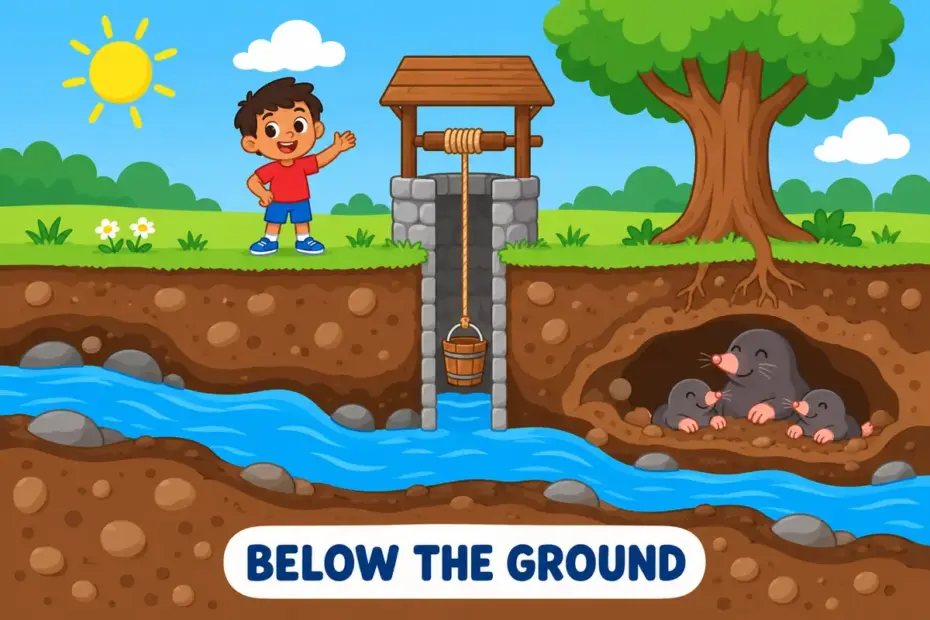
Subterranean means situated or operating below the surface of the earth, and it can also describe something hidden beneath the surface. In a sentence, the adjective sits before its noun: “A subterranean river runs beneath the city.” The word belongs to geological, literary and formal writing, while underground is the everyday equivalent.
Subterranean at a glance
- Subterranean is an adjective meaning existing, happening or operating below ground.
- It also carries a figurative sense of something hidden beneath the surface.
- The adjective sits before its noun: a subterranean lake, a subterranean passage.
- Its usual partners are river, tunnel, chamber, lake and world.
- The commonest error is using it for anything merely dark, when it names a location.
What does subterranean mean?
Subterranean is an adjective meaning situated or occurring below the surface of the earth, and by extension hidden from ordinary view. The Cambridge entry for subterranean records the physical sense, and the figurative sense follows naturally from it. Where a writer needs the plain, everyday word for the same idea, underground usually does the job.
| Sense | Plain meaning | Example sentence |
|---|---|---|
| Physical, below ground | Existing under the earth’s surface | A subterranean lake fills the limestone cave. |
| Technical, geological | Relating to what lies beneath | The survey mapped the subterranean water table. |
| Figurative, hidden | Secret and just below the surface | A subterranean murmur ran through the office. |
The figurative sense is worth watching because it grows straight out of the literal one: anything out of ordinary sight can be called subterranean, from a buried rumour to a half-admitted worry. The metaphor stays close to the ground.
One limitation is worth stating plainly. Subterranean does not mean dark, frightening or primitive, even though writers often use it that way in fiction. It names a position below the ground and nothing more, so a bright, well-lit basement is still subterranean, and a gloomy attic is not.
How do you use subterranean in a sentence?
The adjective is nearly always attributive, which is why it usually appears directly before the noun it locates. The figurative use keeps the same grammar while shifting the meaning from geography to mood. Five patterns cover the sentences learners will meet.
| Pattern | Example | What it signals |
|---|---|---|
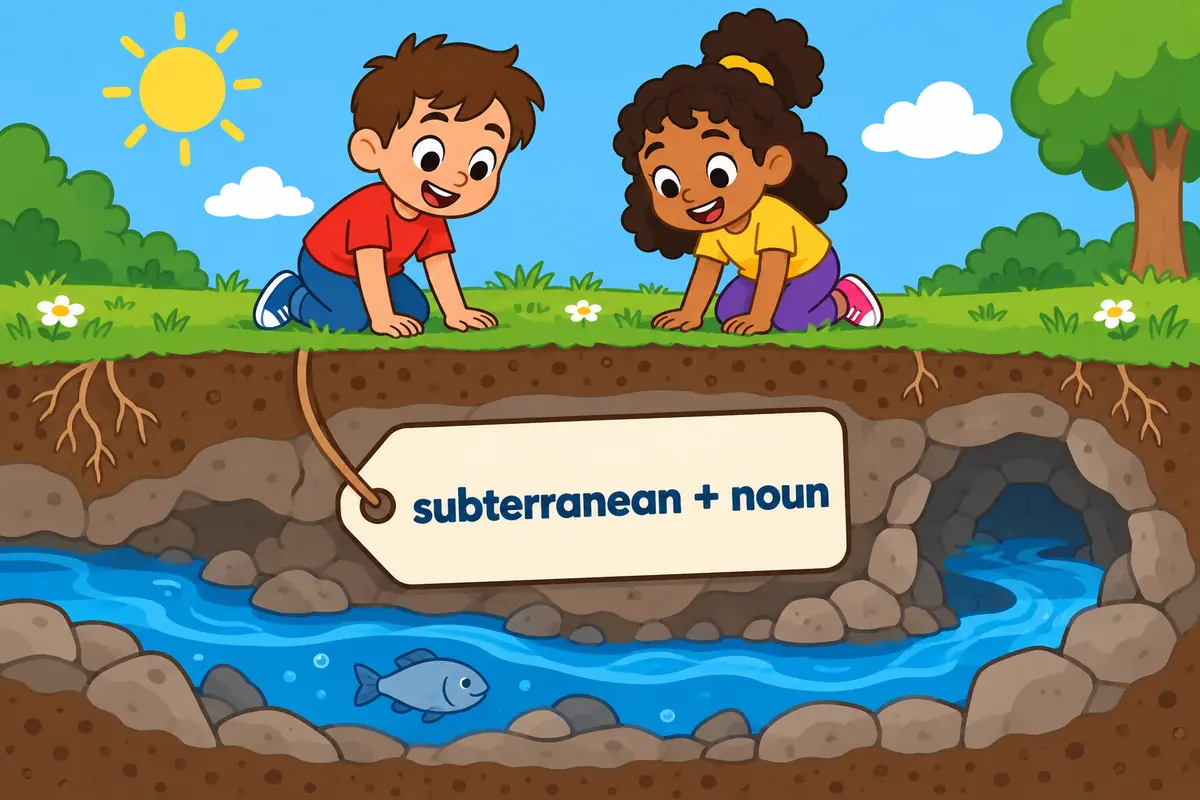
| subterranean + noun | The miners found a subterranean lake. | Attributive adjective, the commonest use by far. |
| a subterranean + noun | They followed a subterranean passage. | Countable use that introduces one specific place. |
| be + subterranean | The whole route is subterranean. | Predicative adjective describing a route or room. |
| subterranean + abstract noun | A subterranean fear gripped the village. | Figurative metaphor for something buried. |
| subterraneously + verb | The stream flows subterraneously for a mile. | Rare adverb form, confined to formal writing. |
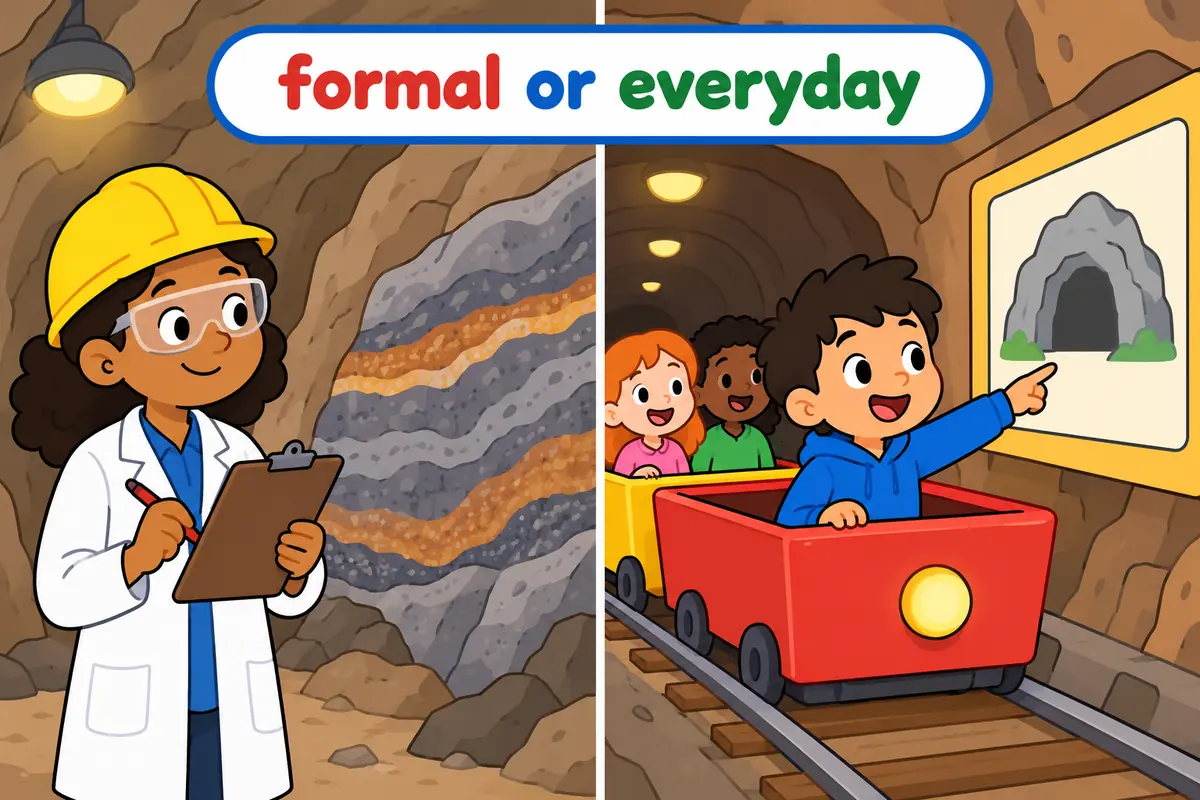
The register is what separates a good sentence from an awkward one. In a geology report the formal adjective signals precision, but in a text message to a friend the same word sounds inflated, and underground or beneath the floor does the work with far less weight.
Because the adjective names a fixed location, it rarely takes a comparative. A writer who wants to grade the depth says deeper underground or further below rather than more subterranean, which sounds forced.
Subterranean in a sentence: examples across contexts
Subterranean shifts between literal geography and literary metaphor, and the noun beside it signals which is meant. The nine sentences below range from a science lesson to a novel, and each one places the adjective carefully.
| Context | Example sentence | Why this works |
|---|---|---|
| Classroom | Our model showed how a subterranean stream feeds the well. | Anchors the word to a process children can picture. |
| Geography lesson | The cave system forms a vast subterranean network. | Uses the technical sense with a precise noun. |
| News report | Engineers found a subterranean leak beneath the main road. | Keeps the word literal and specific for readers. |
| Engineering note | Workers sealed the subterranean chamber before the pour. | Names a structure rather than an abstraction. |
| Literature | A subterranean sadness runs beneath her cheerful letters. | Uses the figurative sense with an abstract noun. |
| Archaeology | The team mapped a cavern and two subterranean tombs. | Places the adjective among exact field terms. |
| Conversation | They built a whole subterranean kitchen under the garden. | Shows the word in relaxed, concrete speech. |
| Urban planning | The plan moves the cables into a subterranean duct. | Applies the word to infrastructure. |
| Mining report | The crew struck a subterranean seam two hundred metres down. | Uses the word for a resource rather than a space. |
| Medical imaging | The scan revealed a small subterranean pocket of fluid. | Extends the adjective to a hidden space inside the body. |
| Science fiction | The settlers farmed a sunken subterranean world. | Uses the word to build a setting. |
Notice how often the sentence pairs the adjective with a word that names a place, a lake, a chamber, a tomb. The figurative rows keep the same structure, which is why the metaphor reads so easily.
Subterranean vs underground
Subterranean and underground overlap almost completely, so the choice is one of register and precision rather than meaning. The related adjectives hidden and concealed cover the figurative sense, while surface marks the opposite.
| Attribute | subterranean | underground |
|---|---|---|
| Core meaning | Below the earth’s surface | Below the earth’s surface |
| Part of speech | Adjective, rarely a noun | Adjective, adverb and noun |
| Register | Formal, geological and literary | Everyday and neutral |
| Extra senses | Mostly figurative secrecy | A railway, or a secret movement |
| Typical noun | lake, river, chamber, world | car park, train, cable, press |
| Tone | Scientific or atmospheric | Practical and plain |
Verdict: choose subterranean for a formal or literary description of what lies beneath the ground, and choose underground for ordinary writing, for transport, and for the political noun that subterranean cannot supply. The clearest test is to swap the two words: if the sentence still needs the term to mean a railway or a resistance movement, only underground will do.
Word forms and grammar of subterranean
Subterranean is stable and adds no endings, which is why its rare noun and adverb forms catch learners out. The word shares a root with subterfuge, but the two mean different things. The table also lists the everyday synonym that most speakers reach for.
| Form | Part of speech | Example |
|---|---|---|
| subterranean | adjective | The survey found a subterranean river. |
| a subterranean | noun, rare | Early writers called moles subterraneans. |
| subterraneously | adverb, rare | The river runs subterraneously for a mile. |
| subterfuge | noun, different meaning | His subterfuge fooled nobody. |
| underground | adjective, everyday synonym | The underground cables need replacing. |
Keep the adjective invariable: subterranean lakes and subterranean rivers, with no ending either way. Apart from the rare adverb, the word never changes shape, so a single form fills every grammatical slot a writer needs. The noun form is rare enough that a learner is usually safer writing the adjective with a concrete noun.
Common mistakes with subterranean
- Incorrect:
The subway is subterranean to the whole city.Correct: The subway is underground throughout the city. Rule: Underground is the natural word for transport; subterranean is formal and descriptive. - Incorrect:
They mapped a subterrainian lake.Correct: They mapped a subterranean lake. Rule: The word ends in -anean, from the Latin for beneath the earth. - Incorrect:
The cellar is very subterranean.Correct: The cellar is entirely below ground. Rule: Subterranean names a fixed location, so grading it with very sounds forced. - Incorrect:
He won the contract by subterranean means.Correct: He won the contract by subterfuge. Rule: Subterranean describes place; subterfuge means a trick or deception. - Incorrect:
A subterranean lived beneath the hill.Correct: Animals lived in a subterranean burrow beneath the hill. Rule: The noun use is rare and dated, so keep the adjective before a noun. - Incorrect:
The story has a subterranean and gloomy mood.Correct: The story has a dark, brooding mood. Rule: Subterranean locates something below the surface, so it cannot simply stand in for gloomy.
Practice using subterranean
Work through the six items, then read the reasoning rather than only the answers.
- Fill the gap: The engineers discovered a ______ river beneath the new runway.
- Choose the better word: Passengers took the (subterranean / underground) train across the city.
- Correct the error: The cave held a subterranean of great size.
- Build a sentence: use subterranean + noun about a hidden lake in a cave.
- Spot the register: which belongs in a geology report — the survey mapped the subterranean water table, or there is a hidden stream under there?
- Rewrite with the everyday synonym: The bunker is subterranean. Use underground.
Answers
- subterranean — the adjective locates the river below the surface.
- underground — transport takes the everyday word, not the formal one.
- The cave held a subterranean lake is the natural fix — the noun use is rare, so add the noun it describes.
- Model answer: Divers found a subterranean lake deep inside the cave.
- The survey mapped the subterranean water table — a technical report prefers the precise formal adjective.
- The bunker is underground — only the everyday synonym changes.
The bottom line
Use subterranean in a sentence to describe something that lies or happens below the earth’s surface, and extend it carefully to mean hidden rather than merely dark. The two nuances that decide most sentences are these: the word is a formal adjective that sits before a concrete noun, and it overlaps with underground in geography but not in transport or politics. Reach for the plain synonym when the register is everyday.
Frequently asked questions about subterranean
Is subterranean a noun or an adjective?
Subterranean is chiefly an adjective, as in a subterranean river or a subterranean chamber. A rare noun form exists, meaning a creature or place that lives below ground, but it is dated and unfamiliar to most readers. Learners should treat the word as an adjective and always give it a noun to describe.
What is an example of something subterranean?
A cave lake, a subway tunnel, a buried cable and a river that runs beneath a city are all subterranean. The word applies to anything positioned below the earth’s surface, whether natural or built, and it can also describe an emotion or rumour that stays hidden just beneath the surface.
Can subterranean mean secret or hidden?
Yes, subterranean has a figurative sense of something hidden just below the surface, as in a subterranean fear or a subterranean rivalry. The metaphor works because the physical word already means below the surface. In formal writing the literal sense is more common, so the figurative use gets its force from context.
What is the difference between subterranean and subterfuge?
Subterranean describes a place below the ground, while subterfuge means a trick or deception used to avoid blame. The two share a Latin root meaning beneath, which is why they look alike, but their meanings never overlap. Use subterranean for location and subterfuge for dishonest behaviour.