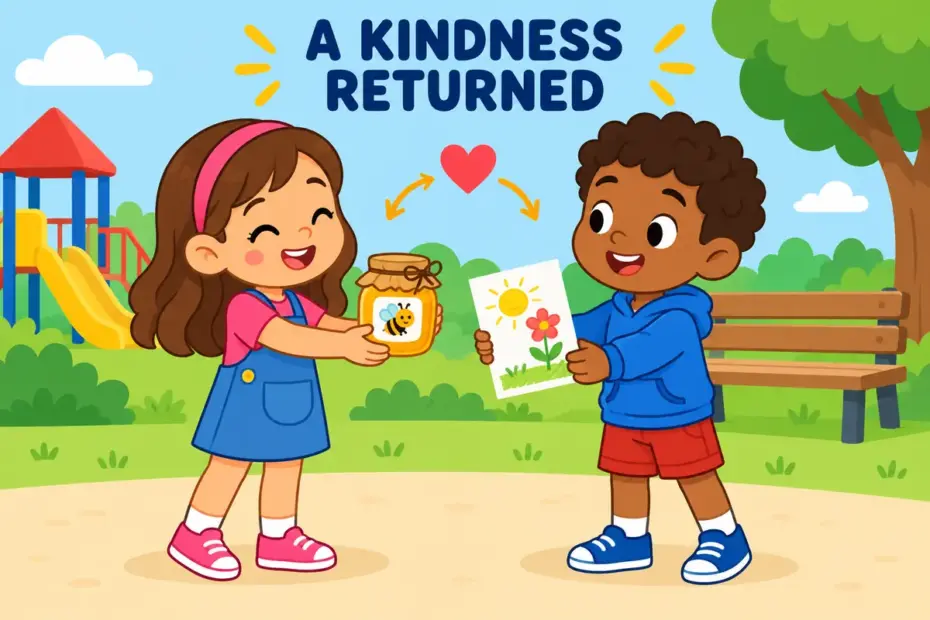
Requite means to return something to somebody, whether a kindness, a favour or a wrong. To use requite in a sentence, name what is returned and who receives it: “She requited his help with a small gift.” The verb is transitive and belongs to formal or literary writing rather than everyday speech.
Requite at a glance
- Requite is a transitive verb; its forms are requites, requited, requiting and the noun requital.
- The word carries three senses: repaying kindness, returning love, and avenging a wrong.
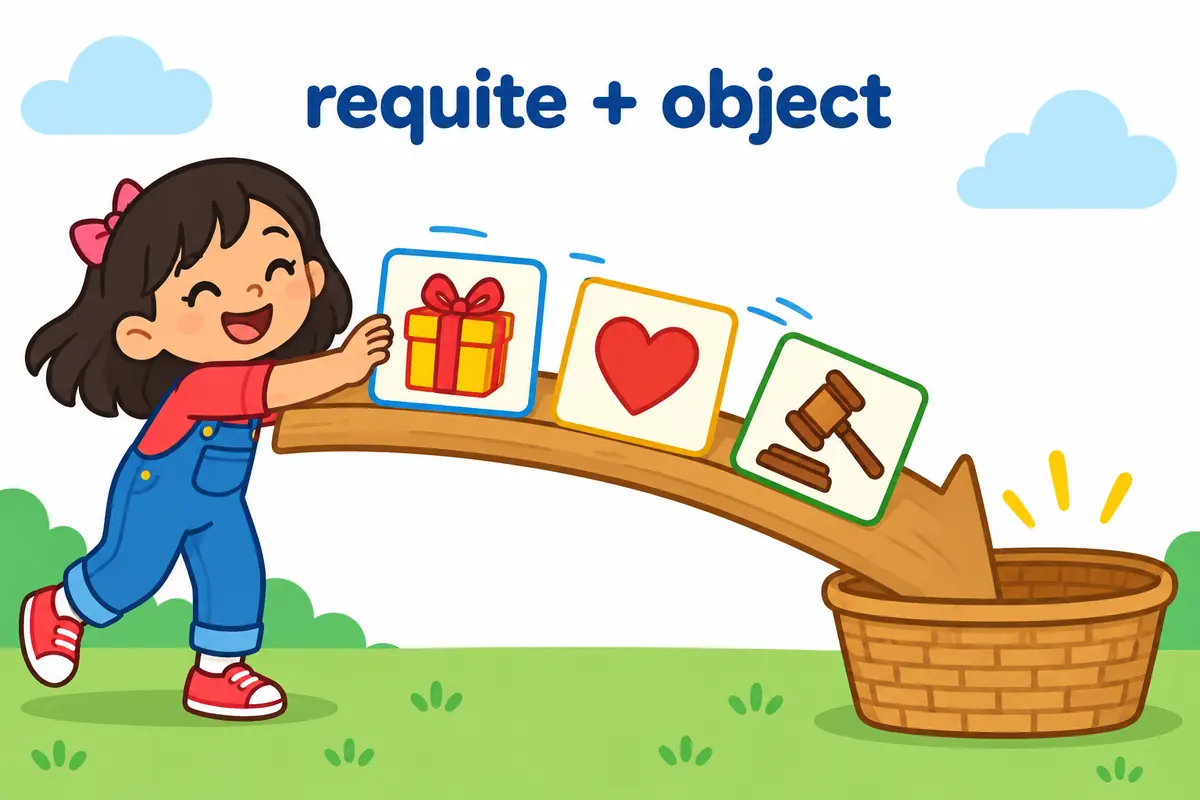
- The dominant grammatical pattern is requite + something + with + something.
- Requite survives today mainly inside the fixed adjective unrequited, as in unrequited love.
- Requite is pronounced /rɪˈkwaɪt/, so it rhymes with despite rather than with requisite.
- The commonest error is treating requite as a synonym for require or for refute.
What does requite mean?
Requite is a transitive verb meaning to return something to somebody, either a benefit or an injury. The Cambridge entry for requite records both directions, and the split matters: one sense repays kindness, the other answers harm. Because the word assumes that somebody first owe a debt of gratitude or blame, it rarely fits a transaction where nothing was owed.
| Sense | Plain meaning | Example sentence |
|---|---|---|
| Repay a benefit | Give something back for a kindness received | She requited their hospitality with a thank-you dinner. |
| Return love | Love somebody who loves you | He loved her for years, but she never requited it. |
| Answer a wrong | Pay somebody back for an injury | The family requited the insult through the courts. |
One honest limitation is worth stating. Requite is now rare outside literature and set phrases, and using it for a small everyday exchange sounds theatrical. Where you simply mean give back or return, those plainer verbs serve better; reserve requite for love, debts of honour and old-fashioned vengeance.
How do you use requite in a sentence?
Put the giver of the return first and the recipient second: subject + requite + object + for or with. Five patterns cover almost every real sentence, and the passive appears whenever the person who owes the return should stay out of focus.
| Pattern | Example | What it signals |
|---|---|---|
| requite + object + with + noun | They requited the gift with a handwritten note. | The return is something concrete you can name. |
| requite + object + for + noun | She requited him for years of quiet support. | The return answers a debt that was owed. |
| requite + somebody’s love | At last he requited her love. | The romantic sense, the one still recognised today. |
| be requited | Her devotion was never requited. | Passive voice, used when the feeling matters more than the person. |
| unrequited + noun | He wrote songs about unrequited love. | The surviving fixed use, an adjective before a noun. |
Writers who want plain reciprocity should reach for reciprocate a gesture instead, because requite adds a faint note of debt and formality that a business email cannot carry.
Requite in a sentence: examples across contexts
Requite changes register more than it changes meaning. The ten sentences below keep the same verb while moving from a playground to a legal brief, and each one names the return taking place.
| Context | Example sentence | Why this works |
|---|---|---|
| Classroom | Maya requited her partner’s help with half of her sandwich. | A concrete object makes the return easy to picture. |
| Workplace email | The team requited the client’s patience with an early delivery. | Names both sides of a professional exchange. |
| News report | The volunteers were requited for their work with a civic award. | Passive voice keeps the honour in focus. |
| Literary criticism | The novel follows a love that is offered but never requited. | Uses the passive for the romantic sense. |
| Poetry | He requited silence with a song. | Balances two abstract nouns, which suits verse. |
| Legal writing | The tribunal requited the wrongful dismissal with compensation. | Applies the answer-a-wrong sense formally. |
| History essay | The crown requited the rebellion with lands and titles. | Shows the repay-a-benefit sense at scale. |
| Conversation | I never requited what my grandmother did for me. | The first person is rare, so it reads as confession. |
| Academic prose | No study has shown that favours are requited evenly over time. | Keeps the claim impersonal with a passive. |
| Song review | The chorus requites a broken promise with a shrug. | Pairs an abstract injury with a light response. |
| Medical note | The clinic requited the unpaid hours with extra leave. | Shows an institution settling a debt to its staff. |
| Business column | Investors requited the founder’s candour with patience. | Pairs an abstract quality with an abstract return. |
Notice how few of these sentences use the first person. That scarcity is the clearest sign that requite lives in narration, not in speech. Three of the sentences are passive as well, because a writer who names the return first keeps the person who owed it in the background.
Requite vs reciprocate
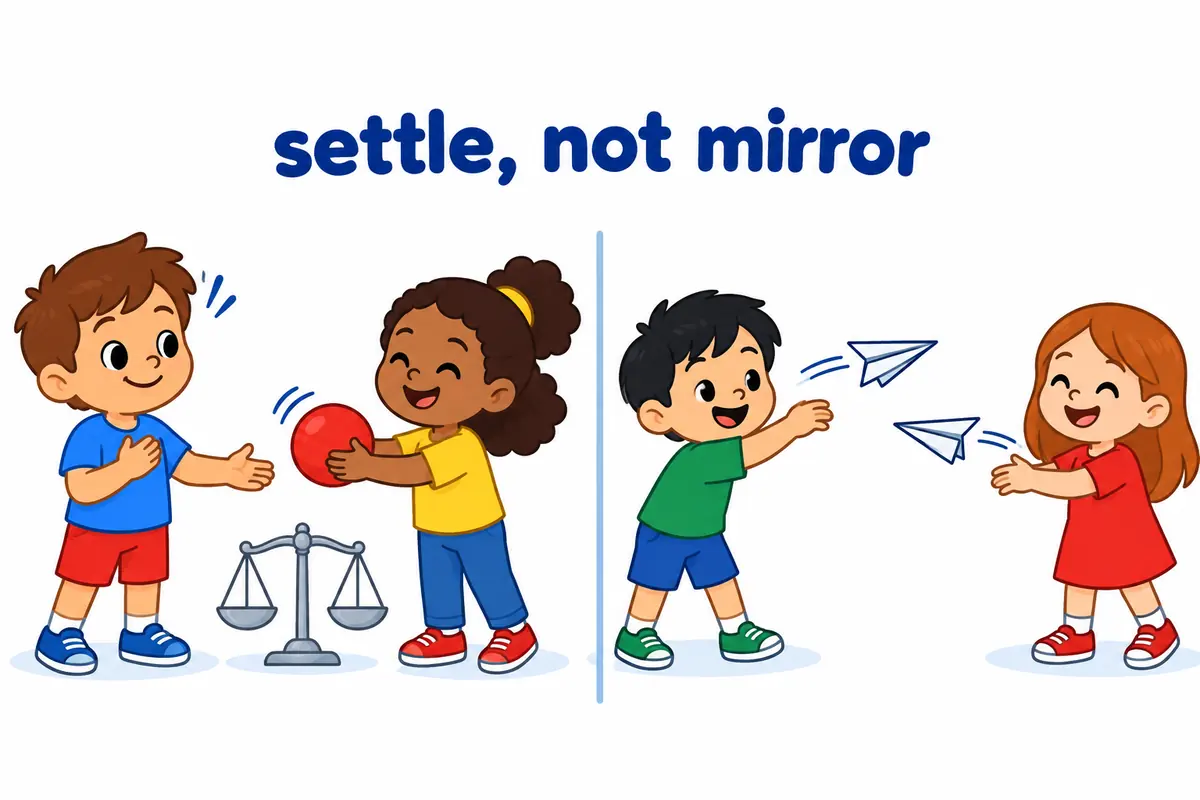
Requite and reciprocate both describe a return, and neither substitutes cleanly for the other. Match a gesture is what reciprocate means; requite means to settle what is owed, whether that is love, a kindness or a wrong. The darker sense sits closest to avenge an insult, which is retaliation rather than gratitude.
| Attribute | requite | reciprocate |
|---|---|---|
| Core job | Return what is owed, good or bad | Match an action with a similar one |
| Direction | One-sided debt is settled | Two parties mirror each other |
| Typical object | Love, a favour, a wrong | A gesture, a feeling, a smile |
| Register | Literary and archaic | Neutral and current |
| Survives in | unrequited love | everyday speech and business writing |
Verdict: choose reciprocate when two people mirror each other in ordinary life, and requite only when you want the older, heavier sense of a debt or an injury being paid. The two also differ in what they assume about fairness: reciprocate expects a rough balance between equals, while requite assumes a one-sided debt that one party must settle.
Word forms and grammar of requite
Requite inflects regularly, and its noun requital is rarer still. The table also lists the forms learners build by mistake, which are not standard English.
| Form | Part of speech | Example |
|---|---|---|
| requite | verb, base form | She hopes to requite the debt one day. |
| requites | verb, third person singular | He requites every kindness twice over. |
| requited | verb, past and past participle | Their loyalty was finally requited. |
| requiting | verb, present participle | Requiting a wrong with patience is difficult. |
| requital | noun | The requital came years later. |
| unrequited | adjective | Unrequited love is the word’s only common home. |
| requitement | non-standard noun | Use requital instead. |
Keep refute a claim well away from this word: it means to prove a statement false, and its closeness in spelling is the commonest trap. Because the noun is so rare, most editors simply rewrite the sentence around the verb instead of forcing requital into a line.
Common mistakes with requite
- Incorrect:
Please requite a passport for your trip.Correct: Please require a passport for your trip. Rule: Requite means repay; require means need. The two share no meaning. - Incorrect:
She requited with a gift.Correct: She requited his kindness with a gift. Rule: Requite is transitive, so the thing being repaid cannot be dropped. - Incorrect:
The lawyer requited that the claim was false.Correct: The lawyer refuted the claim. Rule: Requite takes a noun object, never a that-clause; refute is the verb for disproving a claim. - Incorrect:
He was requited to pay the fine.Correct: He was required to pay the fine. Rule: Passive requite needs a benefit or injury, not an obligation, which is what required expresses.
Practice using requite
Work through the six items, then read the reasoning rather than only the answer.
- Fill the gap: The neighbours ______ her help with a basket of fruit.
- Choose the better word: After the apology, the two old friends finally (requited / reciprocated) the gesture with a handshake.
- Correct the error: The report requited that the bridge was unsafe.
- Build a sentence: use be requited about a kind act that was never returned.
- Spot the register: which belongs in a novel — her love was never requited, or she never got paid back?
- Rewrite with the noun: He requited the favour at last. Use requital instead.
- Fix the sense: She requited the insult with flowers. Make the return match the object.
Answers
- requited — the fruit is the return, and her help is the object it settles.
- reciprocated — two friends mirroring a gesture suit reciprocate, not the literary requite.
- The report showed that the bridge was unsafe — requite cannot take a that-clause.
- Model answer: Her kindness was never requited, though she asked for nothing back.
- Her love was never requited — a novel wants the literary form, not the plain paraphrase.
- The favour received its requital at last — the noun requital needs a determiner.
- She answered the insult with kindness — an insult calls for an answering wrong or for a deliberate note that the return is generous, not a bare mismatch.
The bottom line
Use requite in a sentence when something is owed and then returned, whether that is a kindness, a love or a wrong, and name the object that receives the return. Two nuances decide most sentences: the verb is transitive, so the debt must always be stated, and its tone is literary, so plain options such as reward good work or recompense a loss read better in ordinary writing.
Frequently asked questions about requite
Is requite still used today?
Requite survives mostly in the adjective unrequited, as in unrequited love, and in older literature. A modern speaker who wants to talk about returning a favour will nearly always say pay back or return instead. Using the verb requite in conversation sounds deliberately old-fashioned rather than wrong.
What is the difference between requite and reciprocate?
Requite settles something owed, which may be a kindness, a love or a wrong. Reciprocate means to match another person’s action with a similar one, so both sides behave alike. A favour can be reciprocated and never requited, and a love can be requited without any matching gesture.
Does requite have a noun form?
Yes. The noun is requital, meaning the act of returning or repaying something, and it is even rarer than the verb. It takes a determiner, as in the requital they had long awaited. The adjective unrequited is far more common than either, and it describes a feeling that is never returned.
Can requite mean revenge?
Yes, one sense of requite means to answer a wrong or an injury, which is close to avenge. The word covers both good and bad returns, so context decides. The family requited the insult suggests retaliation, while she requited his kindness suggests gratitude, and the object tells you which.