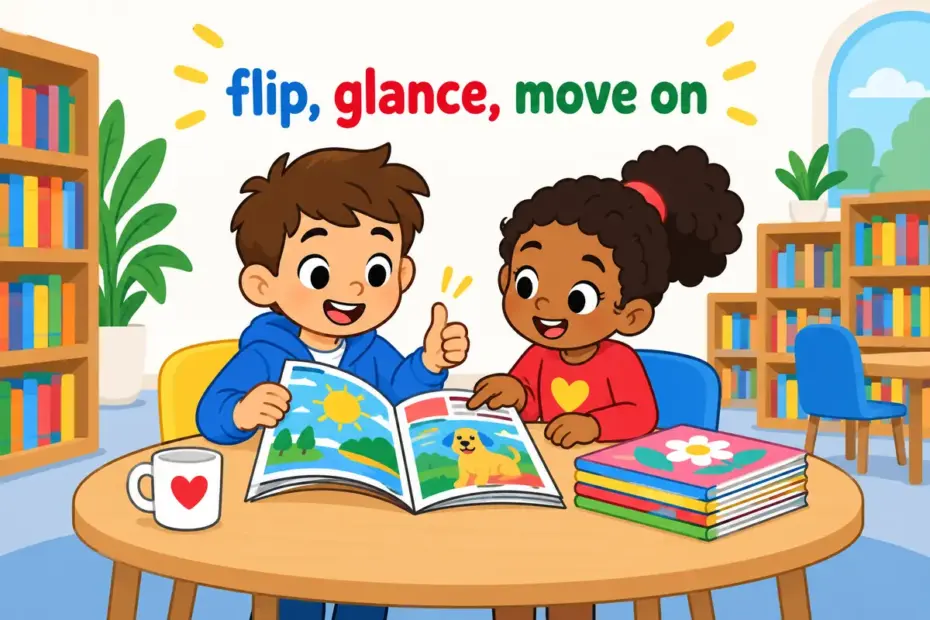
Thumb through means to turn the pages of a book, magazine or document quickly, looking briefly at what is there. To use thumb through in a sentence, put the thing you are scanning straight after the particle: “She thumbed through the report on the train.” The phrase is inseparable, so nothing sits between thumb and through.
Thumb through at a glance
- Thumb through is a prepositional phrasal verb; its forms are thumb through, thumbs through, thumbed through and thumbing through.
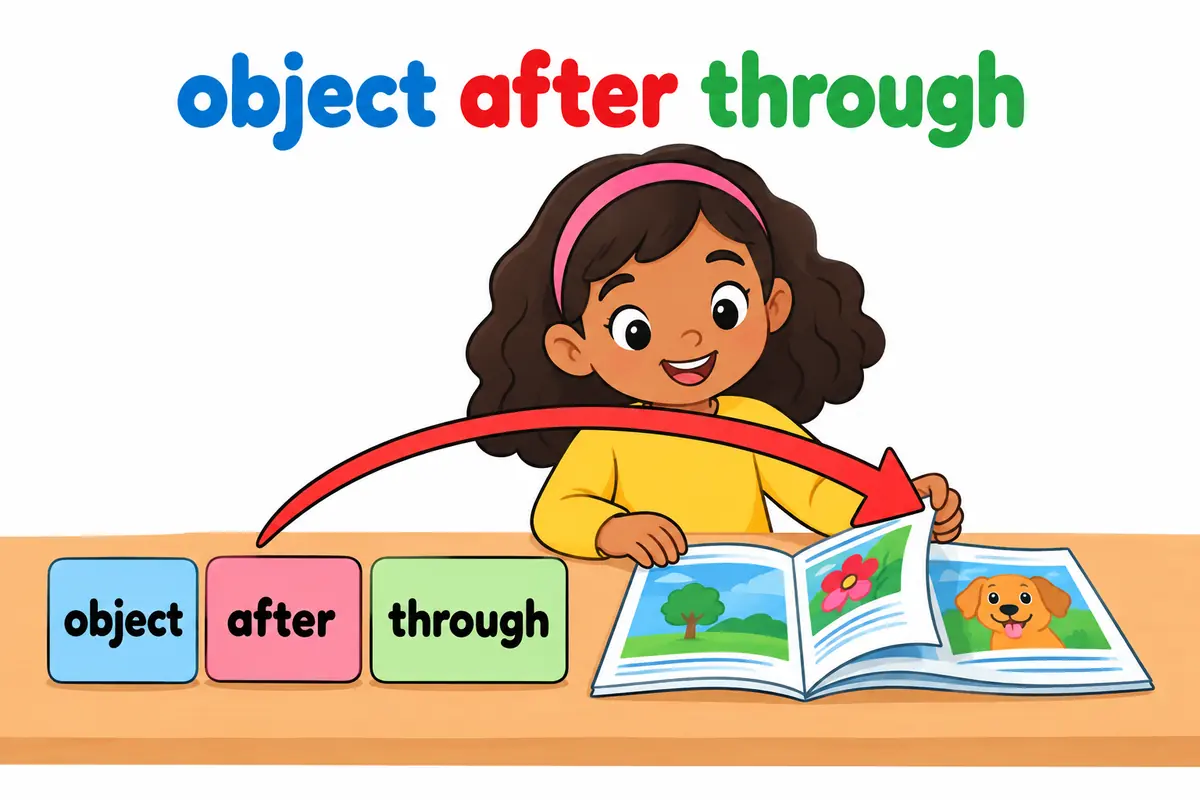
- The object always follows through: thumb through a magazine, never thumb a magazine through.
- The subject is a person who reads or searches, and the object is the thing being scanned.
- Thumb through suits neutral and journalistic writing, and flick through is its close British twin.
- The commonest error is splitting the pair and writing thumb the pages through.
What does thumb through mean?
Thumb through is a phrasal verb meaning to turn the pages of a book, magazine or document quickly in order to get an impression of it or to find something. The Cambridge entry for thumb through records this single sense, and most real sentences follow it: a person moves the pages, and the pages belong to something. The phrase stretches to screens too, where thumbing through a file means scrolling fast rather than reading line by line.
| Sense | Plain meaning | Example sentence |
|---|---|---|
| Turn paper pages | Move the pages of a printed item quickly | He thumbed through the atlas while he waited. |
| Scan a document | Look quickly through a report or file | She thumbed through the draft for the missing figure. |
| Search casually | Glance through something looking for an item | I thumbed through the programme for the band times. |
One limitation is worth stating plainly. Thumb through describes a quick, surface pass, so it never means reading closely. Where a sentence needs the idea of examining every part, choose read or study, or the more searching go through the contract clause by clause, which signals care rather than a glance.
The pair also appears as a hyphenated noun, as in “a quick thumb-through of the minutes”. That noun keeps the same image of moving pages, and British journalism often prefers it to the verb. A learner who writes a thumb-through where a verb is needed will sound wrong, so check whether the word is doing the job of a verb or of a thing.
How do you use thumb through in a sentence?
Keep the object after through. Thumb through is a prepositional phrasal verb, so the noun cannot move between the verb and its particle, and the sentence needs an object to be complete. The five patterns below cover almost every real use.
| Pattern | Example | What it signals |
|---|---|---|
| thumb through + item | He thumbed through the newspaper. | The simplest frame: a person scans a whole item. |
| thumb through + item + for + target | She thumbed through the index for his name. | Says what the reader hopes to find. |
| be thumbing through + item | They were thumbing through the catalogues when the bell rang. | Progressive form, an action in progress. |
| thumb through + item + adverb | I thumbed through the minutes quickly. | Adds the speed the verb already implies. |
| thumbs through + item | She thumbs through the mail every morning. | Habitual present, a repeated routine. |
Because the pages move fast, thumb through rarely appears in the passive. A presenter who wants to rehearse rather than scan might run through the slides once before the meeting, which stresses practice instead of searching.
Note the difference from browse. Browsing needs no object at all, because a shopper can browse for an hour without naming a single item, but thumb through always names the thing being scanned. That requirement is what keeps the two words apart in editing, and it is the test to apply when a sentence feels vague.
Thumb through in a sentence: examples across contexts
Thumb through changes register more than meaning. The nine sentences below keep the same verb while moving from a classroom to a news desk, and each one names what is being scanned.
| Context | Example sentence | Why this works |
|---|---|---|
| Classroom | Maya thumbed through the encyclopedia until she found the map of rivers. | Names a concrete object a reader can picture. |
| Library | The librarian thumbed through the returns trolley for the missing card. | Adds a purpose, which the verb handles neatly with for. |
| Workplace email | I thumbed through the supplier list and flagged three names. | Keeps the object after through and the tone neutral. |
| News report | Reporters thumbed through the leaked accounts late into the night. | Plural subject and past tense, standard in reporting. |
| Waiting room | He thumbed through a gardening magazine while the dentist ran late. | Pairs the action with idleness, a common collocation. |
| Travel writing | We thumbed through the guidebook on the platform. | Sets the scene without adding an adverb. |
| Conversation | I only thumbed through it, so I may have missed the ending. | Signals a shallow pass a speaker admits to. |
| Academic | The reviewer thumbed through the appendices before reading the argument. | Contrasts a glance with the close reading that follows. |
| Technical office | She thumbed through the manual looking for the error code. | Shows the searching sense with a participial phrase. |
| Airport lounge | A passenger thumbed through the duty-free catalogue while the gate stayed closed. | Places the verb in an idle, everyday setting. |
| History essay | The scholar thumbed through the parish registers for a single date. | Uses for to name the exact target of the search. |
When the pile is large and disorganised, writers often switch to sift through the evidence, which stresses the search more than the turning of pages.
Thumb through vs skim through
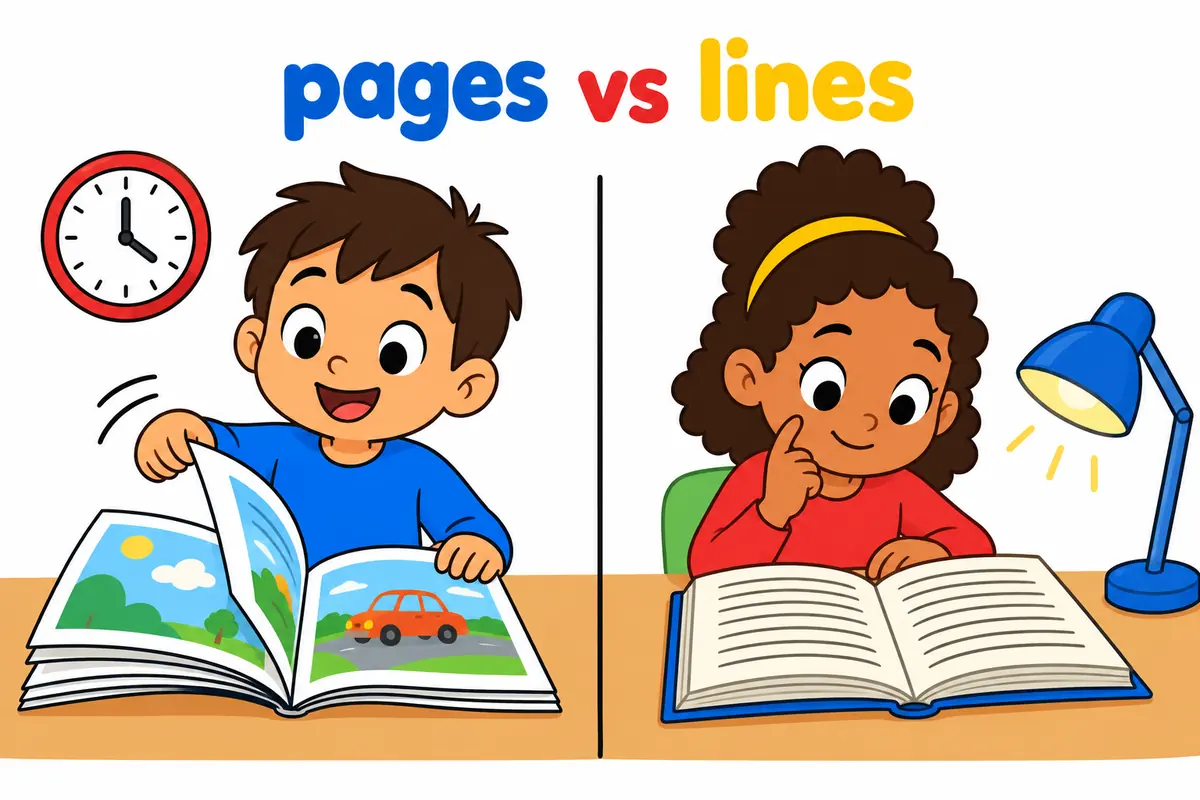
Skim through a chapter and thumb through a chapter both describe a fast pass, but they ask the eye to do different work.
| Attribute | thumb through | skim through |
|---|---|---|
| Speed | Fast, page by page | Faster, line by line |
| Depth | Glance at layout and headings | Read selected lines for the gist |
| Purpose | Get an impression or find an item | Extract the main idea |
| Typical object | A magazine, catalogue or report | An article, chapter or email |
| Main action | Fingers turn pages | Eyes move down lines |
| Register | Neutral and journalistic | Neutral, common in study guides |
Verdict: reach for thumb through when the hand is turning a whole publication, and for skim through when the eyes are picking the gist out of continuous text. The difference is testable: if a reader could summarise the text afterwards, the verb was skim through, and if they only remember the shape of the pages, it was thumb through.
Word forms and grammar of thumb through
Thumb through inflects regularly, and the pair never separates. The table also lists two near synonyms whose differences matter.
| Form | Part of speech | Example |
|---|---|---|
| thumb through | phrasal verb, base | I thumb through the letters each week. |
| thumbs through | verb, third person | She thumbs through the menu before ordering. |
| thumbed through | verb, past | He thumbed through the album twice. |
| thumbing through | verb, present participle | They sat thumbing through old comics. |
| flick through | synonym, informal British | She flicked through the brochure. |
| leaf through | synonym, page-turning | He leafed through the sketchbook. |
Several other through-phrasal verbs share the shape but not the meaning. To follow through is to finish what you began, while throughout is an adverb or preposition and not a verb at all. Reading through a document is closer to study than to a quick scan.
Flick through is the usual British choice and leaf through belongs to picture books, so a writer can keep thumb through for the neutral, information-seeking scan.
Common mistakes with thumb through
- Incorrect:
She thumbed the magazine through.Correct: She thumbed through the magazine. Rule: Through is a preposition here, so the object follows it and never splits the pair. - Incorrect:
He thumbed through.Correct: He thumbed through the catalogue. Rule: The verb is transitive and needs an object to say what is being scanned. - Incorrect:
I thumbed through to page forty.Correct: I turned to page forty. Rule: Thumb through scans a whole item; reaching one page is turn to or flick to. - Incorrect:
Thumb through the article carefully.Correct: Read the article carefully. Rule: Careful reading contradicts the quick pass the verb describes. - Incorrect:
She thumb through the menu yesterday.Correct: She thumbed through the menu yesterday. Rule: A past-time adverb requires the past form thumbed.
Practice using thumb through
Work through the six items, then check the reasoning rather than only the answer.
- Fill the gap: The editor ______ the submissions while her coffee went cold.
- Choose the better word: She needed the main argument, so she (thumbed / skimmed) through the essay.
- Correct the error: He thumb the report through on the train.
- Build a sentence: use thumb through about a student looking for a date in a history book.
- Spot the register: which belongs in a news report — the minister thumbed through the file, or I had a quick thumb through?
- Rewrite with for: The commuter scanned the timetable looking for the last train. Use thumb through and for.
Answers
- thumbed — the verb takes the past form here, and the submissions are the object after through.
- skimmed — she wants the gist of continuous text, which is skim through, not thumb through.
- He thumbed through the report on the train — the object follows through and the tense is past.
- Model answer: Tom thumbed through the history book until he found the date of the treaty.
- The minister thumbed through the file — a report keeps the third person and avoids the noun thumb-through.
- The commuter thumbed through the timetable for the last train — for introduces the target of the search.
The bottom line
Use thumb through in a sentence when someone turns the pages of something quickly, and keep the object after through. Two points decide most sentences: the phrase is inseparable, so nothing goes between thumb and through, and it describes a surface pass, not close reading. When you need the gist of continuous text, skim through is the sharper choice.
Frequently asked questions about thumb through
Is thumb through a phrasal verb?
Yes. Thumb through is a prepositional phrasal verb, which means the particle through acts like a preposition and the object follows it. You write thumb through a magazine, not thumb a magazine through, because nothing can sit between the verb and its particle.
What is the difference between thumb through and leaf through?
Both describe turning pages, but the purpose differs. Thumb through suggests scanning quickly for information or an item, while leaf through suggests a leisurely turning of pages, often to look at pictures. Leaf through carries no sense of searching for a particular fact.
Can you thumb through a website or a file?
Yes, in modern usage. The phrase extends easily from paper to screens: thumbing through a file means scrolling quickly, and thumbing through search results means glancing down a list. The speed stays the same, and the object still follows through.
Is thumb through formal or informal?
Thumb through sits in the neutral middle, at home in journalism and everyday writing alike. It is not slang, and it is not stiff. In British writing flick through often replaces it, while American writing tends to keep thumb through for the same quiet, quick scan.