Frangible means easily broken, and in technical writing it describes something designed to break in a controlled way. To use frangible in a sentence, place it before the noun it describes: “a frangible post beside the track.” The adjective is formal and appears most often in engineering, aviation and safety writing.
Frangible at a glance
- Frangible is an adjective; the noun is frangibility.
- It usually appears before a noun, as in a frangible coupling.
- The word belongs to engineering, aviation, sport and safety writing.
- Common contexts are posts, couplings, bullets, panels and runway fittings.
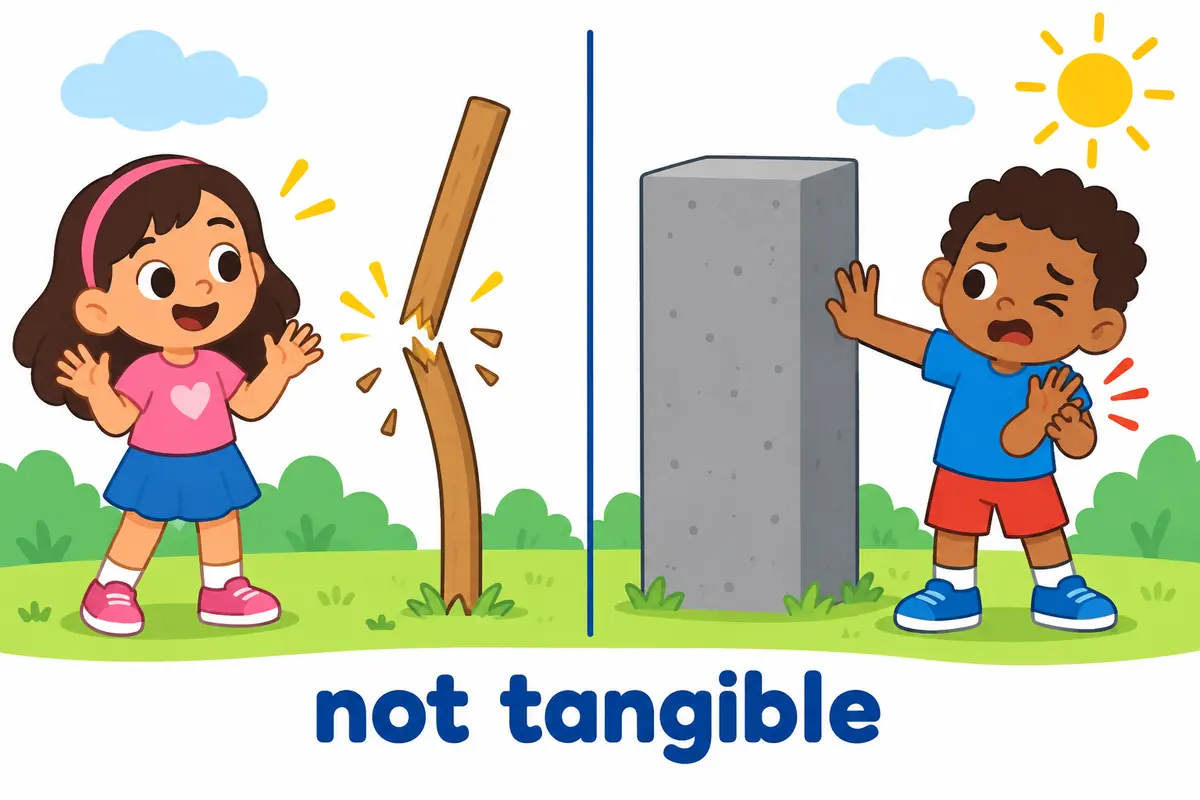
- The commonest error is confusing frangible with tangible, which means touchable or real.
What does frangible mean?
Frangible is an adjective meaning easily broken or liable to break, and in engineering it carries the stronger sense of being designed to break. The Cambridge entry for frangible records the sense of being easily broken. The everyday synonym is breakable, but frangible adds a purpose: whatever it names is expected to give way at a chosen moment rather than at random.
| Sense | Plain meaning | Example sentence |
|---|---|---|
| Easily broken | Breaks under light force | The frangible shell cracked at a touch. |
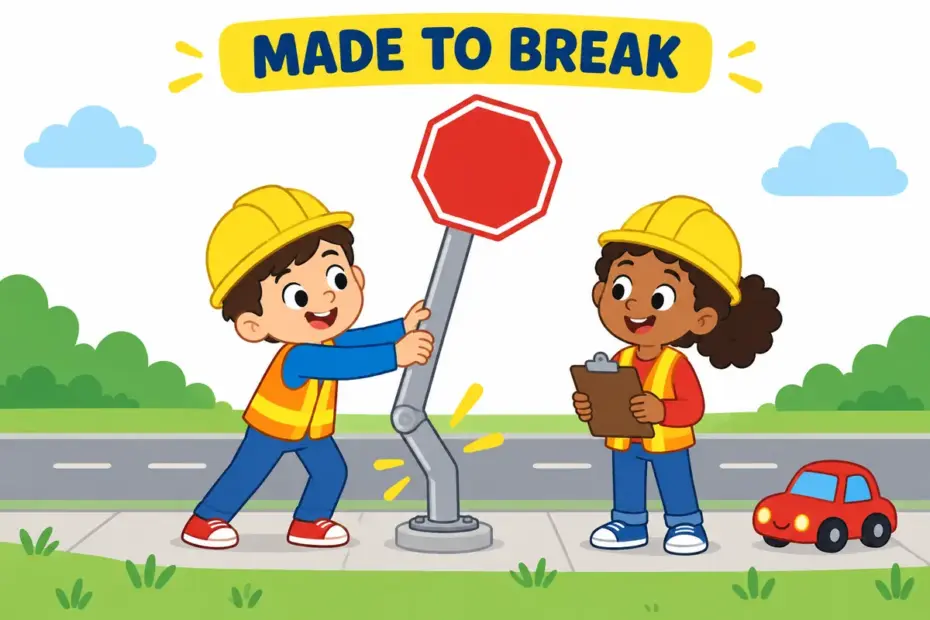
| Designed to break | Built to give way safely on impact | A frangible post holds the sign upright until a car strikes it. |
| Liable to fail | Willing to break under pressure, of a bond or agreement | Their frangible truce survived only a week. |
One limitation is important. Frangible is not a general word for weakness, and it is not the right choice for a person’s health or a child’s feelings. In those sentences the natural adjective is fragile. Frangible also says nothing about how something breaks, only that it breaks easily or is made to do so, so a brittle material that shatters and a ductile joint that snaps both count as frangible.
How do you use frangible in a sentence?
Frangible behaves like most adjectives: it sits before a noun or after a linking verb, and it rarely takes comparison. In technical writing it often precedes a noun that names a component with a safety function, which is the pattern that gives the word its specialised flavour.
| Pattern | Example | What it signals |
|---|---|---|
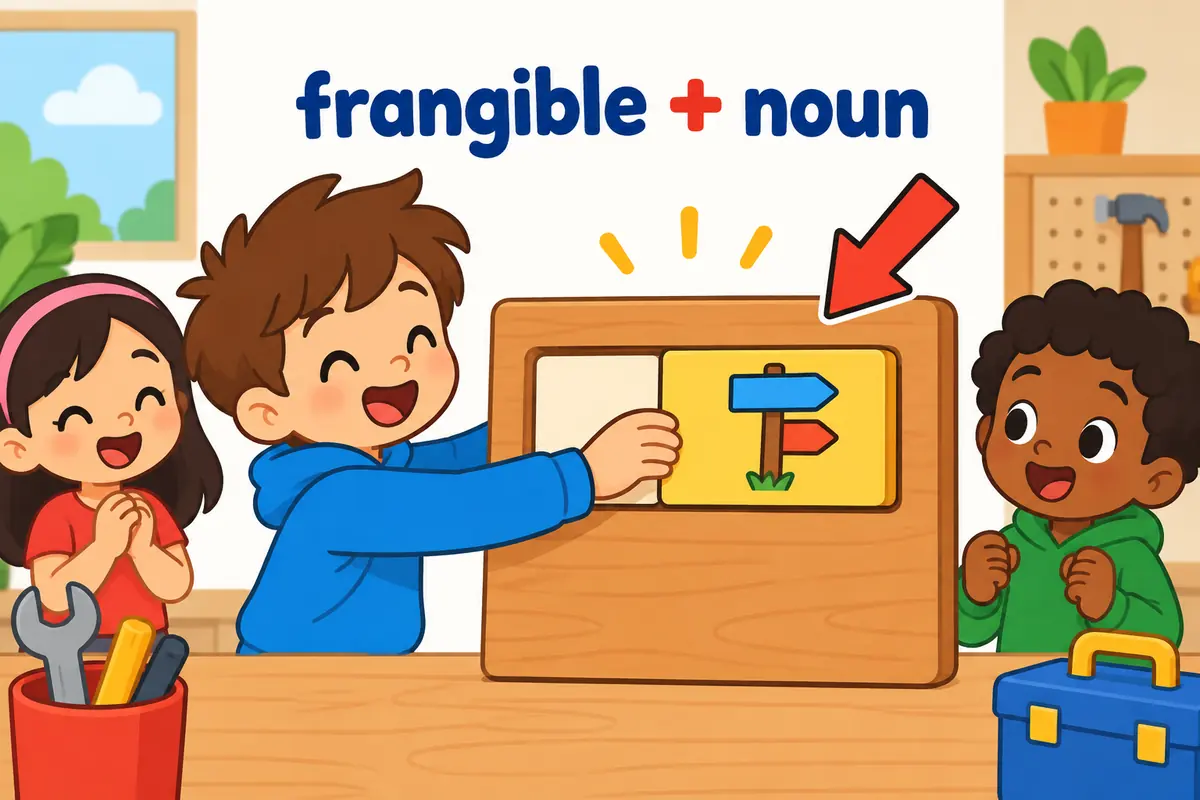
| frangible + noun | A frangible coupling protects the pump. | The attributive order, most common in technical prose. |
| be frangible | The runway markers are deliberately frangible. | Predicative use, often with an adverb such as deliberately. |
| frangible + noun + designed to + verb | A frangible bolt designed to shear on impact. | Spells out the intended failure. |
| more frangible than | The new alloy is more frangible than steel. | A rare comparison, used to rank materials. |
| made of a frangible material | The panel is made of a frangible material. | Names the material rather than the object. |
The preposition to watch is not in the verb but in the company the word keeps. Frangible pairs naturally with designed, deliberately, on impact and at a set load, because all of them describe a controlled break rather than accidental damage.
Frangible in a sentence: examples across contexts
Frangible crowds into the places where breaking safely is a design goal. The sentences below keep the adjective while moving from a racetrack to a laboratory, and each one names the object and its purpose.
| Context | Example sentence | Why this works |
|---|---|---|
| Road engineering | A frangible post snaps at the base when a car leaves the road. | Names the part and the moment it yields. |
| Aviation | Runway edge lights are mounted on frangible fittings. | The fitting, not the aircraft, is designed to break. |
| Motorsport | A frangible barrier absorbs energy instead of hurling debris. | Ties the break to a safety outcome. |
| Safety signage | The mount is frangible so the sign folds on impact. | A purpose clause explains the design. |
| Packaging | The frangible seal cracks open the first time the lid turns. | A controlled break tells the buyer the jar is new. |
| Military training | Recruits practise with frangible rounds that shatter on contact. | Contrasts safe practice with live ammunition. |
| Museums | Curators lift frangible plaster figures with padded forks. | Everyday handling of genuinely breakable objects. |
| Medical equipment | The vial has a frangible neck for sterile opening. | Precision breakage keeps the contents clean. |
| Architecture | Frangible cladding panels protect the facade above a walkway. | Shows the word applied to whole building elements. |
| Literary description | Their frangible peace lasted one long summer. | Figurative use of the break-under-pressure sense. |
| Conversation | The box felt frangible, so I carried it flat. | Predicative use in ordinary speech. |
The technical sentences share a formula that the literary sentence breaks: name the object, name what it protects or what breaks it. That formula is what makes frangible feel precise rather than simply decorative.
Frangible vs fragile
Frangible and fragile both describe something that breaks, and they are easy to swap by mistake. Fragile is the wider, everyday word and covers health, moods and delicate situations; fragile also suggests fragility as a state. Frangible is narrower, formal and usually technical.
| Attribute | frangible | fragile |
|---|---|---|
| Core meaning | Easily broken or built to break | Easily damaged or harmed |
| Scope | Objects, parts, materials, agreements | Objects, people, health, peace |
| Implies design | Often yes, a planned failure | No, damage is a risk to avoid |
| Register | Technical and formal | Everyday and general |
| Typical pairing | frangible coupling, frangible round | fragile goods, fragile truce |
| Comparative form | Rare, as in more frangible | Common, as in more fragile |
Verdict: use fragile for anything that can be harmed or must be handled with care, and save frangible for a part whose breaking is itself part of how it works.
Frangible vs brittle and durable
Two more adjectives sit either side of frangible and sharpen it. Brittle describes how a material snaps without bending, while durable is its opposite, meaning able to withstand wear. A frangible part may be brittle, but it may also be a ductile joint that yields, so frangible and brittle are not the same claim.
| Adjective | What it says | Example |
|---|---|---|
| frangible | Breaks easily or by design | A frangible mast beside the road. |
| fragile | Easily harmed, needs care | A fragile glass ornament. |
| brittle | Snaps without bending | Old brittle plastic. |
| durable | Withstands wear and force | A durable canvas bag. |
The comparison to keep in mind is that durable parts are chosen to survive, frangible parts are chosen to fail at the right moment, and brittle materials simply behave that way whether anyone wants them to or not.
Word forms and grammar of frangible
Frangible has a small family and one famous false friend. The table also lists the forms learners build by analogy with other adjectives, so a coined form is never taken for standard English.
| Form | Part of speech | Example |
|---|---|---|
| frangible | adjective | The engineers specified a frangible base. |
| frangibility | noun | Frangibility is tested at a set impact speed. |
| frangibly | adverb, rare | The joint is frangibly mounted. |
| frangibleness | non-standard | Use frangibility, not frangibleness. |
| tangible | different adjective | A tangible result is one you can measure or touch. |
| frangipani | noun, unrelated | Frangipani is a flowering tree and shares only a root with frangible. |
The shared root is genuine but misleading: frangere, the Latin verb for breaking, lies behind frangible, while frangipani arrived through a family name. Knowing this stops the flower and the engineering term from blurring together.
Common mistakes with frangible
- Incorrect:
The new policy gave frangible progress.Correct: The new policy gave tangible progress. Rule: Tangible means real or measurable; frangible means breakable. - Incorrect:
After the illness she felt frangible.Correct: After the illness she felt fragile. Rule: Fragile describes people and health; frangible describes objects and materials. - Incorrect:
Handle the china carefully, it is frangible.Correct: Handle the china carefully, it is fragile. Rule: For ordinary delicate goods, fragile is the natural word. - Incorrect:
The frangible window shattered from the cold.Correct: The brittle window shattered from the cold. Rule: Brittle describes snapping without bending; frangible does not. - Incorrect:
They signed a frangible contract with no break clause.Correct: They signed a fragile contract with no break clause. Rule: A weak agreement is fragile, not frangible, unless the design sense applies.
Practice using frangible
Work through the seven items, then check the reasoning so the register, not just the spelling, stays with you.
- Fill the gap: The runway lights sit on ______ fittings that give way on impact.
- Choose the better word: The old dry rope was (frangible / brittle) and snapped without stretching.
- Correct the error: The charity reported frangible improvements in literacy.
- Build a sentence: use a frangible barrier about a racetrack.
- Spot the register: which belongs in an engineering report — a frangible coupling, or a breakable little part?
- Rewrite with the noun: The engineers tested how easily the panel broke.
- Choose the better adjective: After the flood the family’s mood was (frangible / fragile).
Answers
- frangible — the fittings are designed to break, which is the technical sense.
- brittle — the rope snapped without stretching, which is brittleness, not general breakability.
- The charity reported tangible improvements in literacy — real, measurable gains are tangible.
- Model answer: A frangible barrier gives way slowly so it absorbs the car’s energy.
- A frangible coupling — the report keeps the precise technical adjective.
- The engineers tested the frangibility of the panel — the noun names the property.
- fragile — a mood is harmed, not built to break.
The bottom line
Use frangible in a sentence for an object that breaks easily or is deliberately built to break, and keep the adjective next to the part it describes. Two details decide most sentences: the design sense separates frangible from fragile, and the look-alike sturdy names the opposite quality. Reach for fragile for people, health and moods, and frangible only where breaking is part of the plan.
Frequently asked questions about frangible
What does frangible mean in simple terms?
Frangible means easily broken, or, in engineering, made to break in a controlled way when struck. A frangible post at the edge of a road is meant to snap so a glancing car is not stopped dead. The word describes a physical property or a design decision, never a person.
What is the difference between frangible and fragile?
Fragile means easily harmed and needing careful handling, and it covers goods, health and moods. Frangible is narrower and more technical, describing an object that breaks easily or is built to break. A wine glass is fragile; a frangible coupling is designed to shear under a load it was measured to withstand.
Is frangible a real word?
It is a real and established word, though uncommon outside technical writing. Dictionaries record it as meaning easily broken, and engineers use it for couplings, posts, panels and training rounds. In everyday prose most writers choose breakable or fragile, which is why frangible can feel specialised.
How do you pronounce frangible?
Frangible is said with the stress on the first syllable, roughly FRAN-juh-bul, and the g sounds like the j in jam. The noun frangibility keeps the same stress pattern. Because the spelling suggests the g might be hard, the soft sound is the detail learners most often get wrong.