Rest upon means to be physically supported by something, and more often to depend on it, as a decision rests upon evidence. To use rest upon in a sentence, put the supported thing first and the support second: “The whole plan rests upon one careful estimate.” The phrase is formal and slightly literary.
Rest upon at a glance
- Rest upon is a fixed verb-and-preposition phrase, not a single verb.
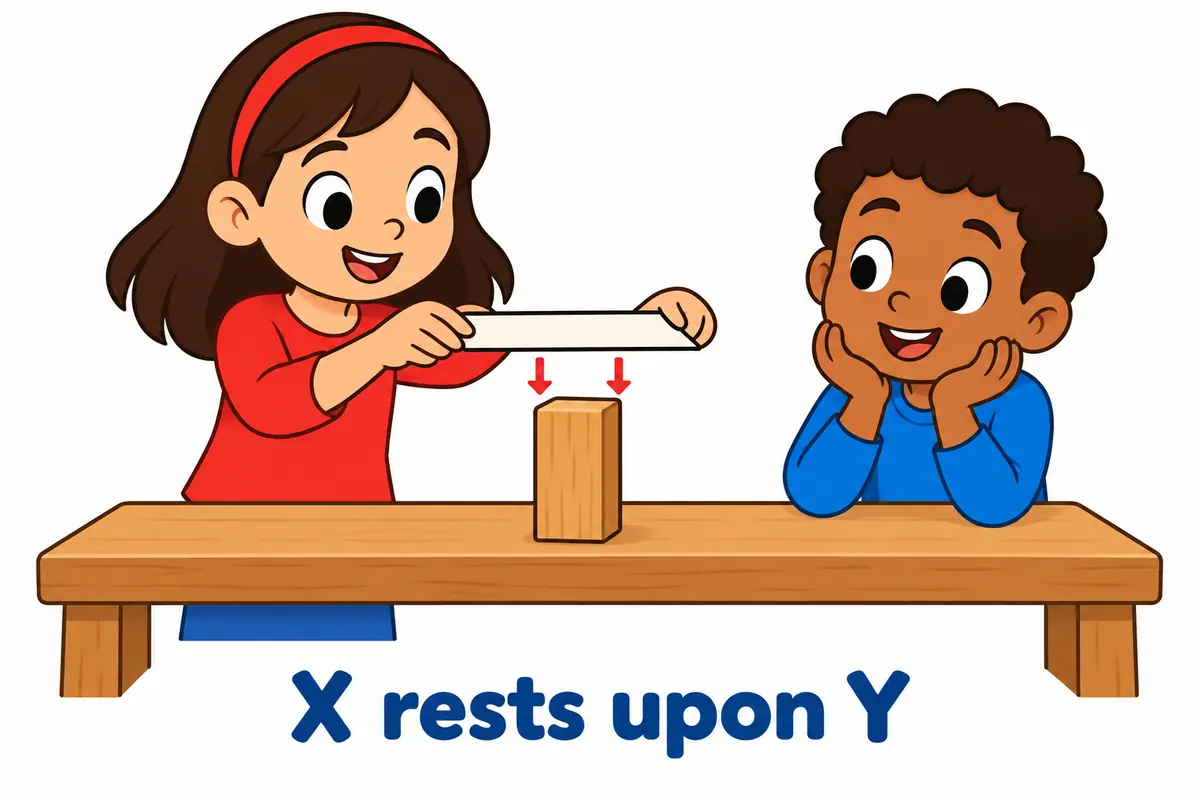
- The supported thing is the subject and the support follows upon: X rests upon Y.
- Its main senses are physical support and abstract dependence.
- The preposition is fixed: upon may become the plainer on, but never in or at.
- The register is formal and literary, common in judgments, essays and treaties.
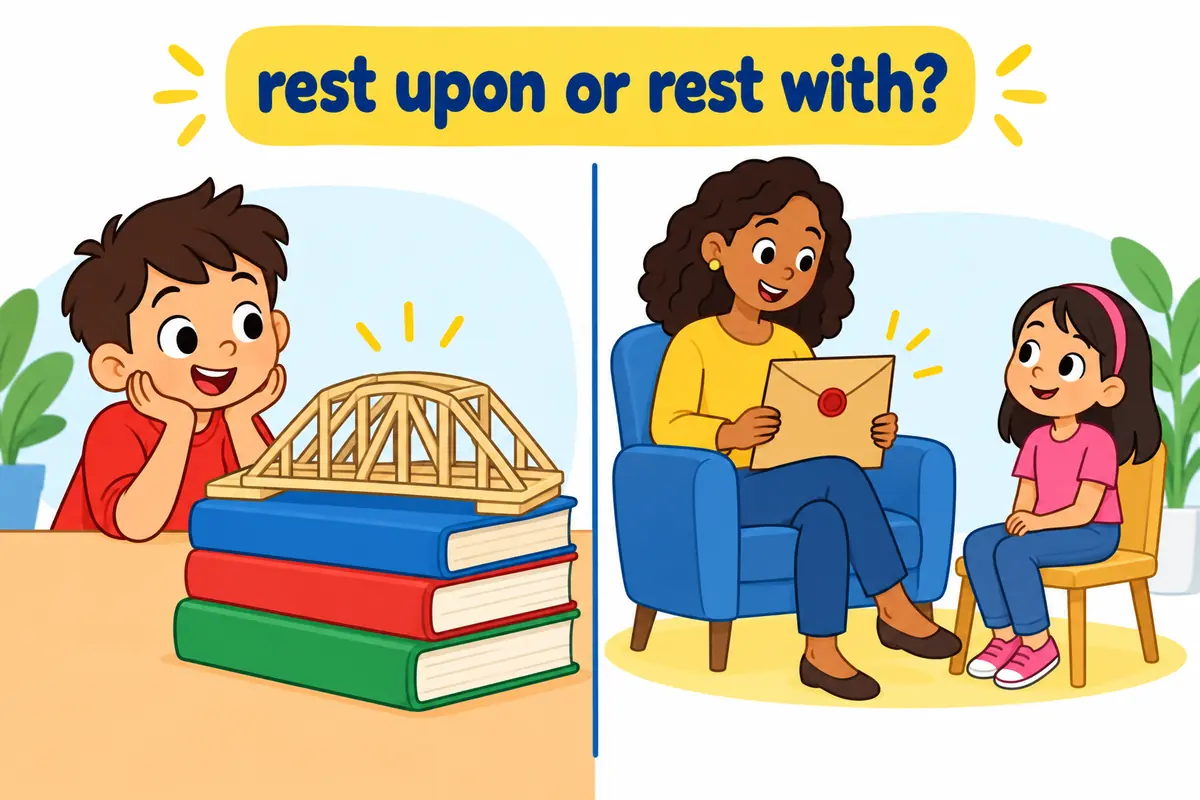
- Rest with is a different idiom meaning to belong to someone as a responsibility.
What does rest upon mean?
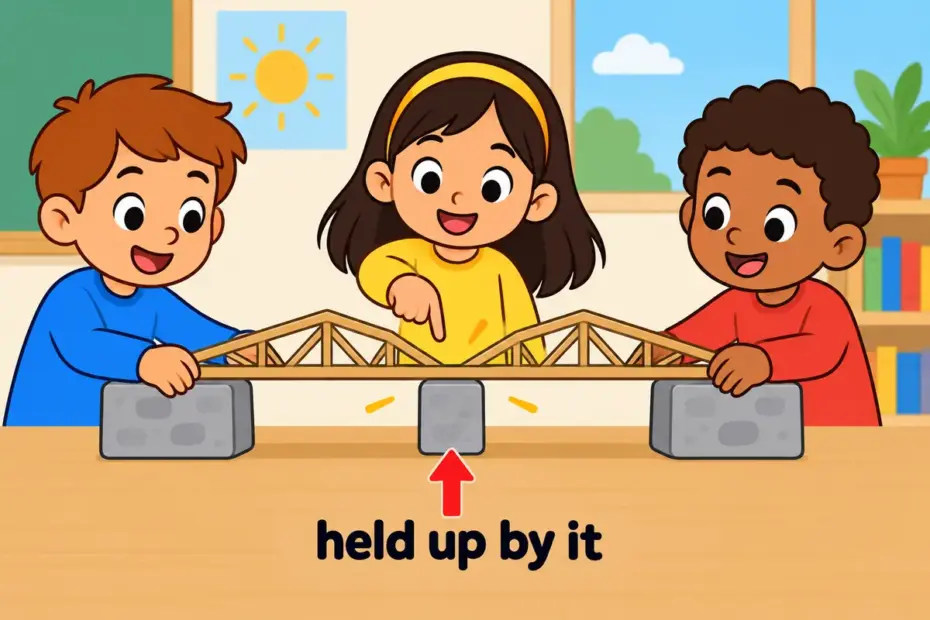
Rest upon is a phrase meaning to be supported by something physically, or to depend on something such as evidence, an assumption or a decision. The Cambridge entry for rest upon records both the physical and the figurative senses, and the split matters: a roof rests upon columns, while a case rests upon testimony, and only the second carries the idea of a conclusion that depends on something else.
| Sense | Plain meaning | Example sentence |
|---|---|---|
| Physical support | Be held up by something below | The old roof rests upon two stone columns. |
| Dependence | Depend on or be based on | The verdict rests upon the new evidence. |
| Responsibility | Be borne by someone, often with rest with | The blame rests upon the night manager. |
| Literary gaze | To settle or dwell on, in older writing | His gaze rested upon the empty chair. |
One limitation is worth stating plainly. Rest upon describes support and dependence, not creation, so a theory does not rest upon its author; the author builds it. To base a claim on evidence is to put it there deliberately, while to rest upon evidence is simply to depend on it. The phrase also says nothing about strength, so something that rests upon a weak support may still stand for a while.
How do you use rest upon in a sentence?
Put the supported thing first and the support second: X rests upon Y. The subject is usually a plan, a case, a decision or a structure, and the object after upon is usually evidence, an assumption or a physical support. Five patterns cover almost every real sentence.
| Pattern | Example | What it signals |
|---|---|---|
| structure + rest upon + support | The bridge rests upon four steel piers. | Physical support below. |
| decision + rest upon + evidence | The ruling rests upon a single witness. | Dependence on a proof. |
| plan + rest upon + assumption | Our schedule rests upon fine weather. | Dependence on a condition. |
| rest heavily upon + noun | Responsibility rests heavily upon the chair. | An adverb strengthens the dependence. |
| Do the rest upon + noun | The rest of the argument rests upon that point. | A recurring idiomatic subject. |
Where one conditional point decides everything, hinge upon is the close synonym, because it pictures a door that turns on a single pin. Where the meaning is simply that a claim is supported by a reason, rest upon keeps the formal tone that reports and arguments prefer.
Rest upon in a sentence: examples across contexts
| Context | Example sentence | Why this works |
|---|---|---|
| Engineering | The walkway rests upon three concrete piers. | The physical sense with a named support. |
| Law | The appeal rests upon one disputed signature. | Dependence on a single piece of evidence. |
| Science | The conclusion rests upon data from two stations. | A claim grounded in measurement. |
| Business memo | The forecast rests upon last year’s sales. | A prediction that depends on a figure. |
| Politics | The whole agreement rests upon a single vote. | The conditional sense in public life. |
| History essay | The argument rests upon three surviving letters. | A scholarly dependence on sources. |
| Everyday speech | It all rests upon whether the train runs. | The phrase in a plainer spoken register. |
| Religion | The teaching rests upon a short parable. | A doctrine supported by one text. |
| Music criticism | The finale rests upon a single repeated chord. | A structural dependence in a work of art. |
| Sports report | The team’s season rests upon the next match. | A conditional turning point. |
| Architecture | The whole dome rests upon a ring of arches. | The classic physical image of support. |
| Personal letter | Everything now rests upon your answer. | The phrase carrying emotional weight. |
Arguments are built on premises and then rest upon them, so the two verbs often appear side by side: what one person constructs, the conclusion depends on. When the supporting evidence gives way, the structure does not soften but collapse, which is why rest upon is so often followed by a warning about a single point of failure. The phrase therefore shows a reader where the risk lies, because a conclusion that rests on one point can be overturned by evidence about that point alone.
Rest upon vs rest with
Rest upon and rest with share the verb but point in different directions, and mixing them is the surest way to make formal writing sound wrong.
| Attribute | rest upon | rest with |
|---|---|---|
| Meaning | Be supported by, or depend on | Belong to someone as a responsibility or choice |
| Typical subject | a plan, a case, a roof | a decision, a duty, the blame |
| Typical object | evidence, estimates, foundations | a person or a body |
| Central idea | Support and dependence | Responsibility and authority |
| Formality | Formal and literary | Formal |
| Swap test | a plan rests upon evidence | a decision rests with the chair |
Verdict: choose rest upon when something depends on evidence or a foundation, and rest with when a duty or choice belongs to a person. In everyday speech people lean on an excuse, but formal writing keeps rest upon for the support and reserves rest with for the responsible party.
Word forms and grammar of rest upon
The expression is fixed, so most of the grammar is about what may not change inside it. The table sets out what varies and what does not.
| Variation | Allowed? | Example |
|---|---|---|
| upon | Fixed preposition | The plan rests upon one figure. |
| on instead of upon | Allowed, less formal | The plan rests on one figure. |
| Adverb before upon | Allowed | The decision rests heavily upon her testimony. |
| Object between rest and upon | Not allowed | You cannot say rest the plan upon. |
| rest + object + upon | A different, causative pattern | Rest the argument upon clear evidence. |
| rest with | Different idiom | The choice rests with the committee. |
| Passive is rested upon | Rare and clumsy | Writers keep it active: the case rests upon the record. |
Because the phrase already points from the support up to the thing supported, the passive adds nothing and usually sounds awkward. A claim that survives scrutiny still stands, and the natural sentence keeps the supported thing as the subject from start to finish.
Common mistakes with rest upon
- Incorrect:
The decision rests in the committee.Correct: The decision rests with the committee. Rule: responsibility rests with a person or body, never in. - Incorrect:
The plan rests upon to finish the work.Correct: The plan rests upon finishing the work. Rule: upon is a preposition, so it takes a noun or gerund, not an infinitive. - Incorrect:
The whole future rests upon.Correct: The whole future rests upon this decision. Rule: rest upon needs an object after the preposition. - Incorrect:
The roof rests in two columns.Correct: The roof rests upon two columns. Rule: physical support takes upon or on, not in. - Incorrect:
The case rests upon to the witness.Correct: The case rests upon the witness account. Rule: upon cannot be followed by to; the object goes straight after it.
Practice using rest upon
- Fill the blank: The entire argument ______ ______ a single assumption.
- Choose the better phrase: The final choice (rests upon / rests with) the head teacher.
- Correct the error: The bridge rests in four steel piers.
- Build a sentence: use rest upon about a forecast that depends on the weather.
- Spot the register: which belongs in a legal judgment, The appeal rests upon one witness, or The appeal hangs on one guy?
- Rewrite with on: The verdict rests upon the new evidence.
- Choose the better phrase: Responsibility for the delay (rests upon / rests with) the supplier.
- Correct the error: The plan rests upon to raise enough money.
Answers
- rests upon: the phrase puts the supported thing first and the support after upon.
- rests with: a choice belongs to a person, so rest with is correct.
- The bridge rests upon four steel piers: physical support takes upon.
- Model answer: The whole harvest rests upon a dry week in September.
- The appeal rests upon one witness: a judgment keeps the formal phrase.
- The verdict rests on the new evidence: on is the plainer variant of upon.
- rests with: responsibility belongs to the supplier, so rest with fits.
- The plan rests upon raising enough money: a gerund follows upon, not an infinitive.
The bottom line
Use rest upon in a sentence when something is supported physically or depends on something else, and put the supported thing first. The two points that decide most sentences are that the preposition is fixed, so upon may become on but never in, and that rest with is a different idiom reserved for responsibility. When the support fails, the argument does not bend but fall, which is exactly why a careful writer names the evidence a conclusion rests upon.
Frequently asked questions about rest upon
What does rest upon mean?
Rest upon means to be supported by something physically, or more commonly to depend on something such as evidence or an estimate. A roof rests upon columns, and a verdict rests upon testimony. The phrase is formal and appears in arguments, reports and literary writing rather than in everyday speech.
Is rest upon the same as rest with?
No. Rest upon means depend on or be supported by, while rest with means belong to someone as a responsibility or decision. A case rests upon evidence, but the final choice rests with the chair. Mixing them is the mistake that most often makes formal writing sound wrong.
Can you say rest on instead of rest upon?
Yes. Rest on is the plainer everyday variant and rest upon is more formal and slightly literary. Headlines and conversation usually prefer rest on, while judgments, treaties and essays often keep rest upon. The meaning is identical, so the choice is one of register rather than sense.
Is rest upon used in the passive?
It is rare. The phrase already points upward from the support to the thing supported, so a passive such as it is rested upon sounds clumsy. Writers keep the active order, with the supported thing as the subject, as in the argument rests upon a single assumption.