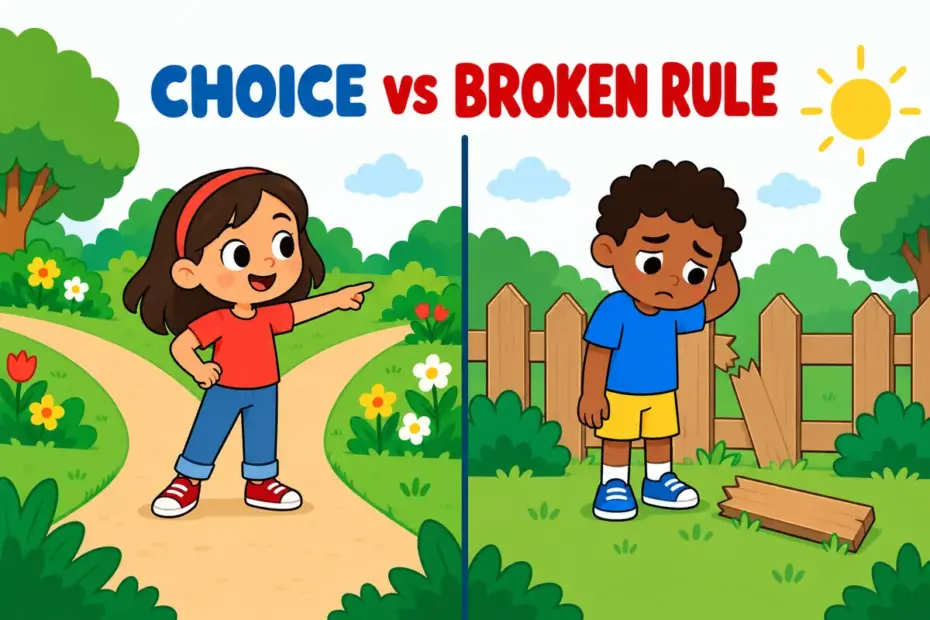
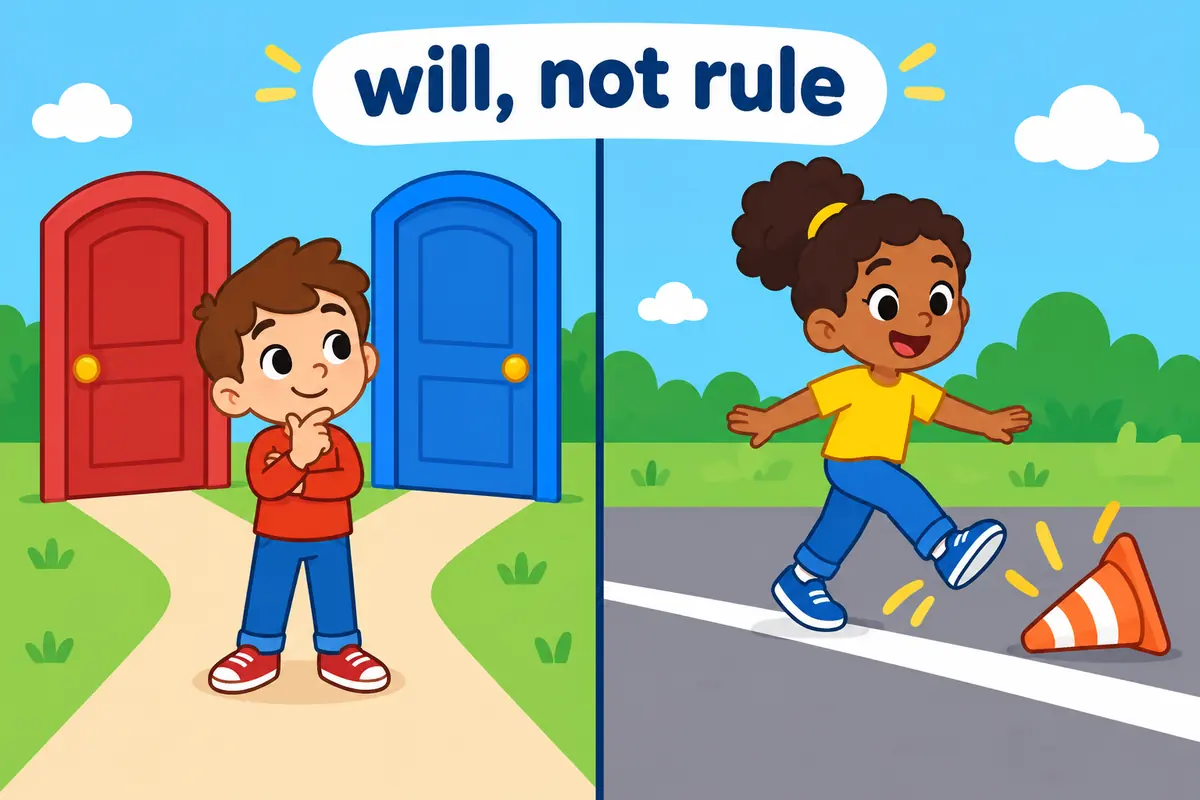
Volition vs violation is a choice between two nouns that sound alike but never overlap: use volition when you mean the power to choose by your own will, and use violation when you mean the act of breaking a rule or a boundary. The first concerns intention and freedom; the second concerns a limit that was crossed.
Volition vs violation at a glance
- Volition is a noun meaning the power to choose; violation is a noun meaning a breach of a rule or right.
- Volition appears almost always in the phrase of one’s own volition, meaning voluntarily.
- Violation appears in the frame violation of, as in a violation of privacy.
- Volition usually stays uncountable, while violation is countable and takes a plural.
- The commonest error is writing violation where the sense of free choice is meant.
Volition vs violation: the master comparison
Seven criteria decide almost every real sentence. Read the row first and the whole choice becomes obvious, because the two words share only a sound.
| Criterion | volition | violation |
|---|---|---|
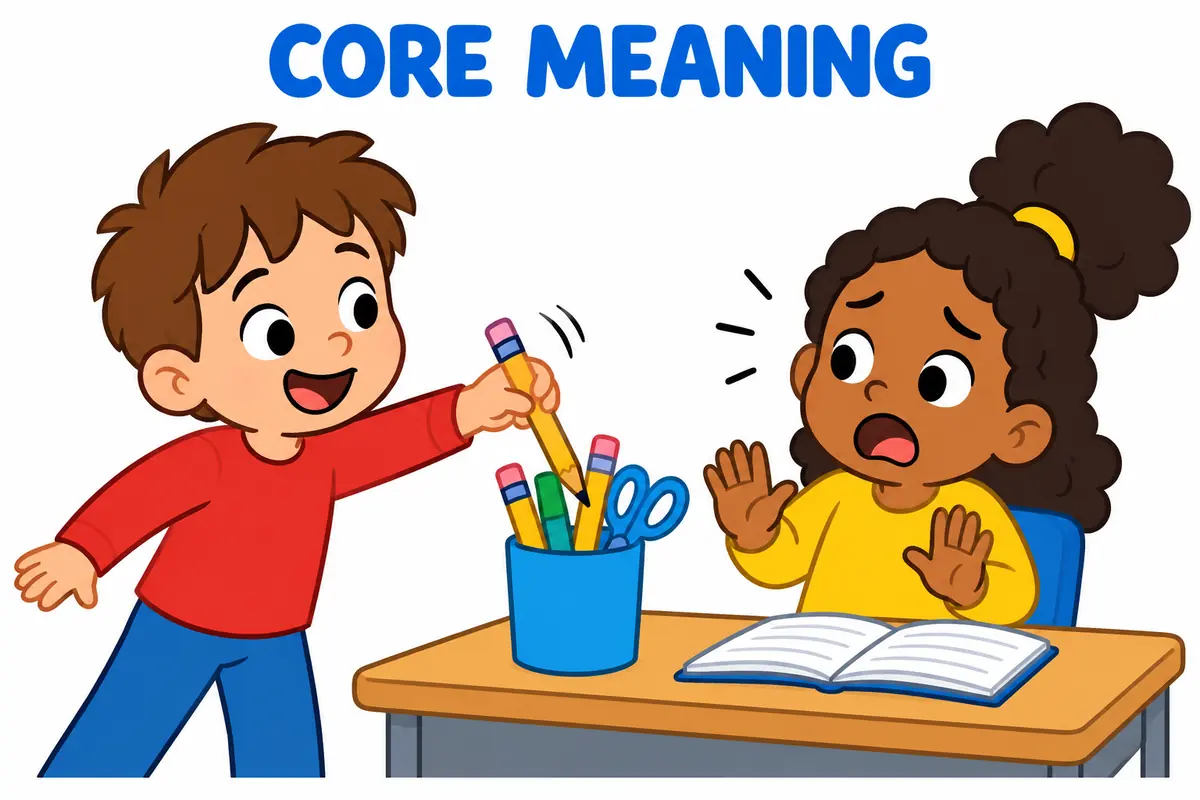
| Core meaning | The power or act of choosing freely | The act of breaking a rule, law or right |
| What it is about | Will and intention | A limit that was crossed |
| Typical subject | A person who decides | A rule, right, agreement or boundary |
| Signature phrase | of one’s own volition | a violation of the rules |
| Countability | Usually uncountable | Countable, with a plural violations |
| Register | Formal and academic | Formal and legal |
| Opposite idea | Compulsion or pressure | Compliance or obedience |
Verdict: reach for volition only when freedom of choice is the point, and reach for violation whenever something was broken, breached or disrespected. A sentence that could use either word almost always needs rewriting, because the two ideas rarely belong together.
What does volition mean?
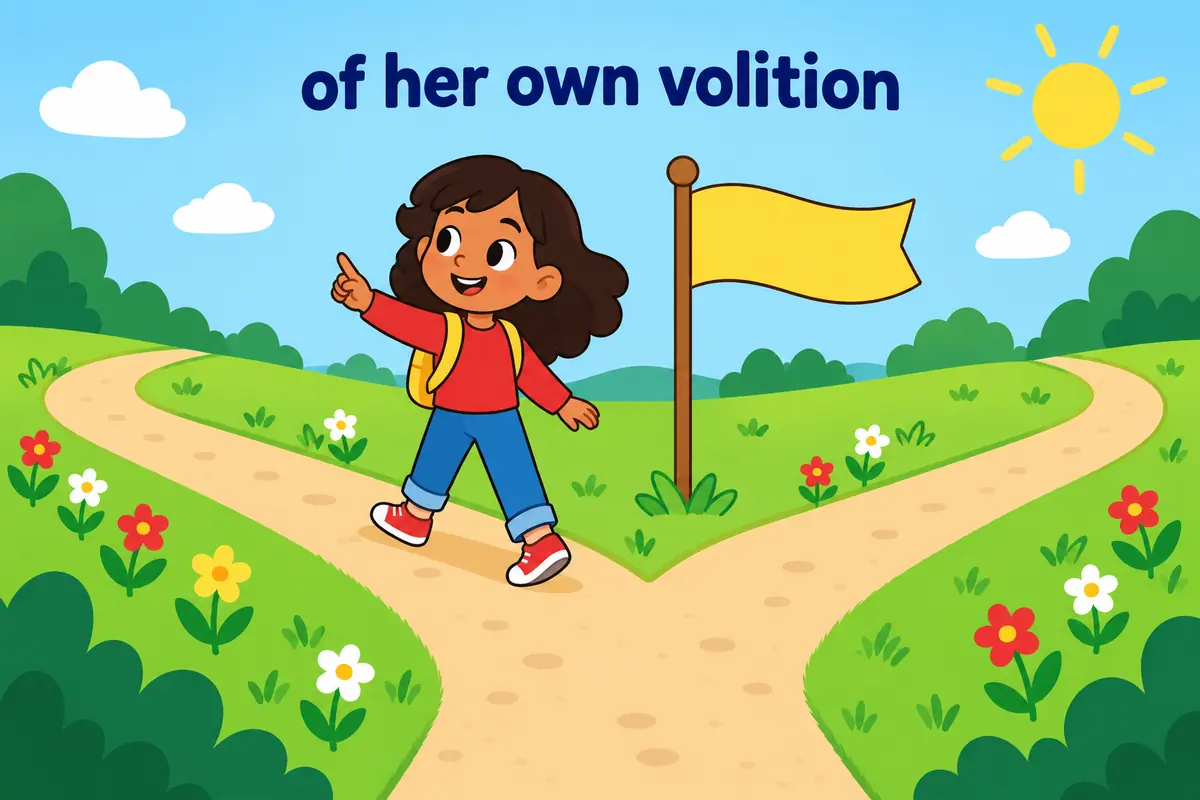
Volition is a noun meaning the power to use your will to make a free choice, or a single act of such choosing. The Cambridge entry for volition centres on the fixed phrase of one’s own volition, which is the form you will meet most often. Volition is the formal, academic member of the family, so volition sits naturally in psychology, philosophy and legal writing rather than in casual talk.
| Sense | Plain meaning | Example sentence |
|---|---|---|
| The power to choose | The ability to decide freely | She resigned of her own volition. |
| A conscious act of will | One deliberate decision | Signing the form was an act of volition. |
| Will as a faculty | The mind considered as a source of choice | The essay examines volition and habit. |
One limitation matters. Volition says nothing about whether a choice was wise, and it does not mean desire or preference; it names the capacity to choose, not the quality of what was chosen. In everyday speech, people say on purpose or by choice, and volition would sound stiff.
What does violation mean?
Violation is a noun meaning the act of breaking a rule, a law, an agreement or a person’s rights. The Cambridge entry for violation records both the rule-breaking sense and the sense of treating something respected with disrespect. Violation is a formal, legal word, and it is countable, so one breach is a violation and several are violations.
| Sense | Plain meaning | Example sentence |
|---|---|---|
| Breach of a rule or law | Breaking an official requirement | The noise was a violation of the local code. |
| Breach of a right | An intrusion on someone’s rights or privacy | Reading her messages was a violation of privacy. |
| Treating something sacred badly | Showing disrespect to a protected place | The damage was treated as a violation of the memorial. |
A limitation works the other way here. Violation implies fault and often carries legal weight, so it is far too strong for a small mistake; a late form is a minor breach, not a violation, unless a rule genuinely exists. The word also points to the rule more than to the person who broke it.
How do you use volition and violation in a sentence?
The two words live in different frames, and mixing the frames is the main source of error. Six patterns cover almost every sentence, three for each noun.
| Pattern | Example | What it signals |
|---|---|---|
| of one’s own volition | He left the club of his own volition. | A free choice made without pressure. |
| an act of volition | Turning back was an act of volition. | A single deliberate decision, often in philosophy. |
| with volition | None of the characters move with volition. | A literary or technical claim about will. |
| violation of + noun | The firm admitted a violation of the safety code. | A breach of a rule, law or right. |
| in violation of + noun | The building stood in violation of the zoning rules. | An ongoing state of breaking a requirement. |
| a gross violation | The report described a gross violation of trust. | An intensified, often moral judgement. |
Volition and violation in a sentence: examples across contexts
The ten sentences below keep the two words apart by context. Each one makes clear whether a person is choosing or a rule is being broken.
| Context | Example sentence | Why this works |
|---|---|---|
| Workplace email | She transferred to the night shift of her own volition. | The fixed phrase marks a choice with no pressure. |
| Legal writing | The court found a violation of the data protection rules. | The frame violation of names the broken rule. |
| Psychology | The study asks whether habit can override volition. | Volition as a faculty suits academic prose. |
| News report | Inspectors logged three safety violations at the plant. | The countable plural suits a list of breaches. |
| Philosophy essay | Freedom of volition is not the same as freedom of action. | A contrast between choosing and doing. |
| Privacy complaint | Sharing the photo without consent was a violation of privacy. | A right was broken, so violation is exact. |
| Human resources | No one was forced; each volunteer acted of their own volition. | The phrase stresses genuine willingness. |
| Sports report | The club was fined for a violation of the salary cap. | An official rule, so the legal noun fits. |
| Conversation | I did it by choice, not because anyone asked. | Everyday speech avoids volition and uses by choice. |
| Academic abstract | The paper separates volition from coercion. | A formal contrast between free will and force. |
Which should you use?
Match the word to the question the sentence is really answering. The list pairs five common situations with a firm recommendation.
- You are describing a choice made without pressure: use volition, and almost always inside of one’s own volition.
- You are describing a rule, law or right that was broken: use violation, in the frame violation of.
- You are writing a legal or official notice: use violation, because it is the precise term of art.
- You are writing about will, choice or the mind: use volition, which is the academic term.
- You are speaking in ordinary conversation: avoid both and say by choice or broke the rules.
When a real sentence seems to need both ideas, split it in two: one clause for the free choice and one for the rule that was broken.
Word forms and grammar of volition and violation
Volition has no verb and stays almost always in its noun form, while violation has a busy verb family. The table sets the two side by side, and the related verb violate shows how the rule-breaking sense spreads across parts of speech.
| Form | Part of speech | Example |
|---|---|---|
| volition | noun | She agreed of her own volition. |
| volitional | adjective | Blinking is partly a volitional act. |
| volitionally | adverb, rare | He moved volitionally, not by reflex. |
| violation | noun | This is a clear violation of policy. |
| violate | verb | Do not violate the terms of use. |
| violated | adjective | Residents felt violated by the intrusion. |
| violator | noun, a person | The violator was fined twice. |
| violations | noun, plural | The file lists six violations. |
Grammar differs in one practical way. Volition usually appears without an article, as in an act of volition, while violation needs one when it is singular, as in a violation of the code. The near neighbours breach, intention and consent each cover part of the same ground, and choosing among them is a matter of precision rather than politeness.
Common mistakes with volition and violation
- Incorrect:
She left the company of her own violation.Correct: She left the company of her own volition. Rule: A free choice is volition; violation means a rule was broken. - Incorrect:
The factory was fined for a volition of the safety rules.Correct: The factory was fined for a violation of the safety rules. Rule: Breaching a rule is a violation, always with of. - Incorrect:
He acted of his own volition of the rules.Correct: He acted in violation of the rules. Rule: The two frames cannot be spliced; use one or the other. - Incorrect:
Moving a finger is a violation of will.Correct: Moving a finger is an act of volition. Rule: Will and choice take volition; broken rules take violation.
Practice using volition and violation
Work through the six items, then read the reasons, because choosing the right noun is the whole exercise.
- Fill the gap: She apologised without being asked, entirely of her own ______.
- Choose the better word: The company was fined for a (volition / violation) of the export rules.
- Correct the error: He resigned of his own violation.
- Build a sentence: use violation of privacy about a shared photograph.
- Spot the register: which belongs in a philosophy essay, Freedom of volition is not freedom of action, or Freedom of violation is not freedom of action?
- Rewrite with the verb: The factory committed a violation of the safety code. Use violate instead.
Answers
- volition – the sentence describes a free choice, so of one’s own volition is the fixed phrase.
- violation – a rule was broken, so the noun takes of and names the breach.
- He resigned of his own volition – violation cannot describe a voluntary choice.
- Model answer: Sharing her photograph without asking was a violation of privacy.
- Freedom of volition is not freedom of action – volition concerns the will, which is the topic here.
- The factory violated the safety code – the verb violate replaces the noun phrase violation of.
The bottom line
Choose volition vs violation by asking what the sentence is about: volition names a free choice made by a person, while violation names a rule, law or right that was broken. The two details that settle most sentences are that volition lives in of one’s own volition and that violation lives in violation of plus the thing that was broken. In ordinary speech, by choice and broke the rules replace both.
Frequently asked questions about volition vs violation
How do you pronounce volition and violation?
Volition is usually said vuh-LISH-un, with the stress on the second syllable. Violation is said vy-uh-LAY-shun, with the stress on the third. The vowel at the start differs, which is the quickest way to tell the two words apart when you hear them in a sentence.
Is volition ever spelled violation?
No. They are separate words with separate meanings, so the spelling is never interchangeable. Volition contains the letters t-i-o in the middle, while violation contains l-a-t-i-o. If a spell checker offers violation while you mean free choice, the sentence has gone wrong somewhere before the spelling.
Can volition be used in everyday speech?
It can, but it sounds formal, and speakers usually choose by choice or on my own instead. Volition survives best in the fixed phrase of one’s own volition, which even careful speakers use when they want to stress that nobody applied pressure. Everywhere else it belongs in writing rather than talk.
What does of my own volition mean?
Of my own volition means that I made the choice freely, without being asked, forced or pressured by anybody. The phrase stresses the absence of outside influence rather than the wisdom of the decision. It can be replaced by voluntarily or by choice with no change in meaning, only a change in register.