Grueling is an adjective meaning extremely tiring and demanding over a long stretch. To use grueling in a sentence, put it before the task that drains people: “The rescue was a grueling effort.” American English spells it grueling and British English keeps gruelling.
Grueling at a glance
- Grueling is an adjective meaning extremely tiring and demanding.
- It describes work, training, races and journeys that wear people down.
- American English spells it grueling; British English keeps gruelling.
- It usually comes before a noun: a grueling schedule, a grueling climb.
- The commonest error is using it as a verb, as in the race grueling on.
What does grueling mean?
Grueling is an adjective meaning extremely tiring and difficult, especially over a long period. The Cambridge entry for grueling gives that sense, and the word almost always arrives before a noun such as effort, schedule or climb. One limitation is worth stating: grueling describes an experience, not a person, so a tired worker is exhausted while the shift they worked is grueling.
| Sense | Plain meaning | Example sentence |
|---|---|---|
| Physically punishing | Demanding great physical effort for a long time | The marathon was a grueling test of stamina. |
| Mentally draining | Exhausting the mind over a long stretch | The inquiry was a grueling two-year process. |
| Relentlessly hard | Hard in a way that seems endless | They endured a grueling schedule of night shifts. |
How do you use grueling in a sentence?
Grueling works like an ordinary adjective, so it can sit before a noun or follow a linking verb. The patterns below show the five shapes it takes, each with the signal it sends.
| Pattern | Example | What it signals |
|---|---|---|
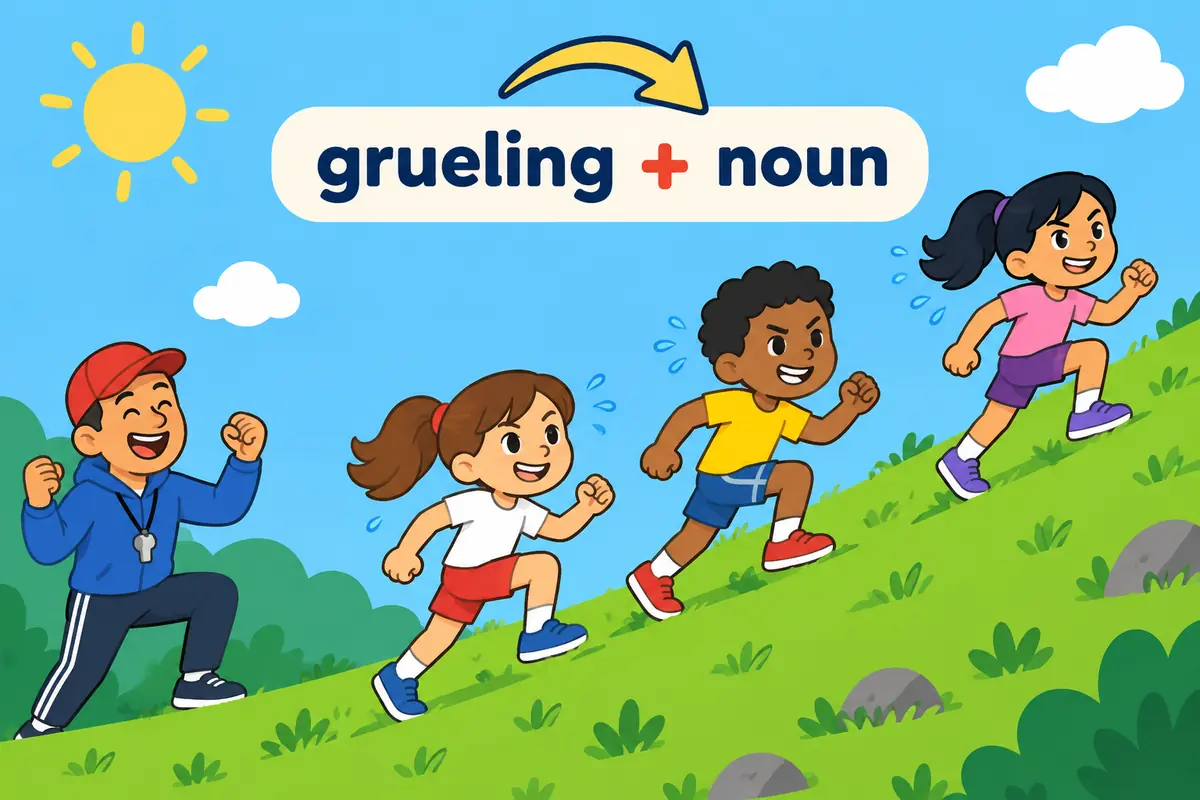
| grueling + noun | The crew faced a grueling climb. | The usual position, directly before the noun. |
| a grueling + noun | It was a grueling day of training. | Frames the experience as one countable stretch. |
| be + grueling | The final stage was grueling. | A plain statement after a linking verb. |
| grueling + for + person | The schedule was grueling for the nurses. | Names who felt the strain. |
| find + noun + grueling | She found the course grueling. | Reports a personal judgement, not a fact. |
| a grueling + period of + noun | It was a grueling period of study. | Bounds the ordeal within a stretch of time. |
| grueling + but + adjective | The work was grueling but rewarding. | Concedes the strain while naming a payoff. |
Grueling in a sentence: examples across contexts
Grueling keeps its meaning but changes company with the text. The sentences below move from a sports page to a documentary script, and each one shows which words a writer reaches for alongside it.
| Context | Example sentence | Why this works |
|---|---|---|
| Sports writing | The runners completed a grueling twenty-mile course. | Measures effort over distance and time. |
| Work report | The team survived a grueling week of night shifts. | Names strain without overstating the drama. |
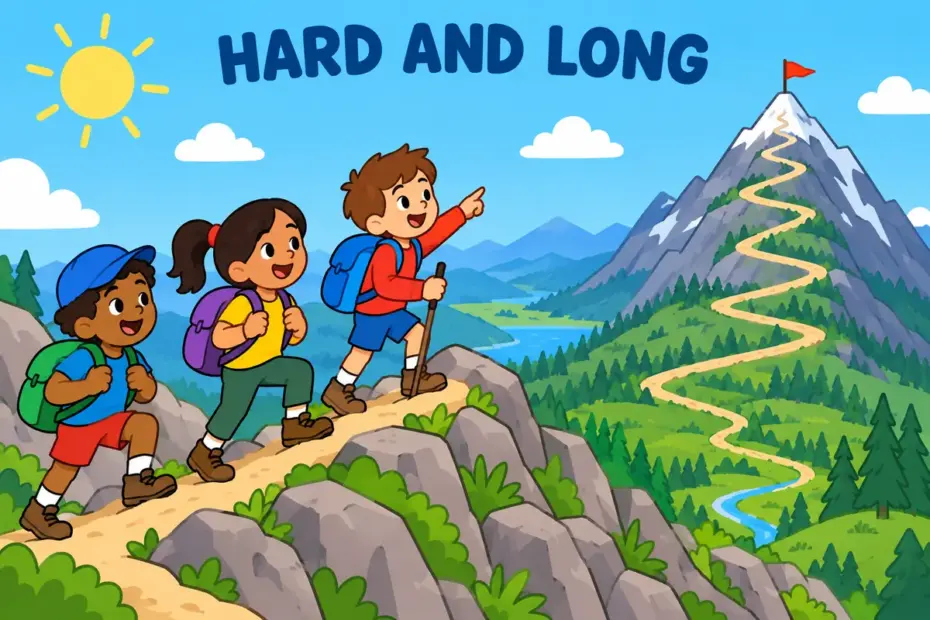
| Travel writing | The ascent became a grueling scramble over loose rock. | Ties exhaustion to a physical task. |
| Medical training | Residents describe a grueling first year. | Reports a widely shared experience in plain terms. |
| History essay | The campaign was a grueling march through winter. | Shows hardship as part of a larger story. |
| Everyday conversation | That exam was grueling. | A short spoken judgement anyone understands. |
| Music review | The band played a grueling two-hour set. | Weighs the effort behind a performance. |
| Business column | The negotiation was a grueling all-night session. | Signals pressure and endurance rather than conflict. |
| Documentary script | The rescue became a grueling struggle against the cold. | Builds tension through a single physical obstacle. |
| Football training | Pre-season brought a grueling routine of two sessions a day. | Names repetition as the source of the strain. |
| Scientific expedition | The team completed a grueling trek across the ice sheet. | Frames hardship as part of serious research. |
| Political campaign | The candidate finished a grueling run of late-night rallies. | Shows endurance as a public test. |
| Volunteering | The volunteers put in a grueling weekend of clearing the trail. | Shows effort given freely rather than paid. |
| Mountain rescue | The search was a grueling night on exposed ground. | Names both the duration and the physical risk. |
| Exam preparation | Revision became a grueling month of daily mock papers. | Applies the word to mental endurance. |
Notice that the vivid examples always attach grueling to a noun the reader can picture, such as course, march or session. That concreteness is what keeps a strong adjective from sounding inflated. The plainer synonym exhausting works in most of these sentences, but it loses the sense of a long ordeal that grueling adds.
Grueling vs exhausting
Grueling and exhausting sit close together on the scale of difficulty, so the choice turns on how long the tiredness lasts. The table sets out the difference.
| Attribute | grueling | exhausting |
|---|---|---|
| Core meaning | Extremely tiring over a long, hard stretch | Making someone very tired |
| Duration | Implies a long ordeal | Can be brief |
| Typical subject | races, schedules, climbs, training | a day, a task, a meeting |
| Tone | Dramatic and vivid | Plain and factual |
| Register | Journalistic and descriptive | Neutral and everyday |
Where the struggle is short, choose exhausting; where it drags on and tests endurance, choose grueling. The related word arduous leans toward steep difficulty, strenuous toward hard physical effort, and taxing toward a steady drain. At the mild end sits tiring, and the far end is brutal, with easy marking the opposite pole.
Verdict: use grueling for a long, punishing ordeal, and exhausting for tiredness that passes quickly.
The comparison also explains a common learner slip. Because the two words feel interchangeable, writers sometimes stack them for emphasis, as in a grueling and exhausting ordeal, which repeats the same idea twice. Choose the one that matches the length of the struggle and let the noun carry the rest of the meaning.
Word forms and grammar of grueling
Grueling has almost no other forms, which is exactly what trips up learners. The table lists the spelling variants and the related word that looks similar but means something else.
| Form | Part of speech | Example |
|---|---|---|
| grueling | adjective, American | The climb was grueling. |
| gruelling | adjective, British | The climb was gruelling. |
| gruelingly | adverb, rare | The day passed gruelingly slowly. |
| gruel | noun, unrelated | The orphanage served thin gruel. |
| grueling (as a verb) | not a form | The race grueling on is non-standard. |
The adverb gruelingly exists but is rare, so most sentences simply place the adjective before a noun. The noun gruel, meaning a thin porridge, is unrelated in meaning even though the two words look alike, and that resemblance produces mistakes such as a grueling soup. Keep the adjective for effort and the noun for food, and the pair stays clear.
A final grammar point is worth naming. Grueling can follow a linking verb, as in the week was grueling, and it can be used predicatively after find, as in they found the pace grueling. What it cannot do is take an object or stand as the main verb, because those are jobs for a verb and grueling is only an adjective.
Common mistakes with grueling
- Incorrect:
The climb grueling on for hours.Correct: The climb ground on for hours. Rule: Grueling is an adjective, so it cannot act as the verb of a sentence. - Incorrect:
It was a gruelling effort written for American readers.Correct: Grueling is the American spelling and gruelling the British one. Rule: Match the spelling to the variety of English you are writing. - Incorrect:
The soup was grueling and cold.Correct: The soup was thin and cold. Rule: Grueling describes exhausting effort, and it is unrelated to the noun gruel. - Incorrect:
She gruelingly finished the race.Correct: She finished the grueling race. Rule: The rare adverb gruelingly fits a manner, while the adjective belongs before the noun. - Incorrect:
He was grueling after work.Correct: He was exhausted after work. Rule: People feel exhausted; the task they did is the thing described as grueling. - Incorrect:
The grueling was too much for the team.Correct: The grueling schedule was too much for the team. Rule: Grueling is an adjective, so it needs a noun to describe and cannot stand alone as a subject.
Practice using grueling
Work through the six items, then read the reasoning rather than only the key, because the grammar of the adjective is what the task tests.
- Fill the gap: The rescue team faced a ______ climb in freezing rain.
- Choose the better word: After a single short meeting she felt (grueling / exhausted).
- Correct the error: The hike grueling on all afternoon.
- Build a sentence: use a grueling schedule about a nurse working nights.
- Spot the register: which belongs in a sports report? a grueling twenty-mile course, or a really tiring old course.
- Change to the British spelling: The training was grueling.
- Fill the gap with a noun: The season was a ______ grind of matches and travel.
- Correct the error: The committee grueling through the evidence all night.
Answers
- grueling, because the adjective paints the difficulty of the climb.
- exhausted, because a person feels tired while the task is what is grueling.
- The hike ground on all afternoon, because grueling is an adjective, not a verb.
- Model answer: The nurse worked a grueling schedule of night shifts all month.
- A grueling twenty-mile course, because a sports report keeps the precise, vivid adjective.
- The training was gruelling, because British English doubles the l.
- grueling, because the adjective describes the noun grind.
- The committee ground through the evidence all night, because grueling cannot serve as a verb.
The bottom line
Use grueling in a sentence to describe work, training or a journey that is punishingly hard over a long stretch. The two points that decide most sentences are its grammar and its spelling: it is an adjective, never a verb, and it doubles the l in British English, becoming gruelling. Where the fatigue is brief rather than an ordeal, exhausting is the plainer and safer word.
Frequently asked questions about grueling
Is grueling spelled gruelling in Britain?
Yes. American English writes grueling with one l, and British English writes gruelling with two. The pronunciation is the same, and both forms are accepted in their own varieties. Choose one spelling and keep it consistent throughout a single document.
Is grueling stronger than tiring?
Much stronger. Tiring means merely causing tiredness, while grueling means punishingly hard over a long period. A short errand is tiring but never grueling. Reserve the word for ordeals that test endurance, such as a marathon or a night shift.
Can grueling describe a person?
Not naturally. Grueling describes experiences and tasks, so a grueling race is normal but a grueling man is odd. The word belongs to things rather than people. To describe a tired person, use exhausted or drained. To describe a demanding person, use exacting or harsh instead.
What is the verb form of grueling?
There is none. Grueling is only an adjective, so it needs a linking verb such as be or seem. A sentence such as the race grueling on is wrong; write the race dragged on or the race was grueling. This gap trips up many learners.