Yonks vs ages comes down to audience: use ages for general English and reserve yonks for British writing that wants a livelier, more dated flavour. Both mean a very long time and both are informal, so neither belongs in a formal report. Choose ages when unsure, and yonks when the British setting is clear.
Yonks vs ages at a glance
- Yonks and ages are both plural nouns meaning a very long time, and both are informal.
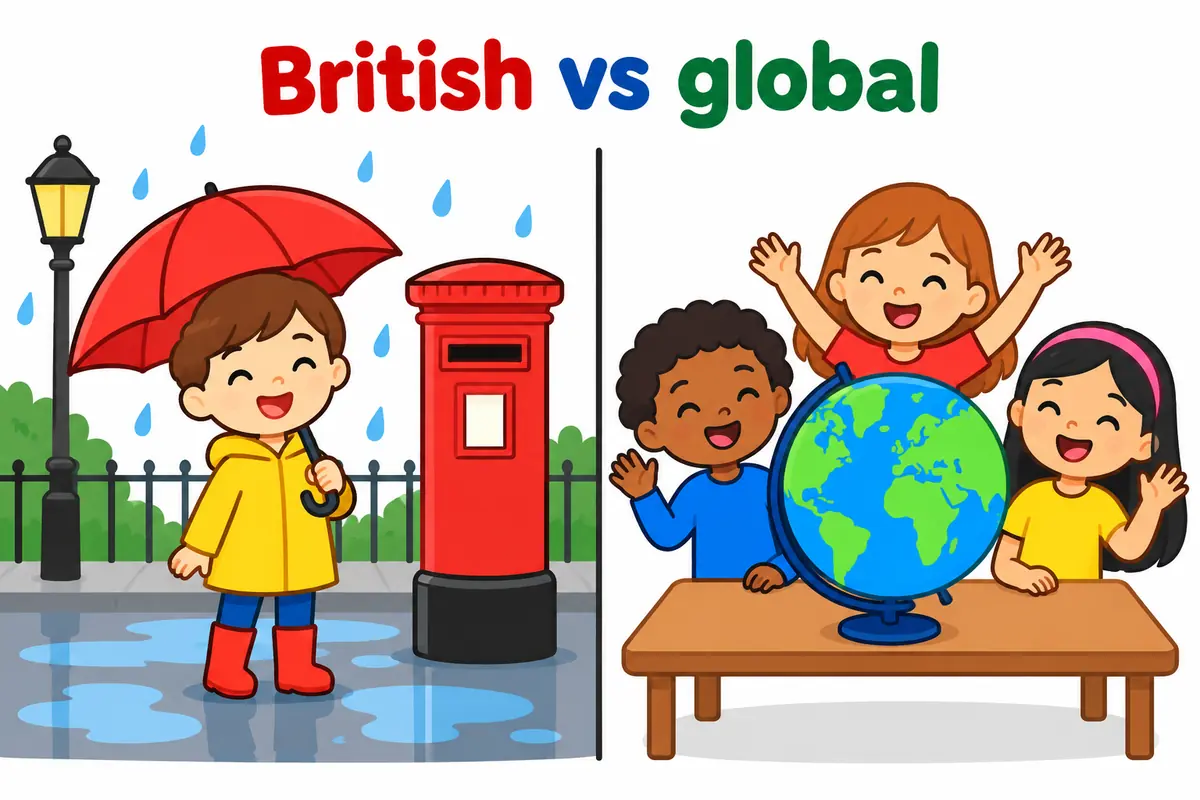
- Yonks is distinctly British; ages is understood everywhere English is spoken.
- Neither word has a useful singular for this sense: there is no yonk, and age means something else.
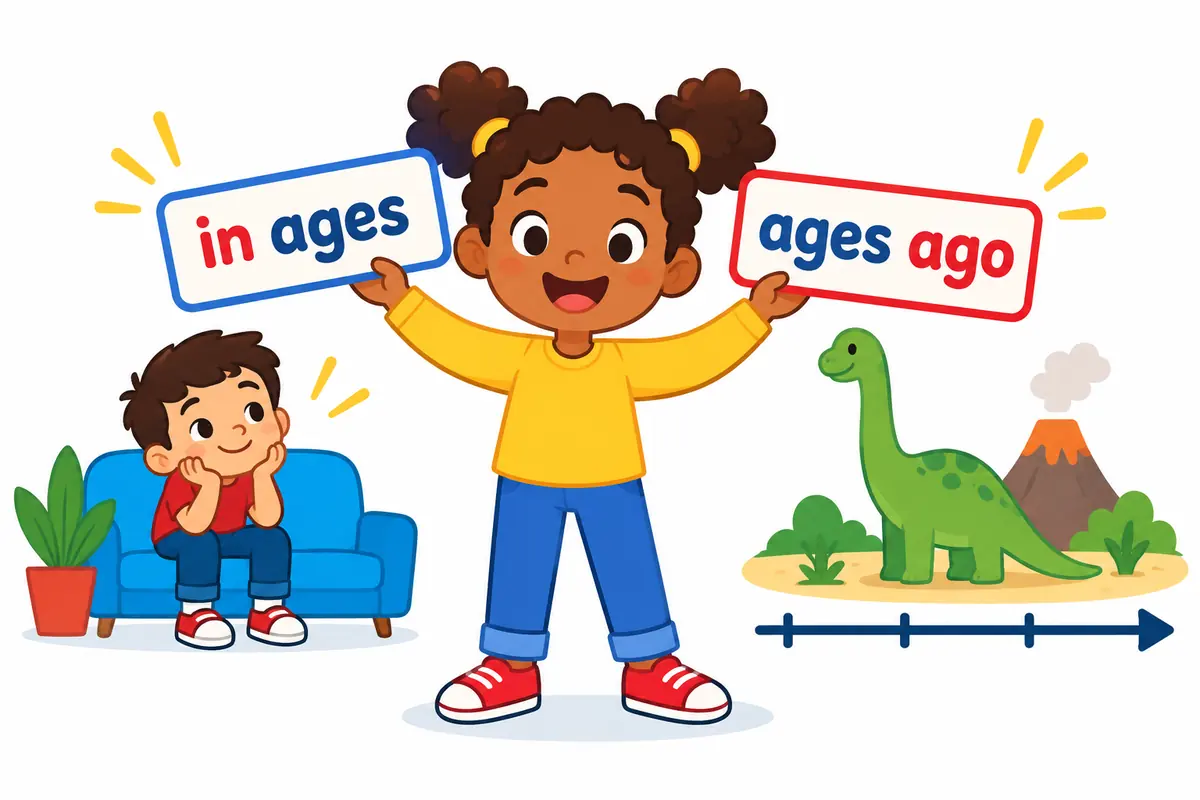
- The usual patterns are in ages, ages ago, in yonks and yonks ago.
- The commonest error is mixing the patterns, as in in ages ago or since ages.
Yonks vs ages: the main differences
The two words are close enough that a sentence can swap them with no change in meaning, so the choice rests on flavour rather than sense. Both describe a stretch of time that feels long, not one that has been measured, and both belong to relaxed speech rather than careful prose. The table below sets out the criteria that actually decide a sentence, from the region a reader expects to the collocation each word prefers.
| Criterion | yonks | ages |
|---|---|---|
| Core meaning | A very long time | A very long time |
| Register | Informal, distinctly British | Informal, general English |
| Typical region | Britain and Ireland | Everywhere English is spoken |
| Usual collocation | yonks ago, in yonks | ages ago, in ages, ages since |
| Tone | Colourful and a little dated | Neutral and safe |
| Strength | Often exaggerates for effect | A mild exaggeration |
| Best medium | Speech, blogs, British fiction | Speech, posts, light writing |
| Formal use | Avoid | Avoid |
What do yonks and ages mean?
Yonks and ages are both informal plural nouns meaning a very long time. The Cambridge entry for yonks marks the word as British and informal, while the entry for ages records the same time sense without the regional label. The words are imprecise by design: they measure a feeling of length rather than a number of days, and both usually answer the question how long.
| Word | Part of speech | Meaning | Example |
|---|---|---|---|
| yonks | plural noun, informal British | a very long time | I have not seen him in yonks. |
| ages | plural noun, informal | a very long time | That concert was ages ago. |
One limitation is worth stating plainly. Both words are too casual for reports, essays and contracts, where the neutral phrase a long time does the job without a change of tone. They are also deliberately vague, so they cannot carry a precise figure; five years is five years, not ages.
How do you use yonks and ages in a sentence?
Both words behave the same way grammatically, which is what makes the swap so easy. The pattern depends on whether the sentence points to a duration or to a moment in the past. Five frames cover almost every real use.
| Pattern | Example | What it signals |
|---|---|---|
| in + ages | I have not been there in ages. | Used after a negative or a question about duration. |
| ages + ago | We moved here yonks ago. | Ago marks a point in the past. |
| it has been + ages + since | It has been ages since we last met. | A since-clause measures the gap. |
| for + yonks | They queued for yonks. | For names a duration, common in speech. |
| ages + of + noun | Ages of practice made the job easy. | A quantifier before of, less common. |
A related informal word, a while, covers a vaguer, often shorter stretch of time, so it cannot replace ages when real length is meant.
Yonks and ages in a sentence: examples across contexts
Because the two words are so close, context decides which one sounds right. Each example below shows a setting where one choice fits better than the other.
| Context | Example sentence | Why this works |
|---|---|---|
| Conversation | I have not seen you in ages. | The neutral informal choice suits any listener. |
| Text message | That film came out yonks ago. | A British sender signals familiarity and humour. |
| British radio | We have been waiting yonks for this result. | Matches the spoken, local register of the host. |
| News feature | The bridge has needed repairs for ages. | A light feature can use ages without losing clarity. |
| Memoir | I spent ages trying to learn that piece. | The first person and vague span suit reflective writing. |
| Sports column | Fans have waited yonks to see the club in a final. | Adds homespun colour to a British sports page. |
| Social post | It has been ages since our last meet-up. | Short, warm and understood by a wide audience. |
| Fiction dialogue | You have been gone yonks, love. | The dialect word marks character and place. |
| Blog post | I have not written here in ages. | Keeps the tone friendly without a regional edge. |
| Podcast chat | We have been meaning to cover that one for yonks. | The relaxed spoken form rewards a British listener. |
| Letter to a friend | It has been ages since we shared a proper letter. | Warm, informal and clear in any country. |
| Travel blog | I had not travelled by train in ages before this trip. | An international readership meets the safer word. |
Which should you use?
The answer depends on who is reading, so the table below turns the main differences into a firm recommendation for five common situations.
| Situation | Recommendation | Why |
|---|---|---|
| You write for a global audience | ages | It is understood everywhere English is spoken. |
| You want a British flavour | yonks | It signals a British voice immediately. |
| You need a formal sentence | neither; use a long time | Both words are informal by definition. |
| You are unsure of your reader | ages | It is the safer, more widely recognised choice. |
| You want extra emphasis | yonks | It tends to exaggerate more colourfully. |
In practice, ages is the default and yonks is the deliberate exception. Readers in Britain accept either without a pause, while readers elsewhere may slow down for a moment at yonks; that small pause is exactly the effect a British voice wants and exactly why global copy avoids it.
Word forms and grammar of yonks and ages
Yonks has no usable singular in this sense, while ages is the plural of a word that changes meaning entirely in the singular. The table also shows a British cousin that behaves the same way.
| Word | Form | Note | Example |
|---|---|---|---|
| yonks | plural noun only | There is no accepted singular yonk. | I have waited yonks. |
| ages | plural noun | The singular age means a stage of life or an era. | It took ages. |
| donkey’s years | fixed phrase | A similar British informal expression. | It has been donkey’s years. |
Keep the singular age out of this time sense: at the age of ten and the digital age have nothing to do with waiting. For a short, vague stretch, a moment or a spell sits at the other end of the scale from ages.
Common mistakes with yonks and ages
- Incorrect:
I have not seen her in yonk.Correct: I have not seen her in yonks. Rule: Yonks exists only as a plural. - Incorrect:
We met yonks ago years.Correct: We met yonks ago. Rule: One time word is enough; do not stack two. - Incorrect:
It happened in ages ago.Correct: It happened ages ago. Rule: Ago and in never appear together in this pattern. - Incorrect:
I have known him since ages.Correct: I have known him for ages. Rule: Since takes a point in time; for takes a duration. - Incorrect:
The report noted that the policy was ages old.Correct: The report noted that the policy was many years old. Rule: Formal writing avoids ages and yonks.
Practice using yonks and ages
Work through the seven items, then read the reasoning rather than only the answer.
- Fill the gap: I have not visited my grandparents in ______.
- Choose the better word: The British presenter joked that the queue had been there for (yonks / a period).
- Correct the error: It happened in ages ago.
- Build a sentence: use it has been ages since about a friend you miss.
- Spot the register: which belongs in a school report — the project has taken a long time, or the project has taken ages?
- Rewrite for a global audience: She moved yonks ago. Replace the regional word.
- Correct the error: I have waited here since yonks.
Answers
- ages — the neutral informal choice suits an unmarked sentence.
- yonks — the British presenter and the playful tone both point to the regional word.
- It happened ages ago — ago and in cannot be combined.
- Model answer: It has been ages since I saw my old teammate.
- The project has taken a long time — a report keeps to neutral wording.
- She moved ages ago — ages is understood everywhere, unlike yonks.
- I have waited here for yonks — for introduces the duration, not since.
The bottom line
Yonks vs ages is a choice of flavour more than meaning, because both say a very long time in an informal way. Use ages for a wide audience and yonks for British colour. The two details that settle most sentences are these: neither word belongs in formal writing, and the pattern matters more than the word, so in ages and ages ago are correct while in ages ago is not.
Frequently asked questions about yonks and ages
Is yonks only used in British English?
Yonks is strongly associated with British and Irish English, and dictionaries usually label it British and informal. Speakers in other regions may recognise it from books and television but rarely use it themselves. Ages carries no such regional label, which is why it travels better in international writing.
How do you choose between ages ago and in ages?
Ages ago points to a moment in the past, as in we met ages ago. In ages measures a stretch of time up to now and usually follows a negative or a question, as in I have not seen you in ages. The two patterns never mix, so in ages ago is always wrong.
Can ages or yonks mean a person’s age?
No. In this informal sense both words only mean a long time. The singular age is different and can refer to how old somebody is, as in at the age of ten, or to a historical era, as in the digital age. Keep the time sense to the plural forms only.
Is there a singular form of yonks?
There is no accepted singular yonk in standard English, so the word is always plural, as in I have waited yonks. Ages also normally appears in the plural for this meaning. If you need a singular, you have left the informal register and should use a long time instead.