Scale back means to reduce the size, scope or amount of something, usually a plan, budget or operation. To use scale back in a sentence, put the thing being reduced as the object: “The council scaled back the road-widening plan.” The verb is transitive and separable, so scale it back also works.
Scale back at a glance
- Scale back is a phrasal verb; the common forms are scale back, scales back, scaled back and scaling back.
- It is transitive, so the thing being reduced normally follows it, as in scale back spending.
- It is separable, so a pronoun must sit between the two parts: scale it back, never scale back it.
- The usual subjects are companies, councils, hospitals and households trimming what they spend.
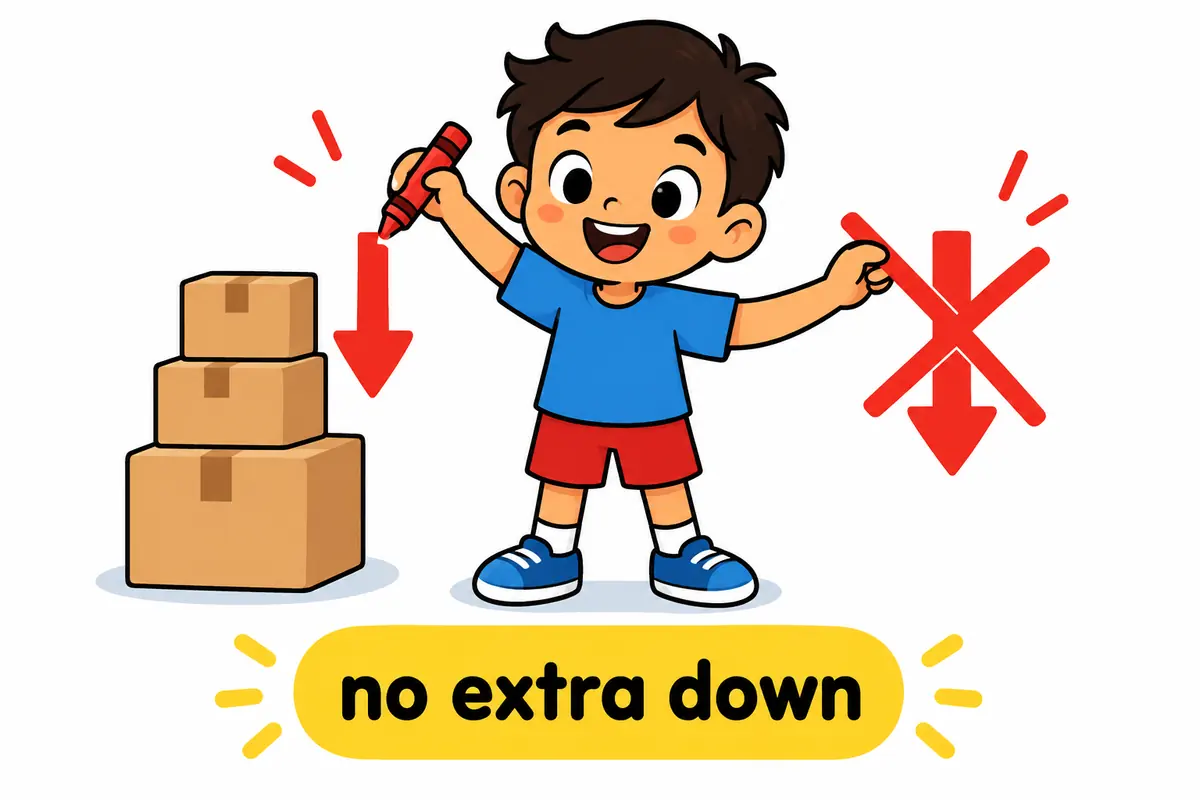
- The commonest error is adding down as well and writing scaled back down, which doubles the particle.
What does scale back mean?
Scale back is a phrasal verb meaning to reduce the size, extent or spending of something. The Cambridge entry for scale back treats it as a reduction in amount or size. One sense covers deliberate cuts to a plan, budget or service, made by whoever runs it; a second covers a gradual fall in output or activity. Where the meaning is simply make less, reduce is the safer single verb, because scale back adds the idea of trimming something that had grown too large.
| Sense | Plain meaning | Example sentence |
|---|---|---|
| Cut the size of a plan | Make a plan, project or budget smaller on purpose | The firm scaled back its expansion. |
| Reduce spending or output | Lower the amount produced or spent over time | Households scaled back spending on travel. |
| Trim staff or activity | Do less of something that had grown large | The clinic scaled back its evening hours. |
One limitation is worth stating plainly. Scale back does not mean stop, close or cancel: a scaled-back service still runs, only on a smaller scale. If the thing ends completely, reach for cancel or shut down instead. The word also carries no judgement about whether the cut was wise, only that it happened.
How do you use scale back in a sentence?
Put the thing being reduced after the verb, and keep the two parts together unless the object is a pronoun. Five patterns cover almost every real sentence, and the separable form is the one careful writers vary on purpose.
| Pattern | Example | What it signals |
|---|---|---|
| scale back + object | The airline scaled back its winter schedule. | The standard order, with the object after the full phrase. |
| scale + object + back | The airline scaled its winter schedule back. | Separable form, common when the object is long. |
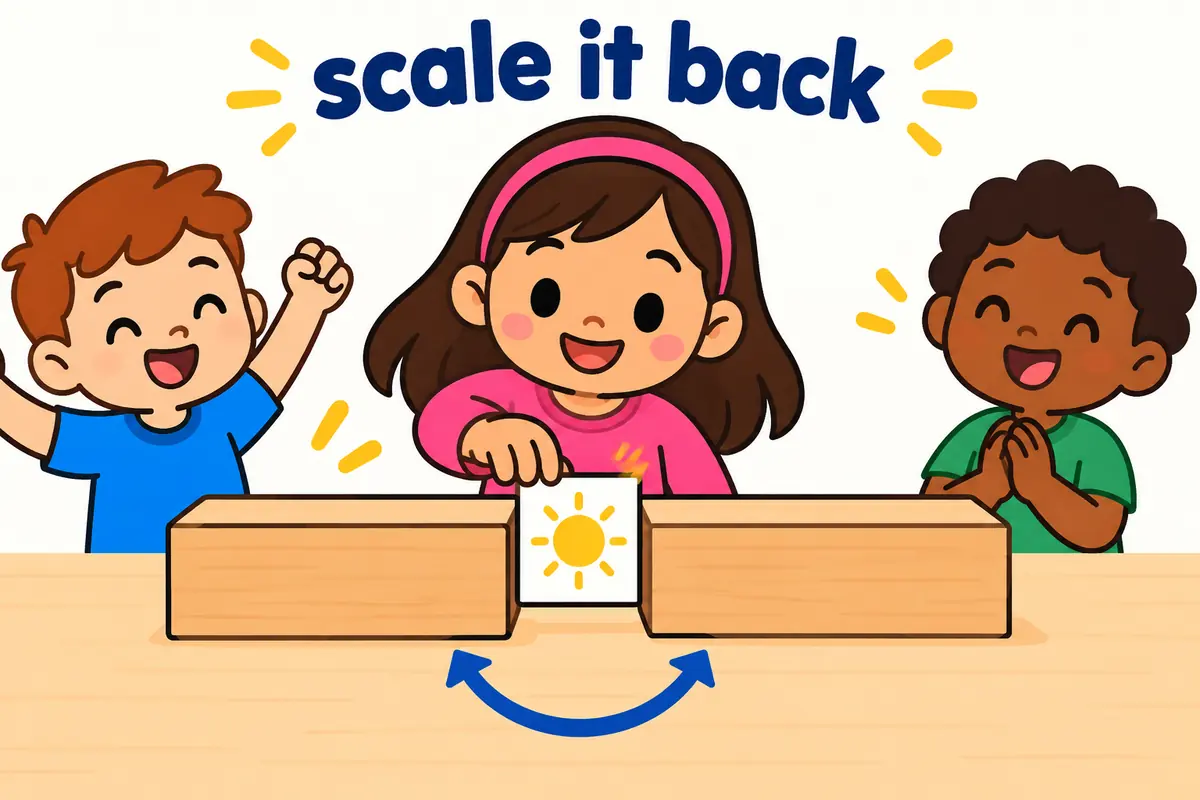
| scale + pronoun + back | They scaled it back. | A pronoun must sit between the two parts. |
| scale back on + noun | The city scaled back on road repairs. | On names the area that is being reduced. |
| scale back, no object | After the losses, the company scaled back. | Intransitive use, with the object understood. |
The rule of thumb is simple: keep scale back together unless the object is a pronoun, which must go in the middle. Writers who want one plain verb rather than a phrase can choose curtail for formal reports, or trim when the cut is small and tidy.
Scale back in a sentence: examples across contexts
Scale back keeps one meaning while changing register. The nine sentences below move from a classroom to a government briefing, and each one names what is being reduced.
| Context | Example sentence | Why this works |
|---|---|---|
| Classroom | Our class scaled back the mural so it would fit the wall. | A concrete object makes the reduction easy to picture. |
| Workplace email | We will scale back the pilot to two teams next term. | States the cut and the limit in one line. |
| News report | The utility scaled back its repair programme after the storm. | Names the organisation doing the reducing, as reporting requires. |
| Business report | Management scaled back capital spending by a fifth. | Pairs the verb with a measured amount, which readers trust. |
| Household talk | We scaled back the holiday to a long weekend. | Shows the everyday sense of trimming personal plans. |
| Government briefing | The ministry scaled back the subsidy for new boilers. | Keeps the tone formal without a one-word synonym. |
| Sports writing | The club scaled back its training camp to save money. | Links the cut to a stated reason. |
| Academic prose | Investigators scaled back the trial when enrolment stalled. | The subject is a procedure, which keeps the claim impersonal. |
| Personal planning | He scaled his ambitions back and finished the course. | A long object sits comfortably between the two parts. |
Only two rows use the split form, and both do so because the object is long enough to sound better after the verb. That is the practical test for separability in real writing.
Scale back vs reduce
Scale back and reduce overlap on almost every sentence, but they are not interchangeable in tone. The table sets out the criteria that decide which one belongs.
| Attribute | reduce | scale back |
|---|---|---|
| Core meaning | Make smaller in number or degree | Make smaller by trimming what had grown large |
| Parts of speech | Single verb | Phrasal verb with a particle |
| Register | Neutral, everyday to formal | Business, news and planning talk |
| Typical object | An amount, risk or speed | A plan, budget, service or schedule |
| Implies a prior increase | No | Often yes |
| Separable | Not applicable | Yes, with the pronoun in the middle |
Verdict: choose reduce when you only need a smaller number, and choose scale back when you mean trimming a plan, budget or service that had grown too big or costly.
Word forms and grammar of scale back
Scale back inflects on the verb rather than the particle, so only scale changes. The table also lists the related phrase learners often confuse with it.
| Form | Part of speech | Example |
|---|---|---|
| scale back | phrasal verb, base form | We must scale back the launch. |
| scales back | phrasal verb, third-person singular | The board scales back bonuses each winter. |
| scaled back | phrasal verb, past and participle | The council scaled back the plan last year. |
| scaling back | phrasal verb, -ing form | They are scaling back production slowly. |
| scaleback | noun, rare and chiefly journalistic | Unions resisted the scaleback of night shifts. |
| scale down | related phrasal verb | The lab scaled down the trial. |
Keep scale back and scale down apart in your notes. Both mean make smaller, but scale down often suggests fitting something to a fixed smaller size, while shrink describes the result rather than the decision.
Common mistakes with scale back
- Incorrect:
The company scaled back its budget down.Correct: The company scaled back its budget. Rule: back already carries the downward idea, so adding down repeats it. - Incorrect:
We need to scale back down the project.Correct: We need to scale back the project. Rule: use either scale back or scale down, never both at once. - Incorrect:
They scaled back it after the review.Correct: They scaled it back after the review. Rule: a pronoun must sit between the verb and its particle. - Incorrect:
The government scaled back of the subsidy.Correct: The government scaled back the subsidy. Rule: scale back takes a direct object; add on only to name the area, as in scaled back on subsidies. - Incorrect:
The festival was scaled back off this year.Correct: The festival was scaled back this year. Rule: the phrasal verb needs no extra preposition after it.
Practice using scale back
Work through the six items, then read the reason beside each answer instead of only the key.
- Fill the gap: The studio ______ its summer programme after ticket sales fell.
- Choose the better word: The council decided to (scale back / cancel) the festival rather than end it entirely.
- Correct the error: They scaled back it before the deadline.
- Build a sentence: use scale something back about a family trimming its holiday plans.
- Spot the register: which belongs in a business report — the firm scaled back its expansion, or the firm made its expansion smaller?
- Rewrite with a pronoun: Scale back the overtime. Use it instead of the overtime.
Answers
- scaled back — the programme is the object and the action is finished.
- scale back — the festival still happens but on a smaller scale, so cancel is too strong.
- They scaled it back before the deadline — the pronoun goes between scale and back.
- Model answer: The family scaled back its holiday to three nights instead of a week.
- The firm scaled back its expansion — a report prefers the precise phrasal verb to a vague longer phrase.
- Scale it back — the pronoun must sit in the middle of a separable phrasal verb.
The bottom line
Use scale back in a sentence when you reduce the size, scope or spending of a plan, budget or service that had grown large, and keep the object close to the verb. Two nuances decide most sentences: the verb is separable but a pronoun must sit between scale and back, and scale back means smaller rather than finished, so cancel is the word when something ends. For a single plain verb, lessen or reduce will often do.
Frequently asked questions about scale back
Is scale back a separable phrasal verb?
Yes. Scale back is separable, so a short object or a pronoun can sit between the verb and the particle, as in scale the plan back or scale it back. A pronoun must take that middle position, because scale back it is not idiomatic. With a long noun phrase, the unsplit order usually reads better.
What is the difference between scale back and scale down?
Both mean make smaller, and most sentences accept either. Scale back often suggests trimming something that grew too large, such as a budget or a service, while scale down often suggests fitting something to a fixed smaller size. Neither can be used to mean stop completely.
Can scale back be used without an object?
Yes. Scale back has an intransitive use for a company or activity that becomes smaller on its own, as in the company scaled back after the losses. The object is understood from context. This intransitive pattern is common in news writing, where the reader already knows what is being reduced.
Is scale back formal or informal?
Scale back sits in the middle. It appears in business reports, government briefings and news stories, where it is perfectly standard, and in everyday talk about holidays and household spending. It is slightly less formal than curtail but more natural than a stiff phrase such as effect a reduction in.