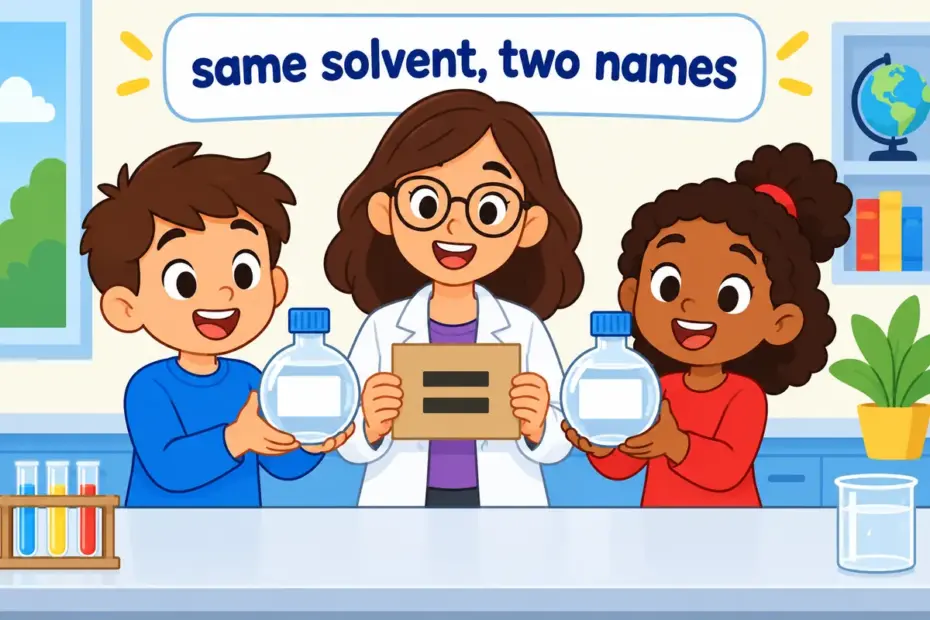
Xylol vs xylene is not a contest between two chemicals: they are two names for the same aromatic solvent, and xylene is the name to use in scientific and technical writing. Keep xylol for older trade labels and industrial supplies, where it still appears on drums and in old lab manuals.
Xylol vs xylene at a glance
- Xylene and xylol are synonyms for one compound, dimethylbenzene, with the formula C8H10.
- Xylene is the systematic, preferred name; xylol is an older commercial and industrial synonym.
- Both label the same clear, flammable liquid used as a solvent and a laboratory clearing agent.
- The three isomers are named with xylene: ortho-xylene, meta-xylene and para-xylene.
- The commonest error is treating xylol and xylene as two different substances and comparing their properties.
Xylol vs xylene: the master comparison
Every practical question about these two words reduces to naming rather than chemistry. The table maps the criteria that decide which label a writer, buyer or teacher should reach for, and it is a comparison of usage, not of substances.
| Criterion | xylene | xylol |
|---|---|---|
| Chemical identity | Dimethylbenzene, C8H10 | The same compound |
| Preferred name | Standard systematic name | Older synonym |
| Where you meet it | Papers, safety sheets, modern catalogues | Trade drums, old manuals, some industry labels |
| Typical audience | Chemists, students, regulators | Painters, printers, industrial buyers |
| Names the isomers | Yes: ortho, meta and para | No |
| Register | Neutral and technical | Industrial and dated |
| Sentence use | Add fifty millilitres of xylene. | The cabinet stored xylol beside the resins. |
| What it is not | Not a brand name | Not a separate substance |
What are xylol and xylene?
Xylene is an aromatic hydrocarbon used mainly as a solvent, and xylol is the same liquid under an older commercial name. The Cambridge entry for xylene defines it as a colourless liquid obtained from petroleum or coal tar, and the entry for xylol simply points to the same substance. In practice, the difference is who is speaking: a laboratory method says xylene, a supplier’s drum from decades ago says xylol, and a modern safety data sheet says xylene because regulators expect the standard name.
| Point of comparison | xylene | xylol |
|---|---|---|
| Status today | The name used in standards and methods | A synonym found in older and trade sources |
| In a sentence | Xylene is the standard solvent in the method. | The workshop stocked xylol for thinning paint. |
| In a glossary | Defined directly | Defined as another word for xylene |
One limitation is worth stating plainly. Because the two words name one substance, you should not write that xylene is stronger, purer or safer than xylol; a difference claimed between them is a difference between suppliers or grades, not between the names themselves. For ordinary household tasks, a paint thinner is the general product, and xylene is only one of several solvents it may contain.
How do you use xylol and xylene in a sentence?
Treat both words as the name of a substance, so they behave as uncountable nouns and take no article before them. Five patterns cover the writing that appears in methods, safety sheets and supplier notes.
| Pattern | Example | What it signals |
|---|---|---|
| as a subject | Xylene dissolves the mounting resin in minutes. | States a property, with no article needed. |
| with an amount | Add twenty millilitres of xylene to the tray. | Measures the liquid in a procedure. |
| as a label on a container | The drum was marked xylol on the old stencil. | Reports what an existing label says. |
| in a list of synonyms | Xylene, also called xylol, is a common solvent. | Introduces the alternative name in one clause. |
| as a modifier | The xylol fraction was analysed for purity. | Uses the word attributively in technical prose. |
The practical rule is consistency: choose xylene as your main term, and mention xylol once as its synonym rather than switching between them. Writers describing a general cleaning product rather than a lab chemical often prefer a household thinner as the plainer label.
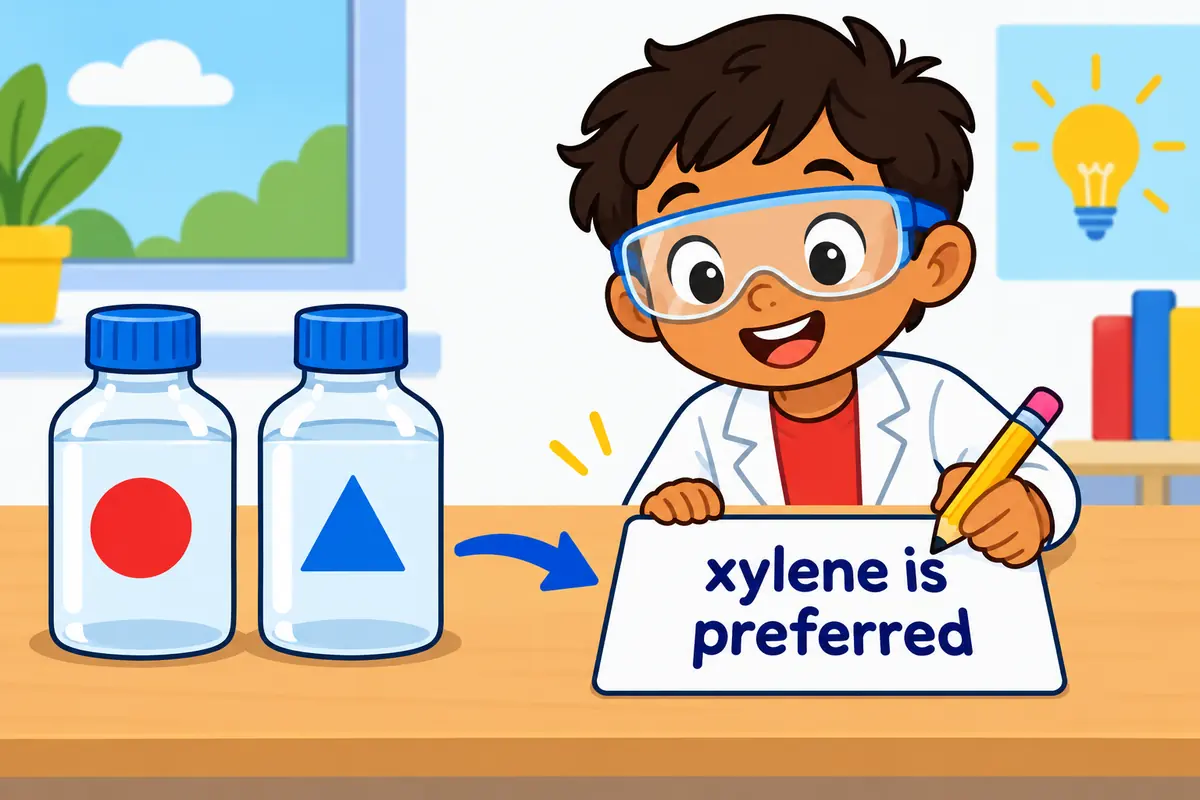
Xylol and xylene in a sentence: examples across contexts
The same substance appears under different names because different readers expect different words. The nine sentences below move from a chemistry method to a workshop note, and each one keeps a single, consistent label.
| Context | Example sentence | Why this works |
|---|---|---|
| Lab method | Clear the slides in xylene for three minutes. | Uses the standard name a method expects. |
| Safety data sheet | Xylene is flammable and must be stored away from heat. | Keeps the standard name in a regulated document. |
| Supplier catalogue | Xylene, technical grade, is sold in twenty-litre drums. | Names the grade as well as the substance. |
| Older lab manual | The bench was labelled xylol in the 1974 handbook. | Quotes the older term as a period detail. |
| Workshop note | The painters kept xylol for thinning enamel. | Matches the word a trade label would carry. |
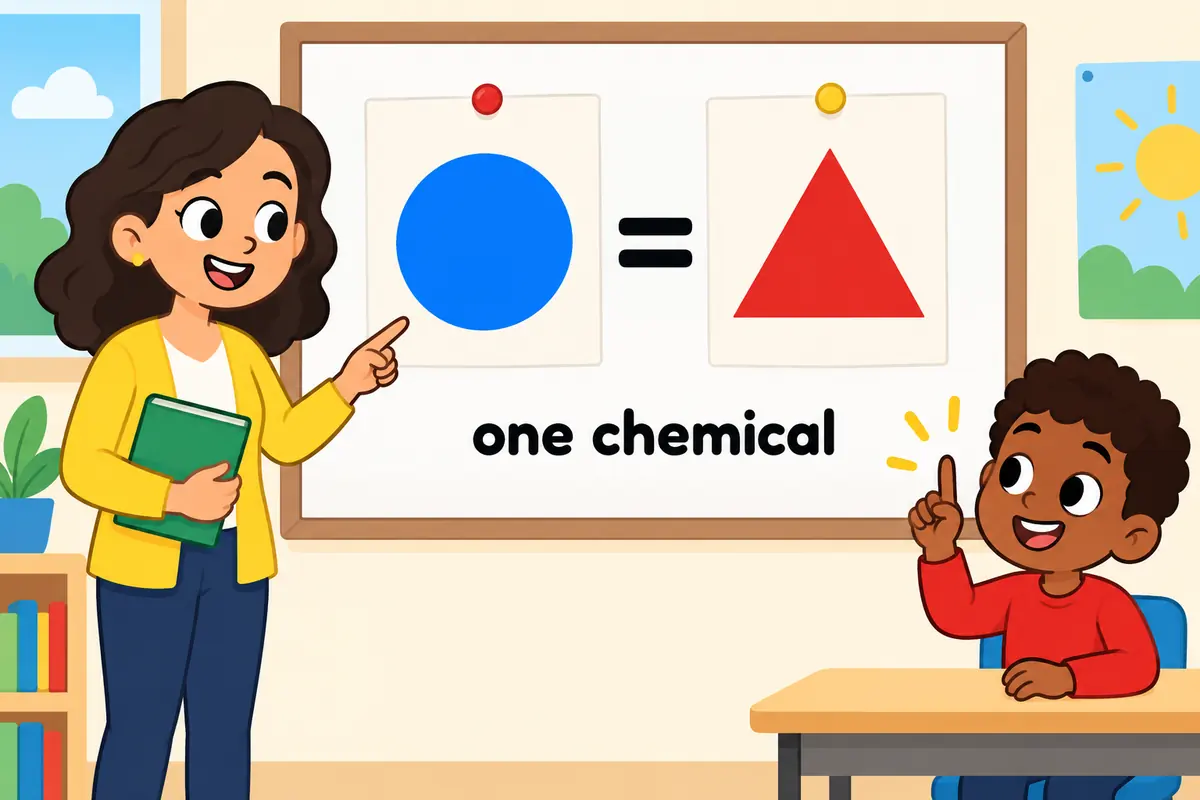
| Classroom | Our teacher explained that xylol and xylene are one chemical. | Names both to clear up the confusion directly. |
| Textbook glossary | Xylene (xylol): an aromatic solvent used in histology. | Puts the preferred term first and the synonym in brackets. |
| News report | Inspectors found xylene drums stored without ventilation. | Reports the substance in its standard modern name. |
| Industrial purchase order | Order one drum of xylol for the printing floor. | Uses the trade term the buyer and supplier share. |
Notice that no row needs both names at once except the glossary and the classroom, and there the pairing is the teaching point. Everywhere else, one label carries the sentence.
Which should you use?
The choice follows the reader, not the chemistry. The table maps the common situations to a firm recommendation.
| Situation | Use this word | Reason |
|---|---|---|
| A scientific paper or method | xylene | Editors and regulators expect the standard name. |
| A safety data sheet or label | xylene | Hazard communication uses recognised chemical names. |
| Quoting an old manual or drum | xylol | The source itself uses that word. |
| A trade order with an older supplier | xylol | Both sides already share the industrial term. |
| Explaining the confusion to a class | both, once | Pairing the names is the lesson. |
Verdict: choose xylene as your default in anything technical or regulatory, quote xylol only when you are reproducing a trade or historical source, and never present the two as rival chemicals with different properties.
Word forms and grammar of xylol and xylene
Both are nouns for a substance, so they are uncountable and normally take no article. The table also lists the plural form learners overuse and the adjective built from xylene.
| Form | Part of speech | Example |
|---|---|---|
| xylene | noun, uncountable | Xylene is stored in a steel cabinet. |
| xylol | noun, uncountable, synonym | The drum of xylol was nearly empty. |
| xylenes | noun, plural, isomer group | The plant separates the xylenes by distillation. |
| mixed xylenes | noun phrase, commercial blend | Mixed xylenes are sold as an industrial solvent. |
| xylene-based | adjective | A xylene-based cleaner needs good ventilation. |
| a xylene | non-standard | Do not write a xylene; the substance name takes no article. |
Keep the plural for the isomer group, not for a single liquid. Chemists talk about the xylenes when they mean the three forms together, and about mixed xylenes when they mean the commercial blend, but a spill is always xylene, never xylenes.
Common mistakes with xylol and xylene
- Incorrect:
Xylene is stronger than xylol for cleaning.Correct: Xylene and xylol are the same solvent. Rule: The words are synonyms, so any strength difference comes from grade or supplier, not the name. - Incorrect:
We compared the toxicity of xylol and xylene.Correct: We reviewed the toxicity of xylene. Rule: A study compares one substance with others, not two names for the same substance. - Incorrect:
Add a xylene to the beaker.Correct: Add xylene to the beaker. Rule: A substance name is uncountable, so it takes no article. - Incorrect:
Two xylenes were spilled in the store.Correct: Xylene was spilled in the store. Rule: The plural xylenes names the isomer group, not a quantity of one liquid. - Incorrect:
Store the Xylene in a cool room.Correct: Store the xylene in a cool room. Rule: Common chemical names are lowercase unless they begin a sentence.
Practice using xylol and xylene
Work through the six items, then read the reason beside each answer rather than only the key.
- Fill the gap: The technician cleared the slides in ______ before mounting them.
- Choose the better word: A modern safety data sheet should name the solvent (xylene / xylol).
- Correct the error: Xylol is a purer chemical than xylene.
- Build a sentence: use also called to introduce the synonym xylol in one clause.
- Spot the register: which belongs in an industrial purchase order — one drum of xylol for the printing floor, or dimethylbenzene for the printing floor?
- Rewrite with the plural: The plant separates the three forms of xylene. Use xylenes instead of the three forms.
Answers
- xylene — a laboratory method uses the standard name for the clearing agent.
- xylene — regulated hazard documents expect the recognised modern name.
- Xylol and xylene are the same chemical — the two words are synonyms, so neither is purer by name.
- Model answer: Xylene, also called xylol, is a solvent used to thin paint.
- One drum of xylol for the printing floor — the trade term matches what the older supplier stocks.
- The plant separates the xylenes by distillation — the plural names the isomer group.
The bottom line
Use xylene as the standard name for this aromatic solvent and treat xylol as its older synonym, because xylol vs xylene is a question of labelling rather than chemistry. Two nuances decide most sentences: never claim a property difference between the two words, and remember the substance is uncountable while the plural xylenes names the isomer group. When you mean a general solvent product rather than a specific chemical, a solvent thinner is the plainer term.
Frequently asked questions about xylol and xylene
Is xylol the same as xylene?
Yes. Xylol is an older commercial synonym for xylene, and both name the aromatic compound dimethylbenzene. The latest dictionaries and safety documents list xylol as another word for xylene rather than a distinct substance. Any apparent difference reflects the grade or supplier, not the name on the label.
Why do some laboratories still say xylol?
Older methods and trade catalogues used xylol widely, and some industries never switched to the modern term. Labels, storeroom shelves and long-standing purchase habits keep the word alive. In new writing, however, the standard name is xylene, and xylol usually appears only when quoting an older source or matching a supplier.
Which word appears on safety data sheets?
Safety data sheets use the recognised chemical name, so they say xylene. Hazard communication rules depend on consistent, unambiguous names that workers and regulators can look up quickly. Xylol may appear in a synonym list on the same document, but the heading and the hazard statements use xylene throughout.
Can I write xylenes instead of xylene?
Only when you mean the isomer group. The plural xylenes covers the ortho, meta and para forms together, and mixed xylenes names the commercial blend. For a single liquid, whether spilled, stored or measured, the correct form is the uncountable singular xylene with no article before it.