To black out is to lose consciousness briefly, to switch off or cover every light, or to hide text so it cannot be read. The verb splits around its object in the lighting and censoring senses: the technician blacked the windows out before the raid. The sense comes from context, not from the particle.
Black out at a glance
- Black out is a phrasal verb; its forms are blacks out, blacked out and blacking out.
- The three common senses are losing consciousness, darkening a place, and suppressing text or information.
- Two senses are transitive and separable; the consciousness sense takes no object at all.
- The one-word noun blackout names a power cut or a gap in memory.
- The usual error is assuming every sense behaves the same way grammatically.
What does black out mean?
Black out is a phrasal verb meaning to lose consciousness for a short time, to darken a place completely, or to hide information so that it cannot be read. The Cambridge entry for black out separates the consciousness sense from the lighting and censorship senses, and the grammar follows the meaning. Where a sentence describes an official decision to remove a record, censor a report names the act more precisely than black out does, and suppress the details is the broader verb that covers every way information is kept back.
| Sense | Plain meaning | Example sentence |
|---|---|---|
| Lose consciousness | Faint briefly and then recover | The runner blacked out at the finish line. |
| Darken a place | Cut or cover every source of light | Stagehands black out the hall between scenes. |
| Hide or censor | Remove text or detail from view | Editors blacked out the agent’s name before publication. |
| Cause a power cut | Make an area lose electricity | The storm blacked out three streets overnight. |
One limitation matters. Black out does not mean fall asleep, and it does not mean die. When a document must be cleaned up for legal use, the precise word is redact, because black out describes the heavy bar across the page rather than the careful removal behind it.
How do you use black out in a sentence?
Black out behaves differently in each sense, so the pattern to choose depends on which meaning you want. The consciousness sense is intransitive and takes no object; the lighting and censoring senses are transitive and separable, which means the object may sit between black and out or after the whole phrase. A pronoun must sit in the middle: you black it out, never black out it.
| Pattern | Example | What it signals |
|---|---|---|
| black out (no object) | The pilot blacked out during the descent. | The intransitive consciousness sense; no object is possible. |
| black + object + out | A technician blacked the windows out. | Separable form; the object sits between verb and particle. |
| black out + object | The censor blacked out the sentence. | Separable form; longer objects come after out. |
| be blacked out | The whole transcript was blacked out. | Passive voice, common in reporting on censorship or outages. |
| blackout (noun) | The storm caused a four-hour blackout. | One-word noun for a power cut or a memory gap. |
When the object is a pronoun, English forces it into the middle slot: black it out is correct, and black out it sounds wrong to every native ear. That single rule separates learners from fluent writers.
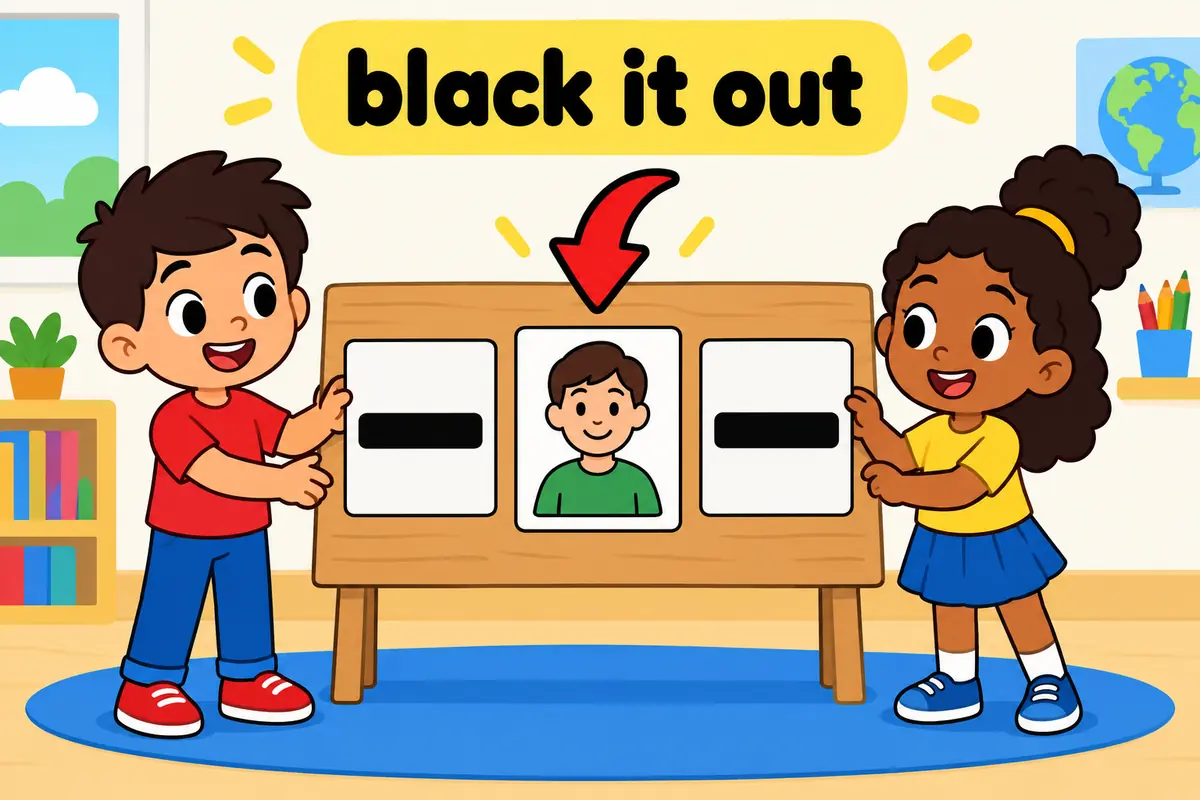
Black out in a sentence: examples across contexts
Black out keeps one spelling but changes meaning and register as it moves between subjects. Each sentence below pins a single sense, so a reader can see how context does the work.
| Context | Example sentence | Why this works |
|---|---|---|
| Classroom | The projector failed and the whole room blacked out for a moment. | The subject is a fault, so the sentence names an outage, not a fainting. |
| Sports report | The boxer blacked out in the eighth round but left the ring unaided. | No object follows, which is the mark of the consciousness sense. |
| Workplace email | We blacked out the client names before circulating the draft. | The object sits after out, the usual choice for a longer noun phrase. |
| News report | Officials blacked out the location of the shelter in the released files. | Passes as a censoring act and keeps the officials as the actors. |
| Safety briefing | If the mains trip, the stairwell lights black out for ten seconds. | The conditional shows a routine, expected outage rather than an accident. |
| Fiction | He blacked out the bedroom and let the dark do the rest. | Separable form used as deliberate action, not a medical event. |
| Medical note | The patient blacked out twice and was referred for tests. | Formal register keeps the verb bare and unsensational. |
| Conversation | I nearly blacked out when I stood up too fast. | The first person and the near miss make it everyday speech. |
| Court filing | The company blacked out the figures that would have shown the shortfall. | The censoring sense carries an implied accusation of concealment. |
Only the news and court rows carry a whiff of wrongdoing. A street lamp that blacks out is an accident, but a company that blacks out figures is choosing to hide them. The verb can eclipse the truth by omission, and reporters who want to name the act instead say the firm tried to erase a name from the record.
Black out vs faint
Black out and faint overlap in the consciousness sense but are not equal. Faint names one medical event and nothing else; black out covers that event plus two unrelated senses about light and information.
| Attribute | black out | faint |
|---|---|---|
| Core meaning | Lose consciousness, darken, or hide | Lose consciousness briefly |
| Number of senses | At least three | One, plus a related adjective |
| Transitivity | Intransitive in one sense, transitive in the others | Always intransitive about a person |
| Register | Everyday, journalistic and technical | Everyday and medical |
| Example | The lights blacked out across the estate. | She fainted in the hot hall. |
Verdict: choose faint when the only thing happening is a person losing consciousness, and choose black out when you also need the senses about lights, power or hidden text. A patient collapse describes falling down for any reason, which is why a doctor may ask whether you fainted, blacked out or simply fell.
Word forms and grammar of black out
Black out keeps the same shape whether it means a fainting, an outage or a censor’s bar. The one-word form blackout is a noun, and the hyphenated blacked-out is an adjective, so the spelling tells a reader which job the word is doing.
| Form | Part of speech | Example |
|---|---|---|
| black out | phrasal verb, base | Storms often black out the whole valley. |
| blacks out | verb, third person singular | He blacks out whenever he skips lunch. |
| blacked out | verb, past and past participle | The editor blacked out the last line. |
| blacking out | verb, present participle | They are blacking out windows for the shoot. |
| blackout | noun, one word | A blackout silenced every radio in the city. |
| blacked-out | adjective, hyphenated | The blacked-out names filled the page. |
Common mistakes with black out
- Incorrect:
The pilot blacked out the engine.Correct: The engine cut out and the pilot blacked out. Rule: The consciousness sense takes no object, so a thing cannot be blacked out by the person fainting. - Incorrect:
Please black out it before you send the file.Correct: Please black it out before you send the file. Rule: A pronoun object must sit between the verb and the particle. - Incorrect:
There was a black out across the district.Correct: There was a blackout across the district. Rule: The noun is one word; the two-word form is the verb. - Incorrect:
The council blacked out the meeting for an hour.Correct: The meeting was blacked out for an hour. Rule: Use the passive when a place or event, not a person, is affected by an outage. - Incorrect:
She was black out after the heat.Correct: She had blacked out in the heat. Rule: After be, the verb needs the -ed or -ing form, so black out cannot stand as a predicate.
Practice using black out
Work through the six items, then read the reasons rather than only the answers.
- Fill the gap: The goalkeeper ______ for a second after the clash of heads.
- Choose the better word: The village suffered a three-hour (black out / blackout) after the storm.
- Correct the error: The editor blacked out it with a thick pen.
- Build a sentence: use black + object + out about a stagehand covering windows.
- Spot the register: which fits a safety notice — the stairwell lights black out during a test, or the lights go all dark and stuff?
- Rewrite with the noun: The crew blacked out the windows. Use blackout instead.
Answers
- blacked out — the consciousness sense takes no object, so the verb stands alone.
- blackout — the noun is a single word, and the adjective three-hour needs it.
- The editor blacked it out with a thick pen — a pronoun object sits between the verb and out.
- Model answer: A stagehand blacked the tall windows out before the morning rehearsal.
- The stairwell lights black out during a test — a notice keeps the register plain and precise.
- The crew created a blackout across the windows — the noun needs an article and a verb such as create.
The bottom line
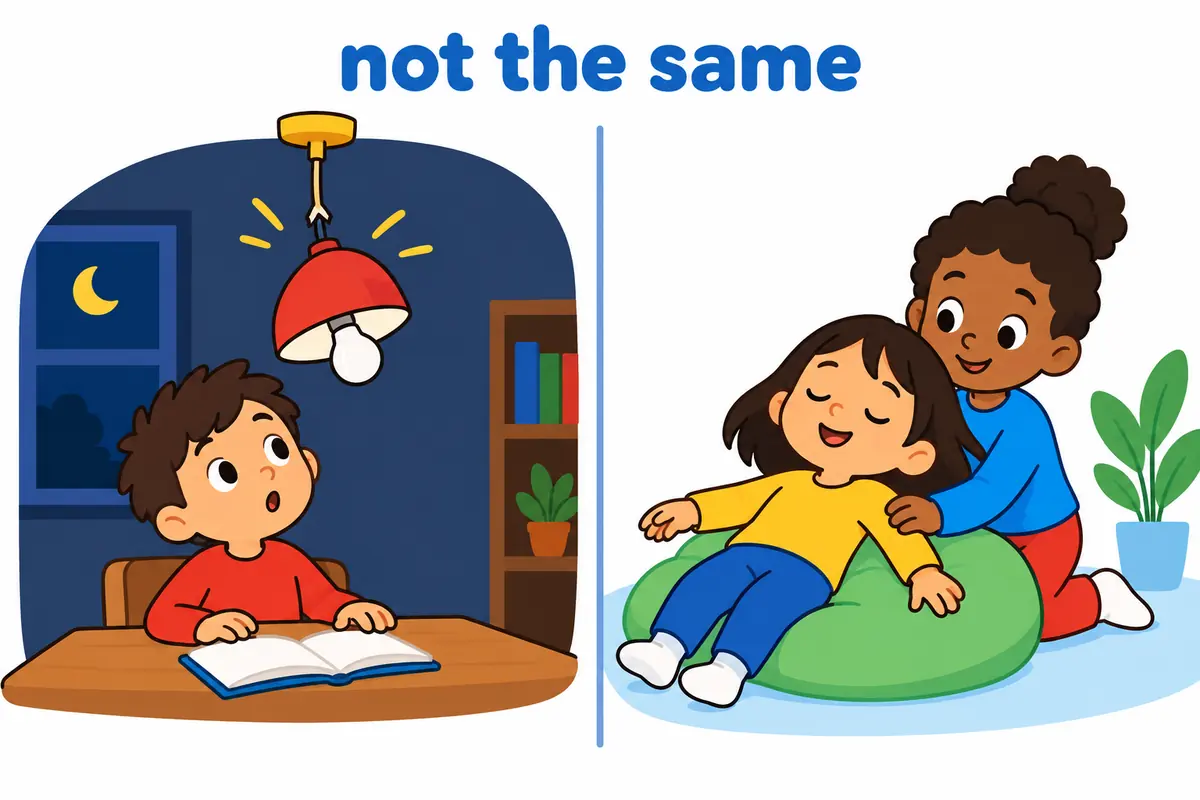
Use black out in a sentence when someone loses consciousness, when a place goes dark, or when text is hidden, and let the object decide the pattern. Two nuances settle most sentences: the consciousness sense takes no object, while the other senses split around their object, and the one-word noun is always blackout. Choose faint when the only event is a person fainting.
Frequently asked questions about black out
Is black out one word or two?
It depends on the job the word is doing. The verb is two words, as in the storm blacked out the village. The noun is one word, as in a sudden blackout, and the adjective is hyphenated, as in a blacked-out window. Spelling the verb as one word is the commonest error in student writing.
Can black out take an object?
Two of its senses can, and one cannot. When it means to darken or to hide, it is transitive and separable, as in black the names out. When it means to lose consciousness, it is intransitive, so the pilot blacked out takes no object at all. Check the sense before you add one.
What is the difference between black out and faint?
Faint names only the brief loss of consciousness. Black out covers that sense and two more: making a place dark and hiding text from view. So a person faints, but a city blacks out in an outage, and an editor blacks out a name. The verbs are not interchangeable.
Does black out mean the same as pass out?
The two are close in the consciousness sense, and both are informal. Pass out is the everyday spoken choice, while black out suits reports and notes. Neither is medical; a doctor writes that a patient lost consciousness. Only black out also means to darken or to censor.