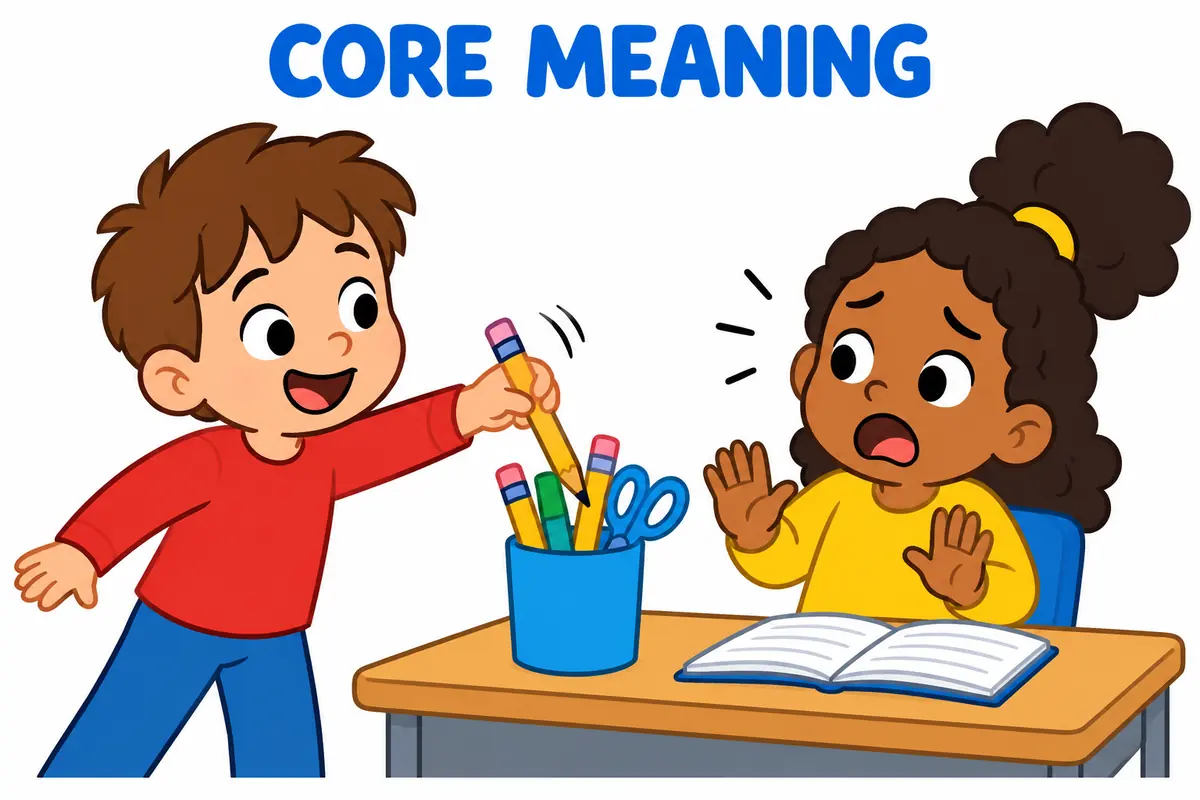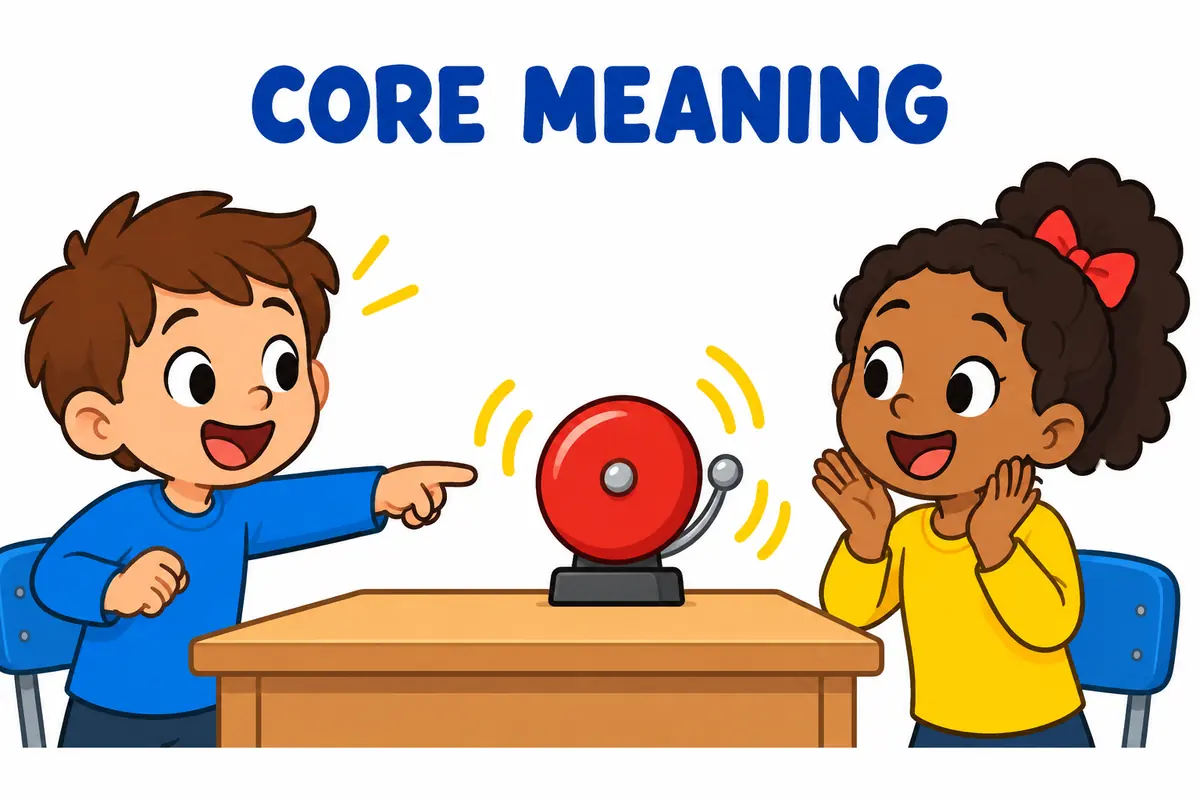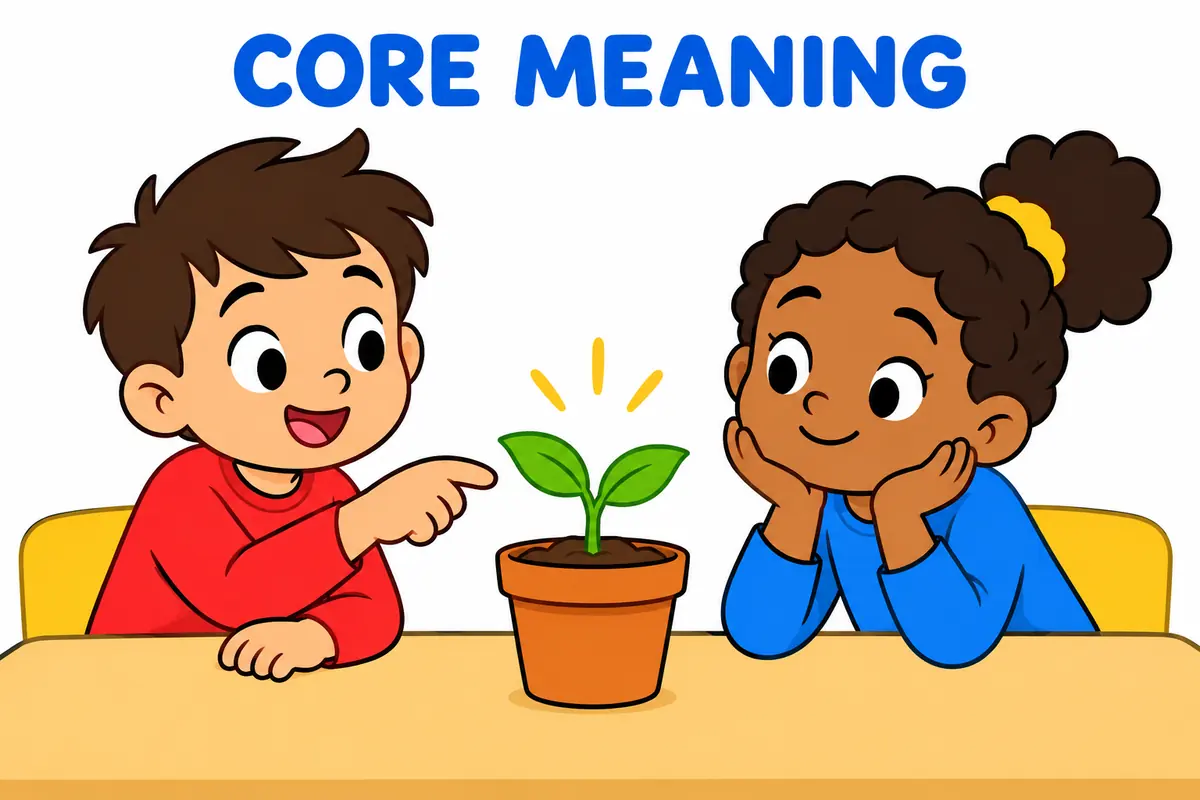
Stick around means to stay in a place for a while longer than expected, often because something useful may follow. To use stick around in a sentence, put it after the subject and add a time or place phrase: “Please stick around after the meeting.” The phrasal verb is intransitive, so it never takes a direct object.
Stick around at a glance
- Stick around is an intransitive phrasal verb; its forms are sticks around, stuck around and sticking around.
- It means to remain in a place or stay available, usually for a short, open-ended time.
- The particle around cannot be separated from the verb, and no direct object ever follows.
- Stick around belongs to informal and conversational writing; stay is the formal equivalent.
- The commonest error is forming the past tense as sticked around instead of stuck around.
What does stick around mean?
Stick around is an intransitive phrasal verb meaning to stay in a place longer, or to remain nearby and available. The Cambridge entry for stick around treats it as informal and defines it as staying somewhere for a period of time. It differs from plain stay because it implies an open-ended decision to wait rather than a fixed plan to remain: “stay for dinner” names an end point, while “stick around for dinner” suggests you could leave but choose not to.
| Sense | Plain meaning | Example sentence |
|---|---|---|
| Remain longer in a place | Stay after the main event ends | She stuck around after the talk to thank the speaker. |
| Wait for something useful | Stay available in case more happens | Stick around and you will hear the results first. |
| Keep someone company | Stay nearby so a person is not alone | I will stick around until your bus comes. |
| Persist informally | Continue to be present over time | That old cafe has stuck around for forty years. |
One honest limitation matters here. Stick around does not mean stand still, and it does not promise anything will happen. It signals willingness to wait, nothing more, so it is a weak choice when a contract or a deadline requires you to remain on site. Keep it for casual plans, where a missed chance costs almost nothing.
How do you use stick around in a sentence?
Place the subject first, then stick around, then the time or place phrase. The verb is intransitive, which means there is no direct object to receive the action, and the particle around stays welded to the verb. You can add purpose with to plus a verb, or reason with for plus a noun.
| Pattern | Example | What it signals |
|---|---|---|
| subject + stick around | The interns stuck around. | A bare decision to remain with no stated purpose. |
| stick around + time phrase | Stick around for a few minutes. | Sets a loose time window for the wait. |
| stick around + place phrase | He stuck around the lobby. | Names where the person remains. |
| stick around + to + verb | She stuck around to help clear up. | States the purpose of staying. |
| stick around + for + noun | We stuck around for the encore. | Names the event that is worth waiting for. |
| imperative stick around | Stick around, the match is not over. | A direct invitation to stay. |
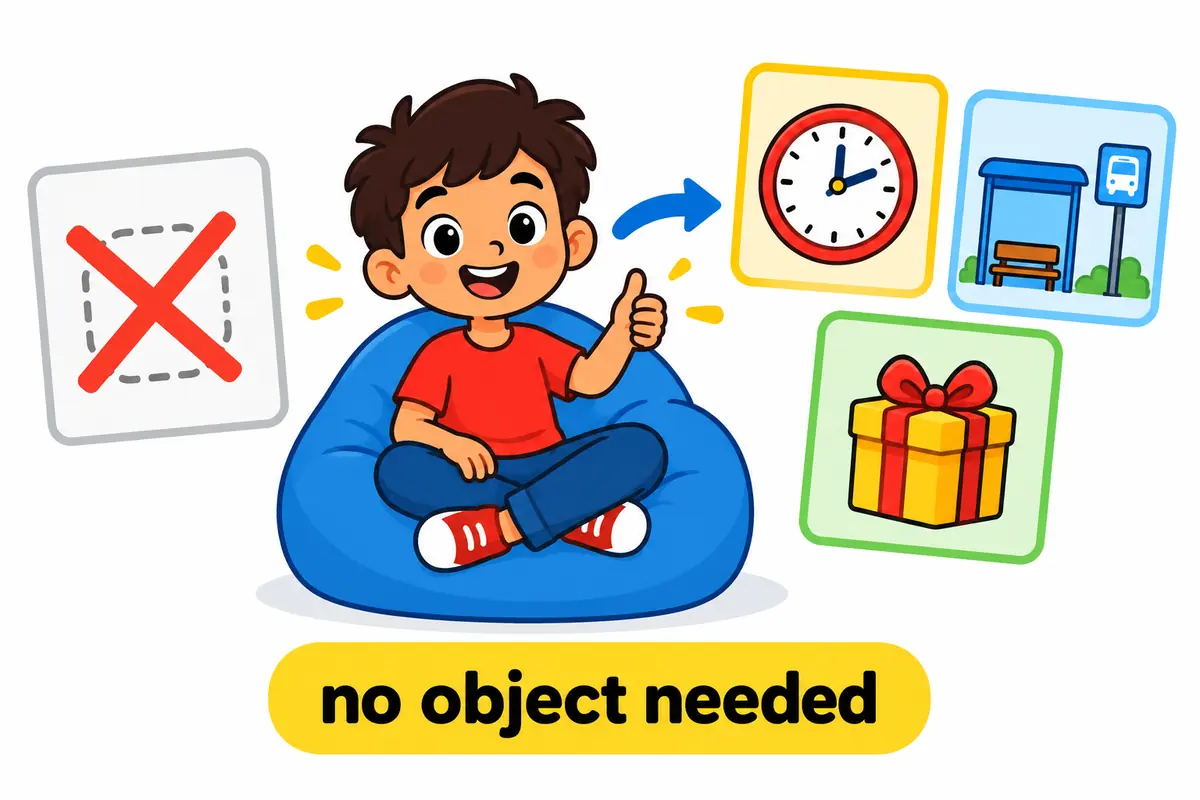
The particle can never move, so you cannot say around stick or stick it around. Because the verb takes no object, phrases such as stick around it are not grammatical; the person who stays is the subject, not an object.
Stick around in a sentence: examples across contexts
The verb keeps one meaning across registers but changes how friendly it sounds. Each sentence below shows who stays, where, and what they hope to gain, which is the information a reader needs.
| Context | Example sentence | Why this works |
|---|---|---|
| Classroom | Stick around after the bell and I will show you the trick. | A teacher offers extra help with a loose time phrase. |
| Workplace chat | Several people stuck around to finish the slides. | Names a shared purpose for staying late. |
| News report | Crowds stuck around the square long after the vote. | A neutral register with a clear place phrase. |
| Customer service | Please stick around; a colleague will check the stock. | An invitation to wait, softened with a reason. |
| Conversation | Do you want to stick around for the second half? | The friendly, everyday use with a named event. |
| Sports commentary | The substitute stuck around to sign autographs. | Shows a public figure choosing to remain. |
| Academic writing | Few participants stuck around for the follow-up session. | Uses the verb to report attendance informally. |
| Event planning | Staff who stick around to the end get a meal. | Pairs the verb with a purpose clause and a reward. |
| Family talk | Her cousins stuck around the whole weekend. | An extended, open-ended stay in a familiar setting. |
| Tech support | Stick around while the update finishes. | An instruction to stay available for a short time. |
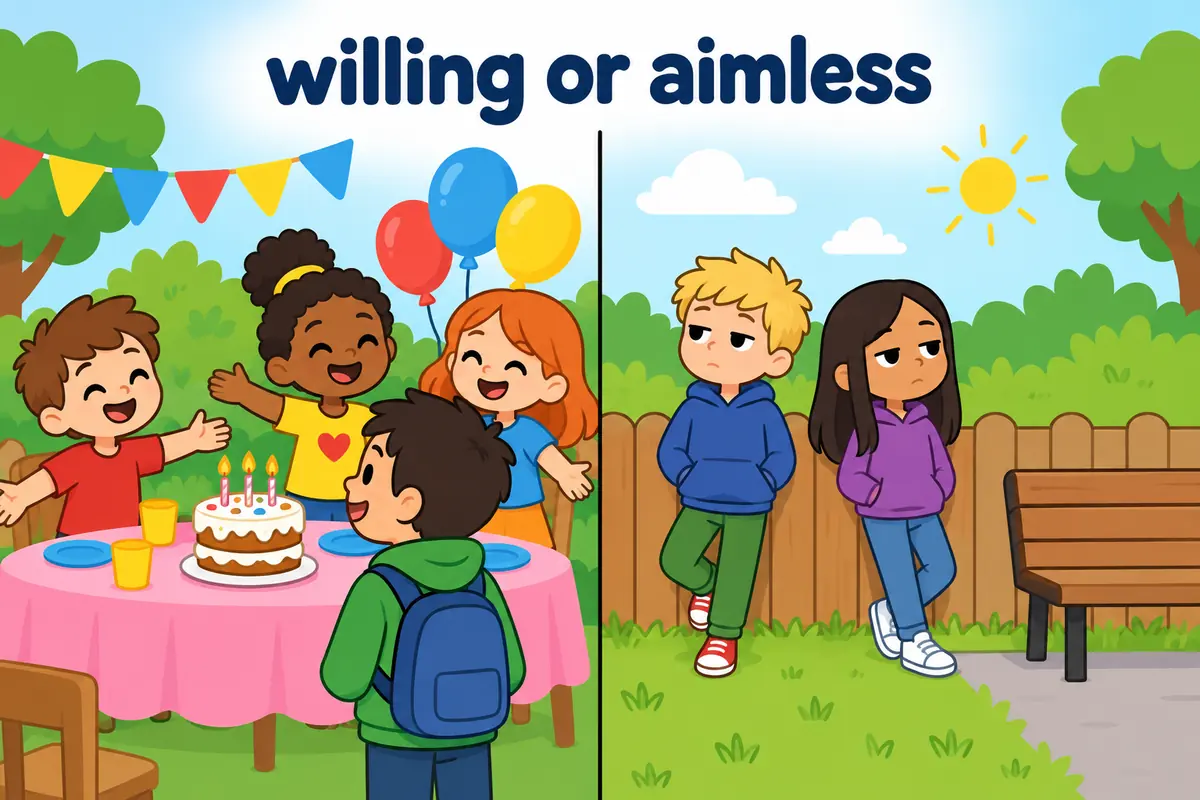
If the point is idleness rather than willingness, hang around the lobby is the sharper verb, because hang around suggests waiting with nothing to do, while stick around suggests a useful reason to remain.
Stick around vs hang around
Stick around and hang around both keep a person in one place, but they carry opposite attitudes. Stick around is cooperative, because the person stays on purpose; hang around is neutral to negative, because it can suggest loitering with no aim. A host invites a guest to stick around; a manager might complain that teenagers hang around the entrance.
| Attribute | stick around | hang around |
|---|---|---|
| Core job | Stay a while, usually for a reason | Wait or loiter, often with no purpose |
| Attitude | Cooperative and willing | Neutral, sometimes critical |
| Typical time | Short and open-ended | Can be long and aimless |
| Common subject | Guests, staff, supporters | Loiterers, crowds, teenagers |
| Register | Informal but polite | Informal, can sound dismissive |
Verdict: choose stick around when you invite someone to stay and mean it, and choose hang around when the staying has no clear purpose or you want to signal the wait is unwelcome.
Word forms and grammar of stick around
The verb follows the irregular pattern of stick, so the past tense is stuck, not sticked. The table also lists the forms learners build by mistake and marks them as non-standard.
| Form | Part of speech | Example |
|---|---|---|
| stick around | phrasal verb, base form | We should stick around for the vote. |
| sticks around | third person singular | He sticks around until the last guest leaves. |
| stuck around | past and past participle | They stuck around for an hour. |
| sticking around | present participle | Sticking around is worth it tonight. |
| sticked around | non-standard past form | Incorrect; write stuck around. |
| stick arounds | non-standard noun | Incorrect; the verb has no noun form. |
Keep the shared particle in mind when you meet other idioms: you can turn around a difficult season or get around to a task, but neither lets you move the particle the way a separable verb would. Pupils who fool around during class are not merely sticking around, and nobody should push around the new pupil to feel included.
Common mistakes with stick around
- Incorrect:
We sticked around for an hour.Correct: We stuck around for an hour. Rule: Stick is irregular, so the past tense is stuck. - Incorrect:
Please stick around it.Correct: Please stick around. Rule: The verb is intransitive, so it takes no object pronoun. - Incorrect:
She stuck around to the party.Correct: She stuck around for the party. Rule: Use for before an event noun, not to. - Incorrect:
Around stick until six.Correct: Stick around until six. Rule: The particle stays after the verb and never moves in front of it. - Incorrect:
He stuck around his homework.Correct: He stayed with his homework. Rule: Stick around cannot name a task as its object; pick stay with or continue.
Practice using stick around
Work through the seven items, then read the reasons rather than only the keys.
- Fill the gap: The fans ______ around long after the final whistle.
- Choose the better word: The guard told the teenagers not to (stick / hang) around the gate.
- Correct the error: We sticked around until the rain stopped.
- Build a sentence: use stick around + to + verb about helping a neighbour.
- Spot the register: which belongs in a formal notice – please remain in the hall, or please stick around, folks?
- Rewrite the negative: Change “Everyone stuck around for the results” into a sentence about nobody staying.
- Fix the object error: She stuck around the meeting.
Answers
- stuck – the past tense of stick is stuck.
- hang – the guard is discouraging aimless waiting, which is the critical sense.
- We stuck around until the rain stopped – the irregular past is stuck.
- Model answer: I stuck around to help my neighbour carry the boxes inside.
- Please remain in the hall – a formal notice avoids the conversational stick around.
- Nobody stuck around for the results – the verb stays intransitive in the negative.
- She stayed for the meeting – stick around cannot take a meeting as its object.
The bottom line
Use stick around in a sentence when someone stays a while longer, usually for a reason, and keep the verb intransitive with no object. The two nuances that decide most sentences are these: the particle never separates from the verb, and the tone is informal but cooperative, so it suits an invitation rather than a formal order. Where you must sound official, remain or stay is the plainer choice.
Frequently asked questions about stick around
Is stick around formal or informal?
Stick around is informal, which is why it fits chat, invitations and light reporting. A formal notice would use remain or stay instead. You can still use it in a workplace if the tone is friendly, as in stick around after the meeting, but avoid it in legal or official writing.
Is stick around separable?
No. Stick around is not separable because it is intransitive and the particle belongs to the verb. You can never say around stick, and you cannot insert an object between the two words. Add a time, place or purpose phrase after the whole verb instead.
What is the past tense of stick around?
The past tense is stuck around, following the irregular verb stick. Sticked around is not a word in standard English. The same past form serves both the simple past and the past participle, so we have stuck around and we have been stuck around both use stuck.
Can stick around mean to survive?
Yes, in an informal and often slightly humorous way. When people say a shop has stuck around for decades, they mean it has survived or persisted. This sense still needs a time phrase, because the verb has no object, so the longevity is expressed with for plus a period.