Stand up is a phrasal verb meaning to rise to your feet, to remain valid, or to fail to keep a date with someone. To use stand up in a sentence, decide which sense you need, as in “Everyone stood up when the judge entered.” Only the fail-a-date sense takes an object.
Stand up at a glance
- Stand up is a phrasal verb with a literal rise sense and several figurative ones.
- It is mainly intransitive, and the particle up cannot be separated in most senses.
- The one separable sense is stand someone up, meaning fail to keep a date.
- Its forms are stands up, stood up and standing up.
- Stand up for means defend, and stand up to means resist.
- The commonest error is placing the object after up in the fail-a-date sense.
What does stand up mean?
Stand up is a phrasal verb whose meaning depends on its object and its particle. The Cambridge entry for stand up keeps the main senses together, and the literal rise sense is the one a date can interrupt when someone fails to turn up. The five senses below are the ones a reader meets most often.
| Sense | Plain meaning | Example sentence |
|---|---|---|
| Rise to your feet | Move from sitting to standing | Everyone stood up when the judge entered. |
| Remain valid | Withstand scrutiny or testing | The claim will not stand up in court. |
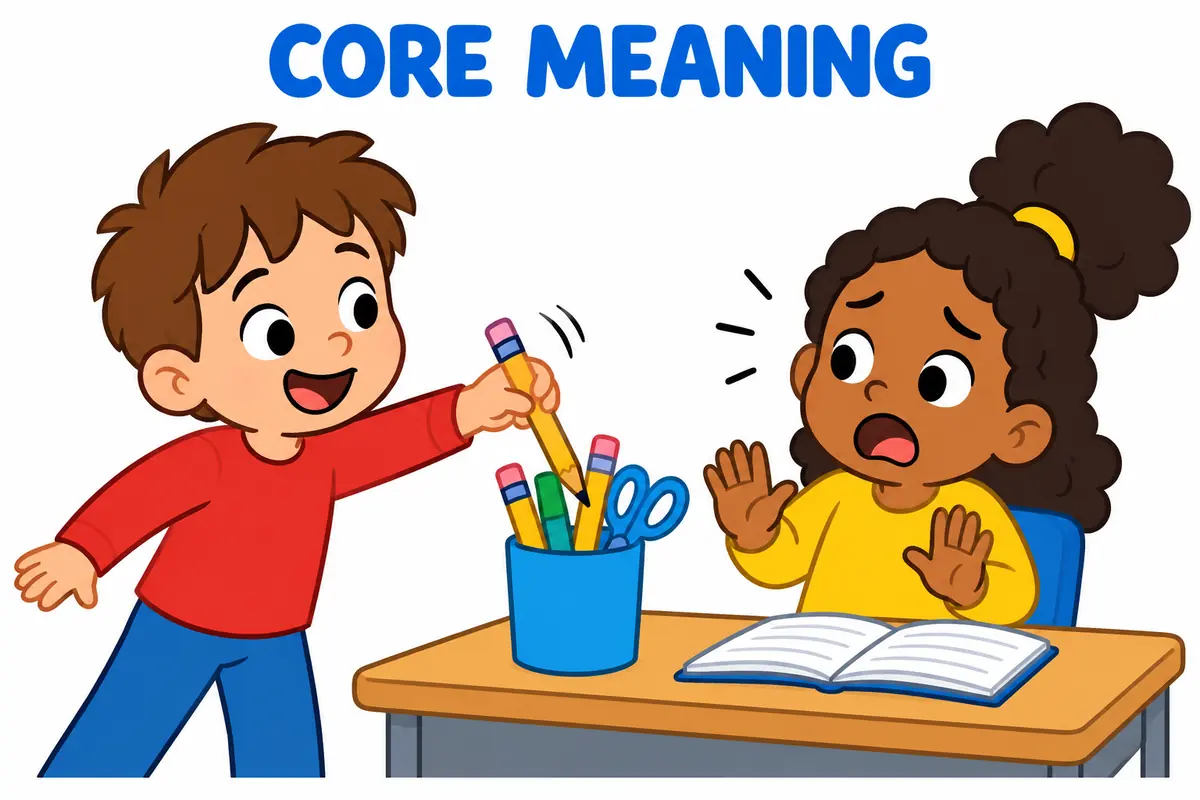
| Fail a date | Not appear when you agreed to meet | He stood me up on Friday. |
| stand up for | Defend or support someone | She stood up for her colleague. |
| stand up to | Resist or withstand pressure | The old boat stood up to the storm. |
One limitation is worth stating plainly. Stand up does not mean to be located; a tower stands on a hill, it does not stand up there, and the rise sense is informal enough that formal writing often prefers rose or got to their feet. The phrasal verb also almost never means simply to continue standing.
How do you use stand up in a sentence?
Stand up is mostly intransitive, and its one transitive sense is separable. In that sense the object goes between the verb and the particle, so you write he stood me up, never he stood up me, and the particle never strands after the object. In stand up for and stand up to the up is fixed before the preposition, and the object follows the preposition rather than the verb.
| Pattern | Example | What it signals |
|---|---|---|
| stand up (intransitive) | The whole class stood up. | Rise to the feet; no object is possible. |
| stand + object + up (separable) | He stood me up on Friday. | Fail to keep a date; the object sits between verb and particle. |
| stand up for + object | She stood up for her colleague. | Defend; up stays fixed before for. |
| stand up to + object | The bridge stood up to the flood. | Resist; up stays fixed before to. |
| stand up + to + scrutiny | The figures will not stand up to scrutiny. | Remain valid under testing; intransitive. |
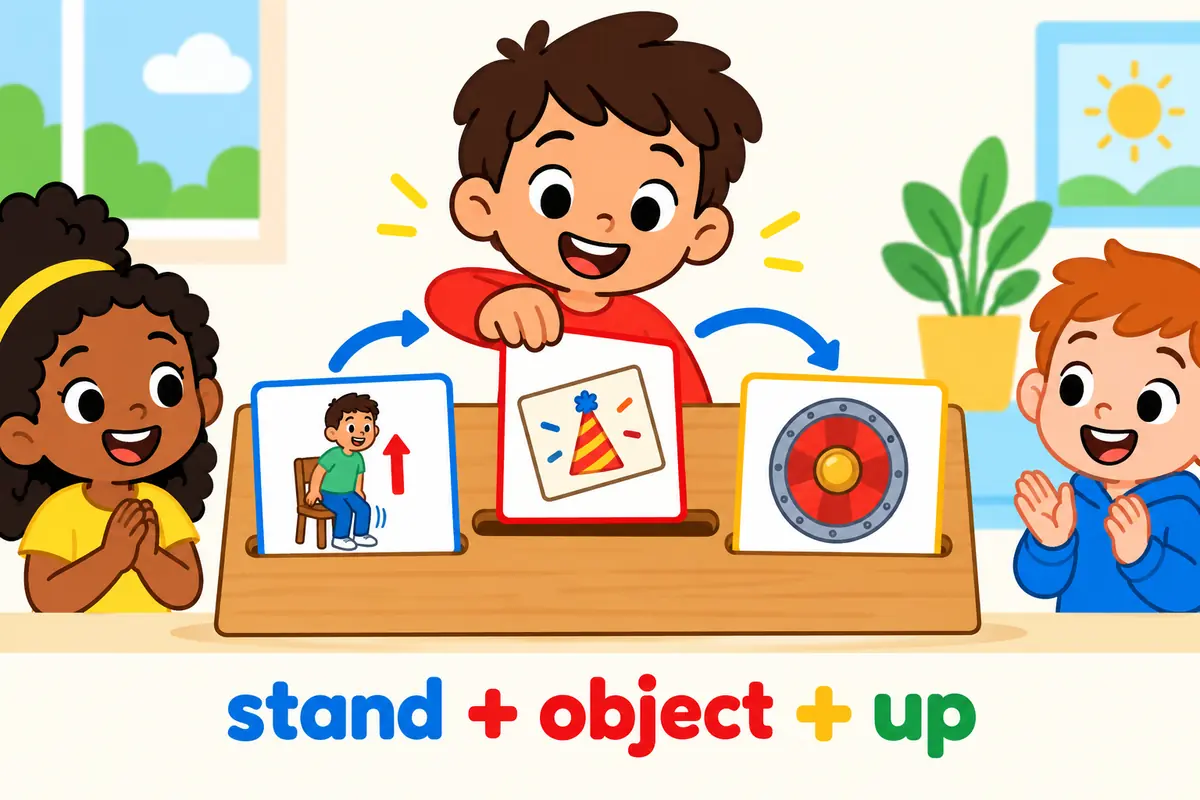
The practitioner rule is simple: if the sentence is not about failing a date, treat stand up as intransitive and keep any object after a following preposition.
Stand up in a sentence: examples across contexts
Stand up wears its sense on its surface, so context does the work of disambiguation. The ten sentences below keep the same phrasal verb while moving from a classroom to a courtroom, and each one shows which sense is meant.
| Context | Example sentence | Why this works |
|---|---|---|
| Classroom | We stand up when the head teacher walks in. | The rise sense is clear from the arrival of a person. |
| Workplace email | The board asked the manager to stand up for her team in the review. | Stand up for plus a person gives the defend sense unambiguously. |
| News report | The minister said the policy would stand up to legal challenge. | Stand up to plus an abstract noun signals withstanding scrutiny. |
| Law report | The plaintiff was stood up by the witness who failed to appear. | The passive of the separable sense keeps the wronged party as subject. |
| Sports commentary | The young keeper stood up to every shot in the final. | Stand up to plus pressure shows resilience under attack. |
| Dating advice | He stood her up twice, so she stopped replying. | The object pronoun between verb and up marks the fail-a-date sense. |
| Engineering report | The temporary supports stood up well under load. | Stand up well is the idiomatic way to say a thing endured. |
| History essay | Few deputies dared stand up to the ruler in public. | The dative-like pattern of resistance fits formal prose. |
| Conversation | Stand up straight, or your back will ache. | The imperative shows the original physical sense. |
| Museum label | The case explains how audiences stand up for a play they admire. | Stand up for an idea shows the defend sense in a new setting. |
Only the dating and law sentences use the transitive sense, which is why a single pronoun between the verb and up is the clearest signal of all.
Stand up vs stand in and get up
Stand up is easily mixed with two similar phrases. stand in means to take someone else’s place, often on a stage or a job, and rise and get up both describe leaving a seat. The phrase stand up for is the one used to defend a person who is under attack.
| Attribute | stand up | stand in | get up |
|---|---|---|---|
| Core meaning | Rise, or fail a date, or defend | Take another person’s place | Leave a seat or a bed |
| Transitivity | Mostly intransitive; one separable sense | Always intransitive | Intransitive |
| Particle fixed | No for stand someone up | Yes | Yes |
| Typical subject | A person, a claim or a structure | A person replacing another | A person or an animal |
| Register | Neutral, with one informal sense | Neutral | Informal to neutral |
Verdict: choose stand in for a replacement, get up for leaving bed, and stand up for rising in public or for the figurative senses that withstand also covers.
Word forms and grammar of stand up
Stand up behaves like a regular phrasal verb, and its past form stood up is the one learners most often build wrongly. The table lists the real shapes, including the hyphenated adjective.
| Form | Part of speech | Example |
|---|---|---|
| stand up | phrasal verb, base form | Please stand up for the national anthem. |
| stands up | verb, third person singular | The argument stands up to close reading. |
| stood up | verb, past and past participle | She stood up and left the room. |
| standing up | verb, present participle | They are standing up for what is fair. |
| stand-up | adjective, hyphenated | A stand-up comedian opened the show. |
| stand-up | noun, hyphenated | The club hosts stand-up on Fridays. |
The base verb stand already means to be upright, so stand up adds the idea of movement; that difference is why a building stands but a person at a meeting stands up.
Common mistakes with stand up
- Incorrect:
The waiter stood up me for the booking.Correct: The waiter stood me up for the booking. Rule: The fail-a-date sense is separable, so the object goes between the verb and up. - Incorrect:
I was stood up me by a friend.Correct: I was stood up by a friend. Rule: The passive drops the of-pronoun and keeps only the subject. - Incorrect:
The tent stood up the strong wind.Correct: The tent stood up to the strong wind. Rule: Resistance needs the fixed phrase stand up to before its object. - Incorrect:
She stood up for to defend her sister.Correct: She stood up for her sister. Rule: Stand up for already means defend, so to defend would repeat it. - Incorrect:
The old castle stands up on the hill.Correct: The old castle stands on the hill. Rule: Location uses the plain verb stand, which means upright, not the phrasal verb of rising.
Practice using stand up
Work through the seven items, then check the reasoning rather than only the answer.
- Fill the gap: The whole hall ______ when the choir walked on stage.
- Choose the correct order: My friend (stood up me / stood me up) at the cinema.
- Correct the error: The old bridge stood up the winter floods.
- Build a sentence: use stand up for about a pupil defending a classmate.
- Spot the register: which belongs in a formal report — the figures will not stand up to scrutiny, or the figures are rubbish?
- Rewrite in the passive: Her date stood her up. Put her at the front of the sentence.
- Fix the sense: He stood up the hill to watch the parade. Make it clear that he moved uphill.
Answers
- stood up — the past form of stand up marks rising to the feet.
- stood me up — the separable sense puts the object between verb and particle.
- The old bridge stood up to the winter floods — resistance needs stand up to.
- Model answer: The pupil stood up for her classmate when the others laughed.
- The figures will not stand up to scrutiny — the fixed phrase is precise and formal.
- She was stood up by her date — the passive keeps her as the subject.
- He walked up the hill to watch the parade — movement uphill is not the rise sense of stand up.
The bottom line
Use stand up in a sentence when someone rises, when a claim survives testing, or when someone fails a date, and let the pattern tell the reader which sense you mean. The two nuances that decide most sentences are these: the fail-a-date sense is the only separable one, so the object sits between stand and up, and resistance always needs the fixed phrase stand up to rather than a bare object. A tower on a hill simply stands; it does not stand up.
Frequently asked questions about stand up
Is stand up one word or two?
As a verb it is always two words, as in please stand up, with the forms stands up, stood up and standing up. As an adjective or a noun it takes a hyphen, as in a stand-up comedian or an evening of stand-up. The hyphen is what tells a reader the word is naming a thing rather than an action.
Can you say he stood me up?
Yes, and that is the standard form. The fail-a-date sense is separable, so the object pronoun sits between the verb and the particle: he stood me up, she stood him up. The order he stood up me is wrong. In the passive the object becomes the subject, giving I was stood up.
What does stand up for mean?
Stand up for means to defend or support someone or something in the face of criticism, as in she stood up for her colleague. The particle up is fixed before for, and the object follows the preposition. Do not add a second verb of defence, because stand up for already carries the meaning of defending.
Is stand up formal or informal?
The rise sense is neutral in speech but sounds casual in formal writing, where writers often use rose or got to their feet. The senses remain valid and resist are neutral to formal. The fail-a-date sense is informal, so it suits conversation and fiction rather than a formal report or a contract.