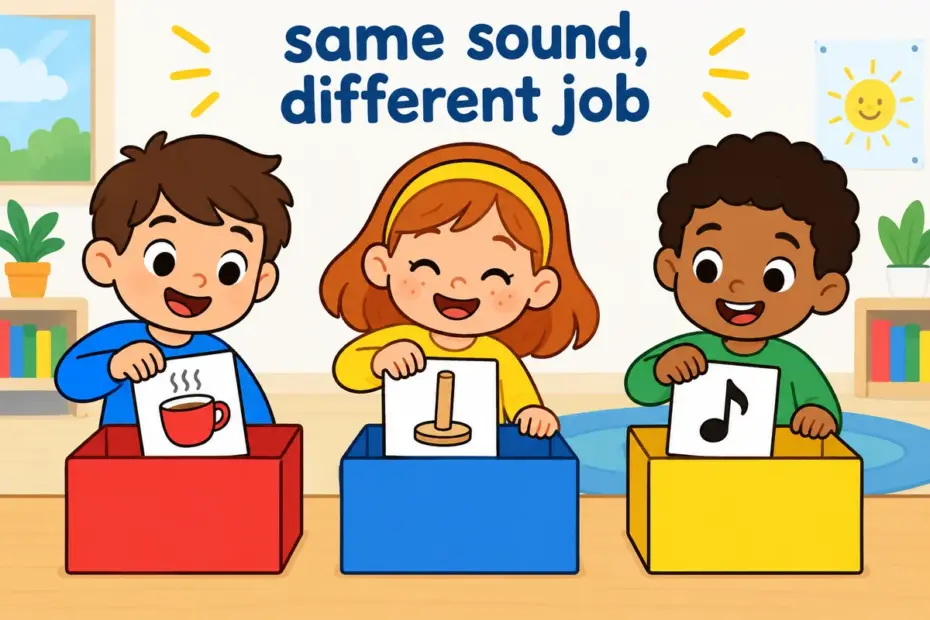
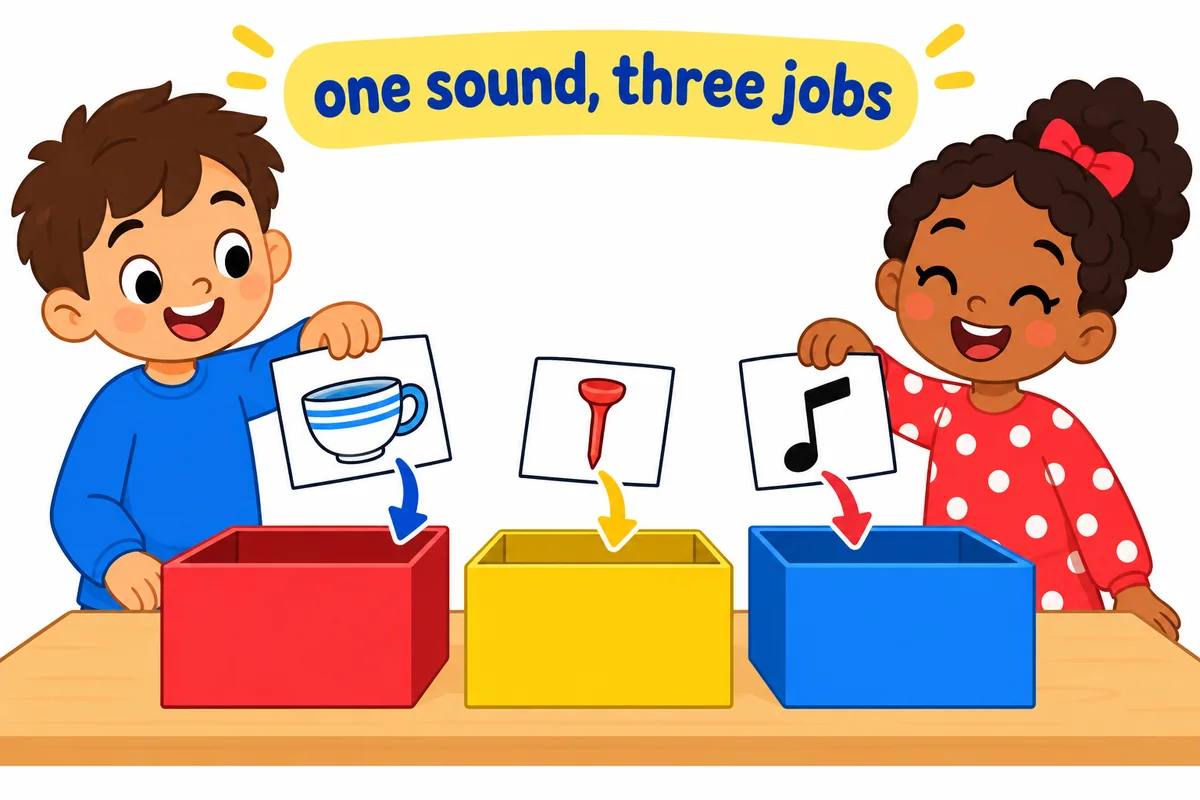
Te vs tea vs tee comes down to meaning, because all three sound the same but do different jobs: tea is the drink or the afternoon meal, tee is the golfer’s stand, the letter T or a short top, and te is the musical note. Choose by subject, not by sound.
Te vs tea vs tee at a glance
- Te, tea and tee are homophones: one pronunciation, three spellings and three meanings.
- Tea is the drink and the light afternoon meal, and it is the commonest of the three in writing.
- Tee is a golf stand, the letter T or a short-sleeved top, and it also works as a verb.
- Te is the musical syllable for the seventh note of a scale, a variant of ti.
- Each word belongs to its own subject area, so the meaning around it decides which to write.
- The commonest error is writing tee for the drink or tea for the golf stand.
Te vs tea vs tee: the master comparison
The three words never compete for the same slot, because each one owns a different subject. The table below sets them side by side on the criteria that decide a spelling choice.
| Criterion | te | tea | tee |
|---|---|---|---|
| Core meaning | The seventh note of a musical scale | The drink, or a light afternoon meal | A golf stand, the letter T, a short top |
| Subject area | Music and singing | Food, drink and British routine | Golf, writing and casual clothing |
| Part of speech | Noun | Noun, and a rare verb | Noun and verb |
| Common collocations | note, scale, syllable | cup, pot, leaves, afternoon | golf, ball, shirt, up |
| Typical short phrase | the final te | a cup of tea | on the tee |
| Where you meet it | A music lesson or score | A cafe, kitchen or British home | A golf course, alphabet or wardrobe |
| Confusion risk | Low, because the subject is narrow | High, confused with tee by sound | High, confused with tea by sound |
The pattern is clear: te is the specialist word, while tea and tee carry the real risk because both appear in ordinary writing. When the subject is food or drink the answer is tea, and when it is golf, the alphabet or clothing the answer is tee.
What do te, tea and tee mean?
Te, tea and tee are three separate words that share one sound, which makes them a homophone pair in the broad sense of words that sound alike but differ in spelling and meaning. Each has its own history and its own dictionary entry, so none of them can stand in for another.
Te is a noun used in music for the seventh note of a scale, a variant of the syllable ti. Dictionary entries for te record this musical sense, and a choir sings a scale that rises through do and re before it reaches te. Chemistry also uses the capitalised symbol Te for the element tellurium, though that is a symbol rather than a word.
The the noun tea names the drink made by steeping the dried leaves of the tea plant in hot water, and it also names a light afternoon meal in British usage. The Cambridge entry for tea gives both senses, and tea is by far the most frequent of the three words in everyday writing.
The the noun tee names the small stand that raises a golf ball before a stroke, the letter T, and informally a short-sleeved top. As a verb it means to place a ball on a tee, as in he teed the ball up. The Cambridge entry for tee records the golf sense and the letter, and the musical noun appears under the Cambridge entry for te.
| Word | Sense | Example sentence |
|---|---|---|
| te | Musical note | The choir held the final te for two slow beats. |
| tea | Drink | She poured a cup of tea for each guest. |
| tea | Light afternoon meal | They invited the neighbours to tea at four. |
| tee | Golf stand | He placed the ball on the tee and checked the wind. |
| tee | Letter T | The wooden sign is cut in the shape of a tee. |
| tee | Short-sleeved top | She wore a plain white tee under her jacket. |
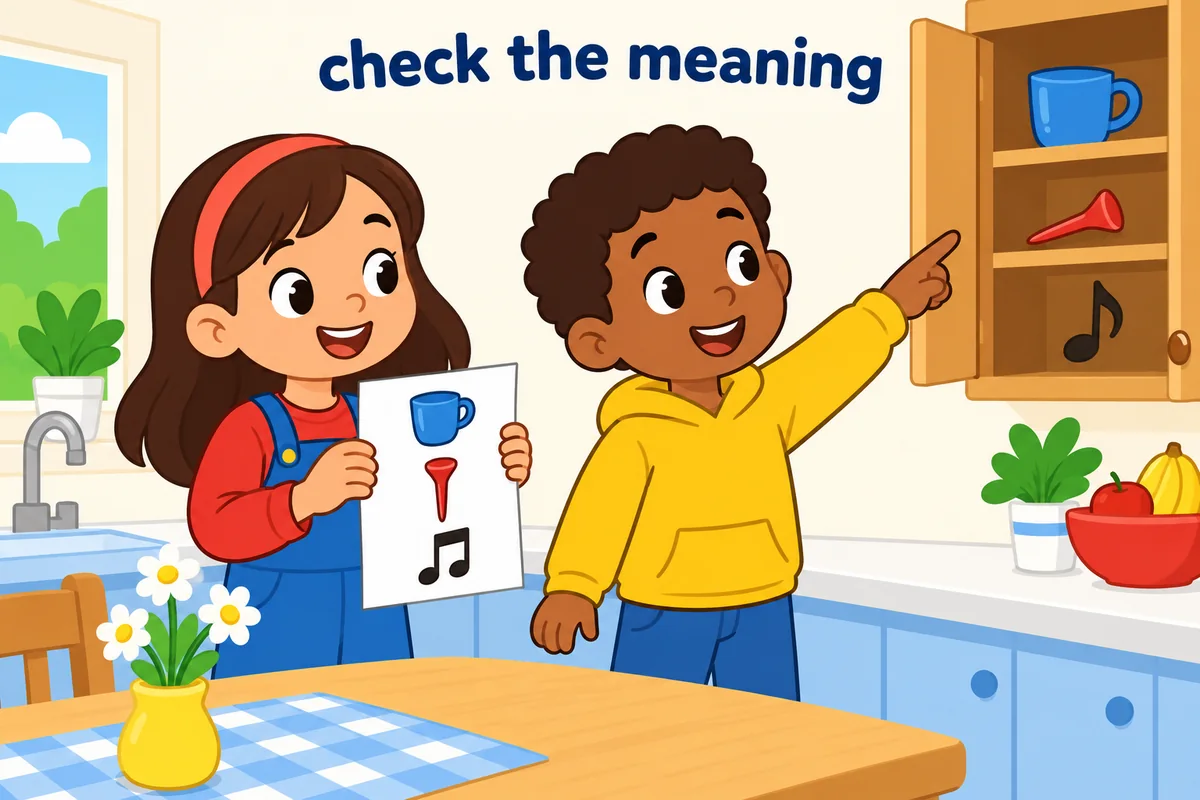
One limitation matters for every writer. None of the three is a synonym for another, so a spell-checker will not save you: all three are correct words, and only the meaning around them can be wrong. When a sentence mixes subjects, name the thing in full, as in a cup of tea or a golf tee, so the reader never has to guess.
How do you use te, tea and tee in a sentence?
Each word keeps to its own subject area and its own grammar. Tea is usually uncountable as a drink, tee switches easily between noun and verb, and te stays a quiet musical noun. Five patterns cover almost every real sentence.
| Pattern | Example | What it signals |
|---|---|---|
| tea as an uncountable noun | Would you like some tea? | Names the drink without counting it. |
| tea as a countable meal | We had a lovely tea. | Names the afternoon meal as an event. |
| tee as a noun | The wooden tee snapped in half. | Names the golf stand as a physical object. |
| tee as a verb | He teed the ball up carefully. | Shows the action of setting the ball. |
| te as a musical noun | The scale ends on te. | Places the note inside a musical phrase. |
Te vs tea vs tee in a sentence: examples across contexts
The three words rarely meet, but a writer can still slip when a sound-alike crowd comes to mind. Each example below uses one word in a subject where only that word fits.
| Context | Example sentence | Why this works |
|---|---|---|
| Cafe menu | The shop sells twelve loose-leaf teas. | Uses tea for kinds of a hot beverage. |
| Kitchen | She made a pot of tea for the guests. | Names the drink in its commonest phrase. |
| British home | They sat down to tea at half past four. | Uses tea for the afternoon meal. |
| Golf report | He teed the ball up and drove it down the fairway. | Shows tee as a verb in a golf sentence. |
| Golf lesson | Place the ball on the tee, not in front of it. | Shows tee as a noun in an instruction. |
| Classroom | The old sign is shaped like a tee. | Uses tee for the letter T. |
| Music lesson | The scale rises through do and re and ends on the the musical note te. | Uses te inside a musical context only. |
| Choir rehearsal | Hold the final te for two beats. | Places te in a singing instruction. |
| Clothing | She pulled on a short-sleeved top before her walk. | Uses tee for a shirt shortened from T-shirt. |
| Idiom | The copy matched the original to a tee. | Uses the fixed phrase to a tee meaning exactly. |
Notice that every example could carry only one of the three spellings. If a sentence works with two of them, the context is too vague and the writer should name the thing in full.
Which should you use?
Read the subject of the sentence, not the sound of the word, and the choice becomes automatic.
| Situation | Use this word | Why |
|---|---|---|
| You are writing about a hot drink | tea | Tea is the drink, and it takes cup, pot and leaves. |
| You are writing about an afternoon meal | tea | British usage gives tea this second, countable sense. |
| You are writing about golf | tee | The small stand is called a tee, and the verb is to tee up. |
| You are writing about a letter or a T-shirt | tee | The alphabet and clothing both take tee. |
| You are writing about singing a scale | te | The seventh note of a scale is spelled te. |
If two answers seem possible, the sentence is missing a fact. Add the noun that names the thing, as in a golf tee or a cup of tea, rather than trusting the sound of the word.
Word forms and grammar of te, tea and tee
The three words inflect differently, which gives a second clue to the right spelling. Tea as a drink is uncountable, while teas means kinds or servings; tee takes a regular plural and a full set of verb forms; te stays singular in ordinary use.
| Form | Part of speech | Example |
|---|---|---|
| tea | noun, uncountable | A cup of tea would be welcome. |
| teas | noun, countable plural | The stall sells herbal teas from six countries. |
| tee | noun | A wooden tee lay beside the ball. |
| tees | noun, plural | The bag held a dozen tees. |
| tee | verb | She tees the ball up before every drive. |
| teed / teeing | verb forms | He teed off early; she is teeing off now. |
| te | noun | The tune ends on te. |
| tes | non-standard | Write the note te; tes is not an English plural. |
Common mistakes with te, tea and tee
- Incorrect:
I drank a cup of tee.Correct: I drank a cup of tea. Rule: the drink is tea; tee is the golf stand or the letter. - Incorrect:
He placed the ball on the tea.Correct: He placed the ball on the tee. Rule: the golf stand is spelled tee, not tea. - Incorrect:
The scale ended on tea.Correct: The scale ended on te. Rule: the musical note is te, not tea. - Incorrect:
She wore a tea shirt.Correct: She wore a tee shirt. Rule: the garment takes tee, short for T-shirt. - Incorrect:
We matched it to a tea.Correct: We matched it to a tee. Rule: the idiom is to a tee, meaning exactly.
Practice using te, tea and tee
Work through the six items, then read the reasoning rather than only the answer.
- Fill the gap: He placed the ball on a wooden ______ and checked his grip.
- Choose the better word: For a drink served with biscuits, (tea / tee) is correct.
- Correct the error: The choir finished on a soft tea.
- Build a sentence: use a cup of tea about a rainy afternoon.
- Spot the register: which belongs in a golf report — he teed off at dawn, or he teaed off at dawn?
- Rewrite with the idiom: Her answer was exactly right. Use to a tee.
Answers
- tee — the golf stand is a tee, not a tea or a te.
- tea — the drink is spelled tea.
- The choir finished on a soft te — the musical note is te.
- Model answer: On a rainy afternoon she made a cup of tea.
- He teed off at dawn — the golf verb is tee, giving teed.
- Her answer was right to a tee — the fixed phrase means exactly.
The bottom line
The te vs tea vs tee choice is settled by meaning rather than sound: tea is the drink and the afternoon meal, tee is the golf stand, the letter T or a short top, and te is the musical note. Two nuances decide most sentences: tea and tee are the two that collide in ordinary writing, and all three spellings are real words, so a spell-checker gives no warning. Name the thing in full when the context is thin.
Frequently asked questions about te vs tea vs tee
Why do te, tea and tee sound the same?
English spelling keeps its history, so different words can converge on one pronunciation. Te, tea and tee all give the long e sound, even though they arrived in the language from different sources and mean unrelated things. Linguists call words like these homophones, and English is full of them, from sea and see to right and write.
Is te a real word in English?
Yes, te is a real noun used in music for the seventh note of a scale, where it is a variant of ti. It appears in singing exercises and in descriptions of a tune. The capitalised form Te is also the chemical symbol for the element tellurium, but that is a symbol rather than an everyday word.
What does to a tee mean?
The idiom to a tee means exactly or perfectly, as in the copy matched the original to a tee. It is also spelled to a T, and both forms are accepted. The phrase has nothing to do with golf or with the letter in any provable way, so writers simply treat it as a fixed expression meaning perfectly.
How can I remember tea and tee?
Link each spelling to a memory hook. Tea holds the word ea, which appears in eat and in mealtime, so tea is what you drink and eat. Tee starts with the letter T, which stands for T-shirt and for the shape of a golf tee. A third hook covers te, the musical note.