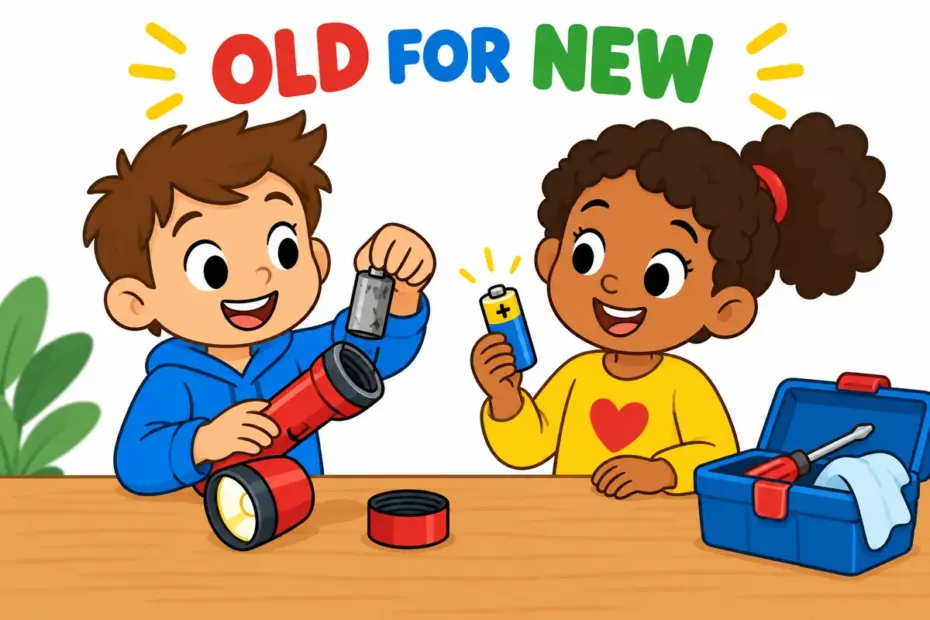
Swap out means to remove something and put a different thing in its place. To use swap out in a sentence, name what is replaced and, if you like, what replaces it: “We swapped out the old battery before the trip.” The phrasal verb is transitive and separable.
Swap out at a glance
- Swap out is a separable phrasal verb meaning to exchange one thing for another.
- Its forms are swap out, swaps out, swapped out and swapping out.
- The object can sit between the two halves: swap the filter out.
- It is common in technical, DIY and workplace contexts for parts, gear and people.
- The commonest error is calling a plain removal a swap when no second item arrives.
What does swap out mean?
Swap out is a transitive phrasal verb meaning to take one thing away and put another in its place. The Cambridge entry for swap out centres on the same idea of exchanging one item for a substitute, whether a machine part, a piece of gear or a player. The verb always implies a one-for-one trade, not a bare removal.
| Sense | Plain meaning | Example sentence |
|---|---|---|
| Replace a part | Remove one component and fit another | Swap out the worn brake pads for new ones. |
| Exchange two items | Trade one thing for another | We swapped out the folding chairs for benches. |
| Substitute a player | Bring one person on for another | The coach swapped out two tired players. |
| Computing | Move idle data from memory to disk | The system swaps out idle pages to free memory. |
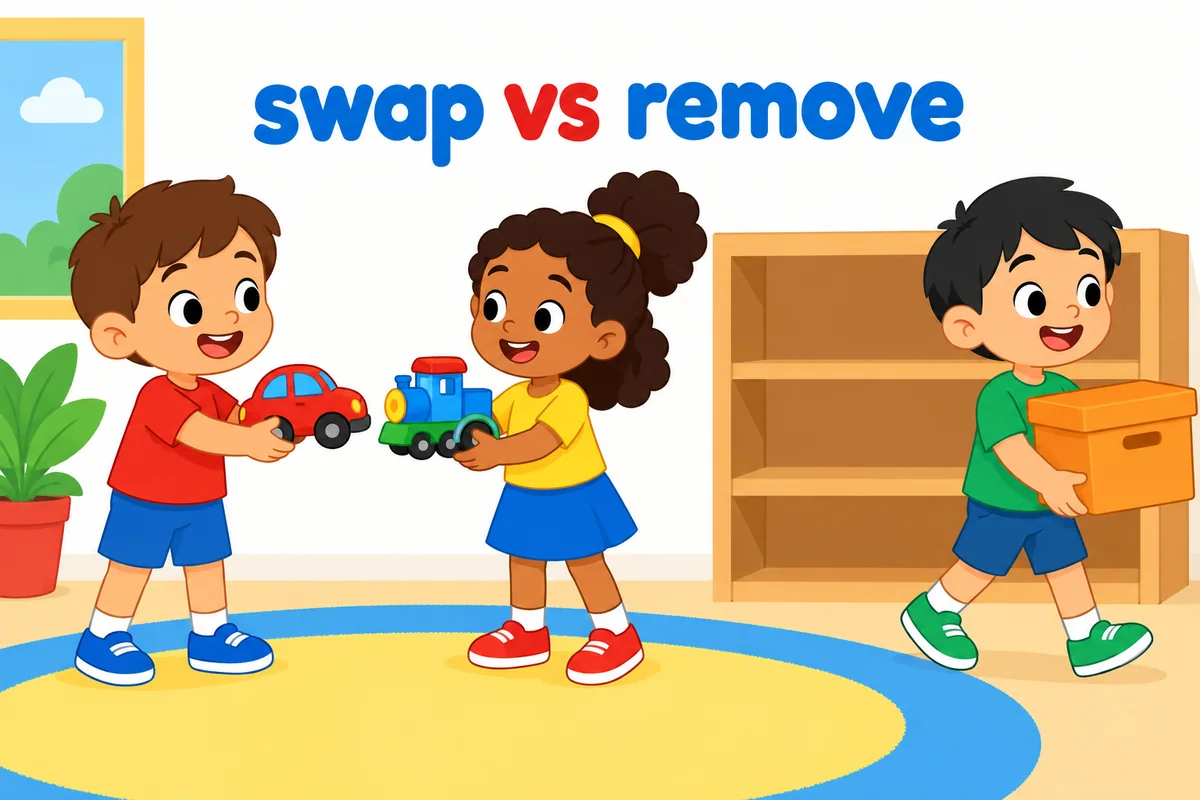
One limitation matters. Swap out implies a replacement, so it is the wrong verb when something is simply taken away. If the old part is discarded and nothing arrives in its place, remove or strip out is accurate; swap out needs the second item.
How do you use swap out in a sentence?
Swap out is transitive, so it needs an object, and it is separable, so that object may sit after the whole verb or between the two halves. The replacement is introduced with for, as in swap out the old cable for a longer one.
| Pattern | Example | What it signals |
|---|---|---|
| swap out + object | We swapped out the filter. | Full phrasal verb before the object. |
| swap + object + out | We swapped the filter out. | Separable: the object sits between the halves. |
| swap out X for Y | They swapped out the old cable for a longer one. | Names the replacement with for. |
| be swapped out | The relay was swapped out during the service. | Passive, common in maintenance logs. |
| swap out + person | The coach swapped out two tired players. | Sports sense: substitute a player. |
Because the verb is separable, a pronoun object must sit between the halves: swap it out, never swap out it. That is the single test that separates swap out from inseparable phrasal verbs such as crop up. Plain swap works the same way.
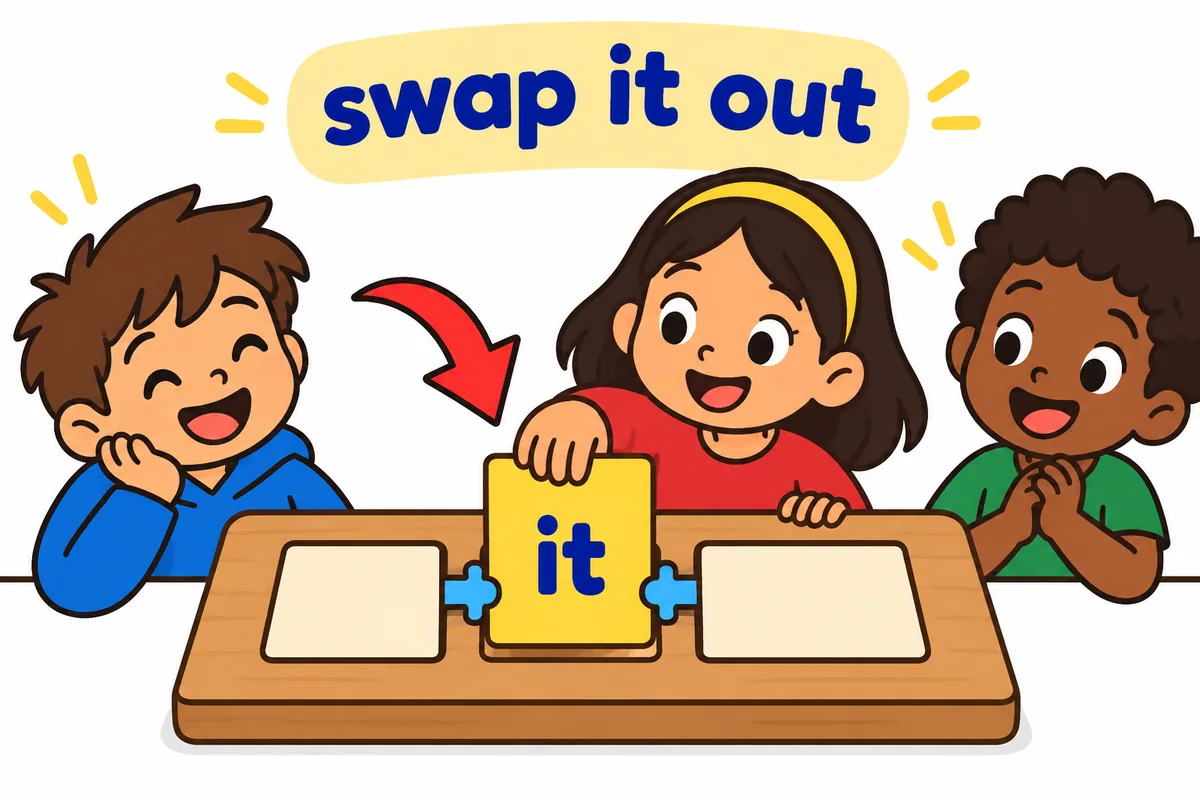
Swap out in a sentence: examples across contexts
The twelve sentences below keep the phrasal verb while moving from a bike shed to an IT log. Each one names the old item and what takes its place, which is what the verb requires.
| Context | Example sentence | Why this works |
|---|---|---|
| DIY and repair | I swapped out the cracked tile before the grout dried. | Concrete task with an obvious one-for-one exchange. |
| IT support | We swapped out the failing drive and rebuilt the array. | Technical register, part replacing part. |
| Workplace email | Please swap out the old template for the revised one. | Polite instruction using swap out X for Y. |
| Sport | The manager swapped out the striker after the hour mark. | Substitution sense with a person as object. |
| Travel | We swapped out our heavy coats for lighter jackets. | Everyday exchange of one set of items for another. |
| Computing | The server swaps out idle processes when memory runs low. | Present tense for a routine system behaviour. |
| Maintenance log | Two sensors were swapped out during the shutdown. | Passive voice, standard in formal records. |
| Kitchen | Swap the sugar out for honey in this recipe. | Imperative with the object between the halves. |
| Retail | The shop swapped out the display for the summer range. | Names both the old and the new in one sentence. |
| Lesson planning | The teacher swapped out the quiz for a group task. | Shows the reason for the exchange in a school setting. |
| Conversation | I need to swap my phone out while it is still under warranty. | Separable form with a pronoun, natural in speech. |
| Hotel front desk | The receptionist swapped out our cramped room for a larger one. | Service exchange that names both the old and the new. |
Notice how often the replacement is named with for. That phrase is optional, but when it appears it turns a vague exchange into a precise one. The verb also accepts two named items, as in swapped the old printer for a newer model, which is why it reads naturally in service and repair writing. What it does not tolerate is a bare removal, with nothing offered in place of what left. Each row above keeps the object close to the verb, and only the conversational line moves the pronoun into the middle.
Swap out vs replace and substitute
Swap out overlaps with replace and substitute but is less formal than both. It suits a quick, hands-on exchange rather than an official change.
| Attribute | swap out | replace | substitute |
|---|---|---|---|
| Register | Informal to neutral | Neutral to formal | Formal |
| Implied speed | Quick, hands-on | Any speed | Planned |
| Typical object | Part, gear, player | Any item or person | Ingredient, player, teacher |
| Names the new item? | Often, with for | With with | With for |
| Can be a noun? | No; a swap can | Yes, a replacement | Yes, a substitute |
| Best in speech? | Yes | Neutral | No, reads formal |
Verdict: use swap out for a brisk physical exchange, replace for a general or official change, and substitute for a formal replacement, especially on a team sheet or in a recipe.
Swap out, switch out and change out
Three near twins sit beside swap out, and the differences are small but real. Change out is the most general and slightly informal; switch out stresses turning from one to another; swap out is the most deliberately even exchange. All three are separable, so all three allow a pronoun in the middle. For a genuine two-way trade, exchange is the more precise noun and verb.
Word forms and grammar of swap out
Swap out inflects by changing the verb, and the past form doubles no letters. The table also notes the near-synonym alternate, which describes taking turns rather than trading places.
| Form | Part of speech | Example |
|---|---|---|
| swap out | phrasal verb, base form | We swap out the batteries each term. |
| swaps out | phrasal verb, third person singular | The app swaps out the old icon automatically. |
| swapped out | phrasal verb, past and participle | They swapped out the whole unit. |
| swapping out | phrasal verb, present participle | He is swapping out the brake pads now. |
| swap | verb and noun | Let us do a swap after lunch. |
| swap out it | non-standard order | Not used: a pronoun goes between the halves, as swap it out. |
Common mistakes with swap out
- Incorrect:
Swap out it before the paint dries.Correct: Swap it out before the paint dries. Rule: A pronoun object must sit between the verb and the particle. - Incorrect:
We swapped out the old printer.Correct: We removed the old printer. Rule: Swap out needs a replacement; if nothing arrives, use remove. - Incorrect:
The filter was swapped out of the pump for a new one.Correct: The filter was swapped out for a new one. Rule: The replacement follows for directly, without an of phrase. - Incorrect:
He swapped out to a new job.Correct: He switched to a new job. Rule: Swap out needs a physical object being exchanged, not a change of situation. - Incorrect:
We swap out between two suppliers.Correct: We alternate between two suppliers. Rule: Taking turns is alternate, not swap out, because nothing is replaced.
Practice using swap out
Seven items follow; the answers explain which form or which verb the sentence needs.
- Fill the gap: Please ______ the flat tyre before we leave.
- Choose the better word: The old sign was simply (removed / swapped out) and nothing replaced it.
- Correct the error: Swap out it for a fresh one.
- Build a sentence: use swap out X for Y about a laptop battery.
- Spot the register: which belongs in a maintenance log — the relay was swapped out, or we chucked the old relay?
- Make it passive: rewrite The team swapped out the router using the passive voice.
- Change the object position: place the pronoun correctly: swap the bulb out.
Answers
- swap out — the tyre is exchanged for the spare, so the phrasal verb fits.
- removed — nothing replaced the sign, so swap out would be wrong.
- Swap it out for a fresh one — the pronoun sits between the halves.
- Model answer: We swapped out the old laptop battery for a new one.
- The relay was swapped out — a maintenance log keeps formal wording.
- The router was swapped out by the team — the passive takes the object as its subject.
- Swap it out — a pronoun object replaces the noun and moves between the halves.
The bottom line
Use swap out in a sentence when one thing is exchanged for another, and let the object fall either after the verb or between its two halves. Two nuances decide most sentences: a pronoun must sit in the middle, as in swap it out, and the verb needs a replacement, so plain removal calls for remove. Where the exchange is formal or official, replace reads more naturally.
Frequently asked questions about swap out
Is swap out a separable phrasal verb?
Yes. Swap out is separable, so the object can sit after the whole verb or between the two parts. You may write swap out the filter or swap the filter out. A pronoun object must go in the middle, so swap it out is correct and swap out it is not.
What is the past tense of swap out?
The past tense and past participle are both swapped out, as in they swapped out the unit and the unit was swapped out. The present participle is swapping out. No letters double in the past form, so swapped has one p at the end.
Is swap out the same as remove?
No. Swap out means exchange one thing for another, so a replacement is always implied. Remove means only that something is taken away, with nothing taking its place. If you take out a broken part and fit a new one, swap out fits; if you simply take it out, remove is correct.
Can swap out be used for people?
Yes, especially in sport, where a coach swaps out a tired player for a fresh one. It also works in casual speech for replacing one person with another on a roster or a shift. In formal writing, substitute or replace is usually the safer choice for people.