solitary vs solitude in a sentence requires attention to its grammatical role and tone. Solitary is an adjective describing someone or something alone; solitude is a noun naming the state or experience of being alone. The clearest example is “Solitary belongs in this context.” A writer can choose a plainer alternative when precision, a professional register, or a different shade
Solitary Vs Solitude at a glance
- Solitary is an adjective describing someone or something alone; solitude is a noun naming the state or experience of being alone.
- Solitary and Solitude have different grammatical jobs and are not interchangeable.
- The surrounding noun, verb pattern and context usually identify the intended sense.
- Use a more precise plain alternative when the phrase could be read in two ways.
- A common learner error is applying the phrase to a context where its grammar does not fit.
What does solitary vs solitude mean?
Solitary is an adjective describing someone or something alone; solitude is a noun naming the state or experience of being alone. The dictionary entries Cambridge Dictionary: solitary and Merriam-Webster Dictionary: solitary document the standard senses and forms. When this expression is not the right choice, a plain term such as alone or a direct description may be clearer; it does not automatically carry every implication of its near-synonym.
| Sense | Plain meaning | Example |
|---|---|---|
| Solitary is an adjective describing someone or something alone; solitude is a noun naming the state or experience of being alone | Solitary is an adjective describing someone or something alone; solitude is a noun naming the state or experience of being alone. | Solitary Vs Solitude appears in a sentence that supplies its context. |
| Contextual or extended use | Meaning shaped by the surrounding subject and register | The writer chose a precise alternative when alone was clearer. |
The related page on solitary gives readers another useful point of comparison.The related page on solitude gives readers another useful point of comparison.The related page on alone gives readers another useful point of comparison.
How do you use solitary vs solitude in a sentence?
Solitary is an adjective describing someone or something alone; solitude is a noun naming the state or experience of being alone. The grammatical frame helps a reader recognize the intended meaning; the particle or nearby noun can be decisive.
| Pattern | Example | What it signals |
|---|---|---|
| solitary + subject/object | The example shows solitary in context. | Use only with a fitting grammatical frame. |
| solitude in contrast | The writer chose solitude for a different meaning. | A neighboring alternative may change the meaning. |
| past or inflected form | The expression appeared in a past-tense sentence. | Inflect the main verb according to the subject and tense. |
| plain-language substitute | The report used a direct synonym for clarity. | A neutral alternative can suit formal writing. |
Solitary Vs Solitude in a sentence: examples across contexts
These examples vary the setting so the same expression is not mistaken for a universal fit. Register and grammatical role both affect whether a sentence sounds natural.
| Context | Example sentence | Why this works |
|---|---|---|
| Classroom | The teacher used solitary in a short example on the board. | The context makes the target expression’s role visible. |
| Workplace email | Please consider whether solitary is the precise wording for this update. | A professional reader benefits from a direct, unambiguous choice. |
| News report | The report described how solitary affected the people involved. | The sentence identifies a concrete situation rather than making a vague claim. |
| Technical writing | The guide explains when solitary applies to the process. | A technical context calls for a literal, well-defined use. |
| Conversation | “I heard someone use solitary yesterday,” said Noor. | Quoted speech can carry an informal tone. |
| Academic writing | The paper distinguishes solitary from its nearest alternative. | The comparison is explicit and supports a careful definition. |
| Home | At home, the family discussed whether solitary described the event. | A familiar setting makes the expression easy to interpret. |
| Editing | The editor replaced solitary where a more exact term was needed. | Editing considers both denotation and register. |
Solitary Vs Solitude vs alone
Solitary is an adjective describing someone or something alone; solitude is a noun naming the state or experience of being alone. Use the comparison table to check meaning, grammar and register before substituting one word for another.
| Criterion | solitary vs solitude | alone |
|---|---|---|
| Grammar | solitary: adjective | solitude: noun |
| Core meaning | Solitary is an adjective describing someone or something alone; solitude is a noun naming the state or experience of being alone. | A neighboring but distinct meaning |
| Typical subject | A person, place, action or situation | A person, state or event depending on the word |
| Register | Neutral or context-marked | Neutral or context-marked |
| Can it be measured? | Depends on the specific sentence | Depends on the specific sentence |
| Best choice | When its stated meaning and grammar fit | When its distinct meaning and grammar fit |
Verdict: choose the target when its specific meaning and grammar fit, and choose alone only when that word expresses the intended idea more precisely.
Which should you use?
Choose solitary to describe a person, place, activity or object that is alone or separate; choose solitude when the sentence names the condition or experience of being alone. The grammar often settles the choice before tone does: an adjective modifies a noun, while the noun solitude can be a subject or object.
| Situation | Recommended wording | Reason |
|---|---|---|
| One tree stands apart in a field | “A solitary tree stood beyond the fence.” | Solitary modifies the singular noun tree. |
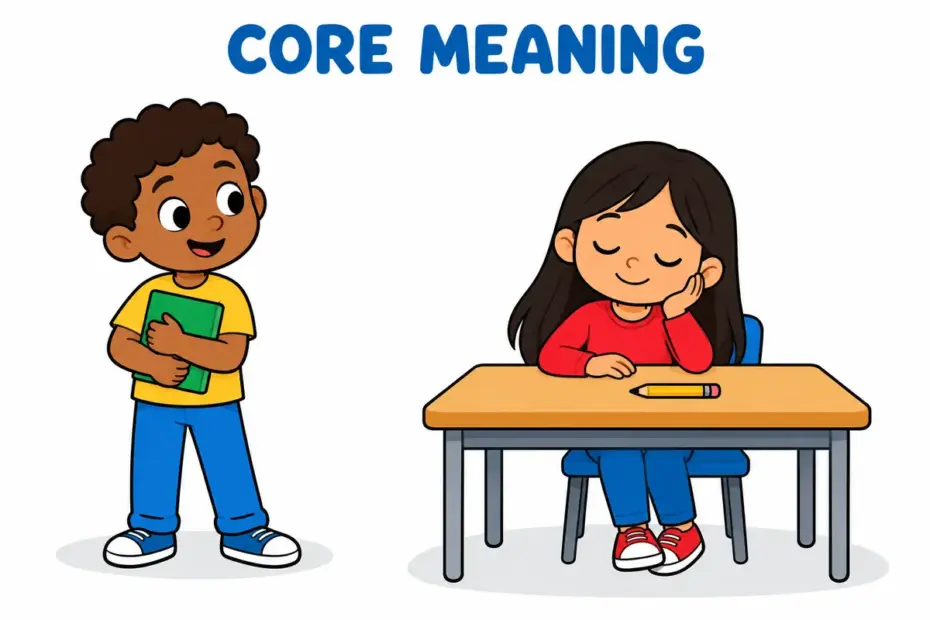
| A person enjoys time alone | “She values solitude after work.” | Solitude names the experience, which may be chosen and welcome. |
| A person has no company and feels distressed | “He felt lonely while living alone.” | Lonely identifies emotional distress; solitude itself does not say how the person feels. |
| A report describes a separate confinement room | “The person was kept in solitary confinement.” | Solitary is part of the established adjective phrase; solitude would not fit this construction. |
Solitary and solitude do not tell us whether aloneness is pleasant. “A solitary walk” may be peaceful, tiring or simply undertaken without company. “Solitude” can likewise be restorative or imposed. If the emotional response matters, name it directly with words such as peaceful, isolating or lonely, each supported by what the person experiences.
There is also a useful count distinction. A solitary object can mean one object that is separate from others, as in a solitary cloud above the horizon. Solitude is generally uncountable when it means the state of being alone: a writer says “she sought solitude,” not “a solitude.” In literary writing, “a solitude” can refer to a particular secluded place or condition, but it is marked and should be clear from context.
When describing a person, consider whether the fact of being alone is relevant. “The solitary applicant answered every question” may imply separation or isolation, while “the applicant answered every question alone” is more neutral. In professional or educational writing, use alone when you mean only that nobody accompanied the person; reserve solitary for a deliberate descriptive effect.
Neither word is a substitute for isolated in every setting. Isolated often stresses separation from contact, access or a wider group; solitary usually describes being alone, and solitude names the state. If distance from help or communication is the important fact, isolated is more exact. If a person’s chosen private time is the point, solitude is clearer.
Word forms and grammar of solitary vs solitude
| Form | Part of speech | Example |
|---|---|---|
| solitary | target form | The example uses solitary naturally. |
| solitude | related word | The nearby word solitude serves a different role. |
| inflected form | past or participle | The team used the appropriate past form. |
| neutral alternative | plain-language form | A plain alternative can clarify a formal sentence. |
Common mistakes with solitary vs solitude
- Incorrect:
Solitary was used as though it meant solitude.Correct: Solitary was used with its own meaning. Rule: Solitary and solitude have distinct meanings and grammatical roles. - Incorrect:
The phrase was put in a sentence without a clear subject.Correct: The sentence names the person or thing involved. Rule: Give the expression enough grammatical context to identify its subject or object. - Incorrect:
The formal report used solitary without checking tone.Correct: The formal report chose a precise neutral alternative. Rule: An informal or marked expression may not suit a formal document. - Incorrect:
The writer changed the verb form incorrectly.Correct: The writer matched the verb form to its subject and tense. Rule: Phrasal verbs inflect their main verb, while the particle remains unchanged.
Practice using solitary vs solitude
Try each task before checking the answer; the explanation identifies the grammatical or meaning clue.
- Fill in the blank: Choose solitary vs solitude or alone for a sentence about the intended meaning.
- Choose the better word: Complete a sentence where only solitary vs solitude fits the context.
- Correct the error: Rewrite one of the incorrect patterns above.
- Build a sentence: Use solitary vs solitude in a short workplace message.
- Spot the register: Identify which example above fits a formal report, and explain why.
- Rewrite: Replace solitary vs solitude with a clear plain-language alternative without changing the main idea.
Answers
- Use solitary vs solitude where the definition and syntax fit; the context determines the intended reading.
- Choose solitary vs solitude only if its exact meaning fits; alone expresses a different idea.
- Use the corrected construction shown in the common-mistakes section; its rule explains the repair.
- Model: The editor checked whether solitary vs solitude conveyed the intended meaning; the subject and setting make the phrase interpretable.
- The technical or academic example is most suitable because it states the point precisely and avoids casual tone.
- Choose a direct synonym that preserves the sentence’s intended action or state; do not swap words mechanically.
The bottom line
Use solitary vs solitude when its meaning and grammatical pattern fit the sentence. The strongest clue is the surrounding context, while register determines whether the expression sounds natural to the intended reader. A direct alternative is clearer when the phrase could be misunderstood.
Frequently asked questions about solitary vs solitude
What does solitary vs solitude mean?
Solitary is an adjective describing someone or something alone; solitude is a noun naming the state or experience of being alone. Check the full sentence before choosing a substitute, because a related word may share only part of the meaning. The subject, object and setting can narrow the sense and show whether the expression sounds natural there.
Is solitary vs solitude formal or informal?
The best register depends on the expression and context. If the phrase sounds conversational, use it in dialogue or informal writing and consider a precise alternative in a report, application or technical instruction. A sentence should match the audience and the consequence of ambiguity.
What is a common mistake with solitary vs solitude?
A common mistake is treating a related word as an exact synonym or using the expression with the wrong grammatical pattern. Test the sentence by naming the subject and object, then check whether the intended meaning still holds after replacing it with a plain definition.
Can solitary vs solitude have more than one meaning?
Context can give this expression more than one reading. Read the words around it, especially its subject, object and any time or place phrase. If two readings remain possible, replace the expression with a direct verb or noun that states the intended event.