100 shortest English sentences with PDF gathers the smallest complete sentences the language allows, from one-word commands such as Go to tiny subject-verb lines such as Birds sing. A short sentence is not a broken one; each line still carries a complete idea. The set shows how little a full sentence can contain.
100 Shortest English Sentences at a Glance
- A complete sentence needs a subject and a finite verb.
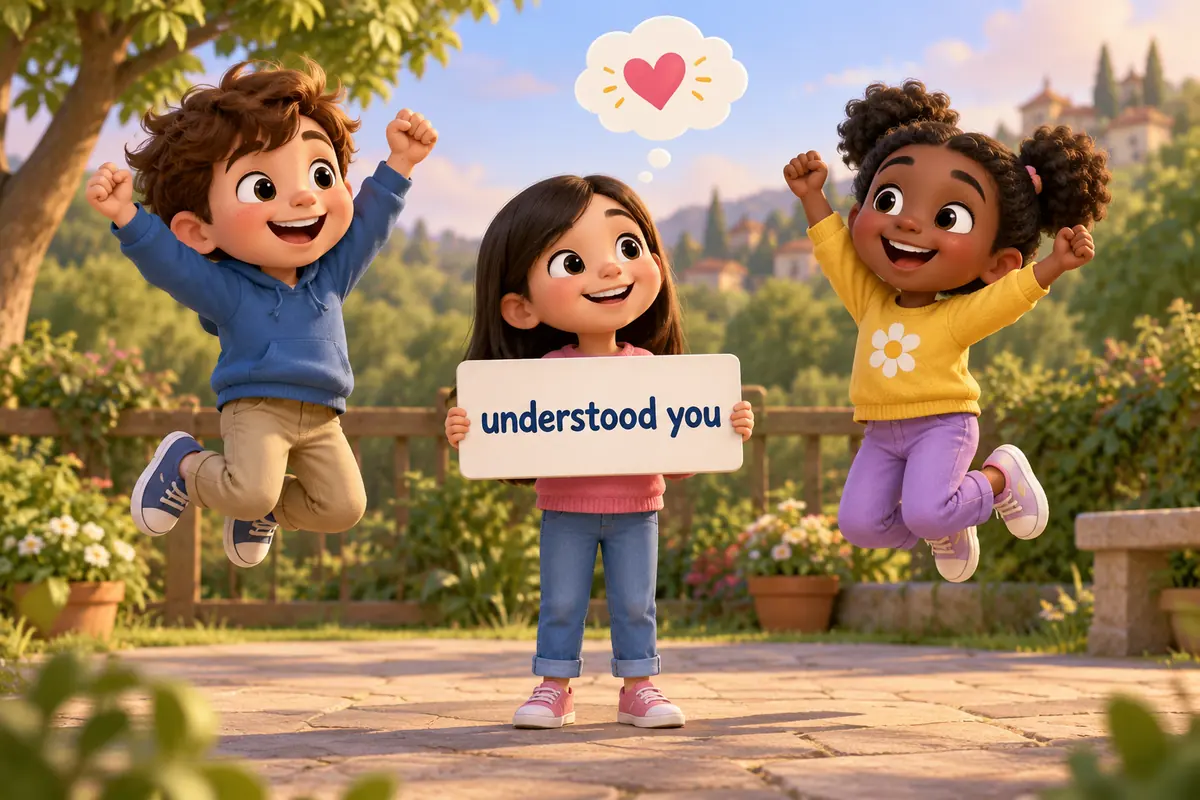
- One-word commands such as Stop are full sentences with an understood you.
- The shortest statements pair a short subject with a short verb.
- Spoken answers are often the shortest sentences of all.
- The commonest error is treating a short fragment as a sentence.
What Are the Shortest English Sentences?
The shortest English sentences are complete lines of one, two or three words. The one-word group is made of commands, where the subject you is understood rather than written: Stop, Run, Look. The two- and three-word group is made of statements with a short subject and verb, such as Birds sing or She runs. In every case a finite verb is present, which is what separates a sentence from a fragment.
| Length | Type | Example |
|---|---|---|
| one word | command | Go. |
| one word | exclamation | Thanks. |
| two words | statement | Birds sing. |
| two words | question | Ready? |
| three words | statement | The bell rang. |
How Do You Use the Shortest Sentences?
Use a one-word line for a command, a two-word line for a quick statement, and a very short line for an answer. The pattern depends on what the sentence is doing, not on how formal it sounds. The table below links each job to the smallest form that does it.
| Job | Smallest form | Example |
|---|---|---|
| give a command | verb only, you understood | Run. |
| make a statement | subject + verb | Dogs bark. |
| answer a question | the missing part only | Yes. |
| warn someone | verb only | Careful! |
| reply politely | one word | Thanks. |
Shortest English Sentences: Examples Across Contexts
Short lines carry real work in speech and writing. The examples below show the smallest sentence each situation allows.
| Context | Sentence | Why it works |
|---|---|---|
| Coaching | Run! | a one-word command with understood you. |
| Warning | Look out! | an urgent two-word command. |
| Nature writing | Birds sing. | a short subject and verb. |
| Conversation | Really? | a one-word question. |
| Classroom | Listen. | a single-verb instruction. |
| Sports | He scores. | a two-word statement. |
| Morning greeting | Good morning. | a fixed short greeting. |
| Emergency | Stop! | the shortest possible warning. |
| Story opening | Rain fell. | a mood-setting short line. |
| Email reply | Received. | a one-word acknowledgement. |
| Cheering | Well done! | a short exclamation. |
| Direction | Turn left. | a compact two-word command. |
Short Sentences vs Long Sentences
Both forms are correct; the choice depends on the effect you want. A short sentence lands hard and moves fast, while a long one carries detail and condition. Skilled writers alternate them so the short line stands out.
| Feature | Short sentence | Long sentence |
|---|---|---|
| Length | one to five words | ten words or more |
| Effect | punchy and clear | detailed and flowing |
| Typical use | commands and key points | explanations and descriptions |
| Rhythm | stops the reader | carries the reader |
| Risk | can feel abrupt | can become a run-on |
More one-line models sit in these shortest sentence examples. Once a short line is secure, a child can add one word with this lesson on using adjectives in sentences and phrases. The shortest sentences contrast neatly with the longer adjective clauses in complex sentences.
Word Forms and Grammar of Shortest Sentences
The grammar of a short sentence is the grammar of any sentence, only with fewer words. The table shows the minimum each type needs.
| Sentence type | Minimum needed | Example |
|---|---|---|
| command | a verb | Sit. |
| statement | subject + verb | Fish swim. |
| question | verb or helper + subject | Ready? |
| exclamation | a word or phrase of feeling | Hooray! |
| answer | the missing information | Three. |
| fragment (non-standard) | no verb | The big red bus |
More Tiny Sentences to Learn
Each example is a complete sentence of one to three words, with the type noted beside it.
| Sentence | Type |
|---|---|
| Go. | command |
| Stop. | command |
| Run! | urgent command |
| Look. | command |
| Sit. | command |
| Listen. | command |
| Thanks. | exclamation |
| Ready? | question |
| Birds sing. | statement |
| Dogs bark. | statement |
| Rain fell. | statement |
| He scored. | statement |
Common Mistakes With Shortest Sentences
The big red bus. Write The bus stopped. Rule: a group of words without a verb is a fragment, not a sentence.
Runs fast. Write She runs fast. Rule: a statement needs a stated subject, not only a verb.
In the morning. Write We left in the morning. Rule: a phrase cannot stand alone without a subject and verb.
Go you. Write Go. Rule: an imperative command does not add the understood you.
Birds sing and. Write Birds sing. Rule: a joining word at the end leaves the sentence unfinished.
Practice With the Shortest Sentences
- Fill in the blank: ______! (a one-word warning)
- Choose the better word: (Rain fell. / Rain.) for a story opening.
- Correct the error: The small brown dog.
- Build a sentence: a two-word command about listening.
- Fill in the blank: Fish ______. (verb)
- Spot the register: which fits an urgent warning, Look out! or You should perhaps look out?
Answers
- Stop — a single verb is a complete command.
- Rain fell. — it has a subject and a verb.
- The dog barked. — add a verb to remove the fragment.
- Listen. — one verb forms a complete command.
- swim — a plural subject takes a plural verb.
- Look out! — the shortest line carries the urgency best.
The Bottom Line
100 shortest English sentences with PDF shows that length is not what makes a sentence complete; a verb and a subject are. One-word commands, two-word statements, and one-word answers are all full sentences when a verb is present. Use short lines for commands and punch, and check every tiny line for a verb before calling it a sentence.
Frequently asked questions about the Shortest Sentences
What is the shortest possible English sentence?
The shortest are one-word commands such as Go, Stop and Sit, because the subject you is understood rather than written. A one-word question such as Ready also counts. Each still contains a verb, which is the minimum a sentence needs to be complete rather than a fragment.
Is a one-word sentence grammatically correct?
Yes, when the single word is a verb forming a command, as in Run, or a word that stands as a complete exclamation, as in Thanks. A single noun, such as Bus, is not a sentence on its own, because it has no verb and no stated or understood subject performing an action.
Why do people use such short sentences?
Short sentences create speed, emphasis and clarity. A writer uses them to deliver a command, land a key point, or break a long flow of description so one idea stands alone. In speech they are very common, which is why learners who practise them sound more natural.
Can a short sentence be a fragment?
It can, and that is the usual confusion. A fragment is a group of words that lacks a subject, a verb, or a complete idea, such as The tall tree. However short it is, a real sentence must contain a finite verb and a complete idea, or an understood subject in a command.