Active and passive voice examples sentences show the same event written two ways, once with the doer in front and once with the receiver in front. Seeing the pair side by side makes the structural shift easy to copy and easier to remember.
Voice example sentences at a glance
- Each example sentence shows the same event in one voice.
- The active version names the doer before the verb.
- The passive version moves the receiver to the front.
- The passive adds be plus a past participle.
- Examples across tenses show was, is and has been in use.
- A pair makes the change easy to see and copy.
What are active and passive voice examples sentences?
An example sentence is the quickest way to learn a grammar pattern, because the two versions sit together and the change becomes visible. In the active line the doer leads, and in the passive line the same doer slips behind the verb or disappears from the sentence entirely.
| Example type | What it shows | Sentence |
|---|---|---|
| Active, past | Doer first, finished action | The crew repaired the road. |
| Passive, past | Receiver first | The road was repaired by the crew. |
| Active, present | Doer first, current habit | The crew repairs roads weekly. |
| Passive, present | Receiver first, current habit | Roads are repaired weekly. |
| Passive, no doer | The doer is left out | The road was repaired. |
For a longer set of pairs, look at passive sentence examples.
How do you rewrite one voice as the other?
Rewriting keeps the meaning and changes the order. Find the object, move it to the subject slot, and add the matching form of be before the participle. Keep the original doer only when it still earns its place in a by phrase.
| Pattern | Active example | Passive example |
|---|---|---|
| doer + verb + object | The guide led the tour. | The tour was led by the guide. |
| object + be + participle | The chef baked the cake. | The cake was baked by the chef. |
| no doer named | Someone cleaned the hall. | The hall was cleaned. |
| perfect tense | The team has finished the task. | The task has been finished. |
| question form | Did the guard lock the gate? | Was the gate locked by the guard? |
The matching active sentence examples show the doer leading each line.
Example sentences for every voice pattern
The table walks through the main tenses, then questions and negatives. Each row gives a matched pair, and the final column notes the tense. For a longer set of pairs, look at passive sentence examples.
| Tense or type | Active and passive pair | Why this works |
|---|---|---|
| Past simple | The mechanic fixed the engine. The engine was fixed by the mechanic. | The pair shows a clean tense shift. |
| Present simple | The teacher marks the tests. The tests are marked by the teacher. | The habit stays the same in both. |
| Present perfect | They have sold the house. The house has been sold. | The perfect passive needs has been. |
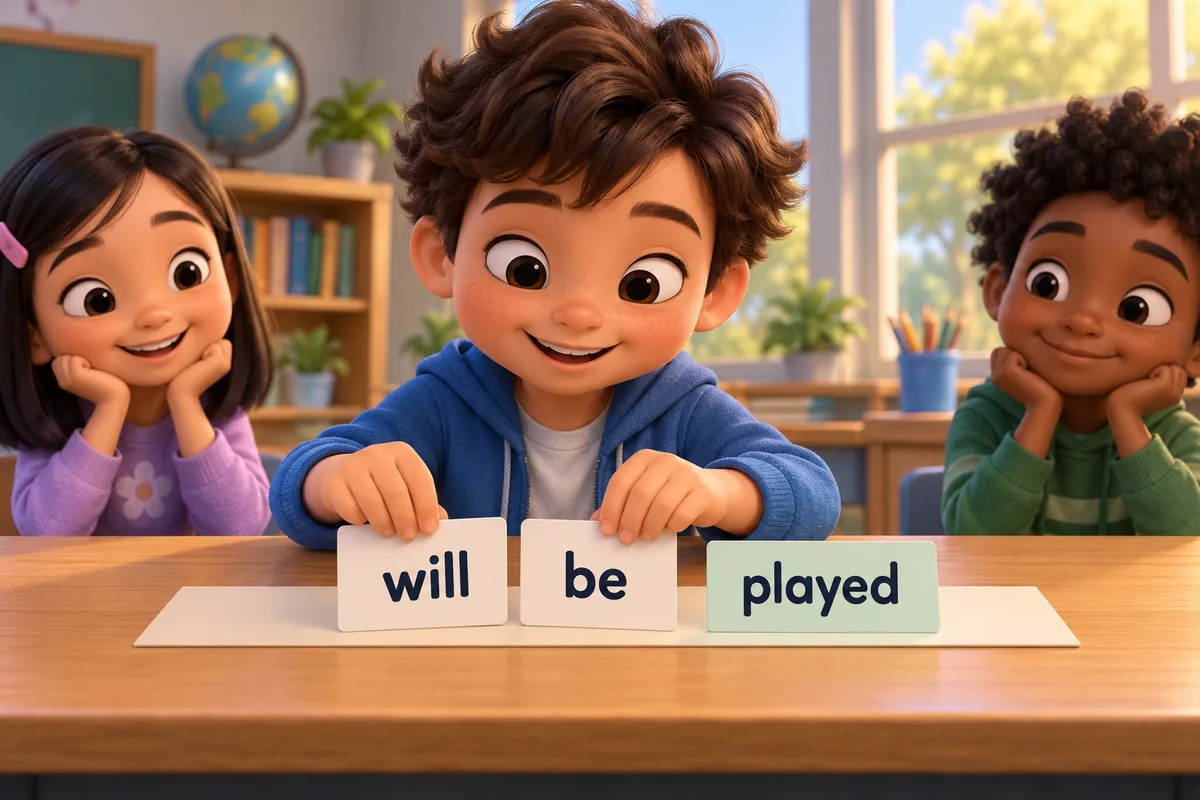
| Future | The band will play the song. The song will be played by the band. | Will be plus the participle forms the future. |
| Modal | You must sign the form. The form must be signed. | The modal passive keeps be plus the participle. |
| Negative | The dog did not eat the food. The food was not eaten. | The negative moves with be or the auxiliary. |
| Question | Did the guard lock the gate? Was the gate locked by the guard? | The question moves be in front. |
| Continuous | They are painting the wall. The wall is being painted. | The continuous passive uses is being. |
| No doer | Someone broke the vase. The vase was broken. | The passive lets you drop an unknown doer. |
| Past perfect | The staff had cleaned the room. The room had been cleaned. | Had been marks a passive before another past event. |
| Verb plus object | The chef tastes the soup. The soup is tasted by the chef. | Not every verb passivises naturally, so choose one that does. |
The same way of building a line appears in using adjectives in sentences.
Active examples vs passive examples
The paired examples differ in order, length and tone rather than in meaning. Reading them side by side shows which version suits a given sentence, and why a writer reaches for one over the other.
| Point | Active example | Passive example |
|---|---|---|
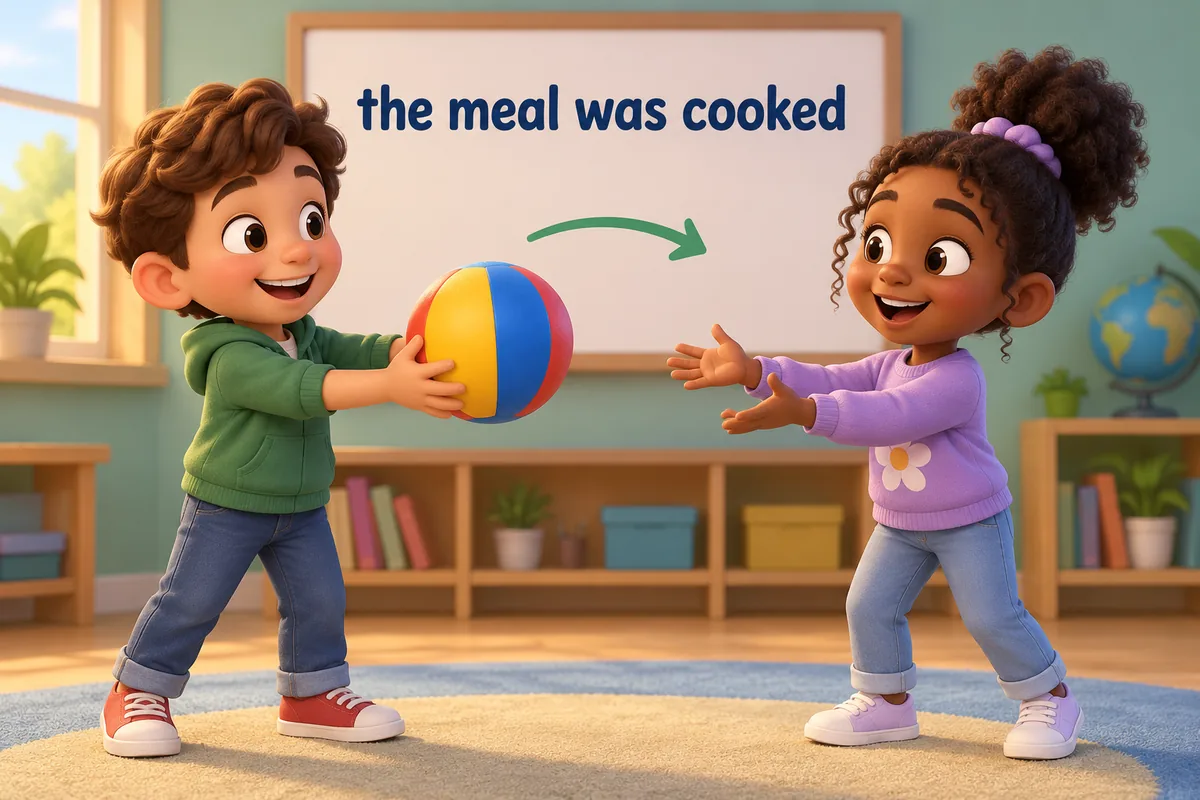
| Length | The chef cooked the meal. | The meal was cooked by the chef. |
| Focus | On the chef | On the meal |
| Verb form | one verb, cooked | be plus participle, was cooked |
| Tone | Direct and warm | Formal and distant |
| Best use | Most everyday writing | Reports when the doer is unknown |
| Doer | Always present | Often dropped |
Grammar of the example pairs
The paired examples run through every common tense, and the table collects the passive forms in one place. Each row shows the be pattern for that tense, so the same frame can be reused with any transitive verb.
| Passive form | Tense | Example |
|---|---|---|
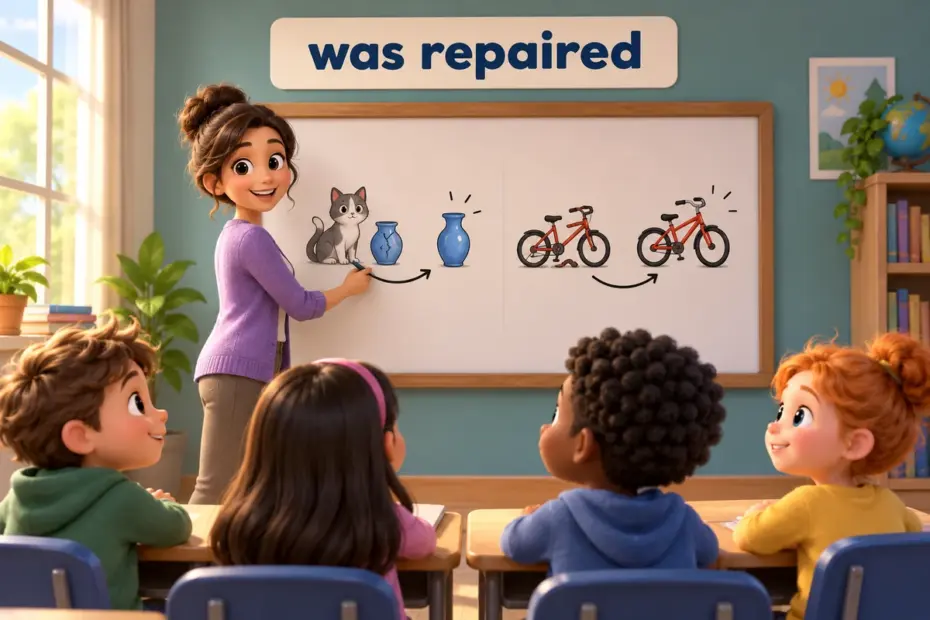
| was repaired | past simple | The road was repaired. |
| is repaired | present simple | The road is repaired each spring. |
| has been repaired | present perfect | The road has been repaired. |
| is being repaired | present continuous | The road is being repaired now. |
| will be repaired | future | The road will be repaired soon. |
| had been repaired | past perfect | The road had been repaired before the storm. |
Longer passive lines often carry adjective clauses in complex sentences.
Rewriting between the two voices is a reliable way to test your grasp of the pattern, because the meaning must survive the change. Start from the object, move it to the subject slot, then add the matching form of be and finish with the participle. Two traps catch learners: forgetting that only transitive verbs passivise, so happen and arrive cannot be turned, and leaving out be before the participle, which produces lines such as the gate locked by the guard. When you drop the doer, check that the sentence still reads clearly, because a doerless passive can hide who is responsible. Practise with the pairs above and the change becomes automatic.
Common mistakes when rewriting voice
- Incorrect:
The cake was bake by the chef.Correct: The cake was baked by the chef. Rule: the passive needs the past participle. - Incorrect:
The hall was cleaned by someone.Correct: The hall was cleaned. Rule: drop a doer you do not need. - Incorrect:
The song will played by the band.Correct: The song will be played by the band. Rule: will needs be before the participle. - Incorrect:
The gate locked by the guard.Correct: The gate was locked by the guard. Rule: the passive always includes a form of be. - Incorrect:
The vase was broke.Correct: The vase was broken. Rule: break has the participle broken. - Incorrect:
The tests are mark by the teacher.Correct: The tests are marked by the teacher. Rule: the participle keeps its -ed ending after be.
Practice rewriting example sentences
- Rewrite in the passive: The nurse checked the chart.
- Rewrite in the active: The letter was written by Sam.
- Fill the gap: The window ______ last night. (break)
- Correct the error: The car was drove by my aunt.
- Build a passive sentence in the present perfect about a bridge.
- Spot the register: which is better in a news report, (a) Officials closed the bridge, or (b) The bridge was closed by officials?
Answers
- The chart was checked by the nurse, because the object moves to the front.
- Sam wrote the letter, because the doer returns to the subject slot.
- was broken, because the past passive uses was plus the participle broken.
- The car was driven by my aunt, because drive has the participle driven.
- The bridge has been closed for repairs, because has been plus the participle marks the perfect passive.
- (a) Officials closed the bridge, because the active voice is shorter and names who acted.

The bottom line
Active and passive voice examples sentences are best learned as pairs, because the matched lines make the shift from doer to receiver plain. Read the active version first, then the passive, and note where be and the participle appear. Once the pattern is clear, any transitive verb can be turned from one voice into the other.
Frequently asked questions about active and passive voice examples
What is one clear example of active and passive voice?
A clean pair is the chef cooked the meal in the active voice and the meal was cooked by the chef in the passive voice. The doer leads the first sentence, while the receiver leads the second, and the meaning stays the same throughout.
Does the passive change the meaning?
No, the meaning stays the same, but the emphasis shifts from the doer to the receiver. That shift matters in writing, because the passive can make a sentence feel impersonal or hide who carried out the action. The two versions describe one event.
How do I make a passive sentence active?
Find the doer in the by phrase, or supply one if it is missing, and move it to the front as the subject. Then turn be plus the participle back into a single past-tense verb, as in the ball was thrown by him becoming he threw the ball.
Why do example pairs help learners?
A pair puts the two versions of the same sentence side by side, so the change is visible rather than described. The learner sees the object move, the form of be appear and the participle take shape, which is far easier to copy than an abstract rule.