
Anticipated vs expected both describe something that is coming, but anticipated carries a sense of looking ahead and preparing, while expected simply states what is likely or due. “The anticipated crowd arrived early” looks forward; “the expected rain never came” states a forecast.
Anticipated vs Expected at a glance
- Anticipated and expected are both adjectives formed from verbs.
- Anticipated means awaited or foreseen, often with some preparation.
- Expected means regarded as likely or due.
- Anticipated pairs with demand, delay and results; expected pairs with arrival, cost and outcome.
- The commonest error is using anticipated where the plain word expected fits better.
What does anticipated mean and what does expected mean?
Anticipated is an adjective meaning awaited or foreseen, often with a sense of looking ahead; expected is an adjective meaning regarded as likely or due. The Cambridge entry for anticipated and the Cambridge entry for expected mark this split, and one line shows it: an anticipated result is one you prepared for, while an expected result is the one a forecast predicts.
| Sense | Word | Plain meaning | Example |
|---|---|---|---|
| Awaited | anticipated | Looked forward to | The anticipated guests have arrived. |
| Foreseen | anticipated | Guessed in advance | The drop was anticipated by analysts. |
| Regarded as likely | expected | Thought probable | Rain is expected tonight. |
| Due | expected | Scheduled to happen | The train is expected at six. |
| Required by custom | expected to | An obligation or norm | Guests are expected to greet the host. |
What is the difference between anticipated and expected?
The difference is one of stance: anticipated leans toward looking ahead and preparing for what may come, while expected states a plain forecast or a duty. A familiar look-alike pair such as abel vs able is settled the same way, by asking which shade of meaning the sentence needs.
| Test | Anticipated | Expected |
|---|---|---|
| Core meaning | awaited or foreseen | regarded as likely |
| Extra sense | looking ahead, preparation | likelihood or duty |
| Register | slightly formal | neutral and general |
| Typical partner | demand, delay, results | arrival, cost, outcome |
| Opposite | unanticipated | unexpected |
| Quick test | if it means waited for, use anticipated | if it means likely, use expected |
Choose anticipated when the sentence stresses that someone looked ahead, and expected when it simply records a forecast or a duty.
How do you use anticipated and expected in a sentence?
Each adjective follows fixed frames, and the frame is a faster test than the meaning; to watch anticipated work with nouns, read sentences using anticipated.
| Pattern | Example | What it signals |
|---|---|---|
| anticipated + noun | The anticipated delay did not occur. | a foreseen event |
| be anticipated | A rise in demand is anticipated. | a forecast |
| as anticipated | As anticipated, the hall filled fast. | a confirmed prediction |
| expected + noun | The expected cost is low. | a likely figure |
| be expected to + verb | Staff are expected to attend. | a duty or norm |
| than expected | Sales were higher than expected. | a comparison with a forecast |

Anticipated and expected in a sentence: examples across contexts
Reading the pair in different registers makes the choice automatic, and more frames for the forecast sense sit in sentences using expected.
| Context | Example sentence | Why this works |
|---|---|---|
| Classroom | The teacher read the anticipated questions aloud. | anticipated means foreseen |
| Workplace email | A short delay is anticipated this week. | anticipated signals looking ahead |
| News report | The storm is expected to reach the coast tonight. | expected states a forecast |
| Events | The anticipated guest list grew to fifty names. | anticipated as awaited |
| Everyday speech | That was longer than expected. | than expected compares to a forecast |
| Academic writing | Higher costs were anticipated in the model. | anticipated means built in |
| Business | Staff are expected to log their hours. | expected to marks a duty |
| Travel | Our train is expected at half past six. | expected as due |
| Planning | As anticipated, demand peaked in July. | as anticipated confirms a prediction |
| Health writing | The expected recovery time is two weeks. | expected as a standard figure |
Which should you use?
Match the word to the stance: looking ahead and preparing takes anticipated, while a plain forecast or duty takes expected.
| Situation | Use | Example |
|---|---|---|
| Something prepared for | anticipated | The anticipated rush was handled well. |
| Something likely | expected | A warm day is expected. |
| Confirming a prediction | anticipated | As anticipated, prices fell. |
| Stating a duty | expected | Visitors are expected to sign in. |
Register is the second test. Anticipated reads as slightly formal and belongs in reports and planning, where someone has looked ahead, while expected is neutral and fits almost any sentence about likelihood, timing or duty. Neither word replaces the other, so the honest limit is this: a plain forecast sounds inflated with anticipated, and a sentence that stresses preparation loses its point with expected.
Word forms and grammar of anticipated and expected
The two families grow from separate verbs, and another letter-close pair, addition vs edition, is caught the same way once the meaning is clear.
| Form | Part of speech | Example |
|---|---|---|
| anticipate | verb | We anticipate a busy season. |
| anticipates | verb, third person | She anticipates every objection. |
| anticipated | adjective or past participle | The move was anticipated for months. |
| anticipation | noun | They waited in anticipation. |
| expect | verb | I expect a quick reply. |
| expecting | verb, -ing | She is expecting a parcel. |
| expected | adjective or past participle | Snow is expected tomorrow. |
| expectation | noun | The results matched expectation. |
Common mistakes with anticipated and expected
Mistake 1: anticipated for a plain forecast. Incorrect: Cold weather is anticipated tonight. Correct: Cold weather is expected tonight. Rule: a simple forecast takes expected.
Mistake 2: expected for active preparation. Incorrect: The team was well expected for the rush. Correct: The team was well anticipated for the rush. Rule: looking ahead with preparation takes anticipated.
Mistake 3: the wrong opposite. Incorrect: The result was totally unexpecteded. Correct: The result was totally unexpected. Rule: the opposite of expected is unexpected, with no extra ed.
Mistake 4: dropping to after expected. Incorrect: Guests are expected sign in. Correct: Guests are expected to sign in. Rule: expected as a duty takes to plus the verb.
Mistake 5: anticipated as a duty word. Incorrect: Staff are anticipated to attend. Correct: Staff are expected to attend. Rule: a duty or norm takes expected to.
Practice using anticipated and expected
- Fill in the blank: A light frost is ___ in the hills tonight.
- Choose the better word: The busy season was (anticipated / expected) and the shelves were fully stocked.
- Correct the error: Sales were far higher than anticiped.
- Build a sentence: use expected to describe the time a flight is due.
- Spot the register: which line suits a planning report, (a) We guessed there would be a rush, or (b) The rise in demand was anticipated?
- Fill in the blank: As ___, the tickets sold out within an hour.
Answers
- expected, because it states a plain forecast.
- anticipated, because the team prepared in advance.
- Sales were far higher than expected; the comparison takes expected.
- The flight is expected at eight thirty.
- (b), because anticipated suits a formal planning report.
- anticipated, because the phrase as anticipated confirms a prediction.
The bottom line
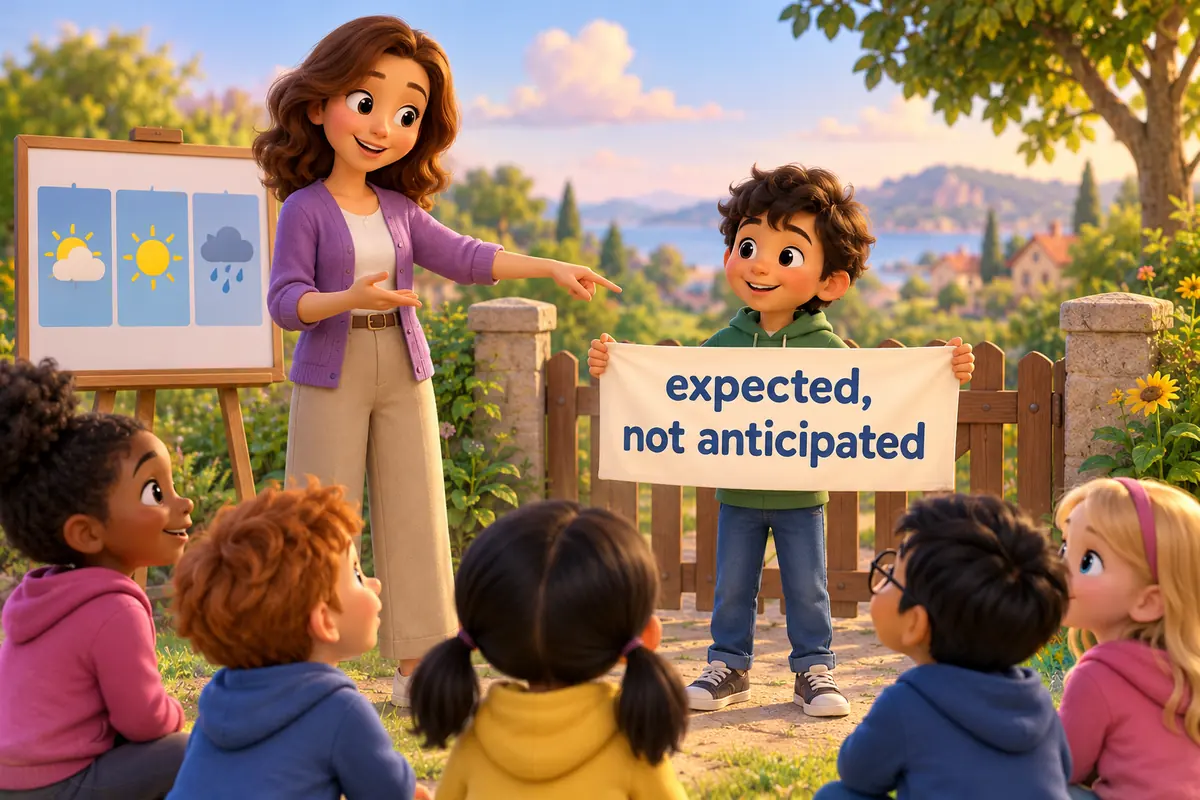
The anticipated vs expected choice turns on stance rather than timing: anticipated suggests someone looked ahead and prepared, while expected states what is likely or due. Keep anticipated for reports and planning that stress foresight, and reach for expected in plain forecasts and duties. The frames help, since anticipated often precedes a noun and expected often follows than or the word to.
Frequently asked questions about anticipated and expected
What is the difference between anticipated and expected?
Both describe something coming, but anticipated adds a sense of looking ahead and preparing, while expected simply states what is likely or due. A report might say demand was anticipated, meaning staff planned for it, or say a warm day is expected, meaning it is the forecast.
Can anticipated and expected be used for the same thing?
Often they can, and the choice then comes down to emphasis. When the sentence stresses preparation or foresight, anticipated is stronger. When it only records a forecast, a timing, or a duty, expected is the plainer and safer word. In formal reports, anticipated reads well.
What is the opposite of expected and anticipated?
The opposite of expected is unexpected, meaning not likely and often surprising. The opposite of anticipated is unanticipated, which keeps the sense of something not foreseen. Both opposites are single words on their own, so no extra letters follow the prefix un.
How do I use anticipated and expected in writing?
Put anticipated before a noun or after the verb be to stress foresight, as in the anticipated delay or the rise is anticipated. Put expected after be or after than to state a forecast or duty, as in rain is expected or higher than expected. The frame decides the tone.