Future simple tense uses and examples cover the commonest way to talk about tomorrow, because will plus a base verb handles predictions, promises and instant decisions. In I will call you tonight, the speaker decides at the moment of speaking. This guide shows the forms, the main jobs and the traps that catch learners.
Future simple tense uses and examples at a glance
- The core form is will plus the base verb, with no change for person.
- It covers predictions, promises, offers and spontaneous decisions.
- The negative is will not or its contraction, and the question moves will first.
- Be going to is the close partner for plans and visible evidence.
- The commonest error is adding to after will, as in will to go.
What is the future simple tense?
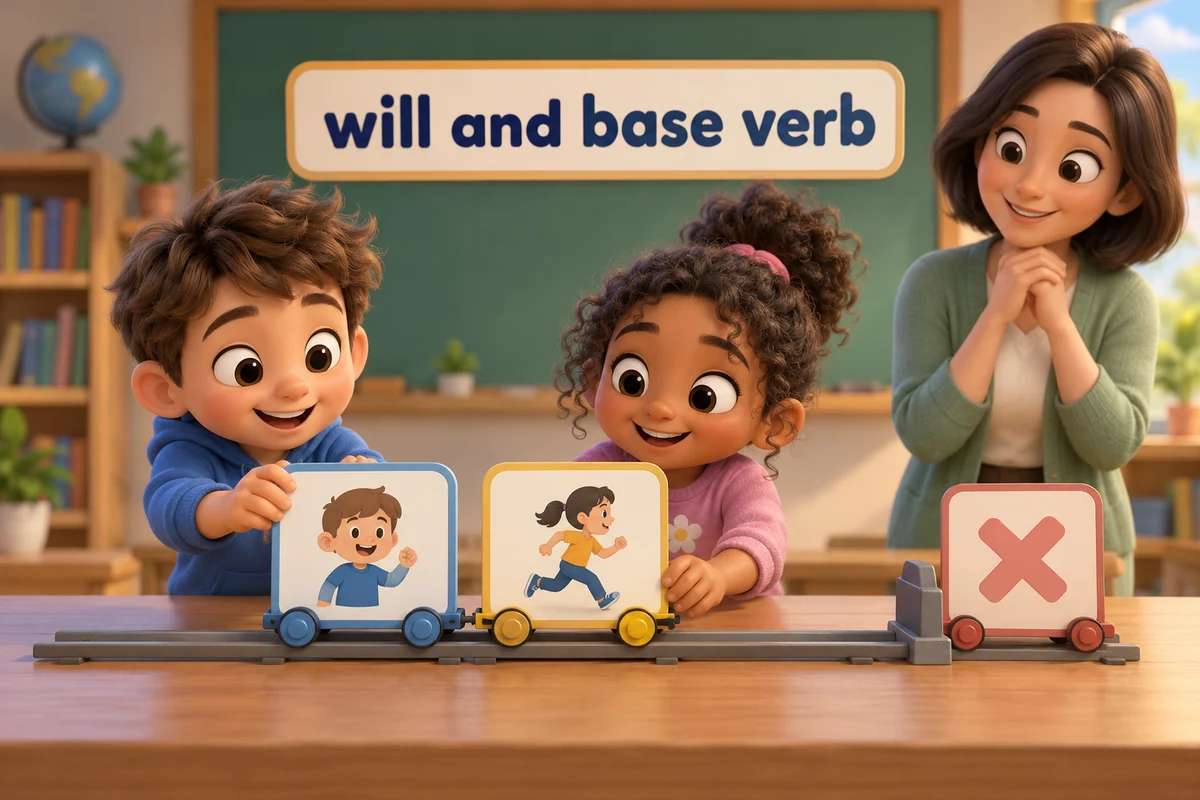
The future simple tense is a verb form that places an action or state in future time with the helper will. Its shape never changes with the subject: I will go, she will go, they will go all use the same verb. A second pattern, be going to plus the base verb, also marks the future and shares most of the jobs. The table shows the core form, and more frames sit in in future sentence examples.
| Part | Form | Example |
|---|---|---|
| helper | will | We will… |
| main verb | base verb, no endings | …arrive. |
| full form | will + base verb | She will arrive at six. |
| partner form | be going to + base verb | She is going to arrive at six. |
| short answer | Yes, I will. / No, I will not. | Yes, I will. |
How do you form the future simple tense?
Move one word to change the sentence type. Add not for the negative, and place will in front of the subject for a question; the main verb stays in its base form throughout. The table lists the patterns with one example each.
| Type | Pattern | Example |
|---|---|---|
| positive | subject + will + base verb | The shop will open at nine. |
| negative | subject + will not + base verb | The shop will not open today. |
| question | will + subject + base verb | Will the shop open today? |
| short answer | Yes, subject + will. / No, subject + will not. | No, it will not. |
| be going to | subject + am/is/are + going to + base verb | It is going to rain. |
Future simple tense examples across contexts
The tense fits wherever the future is a decision, a guess or a promise rather than a fixed arrangement. Each sentence below shows one of those jobs, and more everyday frames sit in future sentence examples.
| Context | Sentence | Why this works |
|---|---|---|
| Daily plan | I will email you tomorrow. | a decision made now |
| Promise | I will keep your secret. | a commitment to a future act |
| Offer | I will carry that for you. | willingness offered at the moment |
| Weather guess | It will be cold tonight. | a prediction with no proof |
| Workplace | The manager will sign it on Monday. | a simple statement about the future |
| Warning | You will fall if you lean back. | a prediction about a consequence |
| News report | The minister will visit the region next week. | a scheduled future event |
| Negotiation | We will accept a later delivery date. | a present decision about terms |
| Storytelling | The hero will return at dawn. | a forecast inside a narrative |
| Study plan | I will revise every evening this week. | a resolve stated for the future |
When should you use the future simple tense?
Reach for the future simple when the future act is a prediction, a promise, an offer or a decision taken as you speak. Use be going to instead when a plan already exists or when evidence points to a result. The table maps the main jobs of the tense.
| Use | Meaning | Example |
|---|---|---|
| Prediction | a guess about the future | Prices will rise next year. |
| Spontaneous decision | a choice made now | I will have the soup. |
| Promise or offer | a commitment or willingness | I will help you move. |
| Fact about the future | a simple future statement | She will turn thirty in May. |
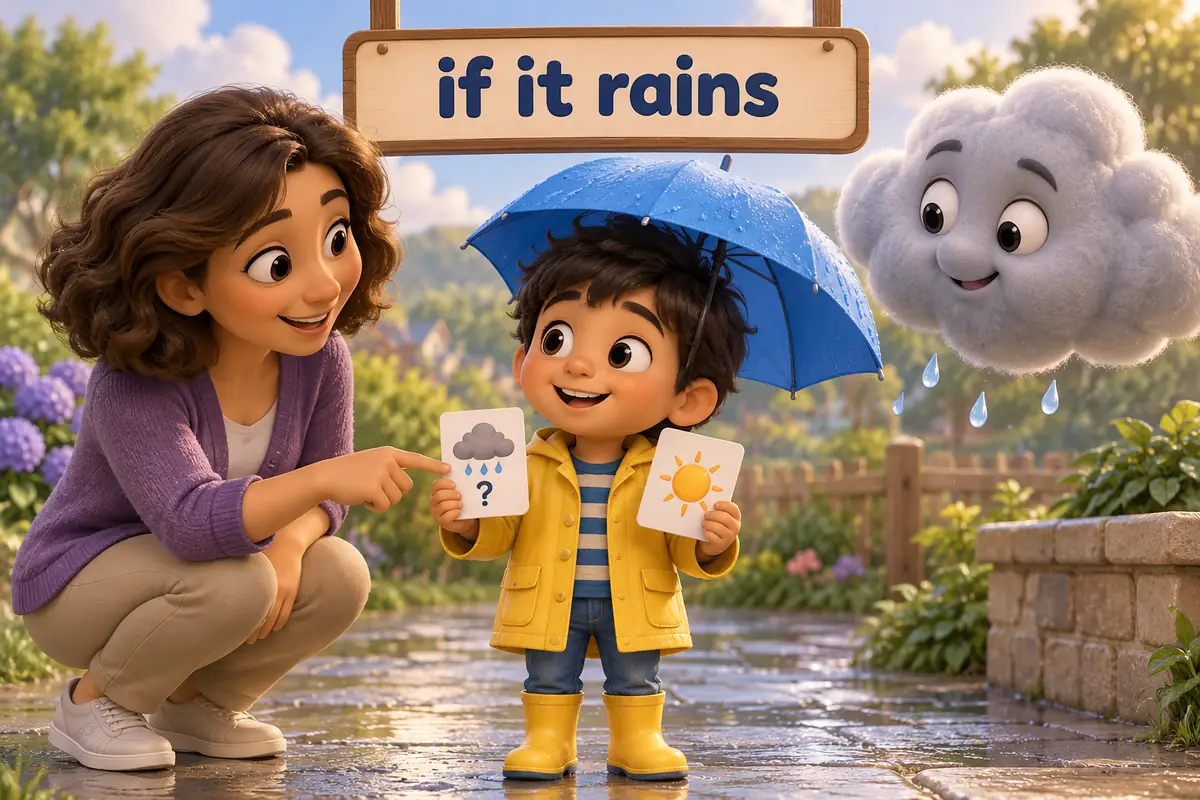
| First conditional | the result clause after if | If it rains, we will stay in. |
Future simple vs be going to
Both forms talk about the future, but they answer different questions. Will suits a decision made at the moment of speaking, while be going to suits a plan already made or a result already visible. The table sets the two side by side.
| Test | Will | Be going to |
|---|---|---|
| Form | will + base verb | am/is/are + going to + base verb |
| Decision time | made at the moment of speaking | already decided before speaking |
| Evidence | a bare prediction | a sign that supports the guess |
| Typical use | offers, promises, quick choices | plans and firm intentions |
| Example | I will answer the phone. | I am going to study medicine. |
One sentence can show the split: the doorbell rings, so you say I will get it, but you have a ticket, so you say I am going to travel.
Word forms and grammar of the future simple
The helper will carries no endings, so the subject never changes it, and the main verb stays in its base form; further tense sentence patterns follow the same idea. The table lists the parts a learner writes most, including the sentences that look right but are not.
| Form | Note | Example |
|---|---|---|
| will | the same for every person | he will, we will, they will |
| base verb | no -s and no -ed after will | she will go, not will goes |
| negative | will not, often shortened in speech | they will not wait, they will not wait |
| question | will moves before the subject | Will he call? |
| be going to | verb be agrees with the subject | I am going to rest |
| non-standard | to after will is wrong | I will go, not I will to go |
Common mistakes with the future simple
Mistake 1: adding to after will. Incorrect: I will to call you. Correct: I will call you. Rule: will is a helper and takes the bare base verb, never to.
Mistake 2: putting an -s on the main verb. Incorrect: She will comes later. Correct: She will come later. Rule: after a helper, the main verb loses its endings.
Mistake 3: stacking two helpers. Incorrect: I will can help. Correct: I will be able to help. Rule: will cannot combine with can; use be able to.
Mistake 4: will inside an if clause. Incorrect: If it will rain, we will stay in. Correct: If it rains, we will stay in. Rule: the if clause takes the present simple, and will goes in the result clause.
Mistake 5: will for a fixed arrangement. Incorrect: We will meet the dentist at four tomorrow, booked last week. Correct: We are meeting the dentist at four tomorrow. Rule: a fixed arrangement takes the present continuous.
Practice using the future simple tense
- Fill in the blank: I ______ (help) you with that bag.
- Make it negative: She will finish the essay tonight.
- Correct the error: They will to arrive before noon.
- Build a sentence: use the future simple to make a prediction about the weather.
- Choose the better form: The phone is ringing, so I (will get / am going to get) it.
- Spot the register: which suits a formal notice, The office will close at five, or The office gonna close at five?
Answers
- will help; will takes the bare base verb.
- She will not finish the essay tonight; add not after will.
- They will arrive before noon; will never takes to.
- Sample: It will rain tomorrow; a bare guess takes the future simple.
- will get; a decision made as the phone rings takes will.
- The office will close at five; it is standard and formal.
The bottom line
Future simple tense uses and examples come down to one helper, will, and one bare verb that never changes. Use will for predictions, promises, offers and decisions made as you speak, and switch to be going to for plans and visible evidence. Keep to out of the sentence after will, and the form stays reliable in speech and writing alike.
Frequently asked questions about the future simple tense
What is the future simple tense used for?
It is used for predictions, promises, offers, warnings and decisions made at the moment of speaking, as in I will help you. It also states plain facts about the future and forms the result clause of a first conditional. It does not describe fixed arrangements, which take the present continuous.
How do you make the future simple negative?
Add not between will and the base verb, as in she will not come, and shorten it to will not in casual speech, as in she will not come. The main verb stays in its base form either way. Questions move will in front of the subject, as in will she come.
What is the difference between will and be going to?
Will marks a decision made as you speak or a bare prediction, as in I will answer it. Be going to marks a plan already made or a result supported by evidence, as in look at those clouds, it is going to rain. The two often overlap, but the timing of the decision separates them.
Can the future simple express a promise?
Yes, and it is the usual form for one. A promise such as I will keep my word states a commitment for the future with no condition and no arrangement. The same pattern carries offers and willingness, as in I will carry that bag for you.