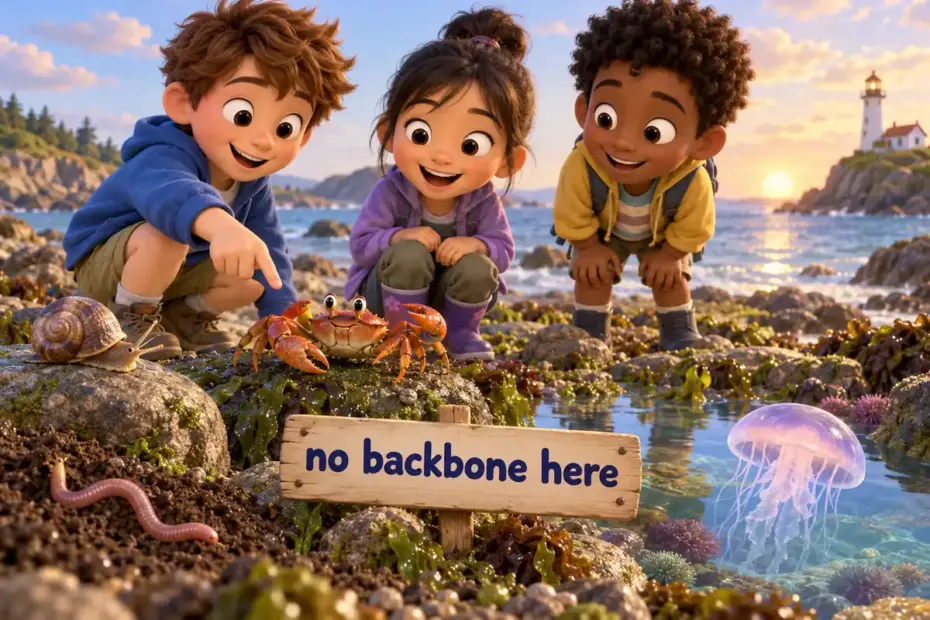
Invertebrate animals types names pictures covers every animal without a backbone, from insects and spiders to crabs, snails, worms and jellyfish. Invertebrates make up the great majority of animal species, and the name of each group points to its body plan. A jellyfish is an invertebrate.
Invertebrate animals at a glance
- An invertebrate is an animal that has no backbone.
- Invertebrates include insects, spiders, crustaceans, molluscs, worms and jellyfish.
- They make up most of the animal species on Earth.
- Vertebrates, such as fish, birds and mammals, all have a backbone instead.
- The commonest error is calling an octopus or a worm a vertebrate.
What are invertebrate animals?
Invertebrate animals are the animals that have no backbone or spinal column, and they make up the great majority of all animal species. The group is not one family but many, so insects, spiders, crabs, molluscs, worms and jellyfish all count as invertebrates for the same simple reason. More describing words sit in adjectives for animals.
| Group | Feature | Common names |
|---|---|---|
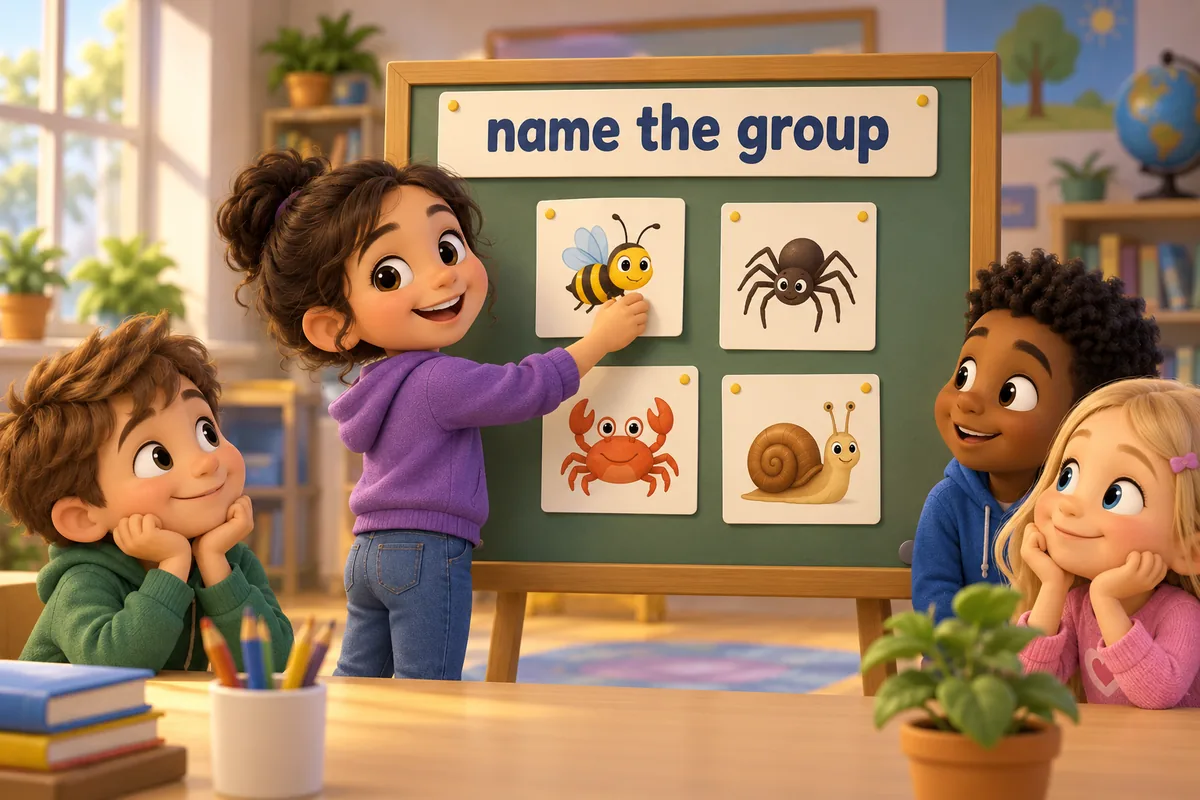
| Insects | six legs, three body parts | bee, ant, butterfly, beetle |
| Arachnids | eight legs, two body parts | spider, scorpion, tick, mite |
| Crustaceans | hard shell, many legs | crab, lobster, shrimp, prawn |
| Molluscs | soft body, often a shell | snail, slug, octopus, squid |
| Worms | soft, long, segmented body | earthworm, leech, ragworm |
| Cnidarians | stinging tentacles | jellyfish, coral, sea anemone |
| Echinoderms | spiny skin, five-part body | starfish, sea urchin, sea cucumber |
| Sponges | simple body full of pores | tube sponge, bath sponge |
| Centipedes and millipedes | many legs, long body | centipede, millipede |
| Flatworms | soft, flat, unsegmented body | planarian, tapeworm |
One honest limit belongs here: invertebrate is a broad everyday label rather than one tidy family. The group gathers animals as different as a jellyfish and a beetle, so knowing that an animal is an invertebrate tells you only that it has no backbone. You still need the group name to know how it looks and lives.
The opposite group is the vertebrates, which have a backbone and an internal skeleton. Fish, amphibians, reptiles, birds and mammals all belong there. Invertebrates instead wear their support on the outside, as a shell or an exoskeleton, or carry no hard support at all, as a worm and a jellyfish do. That single difference, a backbone or none, is the line that divides the animal kingdom into its two largest parts, and it is the reason the invertebrate group is so large.
The table below sorts the common invertebrates into their groups, and each row names the feature that marks the group. Knowing those features is what lets a reader move from the broad label invertebrate to the exact word for the animal in front of them.
How do you use invertebrate names in a sentence?
Group names are countable nouns, and the words around them follow simple patterns.
| Pattern | Example | What it signals |
|---|---|---|
| a / an + invertebrate | An octopus is an invertebrate. | one animal |
| invertebrate + plural verb | Invertebrates live in every habitat. | a whole group |
| type of + invertebrate | A crab is a type of crustacean. | a subgroup |
| invertebrate + is + feature | A jellyfish is an invertebrate with tentacles. | a defining trait |
| unlike vertebrates, + clause | Unlike vertebrates, worms have no spine. | a contrast |
Invertebrate animals types names pictures: examples across contexts
The group names move from a rock pool to a science lesson, and each setting uses a different word. A related set of words sits in adjectives for animals 2, and a full animal list sits in animals that start with a to z.
| Context | Example sentence | Why this works |
|---|---|---|
| Classroom | Sort each animal into vertebrate or invertebrate. | a clear sorting task |
| Rock pool | A crab is an invertebrate with a hard shell. | a scene detail |
| Garden | An earthworm is an invertebrate that aerates soil. | a helpful habit |
| Science note | Insects make up most invertebrate species. | a factual note |
| Story | A jellyfish drifted like an invertebrate ghost. | narration |
| Seashore | Starfish are echinoderms without a backbone. | a group name |
| Beach walk | Every shell belonged to an invertebrate. | a vivid detail |
| Aquarium | An octopus shows how clever invertebrates can be. | a surprising fact |
| Conversation | Is a snail an insect or a mollusc? | an everyday question |
| Nature film | Coral is built by tiny invertebrates. | a process detail |
Which invertebrate group should you name?
Match the group name to the body plan, because a crab and a snail are both invertebrates but belong to different groups.
| Situation | Pick | Example |
|---|---|---|
| Six legs | insect | A bee is an insect. |
| Eight legs | arachnid | A spider is an arachnid. |
| Hard shell and many legs | crustacean | A crab is a crustacean. |
| Soft body, often a shell | mollusc | A snail is a mollusc. |
| Stinging tentacles | cnidarian | A jellyfish is a cnidarian. |
The group name should match the body plan a reader would see, so legs, shells and tentacles tell the groups apart. A spider and a crab both have many legs, but only the crab wears a hard shell, and only the spider belongs to the arachnids. Naming the group, as in an insect or a mollusc, is more precise than the broad word invertebrate.
Word forms and grammar of invertebrate names
The words for the group change shape in a few set ways, and one contrast catches most learners.
| Form | Part of speech | Example |
|---|---|---|
| invertebrate | noun | An octopus is an invertebrate. |
| invertebrate | adjective | Invertebrate animals lack a spine. |
| invertebrates | plural noun | Invertebrates live everywhere. |
| vertebrate | noun | A fish is a vertebrate. |
| arachnid | noun | A spider is an arachnid. |
| crustacean | noun | A lobster is a crustacean. |
| mollusc / mollusk | noun (British / American) | A snail is a mollusc in British writing. |
Common mistakes with invertebrate names
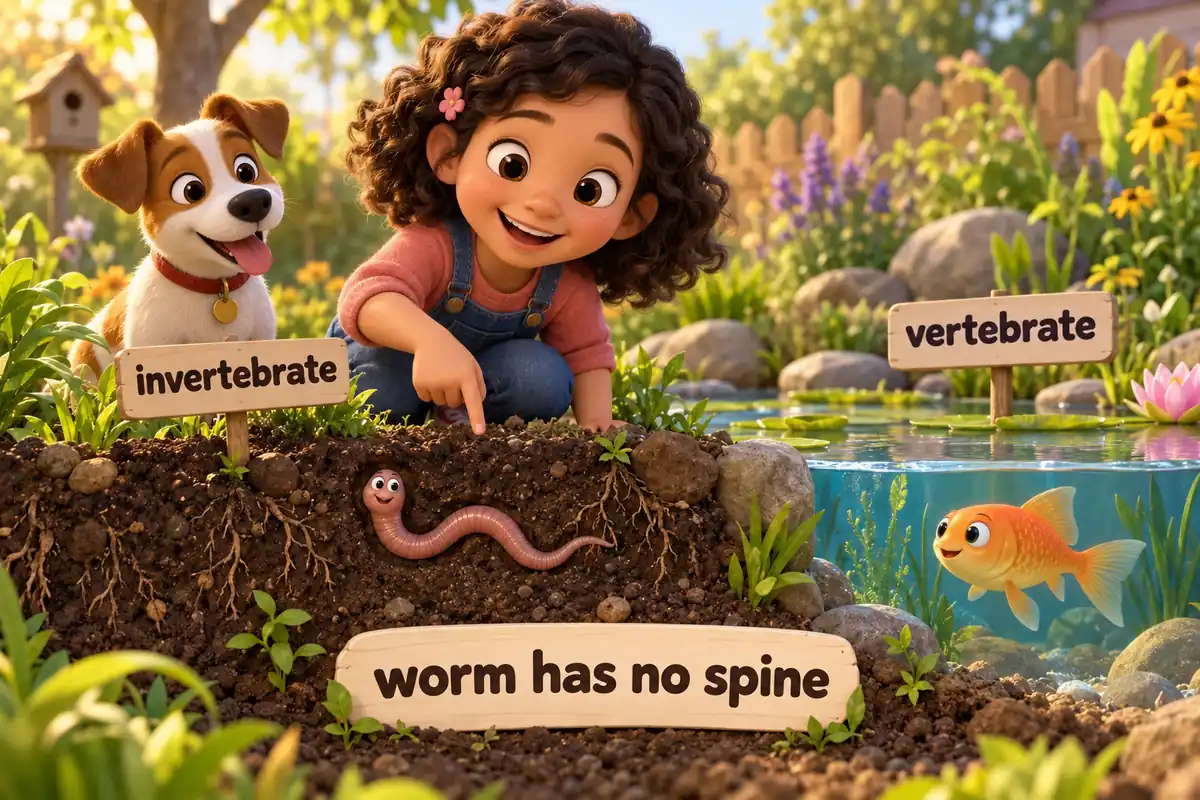
Mistake 1: calling a worm a vertebrate. Incorrect: An earthworm is a vertebrate. Correct: An earthworm is an invertebrate. Rule: a vertebrate has a backbone, and a worm does not.
Mistake 2: a plural after the article an. Incorrect: an octopuses. Correct: an octopus. Rule: an comes before a singular countable noun beginning with a vowel sound.
Mistake 3: treating invertebrate as one family. Incorrect: Every invertebrate is an insect. Correct: Insects are only one group of invertebrates. Rule: the label covers many groups, so it is broader than any single name.
Mistake 4: the wrong group for a crab. Incorrect: A crab is an arachnid. Correct: A crab is a crustacean. Rule: an arachnid has eight legs and no shell, while a crustacean has a hard shell.
Mistake 5: mixing the two spellings. Incorrect: a mollusk in British writing. Correct: a mollusc in British writing, or a mollusk in American writing. Rule: the -c spelling is British and the -k spelling is American.
Practice using invertebrate names
- Fill in the blank: An animal without a backbone is called an ___.
- Choose the better word: A spider is an (arachnid / insect).
- Correct the error: An earthworm is a vertebrate.
- Build a sentence: use “type of + invertebrate” with crab and crustacean.
- Spot the register: which suits a science note, (a) Creepy crawlies everywhere, or (b) Invertebrates lack a backbone?
- Fill in the blank: A ___ has stinging tentacles and no backbone.
Answers
- invertebrate, because an invertebrate has no backbone.
- arachnid, because a spider has eight legs and belongs to the arachnids.
- An earthworm is an invertebrate; only animals with a backbone are vertebrates.
- A crab is a type of crustacean.
- (b), because a science note gives a precise, defining statement.
- jellyfish, because a jellyfish is an invertebrate with stinging tentacles.
The bottom line
Invertebrate animals types names pictures gathers the animals with no backbone, from insects and spiders to crabs, snails, worms and jellyfish. Use the group name when a reader needs the body plan, and remember that invertebrate is a broad label covering many different families. A standalone list of describing words sits in adjectives for animals.
Frequently asked questions about invertebrate animals
What are the main types of invertebrates?
The main types are insects, arachnids, crustaceans, molluscs, worms, cnidarians such as jellyfish, echinoderms such as starfish, sponges, centipedes and millipedes, and flatworms. Each group has its own body plan, so the group name tells you far more than the broad word invertebrate.
What is an invertebrate in simple terms?
An invertebrate is an animal that has no backbone or spinal column. The word covers the great majority of animal species, from insects and spiders to crabs, snails, worms and jellyfish, and it stands in contrast to vertebrates such as fish, birds and mammals.
Is a spider an invertebrate?
Yes, a spider is an invertebrate because it has no backbone. More precisely, a spider is an arachnid with eight legs and two body parts, which keeps it apart from insects, which have six legs and three body parts. Both groups sit inside the wider invertebrate label.
Why do invertebrates matter?
Invertebrates make up most animal species and do essential work, from bees that pollinate flowers to worms that aerate soil and corals that build reefs. Losing them would affect food chains and habitats far beyond their own group, which is why they are studied closely.