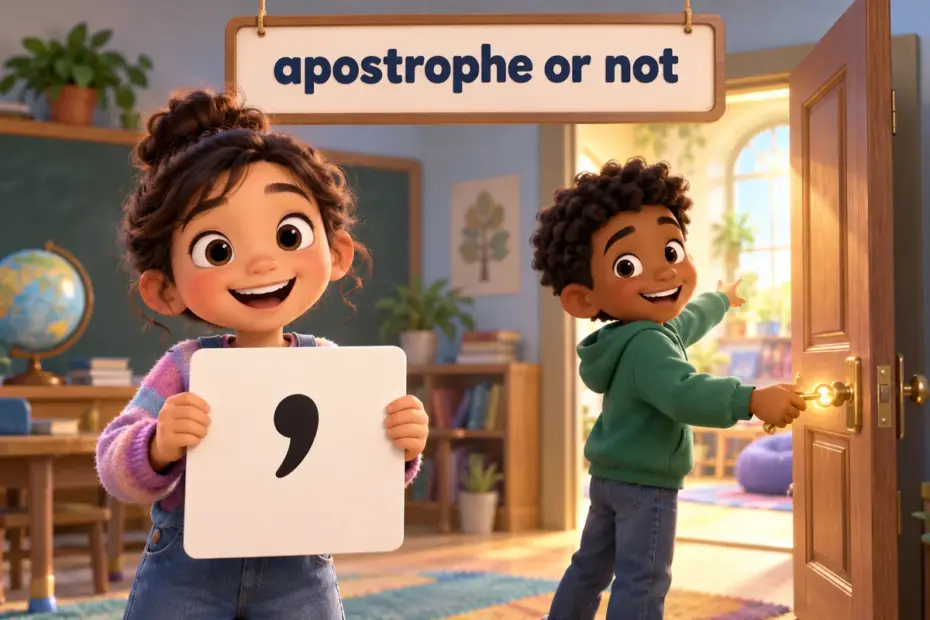
Lets vs lets comes down to a single apostrophe that changes both meaning and grammar. The form lets, with no apostrophe, is the third-person verb meaning allows; the form let’s, with an apostrophe, is the contraction of let us and usually makes a suggestion. One small mark separates a rule from a request.
Lets vs Lets at a glance
- The two forms look alike but differ by one apostrophe.
- Lets is the third-person verb meaning allows or permits.
- Let’s is the contraction of let us and suggests a shared action.
- The apostrophe stands for the missing letters in us.
- The commonest error is writing lets where a suggestion needs let’s.
What does lets mean and what does let’s mean?
Lets is the third-person singular of the verb let, meaning allows or permits. Let’s is a contraction of the two words let us, used to suggest doing something together. The Cambridge entry for lets and the Merriam-Webster entry for lets show the verb, and one line shows the split: the key lets you in, but let’s go inside.
| Form | Word | Plain meaning | Example |
|---|---|---|---|
| Third-person verb | lets | Allows or permits | The new rule lets visitors park for free. |
| Third-person verb | lets | Enables a reaction | Soft music lets me relax. |
| Contraction of let us | let’s | Suggests a shared action | Let’s finish the report today. |
| Contraction of let us | let’s | Invites agreement | Let’s not argue about it. |
| British verb sense | lets | Rents out a property | The owner lets the cottage each summer. |
The two forms never share a job. The plain form always has a singular subject such as he, she or it, while the form with the apostrophe always hides the word us and never names a third person.
What is the difference between lets and let’s?
The difference is grammar, not style. Lets is a full verb with a singular subject, so it always sits beside something it permits; let’s is a fixed contraction whose subject is us, so it always points at a group that includes the speaker. A one-letter trap such as abel vs able works the same way, and near-miss pairs such as addition vs edition and adds vs ads vs adze show how small marks decide meaning.
| Test | Lets | Let’s |
|---|---|---|
| What it is | a verb, third person | a contraction of let us |
| Core meaning | allows, permits or rents | a shared suggestion |
| Subject | he, she, it or a thing | us, always plural |
| Apostrophe | none | one, standing for us |
| Common error | writing lets for a suggestion | writing let’s for allows |
| Memory hook | no apostrophe, no us | apostrophe hides the u in us |
Choose lets when a person or thing allows something, and choose let’s when you are proposing that you and others do something.
How do you use lets and let’s in a sentence?
Both forms follow fixed patterns, and the presence of an apostrophe is a faster test than the meaning. Look at what follows the word: lets takes an object, while let’s takes a verb.
| Pattern | Example | What it signals |
|---|---|---|
| lets + object + verb | The pass lets you enter the hall. | permission is granted |
| lets + object + bare verb | Fresh air lets me think clearly. | something enables an action |
| lets + object (British) | The couple lets two flats in town. | property is rented out |
| let’s + verb | Let’s begin with the first question. | a suggestion to a group |
| let’s not + verb | Let’s not rush the decision. | a shared refusal |
| let’s + name a plan | Let’s meet at noon. | an invitation |

Lets and let’s in a sentence: examples across contexts
Reading the pair in different registers makes the choice automatic. The examples below keep the plain form beside a subject and the apostrophe form beside a plan.
| Context | Example sentence | Why this works |
|---|---|---|
| Classroom | The new timetable lets us finish earlier on Fridays. | lets has a singular subject, the timetable |
| Text message | Let’s grab a coffee after the lecture. | let’s suggests a shared plan |
| Public notice | The pass lets card holders skip the queue. | lets permits an action |
| Sports report | A gap in the defence lets the striker score. | lets enables a result |
| Recipe | Resting the dough lets the flavour develop. | lets takes a thing as subject |
| Workplace chat | Let’s review the figures before we reply. | let’s invites the group |
| Property advert | The agency lets furnished flats to students. | the verb means rents out |
| Song lyric | Let’s leave the light on for the morning. | let’s carries a shared wish |
| News report | The ruling lets the council build on the site. | lets reports a legal permission |
| Conversation | Let’s not pretend the queue was short. | let’s not gives a shared refusal |
| Grammar lesson | The teacher wrote lets and let’s on the board. | the two forms are named |
| Instruction manual | A single switch lets the machine run quietly. | lets enables a mode |
Which should you use?
Match the form to what follows it: a thing that allows takes lets, and a plan that includes you takes let’s.
| Situation | Use | Example |
|---|---|---|
| A rule or person permits something | lets | The voucher lets you travel on Sunday. |
| You propose an action for a group | let’s | Let’s start the meeting. |
| Something enables a result | lets | Good sleep lets the body recover. |
| You suggest skipping or stopping | let’s | Let’s not wait any longer. |
Register is the second test. The contraction let’s belongs to speech, notes and informal writing, where joining words is normal, and it should stay out of the stiffest reports. The plain verb lets belongs everywhere, including contracts and news, because it is a full verb. When in doubt, expand the contraction: if let us reads correctly, the apostrophe is wanted.
Word forms and grammar of lets and let’s
| Form | Part of speech | Example |
|---|---|---|
| let | verb, base | Please let me finish. |
| lets | verb, third person | She lets the dog out at noon. |
| letting | verb, -ing | He is letting the room to a student. |
| let | verb, past | They let us in early. |
| let’s | contraction of let us | Let’s take the train. |
| let us | full form | Let us consider the evidence. |
Common mistakes with lets and let’s
Mistake 1: lets for a suggestion. Incorrect: Lets meet at noon. Correct: Let’s meet at noon. Rule: a shared suggestion uses the contraction let’s.
Mistake 2: let’s for a plain verb. Incorrect: The pass let’s you enter the hall. Correct: The pass lets you enter the hall. Rule: a singular subject with the verb grows a plain s, with no apostrophe.
Mistake 3: apostrophe in the wrong place. Incorrect: He let’s the flat each year. Correct: He lets the flat each year. Rule: the s on the verb is a verb ending, not a missing letter.
Mistake 4: let us where let’s is meant. Incorrect: Let us grab lunch, said in a chatty note. Correct: Let’s grab lunch. Rule: the full form reads as formal, so the contraction fits informal writing.
Mistake 5: the missing apostrophe loses the verb. Incorrect: The door lets you in, lets go. Correct: The door lets you in; let’s go. Rule: two clauses need the right form in each, so the suggestion still takes let’s.
Practice using lets and let’s
- Fill in the blank: The new card ___ you borrow six books.
- Choose the better form: (Lets / Let’s) check the timetable before we leave.
- Correct the error: The ramp let’s wheelchairs reach the door.
- Build a sentence: use let’s not about a delay.
- Spot the register: which line suits a formal report, (a) Let’s wrap this up, or (b) The committee should conclude its review?
- Fill in the blank: The owner ___ the cottage to holiday guests each summer.
Answers
- lets, because the card is a singular subject that permits something.
- Let’s, because the sentence proposes a shared action.
- The ramp lets wheelchairs reach the door; the verb takes a plain s with no apostrophe.
- Let’s not postpone the meeting again.
- (b), because the contraction let’s is too casual for a formal report.
- lets, because the owner rents out the cottage.
The bottom line
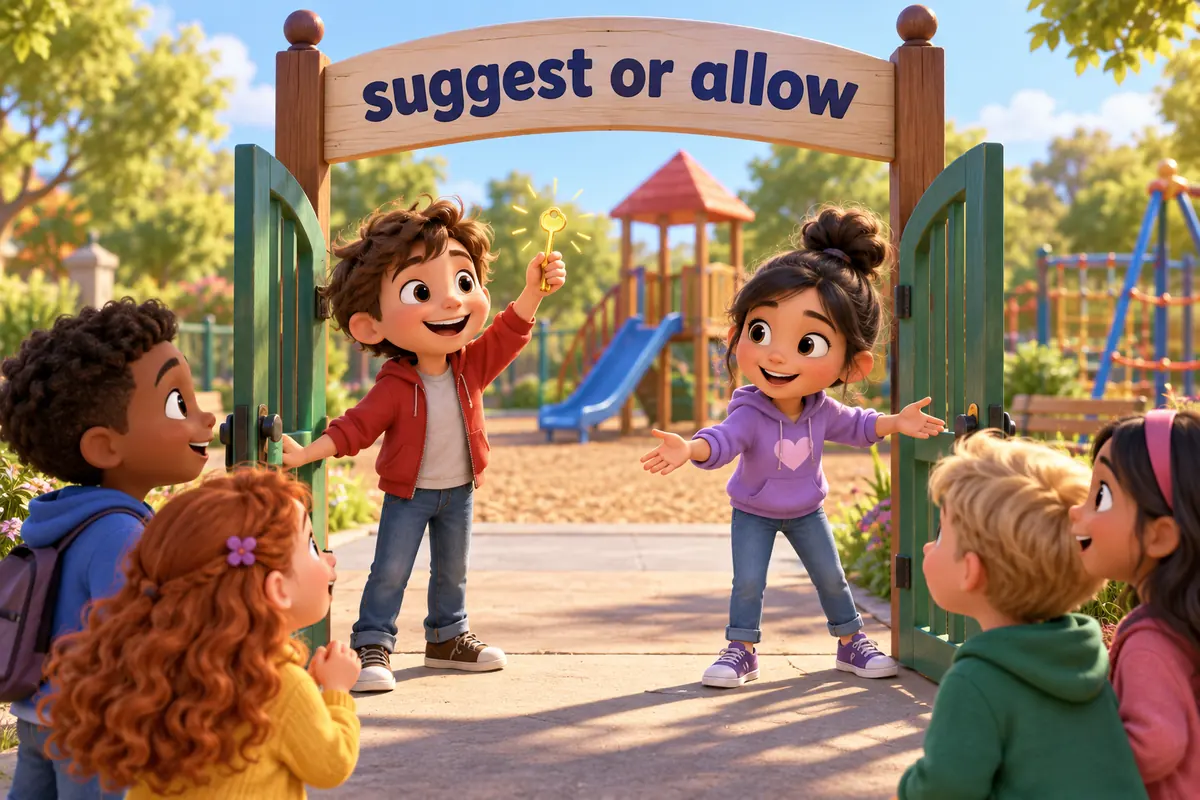
The lets vs lets question is really a question about one apostrophe. The plain form lets is a third-person verb meaning allows or, in British English, rents out, and the form let’s is the contraction of let us that suggests a shared action. Expand let’s to let us in your head, and the right choice becomes obvious.
Frequently asked questions about lets and let’s
Why do lets and let’s look so similar?
The two forms share the letters of the verb let and differ only in the apostrophe, so a reader can skim past the difference. The apostrophe marks where the letters of us have been removed in the contraction. Without that mark, the word is only the ordinary third-person verb.
Is lets ever correct without an apostrophe?
Yes, whenever it is the verb meaning allows or permits, as in the rule lets you in. It is also correct in British English for renting out a property, as in she lets the flat. The plain form is wrong only when the sentence is really a suggestion that needs let us.
Can I write let us instead of let’s in any sentence?
You can expand the contraction to let us without changing the meaning, and it is the safer choice in very formal writing. The full form sounds stiff in a text message or a chat, though, where let’s reads more naturally. Choose the full form when the tone is official.
Does let’s always need a following verb?
Almost always. Let’s normally introduces a verb, as in let’s go, let’s decide or let’s not wait, because it proposes an action. A noun can follow only in fixed phrases such as let’s call it a day. The plain verb lets, by contrast, always takes an object before any further verb.