Loose vs lose differ by a single letter and by one sound, and they belong to different word classes. Loose is usually an adjective meaning not tight or not fixed, while lose is a verb meaning to no longer have something or to fail to win. One describes a state, the other an action.
Loose vs Lose at a glance
- Loose is usually an adjective; lose is always a verb.
- Loose means not tight, not fastened, or free from control.
- Lose means to misplace something or to fail to win.
- The sound differs: loose ends with an s, lose with a z sound.
- The commonest error is writing loose where the verb lose is needed.
What does loose mean and what does lose mean?
Loose is an adjective meaning not firmly fixed or not fitting tightly, and it survives as a rare verb meaning to set free. Lose is a verb meaning to no longer have something, to misplace it, or to fail to win. The Cambridge entry for loose and the Cambridge entry for lose confirm the split, and one line shows it: a loose hinge wobbles, and you lose a glove.
| Sense | Word | Plain meaning | Example |
|---|---|---|---|
| Not firmly fixed | loose | Not firmly attached | One bolt on the shelf is loose. |
| Not fitting tightly | loose | Baggy or roomy | He wore a loose shirt all summer. |
| Free from control | loose | Set free, a rare verb | The keeper loosed the dogs at dusk. |
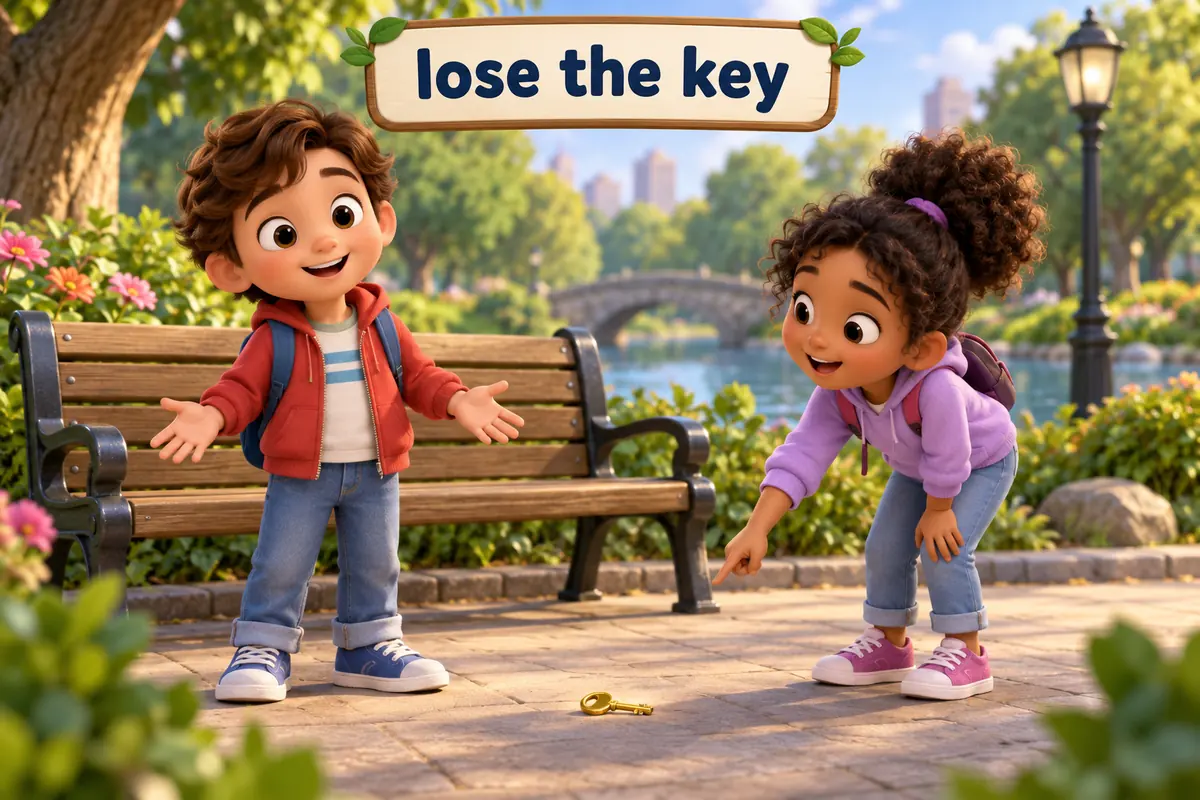
| No longer have | lose | Misplace or forfeit | Do not lose the spare key. |
| Fail to win | lose | Be beaten | Our team may lose on Saturday. |
| Let fall away | lose | Shed or reduce | The company lost money last year. |
The adjective sense of loose covers objects and clothing, while the verb lose always needs a subject that does the losing. That is why the two words can never swap places without breaking the sentence.
What is the difference between loose and lose?
The difference is word class first and meaning second. Loose describes a noun, so it sits beside it or after a linking verb; lose shows an action, so it needs a subject to perform it. A one-letter trap such as abel vs able fails for a similar reason, and another spelling pair, addition vs edition, shows how one letter can shift a whole meaning.
| Test | Loose | Lose |
|---|---|---|
| Part of speech | adjective, rarely a verb | verb |
| Core meaning | not tight or not fixed | to no longer have |
| Typical role | describes a noun | shows an action |
| Sound at the end | a hissing s, as in goose | a buzzing z, as in whose |
| Spelling clue | double o, as in too | single o, as in do |
| Common phrase | a loose screw | lose a match |
Choose loose when you are describing something that is not tight or not fixed, and choose lose when the sentence needs the action of losing.
How do you use loose and lose in a sentence?
Both words follow fixed patterns, and the sound is a faster test than the meaning. To watch the adjective behave, read loose in a sentence.
| Pattern | Example | What it signals |
|---|---|---|
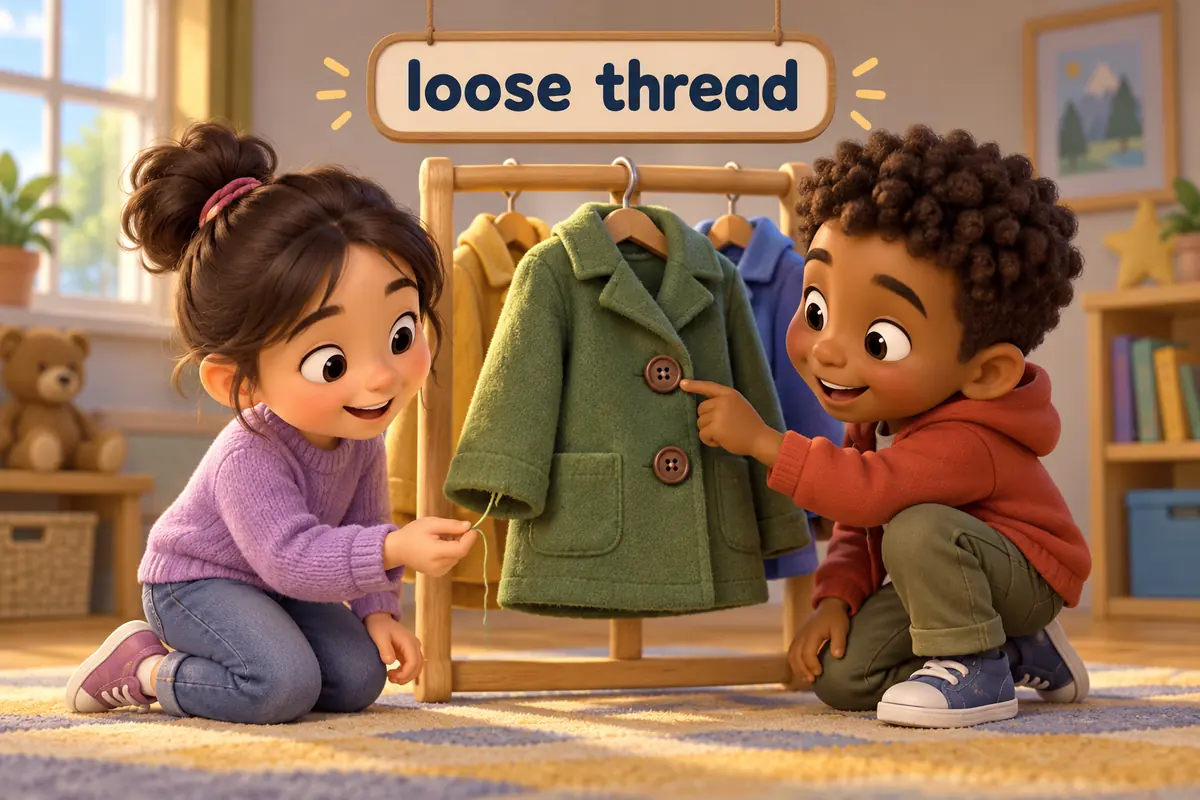
| a loose + noun | A loose thread hangs from the hem. | describes something unfastened |
| come or work loose | The handle worked loose over time. | a thing becomes unfixed |
| loose + clothing noun | Loose trousers are cooler in summer. | not tight |
| lose + object | Do not lose your ticket. | no longer have |
| lose + to + opponent | They lost to a stronger team. | be beaten |
| lose + weight or money | The firm lost money last year. | forfeit or shed something |
| be losing | The team is losing by two goals. | an ongoing action |
Loose and lose in a sentence: examples across contexts
Reading the pair in different registers makes the choice automatic, and more action frames sit in lose in everyday sentences.
| Context | Example sentence | Why this works |
|---|---|---|
| Classroom | A loose page fell from the folder. | loose describes the page |
| Sports report | The champions may lose their first match. | lose shows the action |
| Workplace email | Please tighten any loose screw on the machine. | an adjective beside a noun |
| Everyday talk | I always lose my umbrella on the bus. | a repeated action |
| Tailoring | The jacket felt loose across the shoulders. | not fitting tightly |
| News report | The club lost three million pounds last year. | a financial loss |
| Home advice | Check the rail; it can work loose with use. | become unfixed |
| Fitness writing | Slow progress helps you lose weight safely. | to shed something |
| Conversation | Do not lose heart; the year is young. | a fixed phrase |
| Engineering | A loose cable can damage the socket. | not firmly fixed |
| Chess commentary | One careless move can lose the game. | forfeit the match |
| Instructions | Keep the loose parts in a labelled bag. | separate, unattached pieces |
Which should you use?
Match the word to the job it does: describing something unfastened takes loose, and naming the action takes lose.
| Situation | Use | Example |
|---|---|---|
| Something is not tight or fixed | loose | The lid is loose. |
| Something slips away | lose | Do not lose the receipt. |
| Clothing is baggy | loose | She prefers loose sleeves. |
| A team is beaten | lose | We lose far too often. |
Register makes no difference here, because the two words are not rivals in the same slot. The test is always grammatical: if you need a describing word, choose loose, and if you need an action word, choose lose. Say the pair aloud, hearing the z sound in lose, and the spelling will follow the sound. A quick check is to swap in a known pair: if tight fits the slot, the adjective loose is wanted, and if find does not fit an action slot, the verb lose is wanted.
Word forms and grammar of loose and lose
| Form | Part of speech | Example |
|---|---|---|
| loose | adjective | The hinge is loose. |
| looser | adjective, comparative | The fit is looser than before. |
| loosest | adjective, superlative | This is the loosest knot. |
| loosely | adverb | Wrap it loosely in paper. |
| loosen | verb | Loosen the screw first. |
| lose | verb, base | Try not to lose patience. |
| loses | verb, third person | She loses her keys weekly. |
| lost | verb, past | We lost the trail at dusk. |
| losing | verb, -ing | They are losing ground. |
| loss | noun | The loss was hard to accept. |
Common mistakes with loose and lose
Mistake 1: loose for the verb. Incorrect: I always loose my train ticket. Correct: I always lose my train ticket. Rule: the action of no longer having something takes the verb lose.
Mistake 2: lose for the adjective. Incorrect: The lose button fell off my coat. Correct: The loose button fell off my coat. Rule: describing something unfastened takes the adjective loose.
Mistake 3: the wrong spelling of the past. Incorrect: We loosed the match on Saturday. Correct: We lost the match on Saturday. Rule: the past of lose is lost, not loosed.
Mistake 4: confusing the derived verbs. Incorrect: Please lose this knot. Correct: Please loosen this knot. Rule: to make something less tight is to loosen.
Mistake 5: the noun for a defeat. Incorrect: The loose was painful for the team. Correct: The loss was painful for the team. Rule: the noun from lose is loss.
Practice using loose and lose
- Fill in the blank: The screw in the door handle is ___.
- Choose the better word: Do not (loose / lose) your passport.
- Correct the error: Our side may loose the final match.
- Build a sentence: use loose about a tooth that wobbles.
- Spot the register: which line suits a repair manual, (a) The nut came free, or (b) A loose nut must be tightened before use?
- Fill in the blank: Slow and steady training helps you ___ weight.
Answers
- loose, because it describes the screw.
- lose, because it is the action of no longer having something.
- Our side may lose the final match; the verb lose is spelled with a single o.
- That loose tooth wobbles whenever she bites an apple.
- (b), because loose and its technical phrasing suit a manual.
- lose, because it names the action of shedding weight.
The bottom line
The loose vs lose choice is grammatical rather than stylistic. Loose is the adjective for something not tight or not fixed, and lose is the verb for no longer having something or failing to win. Read the pair aloud, hear the z in lose, and let part of speech decide the spelling.
Frequently asked questions about loose and lose
Why do people confuse loose and lose?
The two spellings differ by a single letter, and in fast typing the eye and hand treat them as the same shape. Their meanings are also loosely related to letting something go, which blurs the choice. Word class is the reliable test: loose describes and lose acts.
Is loose ever a verb?
Yes, but rarely. Loose works as a verb meaning to set free or release, as in loosed the dogs, and it appears mostly in older or literary writing. In everyday use the verb is almost always lose. The related verb loosen, meaning to make less tight, is far more common than loose as a verb.
What is the past tense of lose?
The past tense and past participle of lose are both lost, as in we lost the match and the key is lost. The form loosed belongs only to the rare verb loose, meaning released. Mixing them up, as in loosed the match, is a common slip.
Is there a sound trick to tell them apart?
Yes. Loose ends with a light hissing s, while lose ends with a buzzing z, so the words rhyme with goose and whose. The spelling follows the same pattern: a double o like too signals the s sound, and a single o like do signals the z sound.