
Positive adjectives to describe a room let a writer capture comfort, light and calm in a single word, so cozy, airy and spacious each carry a clear feeling. Choosing the right one depends on what makes the room good. The list below pairs thirty adjectives with their sense and an example.
Positive adjectives to describe a room at a glance
- A descriptive adjective names one quality of a room, such as light, warmth or space.
- Positive options lean on comfort (cozy), light (bright) and calm (tranquil).
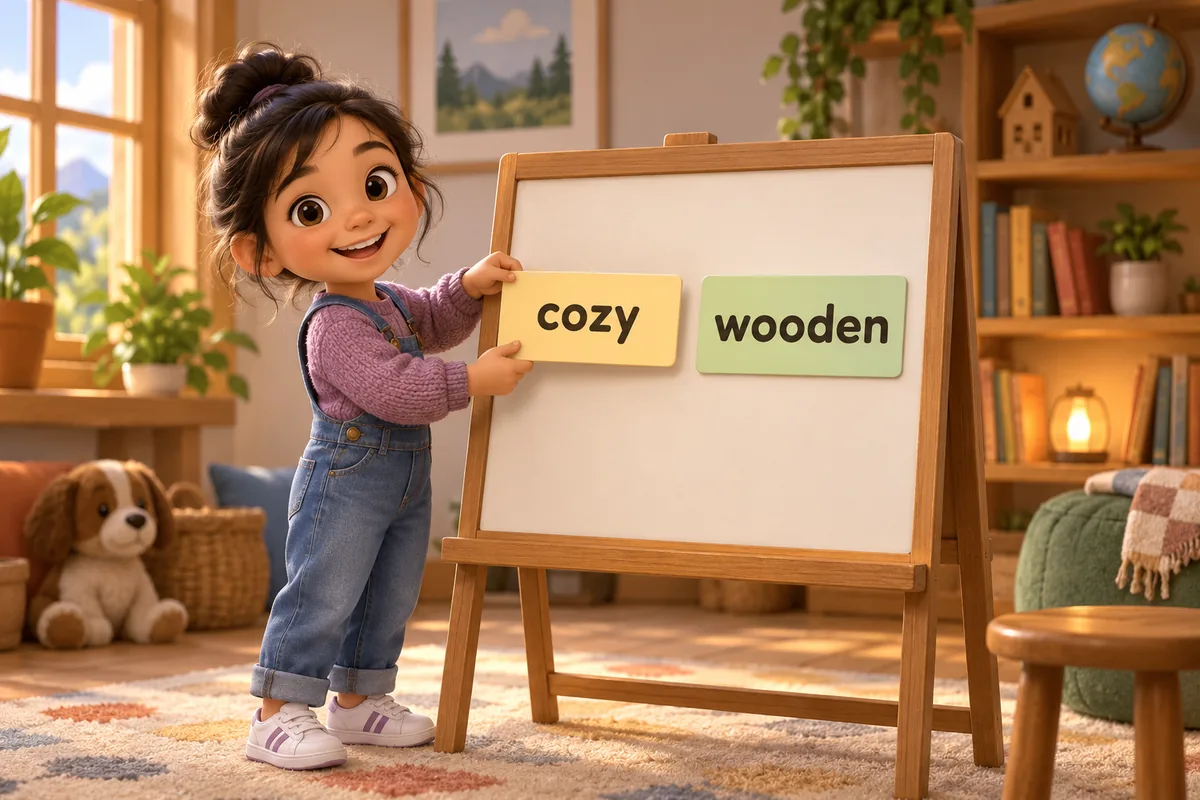
- Opinion adjectives come first, so a cozy wooden room sounds right and a wooden cozy room does not.
- Short adjectives compare with -er, giving cozier and tidier rather than more cozy.
- A specific adjective beats a vague one, so bright and tidy outwork nice.
What are positive adjectives to describe a room?
A positive adjective to describe a room is a describing word that names a pleasing quality of an indoor space. Cozy names warmth and shelter, airy names fresh moving air, and spacious names room to move.
The adjectives fall into families: comfort, such as snug and homely; light, such as bright and sunlit; and mood, such as tranquil and welcoming. Naming the family first makes the right word much easier to reach.
| Adjective | What it suggests | Example sentence |
|---|---|---|
| cozy | small but comfortable and warm | The cozy attic room held two soft chairs. |
| airy | full of fresh moving air | The airy bedroom has windows on two walls. |
| spacious | large and open | The spacious hall fits a hundred guests. |
| bright | full of light | A bright kitchen makes cooking cheerful. |
| warm | comfortably heated | The warm study smelled of old books. |
| tidy | neat and put away | A tidy desk helps clear thinking. |
| elegant | graceful and stylish | The elegant dining room had tall candles. |
| tranquil | calm and quiet | The tranquil reading room hushed every visitor. |
| inviting | welcoming to enter | An inviting porch drew us up the steps. |
| rustic | simple in a country way | The rustic cabin kept its wooden beams. |
| modern | current in style | The modern office hides every cable. |
| cheerful | happy and lively in colour | A cheerful playroom used yellow and blue. |
| homely | plain but comfortable | The homely kitchen smelled of baking. |
| snug | warm and sheltered | A snug corner seat faced the fire. |
| calm | peaceful and steady | The calm nursery lulled the baby. |
| fresh | clean and new-smelling | The fresh linen room opened to a garden. |
| sunlit | lit by direct sun | The sunlit balcony stayed warm till dusk. |
| open | uncluttered and roomy | The open studio had no dividing walls. |
| quiet | free of noise | The quiet library allowed total focus. |
| charming | pleasing in a gentle way | The charming guest room had a lace curtain. |
| restful | helping you relax | The restful bedroom used soft green walls. |
| minimalist | plain and free of clutter | The minimalist flat hid all storage. |
| luxurious | rich and finely made | The luxurious suite had marble floors. |
| comfortable | easy to rest in | The comfortable lounge chairs lasted hours. |
| clean | free of dirt | The clean classroom smelled of soap. |
| peaceful | free of worry or noise | The peaceful garden room faced the pond. |
| vibrant | full of lively colour | The vibrant art studio burst with paint. |
| welcoming | friendly to arrive in | A welcoming entrance sets the whole mood. |
| orderly | arranged with a clear plan | The orderly stockroom labelled every shelf. |
| roomy | having plenty of space | The roomy porch fits a long table. |
The thirty words above give a writer a full palette for a house tour, a review or a story. Notice that most describe a feeling a person has in the room rather than a physical measurement, which is why they suit description rather than technical writing.
Readers who want more choice can browse a wider set of words for rooms before settling on one. The same upbeat tone runs through positive describing words in general, which cover people and places alike.
How do you use these adjectives in a sentence?
The adjective usually sits before the noun or after the verb be, and its position changes the emphasis.
| Pattern | Example | What it signals |
|---|---|---|
| adjective + noun | A bright studio faced the street. | The quality attaches directly to the room. |
| room + is + adjective | The study is tranquil. | The quality is asserted as a whole. |
| adverb + adjective | The room felt wonderfully calm. | An intensifier grades the quality. |
| adjective + and + adjective | The hall was airy and clean. | Two qualities combine in one room. |
| comparative + than | This room is cozier than the last. | Two rooms are ranked against each other. |
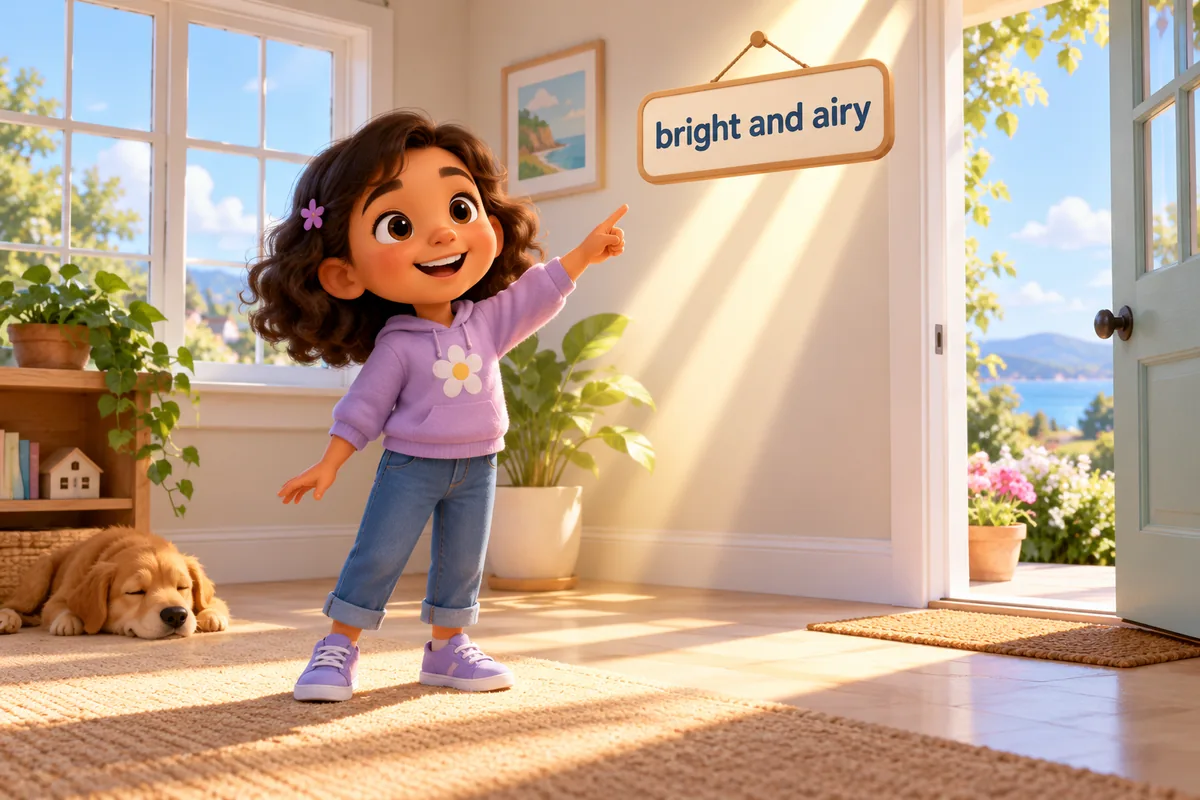
Positive room adjectives across contexts
The same adjectives serve very different purposes depending on who is reading, from a family note to a hotel listing.
| Context | Example sentence | Why this works |
|---|---|---|
| House listing | A sunlit lounge opens onto a quiet garden. | Two pleasing qualities attract a buyer fast. |
| Story setting | The snug kitchen smelled of cinnamon. | The adjective sets a warm mood for a scene. |
| Design brief | Keep the studio minimalist and bright. | Clear qualities guide the work. |
| Family message | Your cozy flat felt like home. | The adjective names the feeling personally. |
| Hotel review | The airy suite stayed cool all day. | One quality explains a comfortable stay. |
| School tour | The cheerful playroom used bold colours. | The adjective reflects what children feel. |
| Estate note | The spacious hall suits large gatherings. | The adjective ties the room to a use. |
| Diary entry | My calm bedroom helped me sleep. | The adjective links room and mood. |
| Restaurant blurb | The elegant dining room glowed at night. | The adjective sells an atmosphere. |
How do you choose the right adjective?
Start from the quality you want the reader to feel, then pick the word from that family, as the table below shows.
| You want to highlight | Choose | Reason |
|---|---|---|
| Comfort in a small space | cozy, snug, homely | These words praise small size rather than shrink from it. |
| Light and openness | bright, airy, sunlit | Each names how light or air moves through the room. |
| Calm and quiet | tranquil, peaceful, restful | The words lower the emotional temperature. |
| Style and taste | elegant, modern, charming | The words describe design rather than feeling. |
| Space and freedom | spacious, roomy, open | The words measure how much room you have. |
The contrast with people is useful, since words used to describe a person praise behaviour rather than space.
Word forms and grammar of the adjectives
These adjectives behave like most English adjectives for comparison and order, with a few spelling notes.
| Form | Part of speech | Example |
|---|---|---|
| cozy (cozier, coziest) | adjective | This corner is cozier than that one. |
| tidy (tidier, tidiest) | adjective | The tidiest room shows least clutter. |
| spacious | adjective | The spacious room echoes when empty. |
| minimalist | adjective or noun | A minimalist keeps the room bare. |
| comfort (comfortable) | noun of the adjective | The comfort of the room mattered most. |
| brightness (bright) | noun of the adjective | The brightness fills the hall. |
Common mistakes with room adjectives
Most slips come from adjective order, comparison and a vague word doing a specific job.
Incorrect: a wooden cozy room Correct: a cozy wooden room Rule: Opinion adjectives come before material adjectives in English order.
Incorrect: The room is more cozy than mine. Correct: The room is cozier than mine. Rule: Short adjectives form the comparative with -er.
Incorrect: It was an unique studio. Correct: It was a unique studio. Rule: Unique begins with a y sound, so it takes a rather than an.
Incorrect: The room felt very air. Correct: The room felt very airy. Rule: The adjective airy is needed, since air is a noun.
Incorrect: The room was nice. Correct: The room was bright and tidy. Rule: A vague adjective gives the reader nothing; name the quality instead.
Practice describing a room
Complete each item, then read the reason to confirm the choice.
- Fill in the blank: The ________ bedroom had windows on two walls. (air)
- Fill in the blank: A ________ desk helps me think clearly. (tidy)
- Choose the better word: The small attic felt ________ with the lamp on. (cozy / cold)
- Correct the error: It was an spacious and modern kitchen.
- Build a sentence: describe a quiet room you like using two positive adjectives.
- Spot the register: which fits a house listing, A sunlit lounge opens to a garden, or The lounge is nice?
Answers
- airy. The noun air becomes the adjective airy with a y ending.
- tidy. Tidy names neat order and fits before the noun desk.
- cozy. The lamp and small space suggest warmth, not cold.
- It was a spacious and modern kitchen. Spacious starts with a consonant sound, so it takes a.
- Sample: The bright reading room stayed quiet all afternoon. Two positive adjectives describe light and calm.
- A sunlit lounge opens to a garden. A listing needs a specific, concrete adjective.
The bottom line
Positive adjectives to describe a room work best when the writer names the quality the reader should feel, then chooses the word from that family. Keep opinion adjectives before material ones, compare with -er on short words, and replace nice with a specific term. A single well-chosen word can carry a whole room.
Frequently asked questions about room adjectives
What is the difference between cozy and snug?
Both praise a small, warm space, but snug stresses shelter from cold or weather while cozy stresses emotional comfort. A snug cabin keeps out the wind, and a cozy nook invites you to sit. Snug often implies a tighter fit than cozy, so it suits smaller spaces.
Can I use airy and spacious together?
Yes, and the pair works well because the two qualities reinforce each other. Use a comma between coordinate adjectives of the same kind, so you write an airy, spacious hall. If the words belong to different families, as in a cozy little room, no comma is needed because they stack naturally.
Is it more cozy or cozier?
Cozier is the standard comparative for the two-syllable adjective cozy, and coziest is the superlative. More cozy appears in speech but sounds clumsy in careful writing. The same pattern gives tidier, homier and roomier for short adjectives that end in the letter y.
Why do writers avoid the word nice for rooms?
Nice carries almost no information, so a reader learns nothing about light, space or mood. A specific adjective such as bright, calm or welcoming gives a picture instead. Reserve nice for casual speech and choose a concrete quality in any writing a reader should picture.