It’s that time of year again! The leaves are falling, the days are getting shorter, and Halloween is just around the corner. If you’re looking to get into the spirit of the season, why not start with adjectives to describe a spooky house?
A dark and ominous house can be the perfect setting for a spine-tingling story or a scary movie. And what better way to set the mood for a Halloween party than by adjectives to describe a spooky house?
Here are some adjectives to help you get started: dark, foreboding, haunted, eerie, spooky, and creepy. With these adjectives, you’ll be able to create the perfect atmosphere for a frightfully fun Halloween!
Choose Haunted House Adjectives by What They Describe
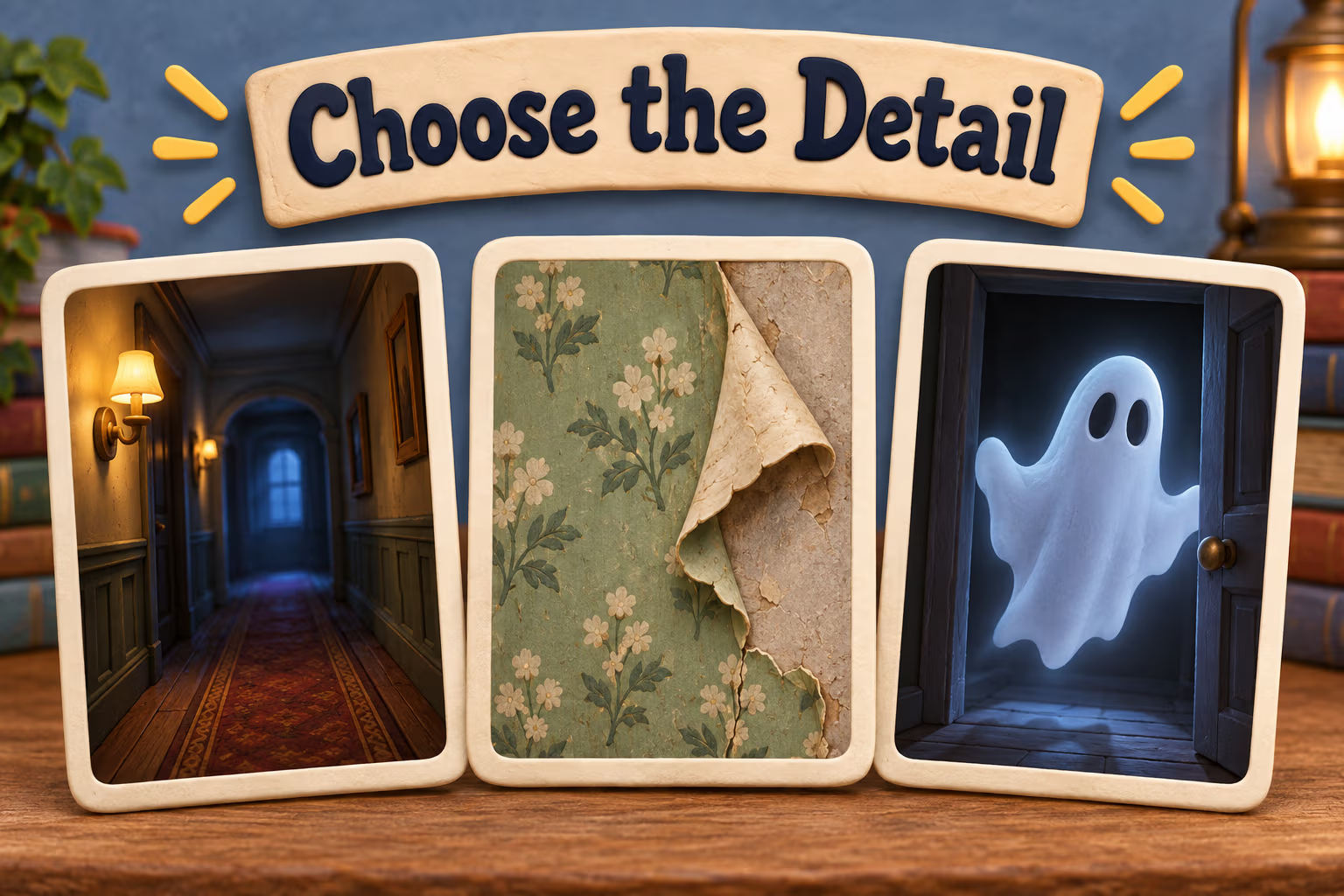
The most useful haunted-house adjectives tell readers whether you mean a mood, a visible building condition, a sensation, or a fictional supernatural claim. A shadowy hallway can feel eerie in a story; that mood alone does not show that a building is haunted or unsafe.
| What you describe | Useful adjectives | What the words suggest |
|---|---|---|
| Atmosphere | eerie, foreboding, unsettling, uncanny | A mood of unease, suspense, or strangeness |
| Visible condition | weathered, peeling, boarded-up, crumbling | Observable wear or damage; use only when the detail is present |
| Sensory detail | musty, echoing, drafty, dim | An odor, sound, airflow, or lighting impression |
| Fictional supernatural element | ghostly, spectral, cursed, haunted | A story premise or reported belief, not a verified property condition |
For example, “the musty hallway smelled of damp plaster” reports a sensory detail, while “the eerie hallway seemed to watch us” gives the scene a personified mood. “The supposedly haunted house” signals a claim or story premise without presenting it as established fact.
Do Spooky Descriptions Prove a House Is Haunted?
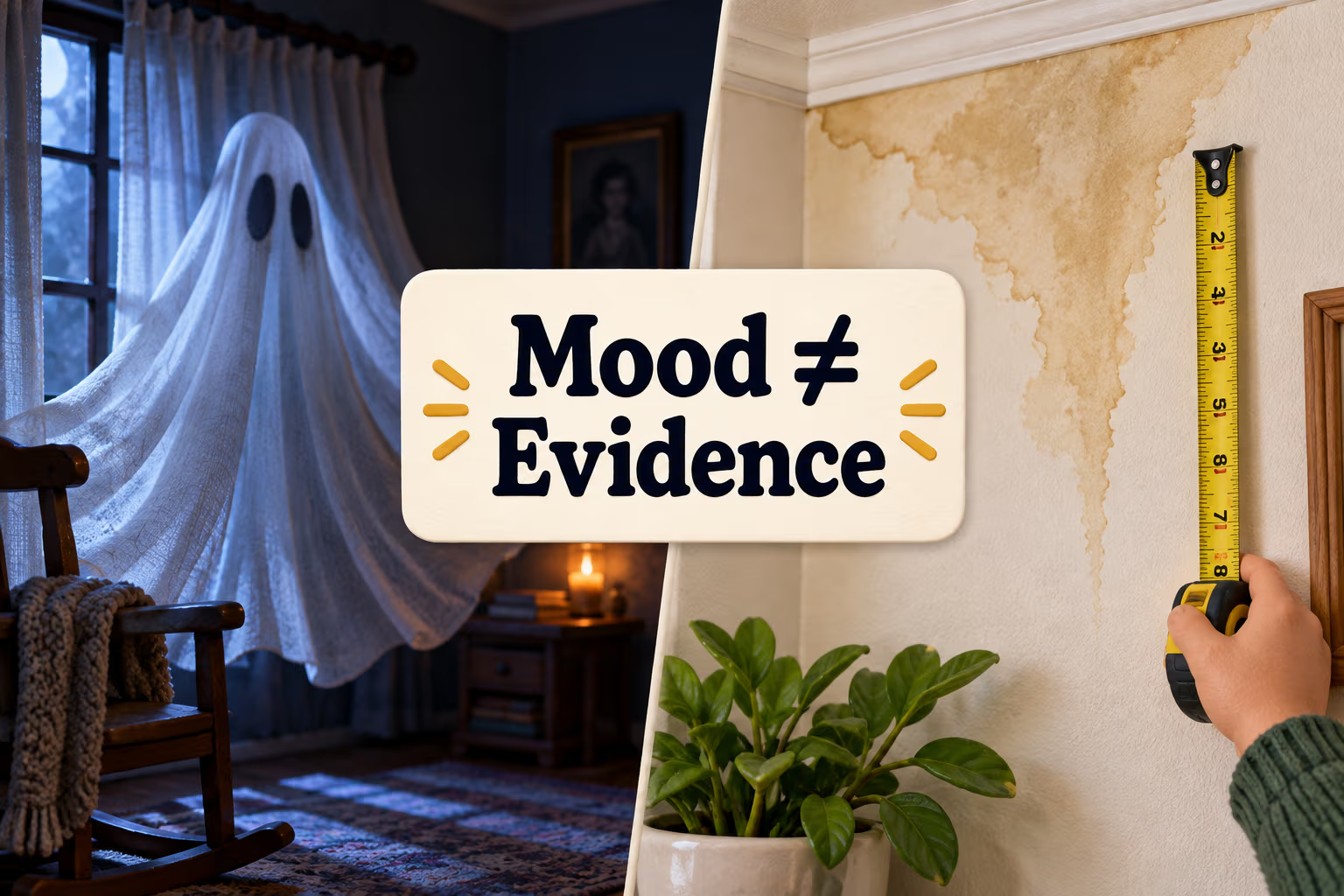
No adjective can verify paranormal activity. Words such as eerie, ghostly, and foreboding describe an impression or a fictional effect; if a writer means that someone reported an apparition or unexplained sound, attribute the report instead of turning it into proof.
Some details that feel spooky also have ordinary explanations or practical significance. “Damp” and “musty” can describe what a person observes, but they do not identify a cause. The CDC says damp or moldy environments may cause health effects for some people, and advises addressing both mold growth and its moisture source; suspected moisture damage should be treated as a building-maintenance question, not as evidence of a haunting. CDC: About Mold.
How Can You Describe a Haunted House Clearly?
Choose one concrete detail, then select the adjective that matches it. This keeps a description vivid without piling up near-synonyms.
- Name what a character notices: a door that scrapes, a stair that groans, or a corridor with little light.
- Separate observation from reaction: “The floorboards groaned” is an event; “the sound was unnerving” is the character’s response.
- Use a supernatural word only for the story’s premise: call the house “haunted” when a character, narrator, or tradition says it is, and make the source of that belief clear.
- Keep real-world conditions literal: describe a leak, damaged step, blocked doorway, or visible mold as a condition to investigate, not as decoration or proof of a ghost.
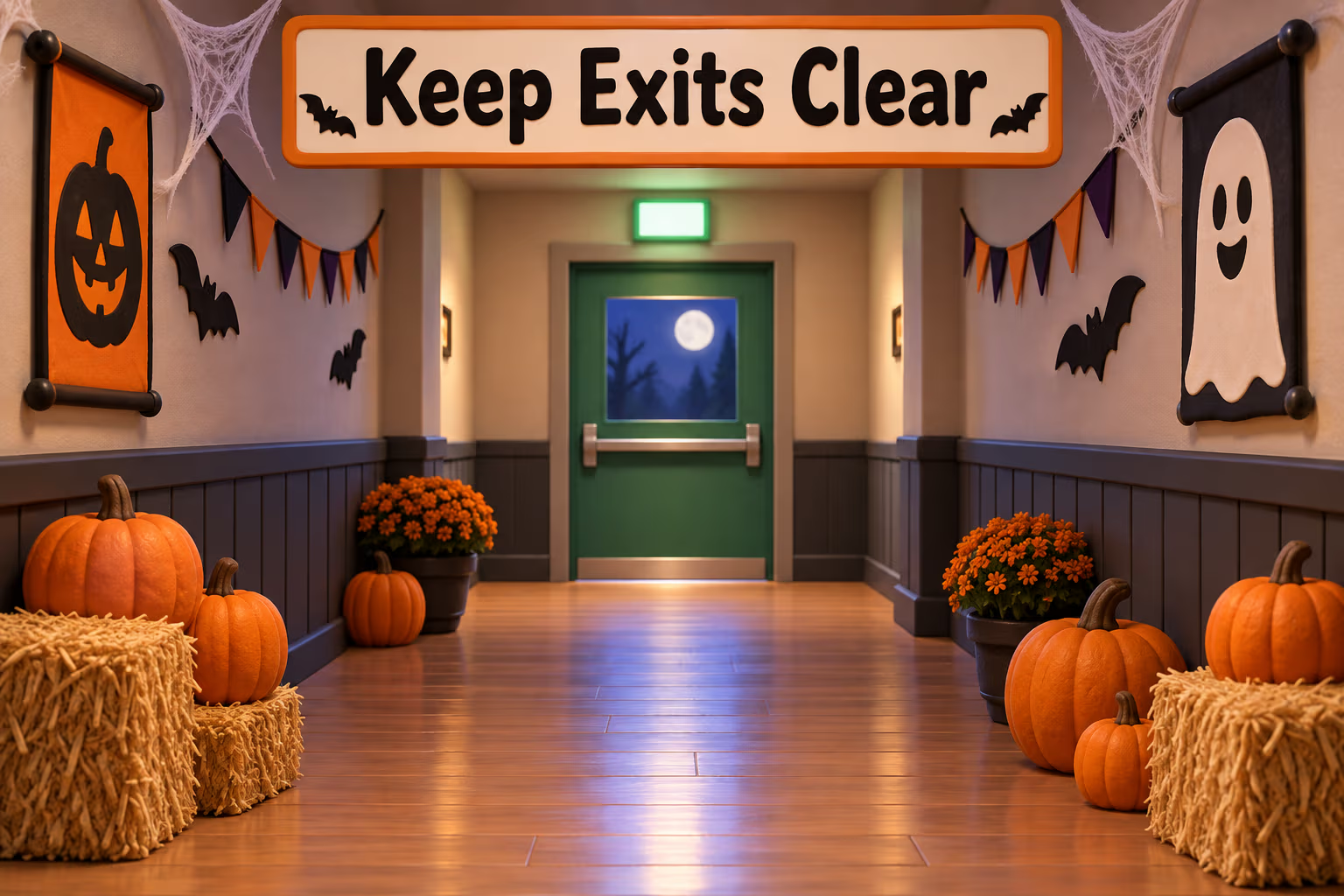
In a real Halloween attraction, atmosphere should not obscure practical safety information. The National Fire Protection Association advises keeping exits clear of decorations, and Fairfax County’s fire marshal guidance warns that smoke effects in temporary haunted houses can obscure exits and exit signs. Local fire codes and officials determine the requirements for a particular venue. NFPA Halloween safety · Fairfax County haunted-house guideline.
Frequently Asked Questions About Haunted House Adjectives
What is the difference between eerie and creepy?
Eerie often suggests an uncanny or strangely unsettling atmosphere, while creepy more directly conveys discomfort or fear. Their meanings overlap, so choose eerie for a quiet, uncanny scene and creepy when you want a stronger personal reaction.
Can “musty” describe a haunted house?
Yes. Musty describes a stale, damp-associated smell, so use it when that odor is part of the scene. It is a sensory adjective, not a synonym for haunted; if the odor comes from a real building, do not assume its cause from the word alone.
How do I avoid clichés when describing a spooky house?
Replace a stack of broad labels such as “scary, creepy, and spooky” with one specific image and a fitting response: “A draft stirred the torn curtain, and the unlit landing felt watchful.” Concrete sound, light, texture, and character reaction make the mood more distinctive.
Haunted House Adjectives
A haunted house is often described as spooky, eerie, creepy, or dark. It can be a place where strange things happen, where people feel like they are being watched, or where there is a sense of foreboding.
There are many Haunted house adjectives that can be used to describe a Haunted House. A few of these Haunted house adjectives include: dark, spooky, eerie, ghostly, and macabre.
All of these Haunted house adjectives perfectly describe the atmosphere that one would expect to find inside of a Haunted House.
The darkness sets the mood for the Haunted House, while the spooky and eerie feeling comes from the ghosts that are said to haunt the halls. The macabre elements come into play with the decorations and theme of the Haunted House. All of these Haunted house adjectives work together to create the perfect description of a Haunted House.

A haunted house may be old and decrepit, with peeling wallpaper and cobwebs in the corners. It may be located in a remote area, or it may be in the middle of a busy city. There may be strange noises coming from the house, or the windows may be boarded up. Whatever the case, a haunted house is sure to send chills down your spine.
A | B
| Accursed | Ancient | Aqueous |
| Accustomed | Apparition | Aristocratic |
| Alarming | Beloved | Blossomy |
| Boyish | Broken | Bungalowsthe |
| Busy |
C
| Caverned | Chief | Constant |
| Chearful | Chilling | Criminal |
| Cheerful | Circled | Crowded |
| Cherished | Cold | Customary |
D | E
| Daily | Damp | Dark |
| Dear | Deep | Disreputable |
| Distant | Dreadful | Earthly |
| Eastern | European |
F
Welcome to this spooky list of scary adjectives that start with F. If you’re looking for some scary words to describe a haunted house or other creepy setting, then you’ve come to the right place. This list includes a variety of scary adjectives, from the more obvious choices like “frightening” and “fearsome” to less obvious options like “filthy” and “foul.”
So whether you’re looking for scary adjectives to use in a story or just want to creep out your friends, this list should have what you’re looking for. So without further ado, let’s get started.
| Familiar | Famous | Farthest |
| Fascinating | Fashionable | Favorite |
| Favourite | Fearful | Festive |
| Fit | Formal | Frequent |
| Frightening | Fearsome | Filthy |
| Foul |
G | H
| Ghastly | Glad | Gloomy |
| Gory | Green | Grim |
| Gruesome | Hair-Raising | Hallowed |
| Hateful | Haunted | Haunted House |
| Hedonistic | Hereditary | Hidden |
| Horrible |
I | L | M
| Idlest | Infamous | Lifeless |
| Lonely | Mad | Massed |
| Mere | Miserable | Moonlit |
| Mysterious |
N
Nests of spiders, ghastly ghosts, and creaking floorboards… there’s nothing quite like a spooky house to get your heart racing. If you’re looking for some scary adjectives to describe a spooky house, we’ve got just the list for you. From “nasty” to “nightmarish,” these words will help set the scene for your next horror story.

So whether you’re writing about a haunted house or simply trying to describe your own creepy home, these adjective words are sure to do the trick.
| Narrow | Native | Neglected |
| Nesting | Nightly | Nightmarish |
| Noisy | Notable | Noxious |
| Nasty |
O | P | R
| Ordinary | Other-Worldly | Paranormal |
| Peaceful | Perennial | Petrifying |
| Pleasant | Poisonous | Popular |
| Possessed | Previous | Principal |
| Proper | Recreational | Regular |
| Remotest | Repulsive | Rocky |
| Rural |
S
Looking for some scary adjectives to describe a spooky house? Here are a few that start with the letter “S”! Spooky, scary, sinister, spindly, spidery. These words conjure up images of an old, abandoned house in the middle of nowhere with its windows boarded up and its doors hanging off their hinges. The perfect setting for a scary story or a horror movie! If you want to really set the mood, try using some of these adjectives the next time you’re describing a spooky house.
| Sacred | Savage | Scary |
| Scream | Secret | Sensual |
| Shadowy | Shady | Shocking |
| Silent | Simple | Single |
| Sinister | Solemn | Solid |
| Solitary | Spine-Chilling | Spooky |
| Squalid | Superb | Supernatural |
| Sweet | Sylvan | Spindly |
| Spidery |
T | U | W
| Temporary | Terrible | Tuneful |
| Unblest | Uncanny | Unearthly |
| Unhallowed | Unknown | Unmapped |
| Unusual | Uptown | Usual |
| Weary | Wild | Wonted |
| Wretched |
How to Describe a Haunted House?
A haunted house is a building in which supernatural activity is said to take place. The activity can include things like strange noises, moving objects, and apparitions of ghosts or other spirits. Many people believe that haunted houses are actually portals to another dimension, and that the ghosts are trying to communicate with the living.
If you’re looking to describe a haunted house, there are many spooky adjectives you can use. For example, a haunted house might be described as eerie, creepy, spooky, or foreboding. It might also be said to have an unsettling atmosphere or to be shrouded in mystery.
Of course, not everyone believes in ghosts and hauntings. But even if you don’t believe in the paranormal, there’s no denying that some houses just have a certain… feeling about them. Whether it’s because of their history or because of the way they look, some houses seem to be haunted even if there’s no evidence of ghosts.
If you’re looking to describe a house that gives you the creeps, there are plenty of words to choose from. A few more examples include: abandoned, dilapidated, run-down, and unsettling. No matter what words you use, one thing is for sure: a truly haunted house is an experience that you’ll never forget.

So, if you’re looking to describe a haunted house, you have plenty of words at your disposal. But what are the best words to use?
Well, it depends on what kind of haunted house we’re talking about. Some haunted houses are just old and spooky, while others might be full of dark secrets or even demonic activity. If you want to capture the essence of a haunted house, you need to use the right words.
One thing to keep in mind is that not all haunted houses are created equal. Some are scarier than others, and some are just plain creepy. It’s important to choose the right adjectives to describe your haunted house accurately.
If you’re looking for a truly terrifying experience, then you’ll want to use words like “blood-curdling,” “hair-raising,” and “scary.” These adjectives will help your readers understand just how scary the house is.
If, on the other hand, your house is more atmospheric and spooky than actually scary, then you might want to use words like “haunting,” “mystical,” and “eerie.” These words will help set the mood and create an atmosphere of fear and suspense.
No matter what words you choose, it’s important to make sure that your readers understand why the house is haunted. What happened there in the past? Why do the ghosts remain? These are important questions that need to be answered in order to create a believable description.
So, if you’re looking to write about a haunted house, make sure that you do your research first. Find out as much as you can about the history of the house and why it’s haunted. Then use your adjectives wisely to create a spooky and atmospheric description that will send chills down your readers’ spines!
Haunted houses are a staple of horror movies and Halloween. But what makes a haunted house truly scary? Some people might say it’s the spooky setting, while others might say it’s the ghostly inhabitants. Whatever the reason, these creepy dwellings have been scaring us for centuries. Here’s how to describe a haunted house in your writing.
A recent article on haunted house adjectives caught my attention. The author noted that many of the words we use to describe haunted houses are actually quite negative, such as dark, musty, and dreary. While these words may accurately describe some haunted houses, they certainly don’t do justice to the entire genre.
After all, there are also many houses that are simply misunderstood, or that have a history that is not entirely clear. In any case, I think it’s important to remember that haunted houses come in all shapes and sizes, and that not all of them are necessarily sinister or foreboding. With that in mind, here are a few of my favorite haunted house adjectives: eerie, mysterious, atmospheric, suspenseful, and chilling.
Final words
As you can see, there are a variety of adjectives that can be used to describe a haunted house. By using these words, you can create an eerie and suspenseful atmosphere that will keep your readers on the edge of their seats. So, the next time you’re writing about a haunted house, don’t be afraid to use some of these adjectives to make it truly haunting.


