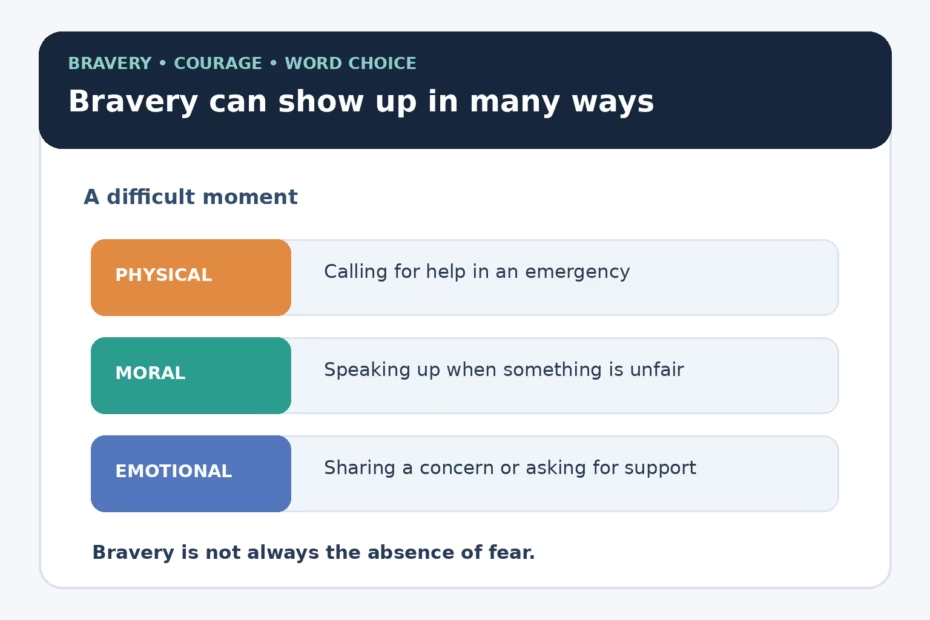
Bravery is the willingness to face danger, difficulty, or a painful choice. The best adjective depends on what happened: courageous is a broad choice, valiant often describes action in a struggle, and steadfast emphasizes remaining committed. These words can describe physical, moral, emotional, or everyday courage.
Bravery does not always mean feeling no fear. Oxford Learner’s Dictionaries defines a brave person as someone willing to do difficult, dangerous, or painful things, and also uses brave for an action that requires or shows courage. In many situations, a person can be afraid and still act thoughtfully. Use the adjective to describe the action or quality the reader should notice, rather than treating every form of courage as identical.
How to choose an adjective for bravery
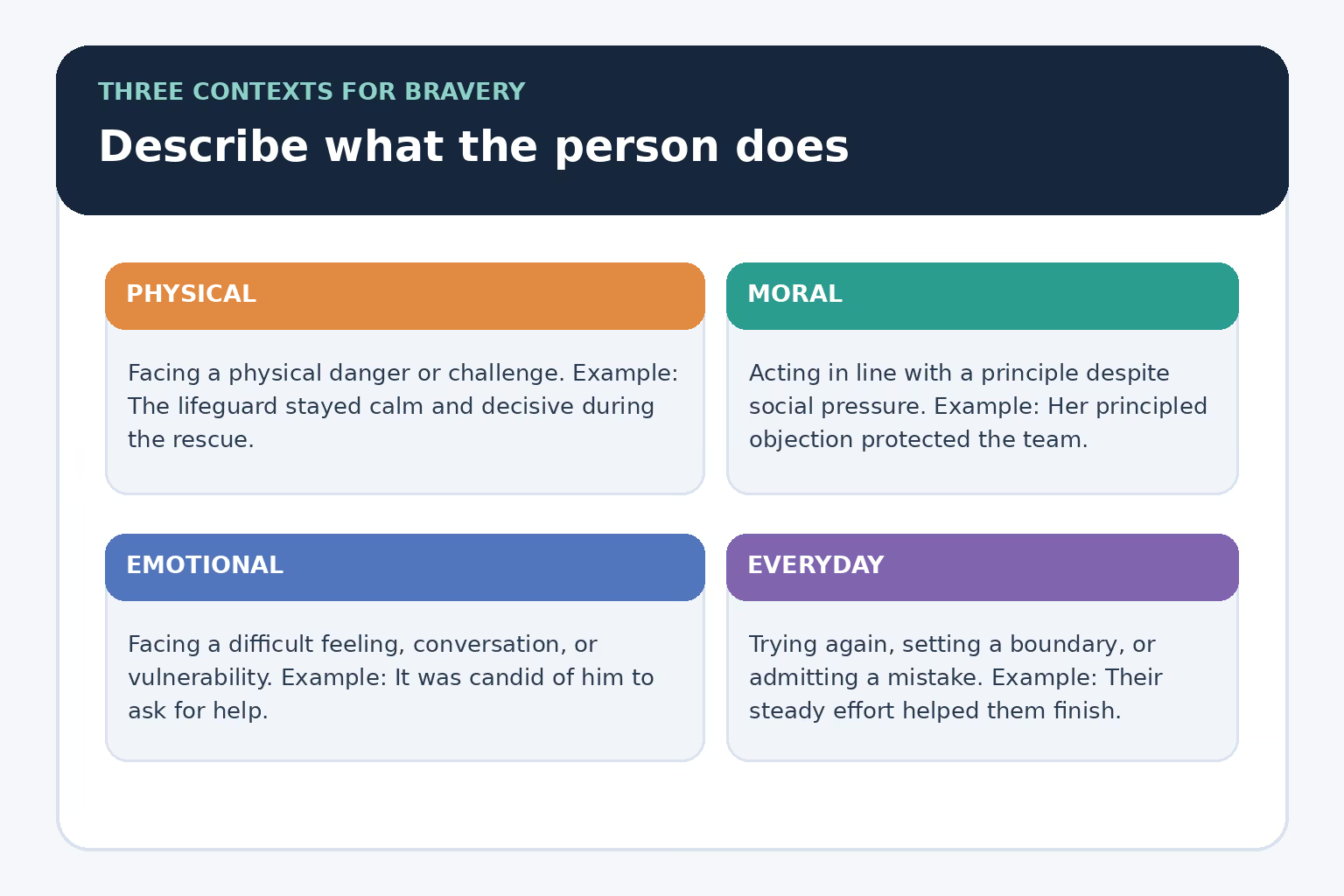
Start with the kind of challenge. Was it a physical danger, a difficult emotional moment, or a decision that required standing by a principle? Then choose a word that describes the action accurately. A rescuer can be courageous; an honest objection can be principled; someone who continues after a setback may be resilient. The last two words relate to courage, but they describe a principle or recovery rather than serving as direct synonyms for bravery.
| Adjective | Meaning or shade | Example |
|---|---|---|
| brave | Willing to face a difficult, dangerous, or painful situation | It was brave of Eli to admit he needed help. |
| courageous | Showing courage in a challenge | The courageous witness told the truth. |
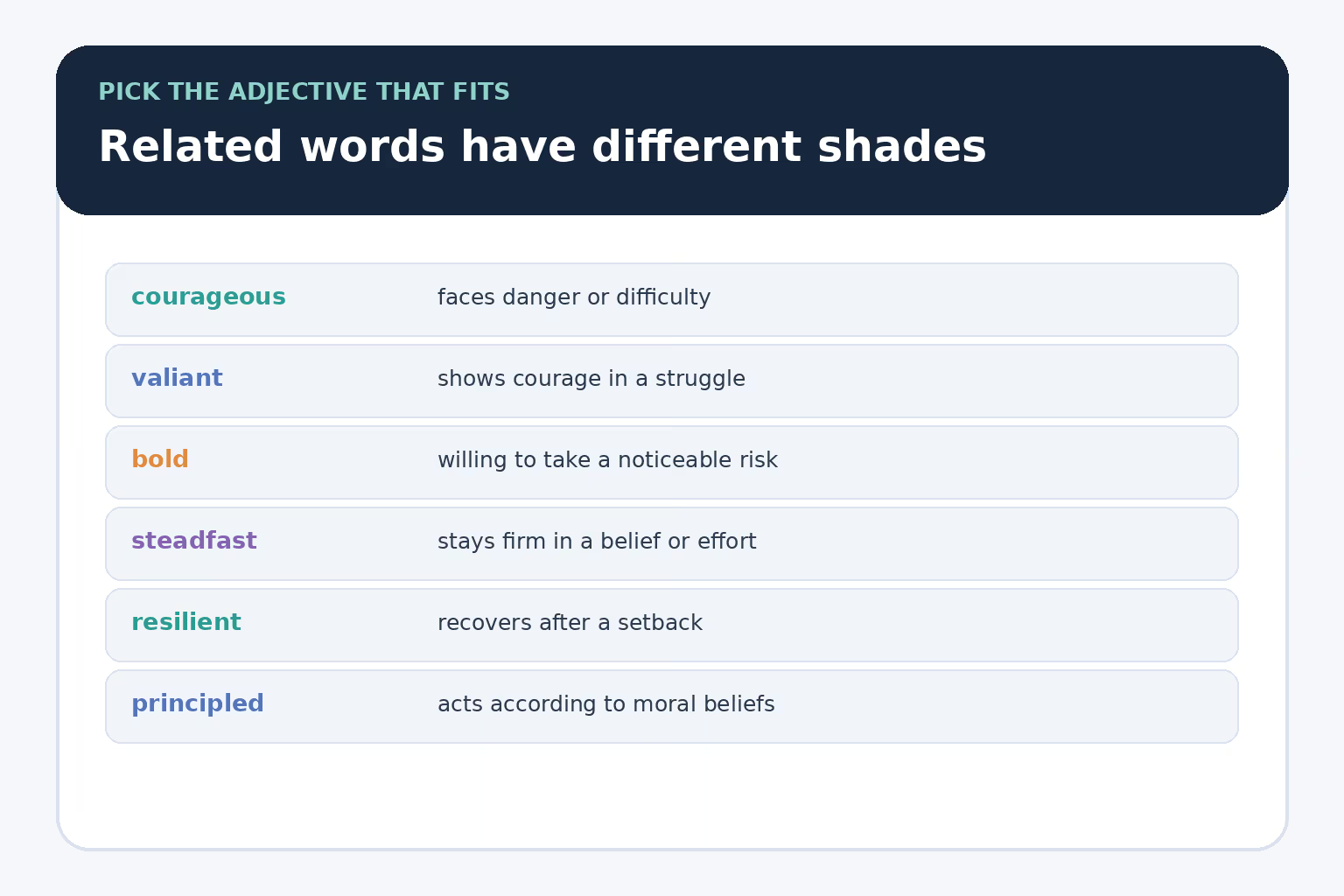
| valiant | Brave and determined, often in a struggle | The crew made a valiant effort to protect the shoreline. |
| bold | Confident and willing to take a noticeable risk | She made a bold choice to speak at the meeting. |
| dauntless | Not easily discouraged by danger or difficulty; formal | The dauntless team continued its search. |
| steadfast | Firm and persistent in a belief or commitment | He remained steadfast in supporting his colleague. |
| resilient | Able to recover or keep going after a setback | The resilient family rebuilt after the flood. |
| principled | Guided by moral beliefs | Her principled decision protected the younger players. |
Direct synonyms and related descriptors
Brave, courageous, valiant, fearless, and dauntless can describe courage, though they do not have exactly the same tone. Fearless stresses an absence of fear; bold stresses confident action and can sound admiring or critical depending on context; valiant is more formal and often suggests a determined effort in adversity. Gallant can imply courtesy or honor as well as bravery, while audacious may praise daring or suggest excessive boldness.
Some useful words are related to bravery rather than direct synonyms. Steadfast describes loyalty or firmness; resilient describes recovery; vulnerable means open to emotional hurt or risk; and empowered describes having greater agency or confidence. Integrity is a noun, not an adjective. Use principled or ethical when describing someone guided by standards of right and wrong.
Bravery and recklessness
Reckless, foolhardy, headstrong, impulsive, and hasty describe actions or behavior that may involve poor judgment. They are not simply negative synonyms for bravery. An action may look bold yet expose someone to needless danger. A courageous choice can include preparation, caution, and care for others. If you want to describe a risky decision critically, use one of these words for the decision or behavior rather than calling bravery itself reckless.
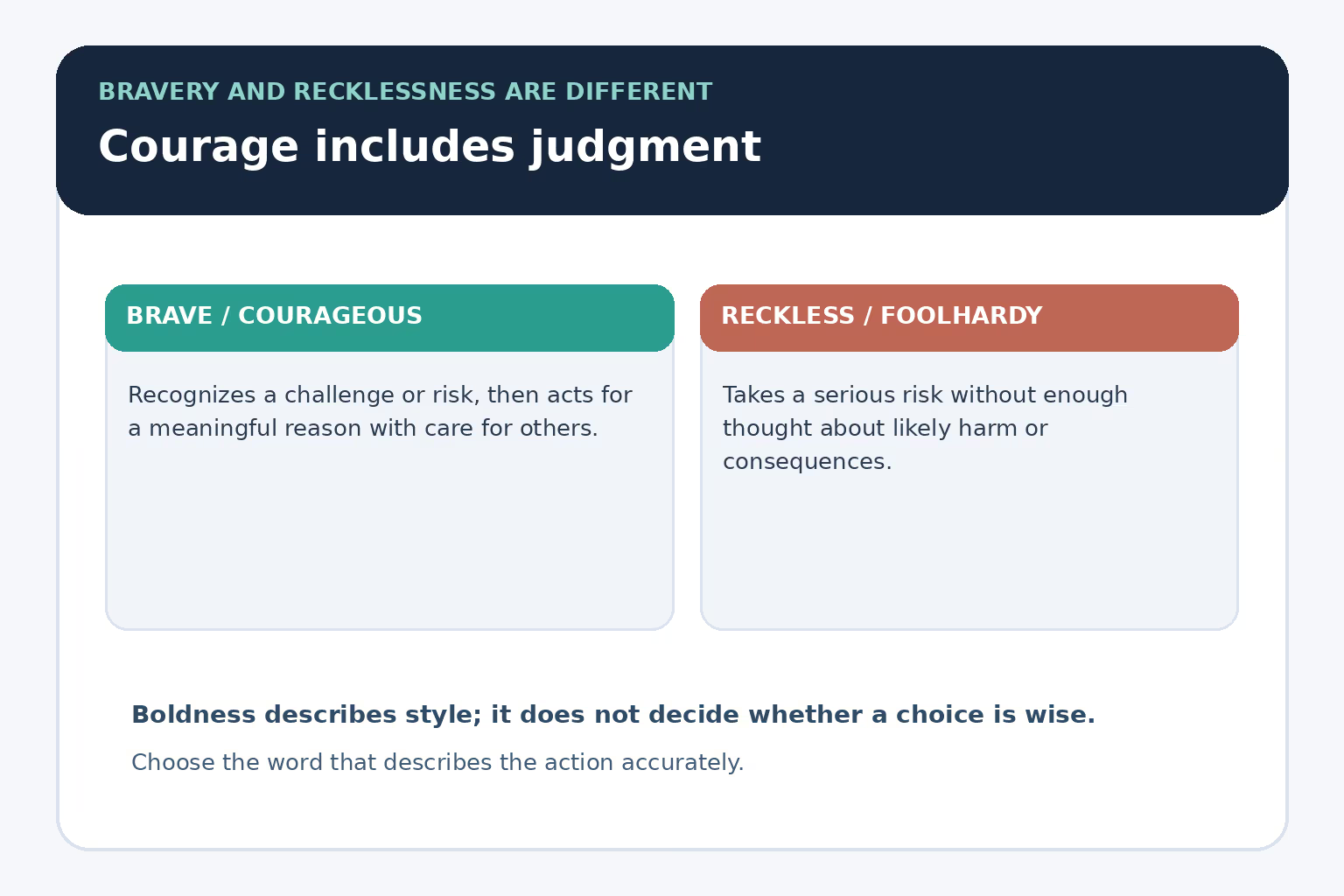
The original examples below are kept intact. The notes that follow them clarify a few word choices—especially the difference between an adjective such as principled and the noun integrity, and between courage and careless risk-taking.
How to Describe Bravery? – Different Scenarios
When it comes to describing bravery, there are different scenarios that can help paint a clearer picture of this remarkable trait. Let’s explore a few examples:- Physical Bravery: Physical bravery refers to acts of courage that involve facing physical danger or overcoming physical challenges. Some adjectives that can be used to describe physical bravery include:
- Moral Bravery: Moral bravery involves standing up for what is right, even in the face of criticism or opposition. When describing moral bravery, consider using adjectives such as:
- Emotional Bravery: Emotional bravery refers to acts of courage that involve facing and overcoming one’s fears or negative emotions. Adjectives that can be used to describe emotional bravery include:
Describing Words for Bravery in English
When it comes to describing bravery, there are numerous adjectives that can help convey the different facets of this admirable trait. Whether it’s physical bravery, moral bravery, or emotional bravery, these adjectives provide a nuanced understanding of what it means to be brave. Let’s explore some describing words for bravery in English:Physical Bravery
Physical bravery refers to acts of courage that involve facing physical danger or overcoming physical challenges. Here are some adjectives that can be used to describe physical bravery:- Fearless: A fearless person doesn’t let fear hold them back and is willing to take risks.
- Courageous: A courageous individual demonstrates bravery in the face of danger or adversity.
- Bold: Someone who is bold shows a willingness to take decisive action even in the most challenging circumstances.
- Daring: A daring person is not afraid to step outside their comfort zone and take on daring feats.
Moral Bravery
Moral bravery involves standing up for what is right and making difficult choices that align with one’s values. Here are some adjectives that capture the essence of moral bravery:- Principled: A principled person acts in accordance with their beliefs and values, even when it’s difficult.
- Ethical: An ethical individual consistently makes choices that are morally right, regardless of the circumstances.
- Integrity: Someone who possesses integrity demonstrates moral bravery by staying true to their principles.
- Noble: A noble person exhibits bravery by doing what is morally right, even when it’s not popular or easy.
Emotional Bravery
Emotional bravery relates to facing and overcoming internal challenges, such as fear, anxiety, or vulnerability. Here are some adjectives that describe emotional bravery:- Resilient: A resilient individual demonstrates emotional bravery by bouncing back from adversity and overcoming difficult emotions.
- Vulnerable: Being vulnerable requires emotional bravery because it entails opening oneself up to potential hurt or rejection.
- Empowered: An empowered person exhibits emotional bravery by taking control of their emotions and navigating difficult situations.
Adjectives for Bravery
Positive Adjectives for Bravery with 12 Example Sentences
When it comes to describing bravery, there are numerous positive adjectives that can effectively convey the courageous spirit. Here are 12 examples of adjectives that can be used to describe bravery in a positive light:- Fearless – Bravery without fear, ready to face any challenge head-on.
- Bold – Willing to take risks and make daring decisions.
- Courageous – Possessing the strength to overcome fear and adversity.
- Valiant – Displaying bravery and heroism in the face of danger.
- Adventurous – Embracing new experiences and showing fearlessness in exploration.
- Dauntless – Fearless and determined, never backing down from a challenge.
- Heroic – Displaying bravery that inspires and brings about positive change.
- Resilient – Able to bounce back from setbacks and continue persevering.
- Daring – Willing to take bold actions despite potential risks.
- Gallant – Brave and chivalrous, showing honor and nobility in the face of danger.
- Steadfast – Courageous and unwavering in the pursuit of one’s beliefs.
- Indomitable – Unconquerable and resolute, unable to be subdued by fear.
- The firefighter’s fearless actions saved lives during the raging inferno.
- The explorer was bold in venturing into uncharted territories.
- The soldier showed courageous determination in the heat of battle.
- The act of rescuing the drowning child was valiant and selfless.
- The adventurer’s daring spirit led them to climb the highest peaks.
- The dauntless CEO took risks and turned their company around.
- The hero’s heroic actions inspired a generation to stand up for justice.
- Despite facing many challenges, the athlete remained resilient and achieved their goals.
- The young entrepreneur made daring decisions that propelled their business to success.
- The knight’s gallant bravery impressed all who witnessed his deeds.
- The activist’s steadfast commitment to their cause brought about lasting change.
- Against all odds, the survivor remained indomitable and never gave up hope.
Negative Adjectives for Bravery with 5 Example Sentences
While bravery is often celebrated as a positive trait, there are also negative adjectives that can be used to describe certain aspects of bravery. Here are 5 examples of negative adjectives that can be associated with bravery:- Reckless – Acting without considering the potential consequences or risks.
- Foolhardy – Displaying bravery without thought or reason, often leading to negative outcomes.
- Headstrong – Stubbornly determined, often ignoring advice or caution.
- Impulsive – Acting without careful thought or planning, driven by instinct or emotion.
- Hasty – Acting with undue haste or without proper consideration, leading to rash decisions.
- The daredevil’s reckless stunts put their own safety at risk.
- The foolhardy adventurer ignored warning signs and found themselves in danger.
- The headstrong leader refused to listen to the advice of their team, leading to disastrous consequences.
- The impulsive decision to confront the enemy without a plan resulted in unnecessary casualties.
- The hasty action taken without proper consideration caused unintended harm.
Synonyms and Antonyms with Example Sentences
Synonyms for Bravery
When we talk about bravery, there are many synonyms that describe this admirable trait. Let’s explore some of these synonyms and see how they can be used in sentences:- Fearless: Someone who is fearless shows great bravery in the face of danger. For example, “She’s a fearless firefighter who rushes into burning buildings to save lives.”
- Bold: Being bold means having the courage to take risks and face challenges head-on. For instance, “He made a bold decision to start his own business.”
- Courageous: A courageous person is someone who displays bravery and strength in difficult situations. For instance, “The soldiers showed courageous acts of bravery during the war.”
- Valiant: To be valiant means to display courage and determination in the face of adversity. For example, “The young knight fought valiantly to protect the kingdom from the dragon.”
- Adventurous: Being adventurous involves being willing to try new things and take on exciting challenges. For example, “She’s an adventurous explorer who loves discovering new places.”
Antonyms for Bravery
While bravery is a commendable trait, there are also antonyms that describe the opposite behavior. Here are a few antonyms for bravery and how they can be used:- Reckless: Someone who is reckless acts without considering the potential consequences. For instance, “He took a reckless leap off the cliff without checking for safety.”
- Foolhardy: Being foolhardy means acting recklessly without considering the dangers involved. For example, “It was foolish and foolhardy to climb the mountain without proper equipment.”
- Headstrong: When someone is headstrong, they are stubborn and refuse to listen to reason or advice. For instance, “Despite the warnings, she remained headstrong and proceeded with her plan.”
- Impulsive: Being impulsive means acting without thinking carefully or considering the consequences. For example, “His impulsive decision to quit his job without a backup plan left him in a difficult situation.”
- Hasty: Acting hastily involves making quick decisions without taking enough time to consider the options. For example, “He regretted his hasty decision to buy the expensive car without doing proper research.”
Conclusion
Bravery is a quality that encompasses various positive adjectives such as fearless, bold, courageous, valiant, and adventurous. It is the ability to face challenges head-on and act with determination and courage. However, it is important to note that bravery should not be confused with recklessness or impulsiveness. Throughout this article, we have explored different scenarios where bravery can be displayed and discussed the significance of choosing actions wisely. By understanding the adjectives associated with bravery, we can better appreciate the complexity of this trait. Remember, being brave does not mean acting without thought or consideration. It means having the courage to face our fears and take calculated risks when necessary. Bravery is a valuable characteristic that can inspire and motivate others. So, let us embrace bravery in all its forms, and strive to be fearless, bold, and courageous in our own lives. By doing so, we can make a positive impact and inspire those around us.More adjectives for bravery with examples
- Intrepid: The intrepid reporter asked difficult questions at the public briefing.
- Resolute: She stayed resolute while asking the board to correct its mistake.
- Plucky: The plucky child tried the new activity even though it felt unfamiliar.
- Audacious: His audacious proposal challenged the team’s usual approach.
- Composed: The composed pilot followed the emergency checklist.
- Tenacious: Their tenacious campaign kept attention on the safety issue.
- Urbane: Not a direct synonym for courage; use it for someone polished and confident in social settings.
- Unflinching: The unflinching advocate continued speaking despite criticism.
- Self-possessed: She remained self-possessed while answering difficult questions.
- Conviction-led: His conviction-led response made the ethical concern clear.
Examples by type of bravery
| Situation | Sentence | Why the adjective fits |
|---|---|---|
| Physical | The courageous hiker called for help when the weather turned dangerous. | Courageous describes facing a difficult situation while acting carefully. |
| Moral | She made a principled choice to report the unfair treatment. | Principled describes the values guiding the decision. |
| Emotional | It was vulnerable of him to explain what had been troubling him. | Vulnerable describes openness to emotional risk. |
| Persistence | The steadfast volunteer returned each week to help the neighborhood. | Steadfast emphasizes continued commitment. |
| After a setback | The resilient student tried a new approach after the first plan failed. | Resilient emphasizes recovery and adaptation. |
| Careless risk | The reckless driver ignored the warning signs. | Reckless criticizes the unsafe choice; it does not mean courageous. |
Common questions about bravery adjectives
What is the best adjective for bravery?
Courageous is a strong all-purpose adjective. Choose a more specific word when the context calls for it: valiant for determined effort in adversity, principled for acting according to values, or resilient for recovering after a setback.
Is fearless the same as brave?
Not exactly. Fearless emphasizes not feeling fear. Brave or courageous can describe someone who faces a difficult situation even while feeling afraid. The best choice depends on what you want to say about the person or action.
Is integrity an adjective for bravery?
No. Integrity is a noun meaning the quality of being honest and guided by strong principles. The adjectives are principled and ethical. For example: “Her principled response showed moral courage.”
Are reckless and foolhardy opposites of brave?
They are better understood as words for unsafe or poorly considered behavior. Someone can take a risk without acting courageously, and a cautious person can still be brave. Describe the specific choice rather than treating every risk as a sign of bravery.


