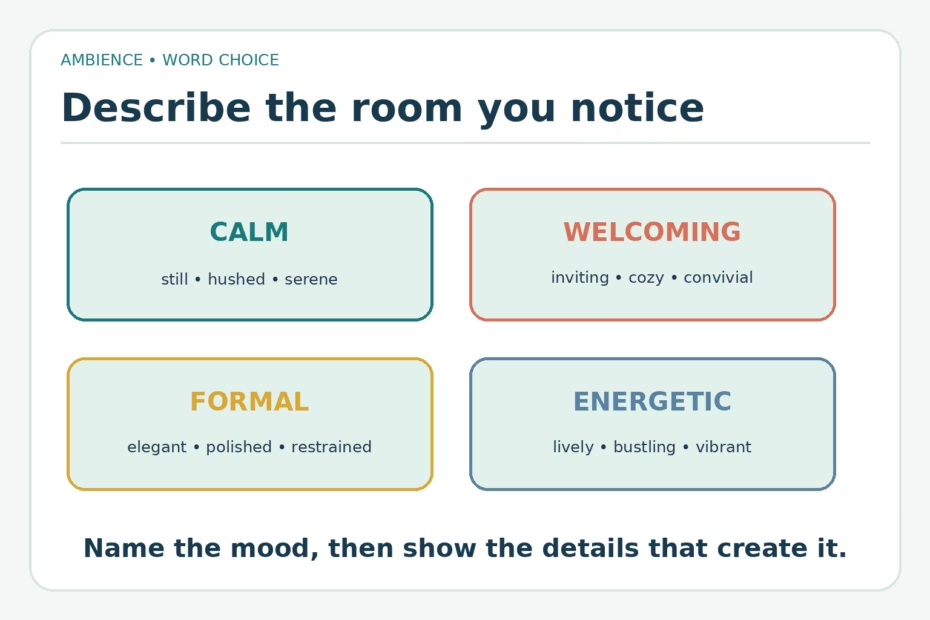
Ambience is the character or atmosphere a place seems to have. To describe it clearly, pair a mood word with details that a reader can picture or hear: instead of simply calling a room “lovely,” describe its low lamps, soft music, and unhurried conversation. The best adjective depends on the setting and the effect you want to communicate.
- Calm: serene, peaceful, hushed, restful
- Comfortable: cozy, inviting, homey, relaxed
- Formal: elegant, polished, refined, stately
- Active: lively, bustling, vibrant, animated
- Unsettling: eerie, tense, somber, disquieting
How to choose an adjective for ambience
Start with the impression you want to describe, then identify what creates it. Light, sound, color, furnishings, scents, space, and the behavior of people can all shape how a place feels. In factual writing, use details you can actually observe. In fiction, you can also make the narrator’s reaction part of the description.
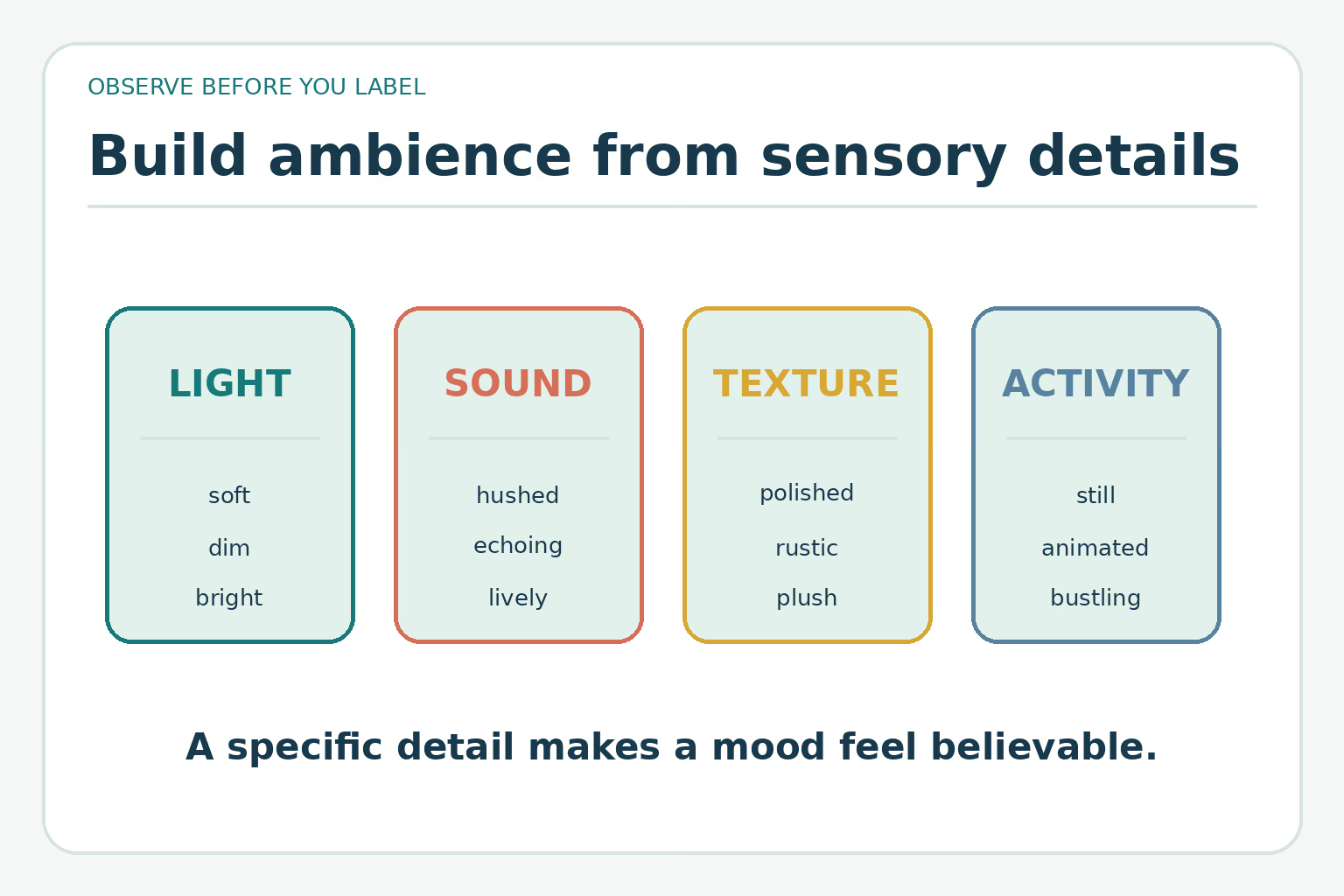
For example, hushed points to little sound, while dim describes light. Those details may help create a serene or intimate ambience, but the words do not mean the same thing. Naming the clue first makes your adjective more convincing: “The low lamps and quiet conversation gave the restaurant an intimate ambience.”
Adjectives for different kinds of ambience
Calm and peaceful
Serene, tranquil, restful, hushed, still, and soothing describe settings with little disturbance or a calming effect. A lakeside path can be still at dawn; a reading room can be hushed; a spa may feel soothing. Use serene or tranquil for an overall sense of calm, and choose a concrete detail such as muted sounds or slow movement to show why.
Cozy and welcoming
Cozy, inviting, comfortable, homey, convivial, and welcoming suggest ease or hospitality. A small table by a fireplace might make a cafe feel cozy; friendly greetings and shared dishes can create a convivial restaurant atmosphere. Homey is informal and emphasizes familiar comfort, while convivial highlights sociable enjoyment.
Elegant and formal
Elegant, refined, polished, sophisticated, stately, and restrained suit carefully designed or formal spaces. A ballroom with high ceilings may feel stately; simple furnishings and attentive service can give a hotel lobby a polished ambience. These words express an impression, so explain the design or behavior that supports it rather than treating elegance as an objective fact.
Lively and energetic
Lively, vibrant, bustling, animated, electric, and spirited describe movement, activity, or excitement. A market can be bustling as vendors call to customers; a concert hall may feel electric as the audience responds to the music. Bustling often suggests busy movement, whereas vibrant can describe a setting full of color, energy, or activity.
Moody, eerie, or tense
Somber, gloomy, eerie, foreboding, tense, and disquieting can create a darker impression. A nearly empty station with flickering lights may seem eerie; a crowded room where nobody speaks may feel tense. Somber suggests seriousness or sadness, while foreboding hints that something troubling may happen. Choose the word that matches the scene rather than piling several negative adjectives together.
Words for ambience in common settings
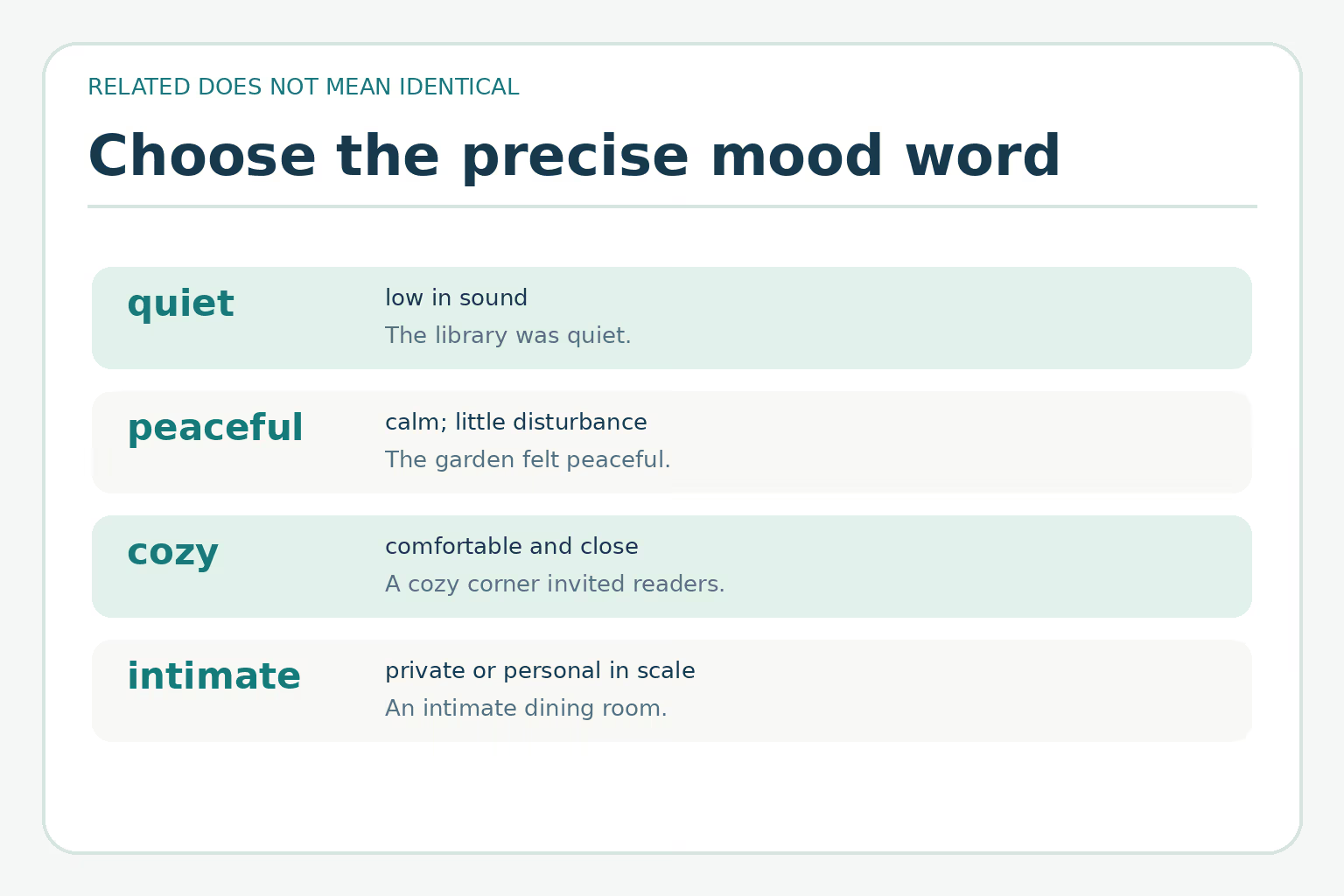
The same adjective can work in more than one place, but context changes its effect. These combinations are starting points; choose words that fit what is actually present in your scene.
| Setting | Possible adjectives | Example |
|---|---|---|
| Cafe | cozy, bustling, convivial, fragrant | The cafe felt convivial as neighbors chatted over coffee. |
| Garden | serene, leafy, restorative, sunlit | A leafy, serene garden softened the noise of the street. |
| Hotel lobby | polished, elegant, welcoming, grand | The polished lobby had a welcoming rather than formal feel. |
| Concert hall | electric, resonant, expectant, celebratory | An expectant hush settled over the hall before the orchestra began. |
| Old house | shadowy, eerie, quiet, unsettling | The shadowy corridor gave the old house an unsettling ambience. |
| Classroom | focused, collaborative, lively, calm | The collaborative classroom buzzed as students compared ideas. |
Quiet, peaceful, cozy, and intimate: what is the difference?
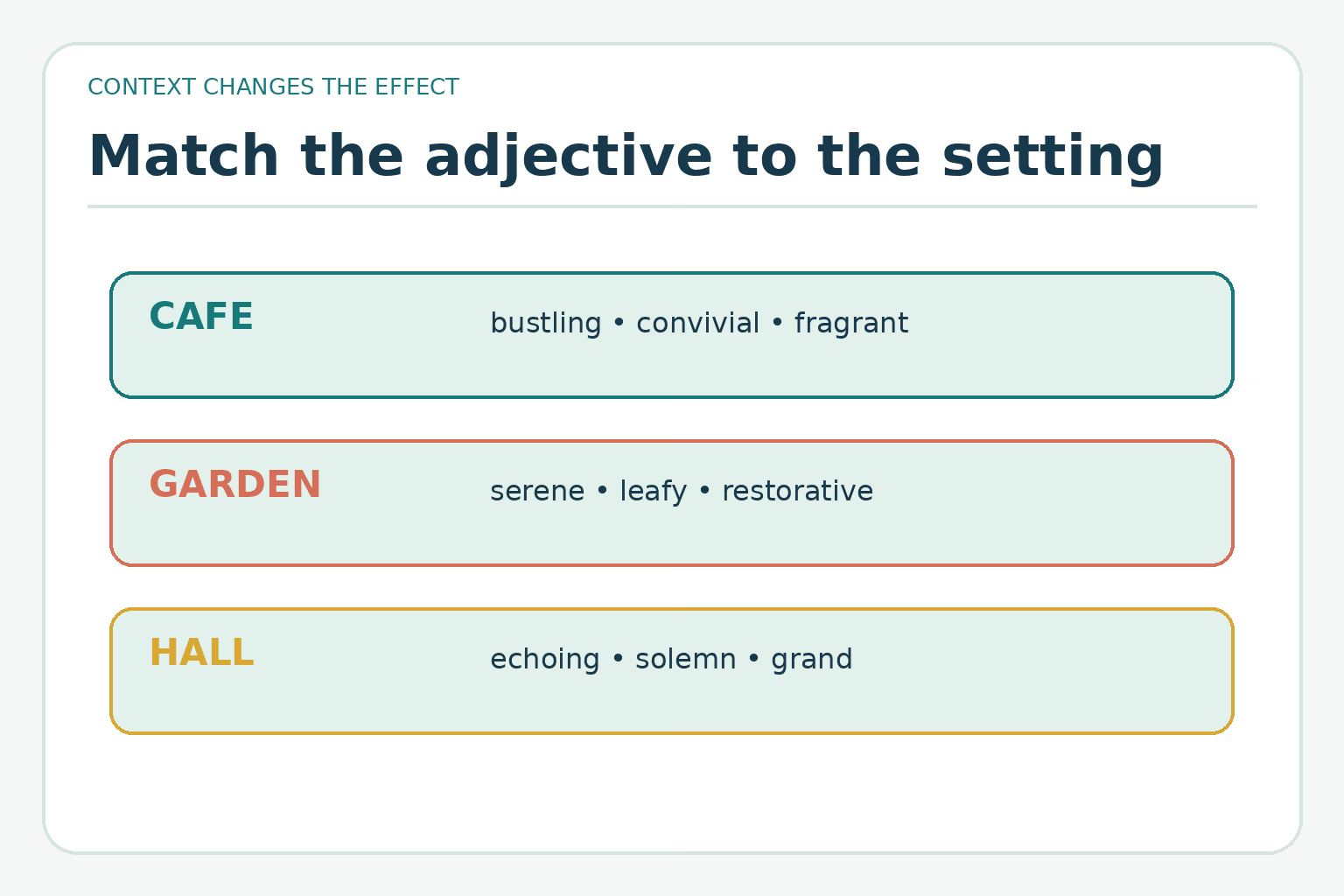
Quiet describes a low level of sound or activity. Peaceful describes a calm, undisturbed feeling. A room can be quiet but uncomfortable, or peaceful even with soft background sounds. Cozy emphasizes comfortable warmth and closeness; intimate suggests privacy, personal scale, or emotional closeness. Use the word that says what you mean, then add a detail to make the scene specific.
Compare these examples: “The waiting room was quiet” reports the sound level. “The garden felt peaceful” gives the overall impression. “A cozy booth kept the diners warm” emphasizes comfort. “The intimate dining room had four small tables” points to scale and privacy. These adjectives may overlap, but they are not interchangeable in every sentence.
How to use an ambience adjective in a sentence
Place the adjective next to the noun it describes, or use it after a linking verb such as feel, seem, or become. Then add the detail that creates the effect:
- Before a noun: “Soft lamps gave the lounge a welcoming ambience.”
- After a linking verb: “The courtyard felt tranquil after the rain.”
- With a contrast: “The station was busy, yet its warm lighting made the waiting area feel calm.”
- In creative writing: “An eerie silence filled the hallway while the clock ticked overhead.”
Try a simple pattern: observable detail + place + adjective for the resulting impression. For instance, “The clink of cups and overlapping conversations made the cafe feel lively.” This gives the reader evidence for the chosen word instead of relying on a string of adjectives.
Common mistakes when describing ambience
- Using several near-synonyms at once: “calm, peaceful, serene, tranquil” repeats one general idea. Pick the most accurate word and add a sensory clue.
- Calling every pleasant place cozy: a spacious, formal gallery may be elegant or serene without feeling warm or close.
- Confusing sound with mood: “quiet” describes sound; it does not automatically mean “peaceful.”
- Presenting an opinion as a fact: ambience is perceived, so describe what creates the impression or make clear whose point of view it reflects.
- Forcing a dramatic word: words such as foreboding imply a threat. Use them only when the scene supports that effect.
Frequently asked questions about ambience adjectives
What is a good adjective for ambience?
It depends on the place: serene may fit a quiet garden, convivial a sociable cafe, and elegant a formal dining room. Choose a word that matches the details and mood you want to convey.
Are “ambience” and “ambiance” different?
Both spellings are used for the character or atmosphere of a place. Choose one spelling and use it consistently; ambience is the spelling used in this guide.
Is ambience the same as atmosphere?
The words overlap when they describe the general feeling or character of a place. Ambience often focuses on the impression created by the surroundings, while atmosphere also has other senses. In many everyday descriptions of a room or venue, either word can work.
Can ambience be negative?
Yes. A place can have a gloomy, tense, eerie, or unsettling ambience. These words describe an impression, so use them with details that support the mood.
Sources and usage note
Oxford Learner’s Dictionaries defines ambience as the character and atmosphere of a place. Cambridge Dictionary’s entry for ambience and its entry for atmosphere support the overlap in their meanings. The setting descriptions and example sentences above are original illustrations; adjectives such as “welcoming” and “eerie” express a reader’s perception.
When it comes to creating the perfect ambience, the right choice of words can make all the difference. Whether you’re describing a cozy caf√©, a serene garden, or a bustling city street, the adjectives you use can help paint a vivid picture in the minds of your readers. In this article, I’ll be sharing a collection of descriptive words that are perfect for capturing the essence of different ambiances. From words that evoke a sense of tranquility to those that convey energy and excitement, you’ll find a range of adjectives to enhance your writing and transport your readers to the world you’ve created.
How to Describe ambience? – Different Scenarios
When it comes to describing ambience, there are various scenarios that I can delve into. From tranquil settings to energetic environments, each scenario requires the use of specific adjectives to effectively capture the essence of the ambience. Let’s explore some different scenarios and the descriptive words that perfectly depict each one.
- Calm and Tranquil:
In a calm and tranquil ambience, silence and serenity fill the air. To describe such a scenario, I could use words like:
- Peaceful
- Serene
- Quiet
- Relaxing
- Harmonious
- Cozy and Warm:
Imagine a space filled with soft lighting, comfortable furniture, and a warm atmosphere. To describe a cozy and warm ambience, I might choose words such as:
- Inviting
- Comforting
- Homely
- Snug
- Nurturing
- Vibrant and Lively:
A vibrant and lively ambience is characterized by energy and excitement. To bring such a scenario to life in words, I could use adjectives like:
- Dynamic
- Energetic
- Exhilarating
- Electric
- Spirited
- Mystical and Enchanting:
For a mysterious and enchanting ambience, I can use adjectives that evoke a sense of wonder and intrigue. Some descriptive words I might employ include:
- Enigmatic
- Magical
- Otherworldly
- Enthralling
- Captivating
- Soothing and Rejuvenating:
A soothing and rejuvenating ambience has the power to relax and revitalize. To describe such a setting, I could use words like:
- Refreshing
- Tranquilizing
- Reinvigorating
- Calming
- Healing
Remember, the choice of words is crucial in creating the perfect ambience through your writing. Whether you’re aiming for tranquility, energy, mystique, or another atmosphere, selecting the right adjectives will help transport your readers to the world you’re describing.
So, experiment with these descriptive words and bring your writing to life by painting vibrant imagery and immersing your readers in an ambience they can feel.
Describing Words for ambience in English
When it comes to creating the perfect ambiance, choosing the right words is essential. By using descriptive adjectives, we can bring our writing to life and transport our readers to different settings and atmospheres. In this section, I’ll be sharing some examples of adjectives that can be used to describe various ambiances in English. Let’s dive in!
Calm and Tranquil Ambiance
- Peaceful
- Serene
- Relaxing
- Quiet
- Gentle
Example: “The room had a peaceful ambiance, with soft lighting and soothing music playing in the background.”
Cozy and Warm Ambiance
- Comfortable
- Inviting
- Snug
- Homely
- Welcoming
Example: “The cabin had a cozy ambiance, with a crackling fireplace and plush furniture that made you feel right at home.”
Vibrant and Lively Ambiance
- Energetic
- Exciting
- Dynamic
- Spirited
- Electrifying
Example: “The nightclub had a vibrant ambiance, with colorful lights, upbeat music, and people dancing all night long.”
Mystical and Enchanting Ambiance
- Magical
- Whimsical
- Enchanting
- Mysterious
- Spellbinding
Example: “The forest had a mystical ambiance, with rays of sunlight peeking through the trees, casting an otherworldly glow.”
- Tranquilizing
- Refreshing
- Rejuvenating
- Calming
- Revitalizing
Example: “The spa had a soothing ambiance, with soft music, aromatic scents, and plush robes that helped guests relax and unwind.”
Adjectives for ambience
Positive Adjectives for Ambience
When it comes to setting the right ambience, the use of positive adjectives can play a significant role. These descriptive words can help create a warm and inviting atmosphere that is perfect for various occasions. Here are 12 examples of positive adjectives that can be used to describe ambience:
| Adjective | Definition | Example Sentence |
|---|---|---|
| Tranquil | Calm and peaceful | The music in the background created a tranquil ambience. |
| Cozy | Comfortable and snug | The soft lighting and plush seating made the room feel cozy. |
| Serene | Calm and untroubled | The serene ambience of the garden was perfect for relaxation. |
| Elegant | Stylish and sophisticated | The fine dining restaurant had an elegant ambience. |
| Inviting | Welcoming and friendly | The café had an inviting ambience that made you want to stay. |
| Enchanting | Charming and magical | The twinkling lights and beautiful decorations created an enchanting ambience. |
| Lively | Energetic and vibrant | The bustling market had a lively ambience. |
| Blissful | Extremely happy and peaceful | The spa had a blissful ambience that helped guests relax. |
| Harmonious | Balanced and pleasing | The combination of colors and textures created a harmonious ambience. |
| Delightful | Charming and enjoyable | The café had a delightful ambience with its cheerful decor. |
| Whimsical | Playful and imaginative | The children’s play area had a whimsical ambience. |
| Serendipitous | Pleasantly surprising and fortunate | The unexpected live music added a serendipitous touch to the ambience. |
Negative Adjectives for Ambience
While positive adjectives can enhance the ambience, negative adjectives, on the other hand, can describe an atmosphere that may not be ideal. Here are 5 examples of negative adjectives that can be used to describe ambience:
| Adjective | Definition | Example Sentence |
|---|---|---|
| Gloomy | Dark and depressing | The dimly lit room had a gloomy ambience. |
| Chaotic | Disorderly and noisy | The crowded street had a chaotic ambience. |
| Dull | Boring and unexciting | The plain walls and lack of decor created a dull ambience. |
| Unpleasant | Not enjoyable or comfortable | The strong smell in the room made for an unpleasant ambience. |
| Disconcerting | Disturbing and unsettling | The eerie silence in the old house created a disconcerting ambience. |
By choosing the right adjectives to describe ambience, you can effectively convey the desired atmosphere and set the mood for any setting. Whether it’s a cozy and warm environment or a vibrant and lively space, the words you use can truly bring the ambience to life. Experiment with different adjectives to create the perfect ambiance in your writing and captivate your readers.
Synonyms and Antonyms with Example Sentences
Synonyms for ambience
When it comes to describing the atmosphere and setting the mood, having a variety of adjectives at your disposal is essential. Here are some synonyms for “ambience” that can help you convey different feelings and emotions:
| Synonym | Definition | Example Sentence |
|---|---|---|
| Tranquil | Calm and peaceful | The garden was a tranquil oasis. |
| Cozy | Warm and snug | The cabin had a cozy, homely feel. |
| Serene | Calm and untroubled | The beach at sunset was serene. |
| Elegant | Gracefully stylish and sophisticated | The ballroom had an elegant ambiance. |
| Inviting | Welcoming and friendly | The cafe had an inviting atmosphere. |
| Enchanting | Delightfully charming and magical | The fairytale cottage was enchanting. |
| Lively | Full of energy and excitement | The party had a lively atmosphere. |
| Blissful | Utterly peaceful and joyful | The spa provided a blissful experience. |
| Harmonious | Perfectly balanced and pleasing | The music created a harmonious ambience. |
| Delightful | Highly pleasing and enjoyable | The garden was a delightful retreat. |
| Whimsical | Playfully imaginative and unconventional | The cafe was decorated with whimsical artwork. |
| Serendipitous | Pleasantly surprising and unexpected | The bookstore had a serendipitous vibe. |
Antonyms for ambience
On the other hand, sometimes you may want to describe an atmosphere that is undesirable or not conducive to a certain mood. Here are some antonyms for “ambience” that can help you convey a negative atmosphere or setting:
| Antonym | Definition | Example Sentence |
|---|---|---|
| Gloomy | Dark, dull, and depressing | The old mansion had a gloomy ambience. |
| Chaotic | Disorderly and confusing | The classroom was chaotic and noisy. |
| Dull | Boring and lacking excitement | The party had a dull atmosphere. |
| Unpleasant | Disagreeable and not enjoyable | The restaurant had an unpleasant ambiance. |
| Disconcerting | Causing unease or confusion | The art exhibit was disconcerting. |
Remember, choosing the right adjectives is crucial in effectively conveying the desired atmosphere and setting the mood. Whether you want to create a tranquil and blissful ambience or a lively and whimsical one, the power of words can help you achieve your goal. So, go ahead and explore the world of adjectives – there’s a perfect word for every ambience!
Keep reading to discover more tips and tricks on creating the right ambience in any setting.
Conclusion
Choosing the right adjectives to describe the ambience of a setting can make all the difference in creating the desired atmosphere and setting the mood. In this article, we explored a range of adjectives that can be used to convey different feelings and emotions.
From positive adjectives like tranquil, cozy, and serene, to elegant, inviting, and enchanting, we discovered a variety of words that can help paint a vivid picture of a calming and delightful atmosphere. On the other hand, we also explored negative adjectives such as gloomy, chaotic, and unpleasant, which can be used to describe a more disconcerting or dull environment.
By understanding the power of adjectives and their ability to evoke specific emotions, we can enhance the overall ambience of any setting. Whether it’s a whimsical and lively space or a harmonious and blissful environment, the right choice of adjectives can transport individuals into a world of serendipity and delight.
Remember, when it comes to describing ambience, the words we choose can truly transform the way people experience a space. So, take the time to select the perfect adjectives and watch as the atmosphere comes alive with the power of language.


