How to Describe Architecture More Precisely
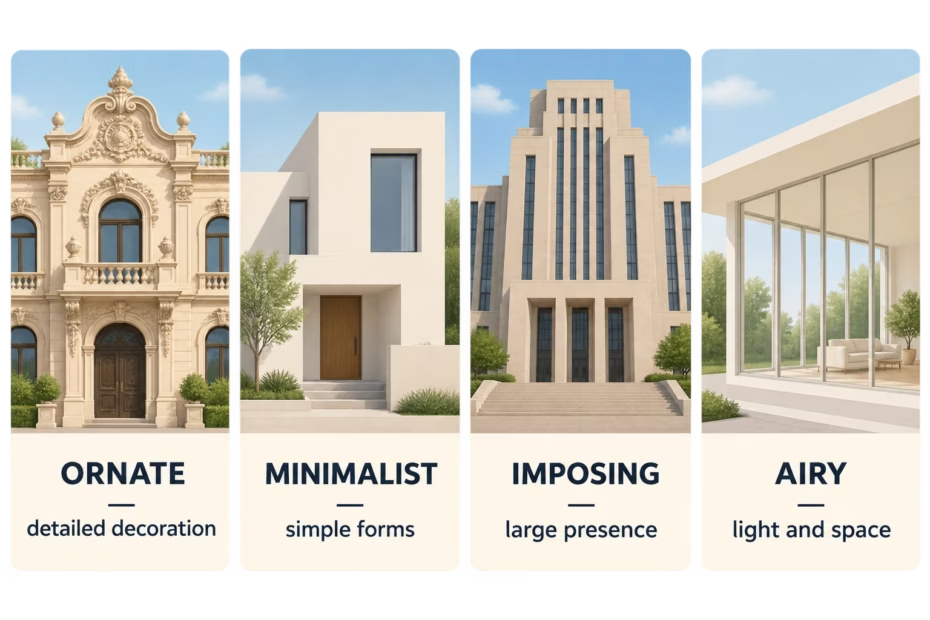
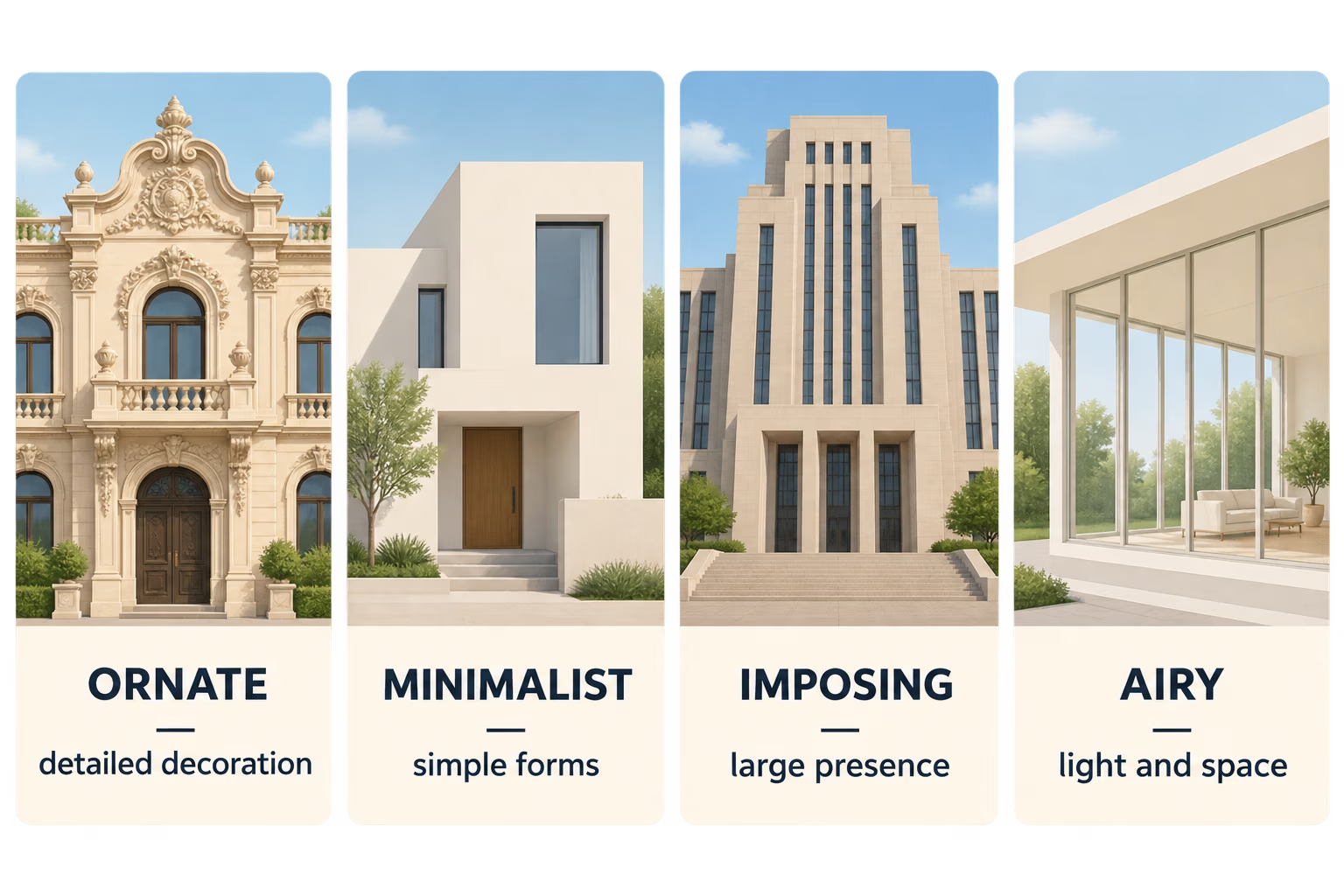
A useful architecture adjective points to a feature readers can picture: a building’s shape, scale, materials, decoration, light, or spatial feeling. Start with what you can observe, then choose a word that expresses your response. Ornate describes abundant decoration; airy describes a sense of light and space; imposing describes an appearance that seems important or commands attention. Those words help readers see different qualities instead of hearing only that a building is “beautiful” or “modern.”
Architecture can refer to the design of buildings as well as the buildings themselves. When writing about one structure, identify what you mean: its façade, interior, roofline, materials, plan, or overall effect. A detail such as “the narrow windows and deeply shadowed entrance” gives context for an adjective like austere or monumental.
Architecture Adjectives by What You Notice
| Adjective | What it suggests | Example |
|---|---|---|
| Ornate | Many detailed or elaborate decorations. | “An ornate stone doorway frames the entrance.” |
| Minimalist | A design using simple forms and a limited range of materials or colors. | “The minimalist pavilion pairs a plain roof with open walls.” |
| Austere | A plain, restrained appearance with little decoration; it can sound severe or unwelcoming. | “The austere memorial uses bare stone and a quiet, enclosed courtyard.” |
| Imposing | A large or important-looking presence that may inspire admiration or nervousness. | “The courthouse has an imposing entrance and tall columns.” |
| Monumental | A massive scale or a strong sense of importance. | “A monumental arch marks the center of the public square.” |
| Compact | A small, efficiently arranged form. | “The compact library fits reading rooms around a central stair.” |
| Symmetrical | Parts that correspond across an axis or follow a balanced arrangement. | “The symmetrical façade places matching windows on either side of the entrance.” |
| Asymmetrical | An arrangement whose sides do not mirror each other. | “An asymmetrical roofline gives the small gallery a distinctive profile.” |
| Angular | Prominent corners, sharp turns, or straight-edged forms. | “Angular balconies project from the building’s upper floors.” |
| Curving | Rounded or flowing lines rather than mostly straight edges. | “A curving glass wall follows the riverbank.” |
| Geometric | Shapes or patterns based on clear, repeated forms. | “Geometric screens cast patterned shadows across the lobby.” |
| Airy | A light, spacious impression. | “The airy atrium draws daylight into the center of the building.” |
| Light-filled | Interior areas with abundant natural or designed light. | “The light-filled studio has windows along two walls.” |
| Textured | A surface with visible or tactile variation. | “Textured brick softens the long exterior wall.” |
| Glazed | Fitted with glass or finished with a glassy surface; specify which if unclear. | “A glazed walkway connects the two wings.” |
| Weathered | Visibly changed by exposure to weather over time. | “Weathered timber gives the old boathouse a silvery surface.” |
| Welcoming | An observer’s impression that an entrance or place feels inviting. | “A low front step and a sheltered porch make the entry feel welcoming.” |
| Striking | Immediately noticeable or memorable; a response rather than a technical category. | “A striking red canopy marks the museum entrance.” |
Cambridge Dictionary describes ornate as having a lot of complicated decoration, and its architecture-and-design definition of minimalist emphasizes simple shapes and a small range of materials or colors. It defines airy as having a lot of light and space and imposing as looking important or causing admiration. These meanings make them useful for different observations; they are not interchangeable style labels. See the entries for ornate, minimalist, airy, and imposing.
Separate a Visible Feature from an Impression
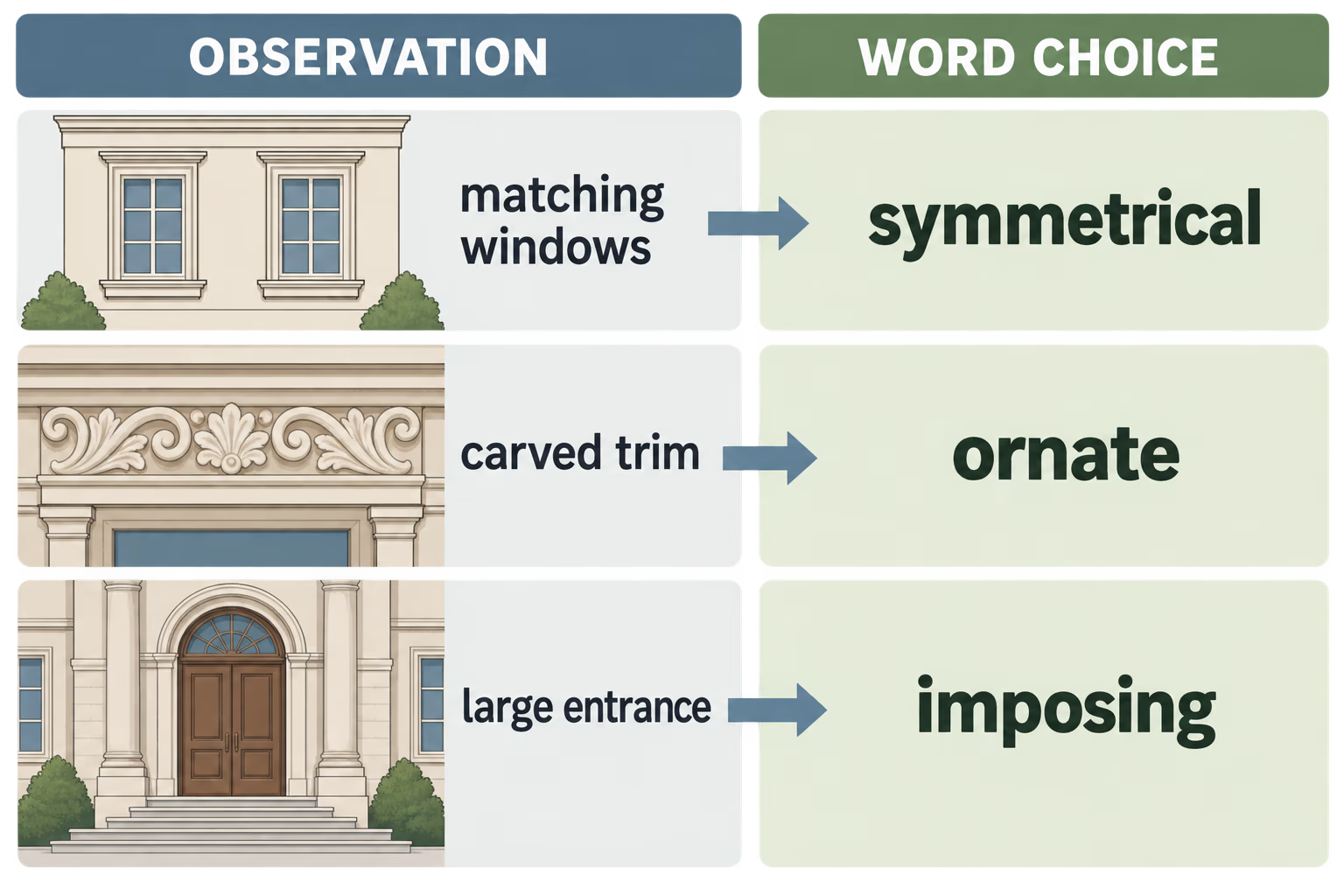
Some adjectives can be checked against a visible feature; others report a viewer’s reaction. Symmetrical, angular, curving, and ornate can point to arrangement or form. Elegant, welcoming, haunting, and beautiful express an interpretation. Both kinds of words belong in descriptions, but a reader benefits when you show the feature that led to your judgment.
| Observation | Possible adjective | Sentence |
|---|---|---|
| Matching windows on both sides of a central door | Symmetrical | “The symmetrical façade centers on a deep-set doorway.” |
| Carved trim around windows and roof edges | Ornate | “Ornate trim outlines the windows and roof.” |
| A tall entrance that dominates the street view | Imposing | “The imposing entrance makes the civic hall easy to spot.” |
| Few partitions and daylight from several directions | Airy | “The airy reading room opens toward a garden.” |
| A curved roof and rounded corners | Curving | “A curving roof gives the station a fluid outline.” |
For example, “The building is elegant” gives an opinion. “The slender columns and evenly spaced windows make the façade feel elegant” connects that opinion to visible evidence. This approach also helps readers who may respond differently to the same design.
Use Style Words Carefully
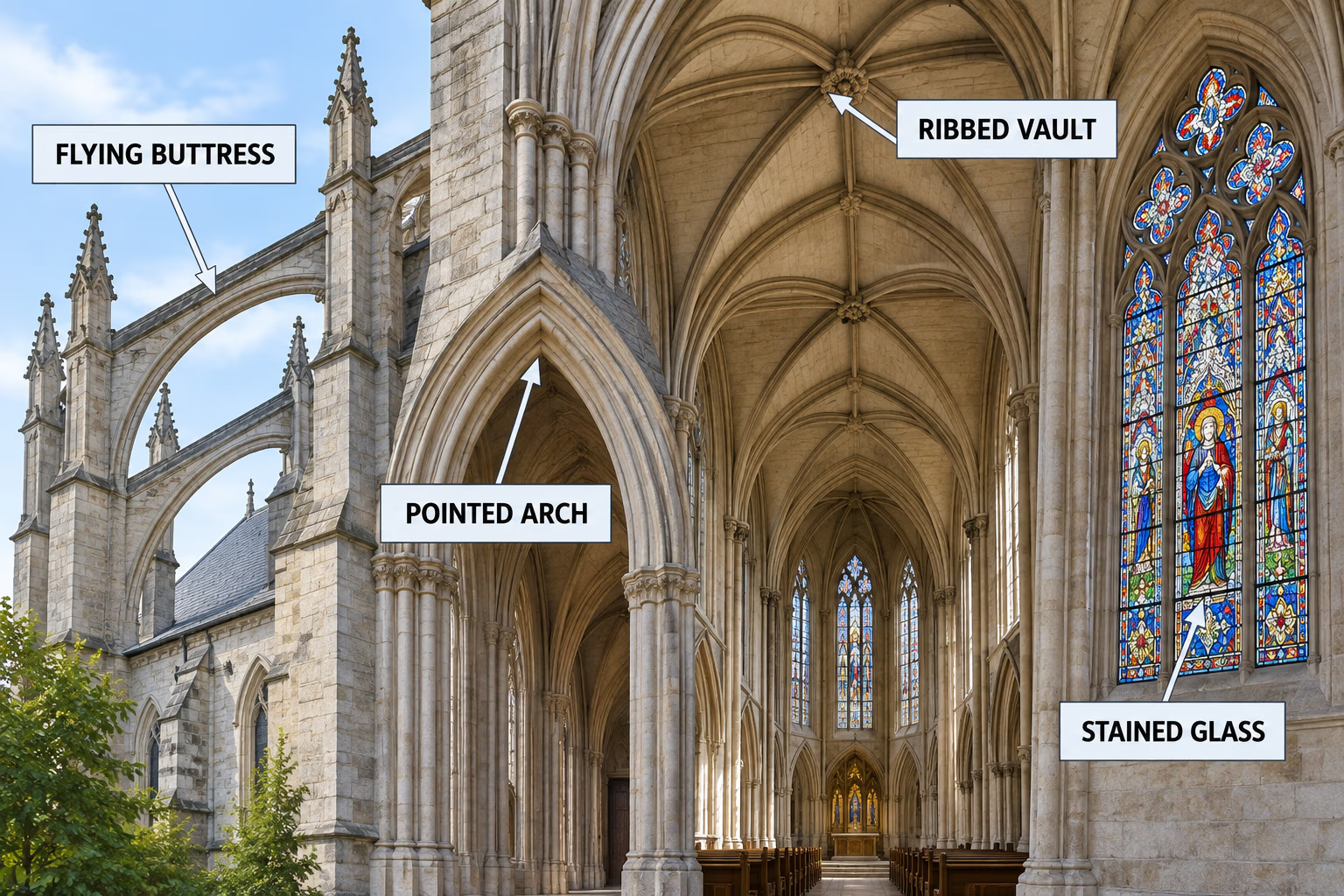
Style names can be useful when they are accurate, but an adjective alone does not identify a building’s architectural history. The Metropolitan Museum of Art describes Gothic architecture through features such as pointed arches, ribbed vaults, flying buttresses, and large windows that could hold stained glass. If you use words such as Gothic, Romanesque, or modernist, make sure the label fits the building rather than relying on a mood word.
For instance, spooky can describe a viewer’s reaction to a shadowy interior, but it is not a defining architectural feature of Gothic design. A more grounded description might mention a pointed arch, clustered columns, stained glass, and the impression those details create. The Royal Institute of British Architects describes Modernism as a twentieth-century movement associated with minimal ornament, asymmetrical compositions, and an emphasis on volume. A building with a plain or angular appearance is not automatically Modernist; use the style label when its broader design and historical context support it. Regional period, later restoration, and revival styles can also affect what a building looks like, so avoid treating one adjective as a full classification.
Likewise, a building may look green or natural without its environmental performance being established by appearance. Use claims about energy use, accessibility, structural safety, or materials only when the relevant plans, certifications, measurements, or records support them.
How to Choose an Architecture Adjective
- Choose the part: Are you describing the façade, roof, entrance, room, structure, or setting?
- Record one visible detail: Note a shape, repeated pattern, material, surface, amount of ornament, or quality of light.
- Select the closest word: Use angular for sharp geometry, weathered for visible exposure over time, or airy for a spacious, well-lit feeling.
- Show your point of view: Add a detail after an opinion word such as welcoming or impressive.
- Check the claim: A visual description can be based on observation; claims about function, safety, history, or environmental performance need appropriate evidence.
Instead of stacking near-synonyms—“beautiful, stunning, elegant, and breathtaking”—choose one word and explain what supports it. “The elegant stone entrance has a shallow arch and a carved border” is more useful than praise alone. For a neutral report, describe shape and material first; for a review, add your response and explain why you had it.
Quick Practice
Pick the adjective that most closely matches each observation.
- A hall has a lot of carved decoration around its doors. (ornate / compact)
- A room feels spacious and receives abundant daylight. (airy / austere)
- A façade has matching wings on both sides of the entrance. (symmetrical / curving)
- A building’s entrance appears large and important from the street. (imposing / weathered)
Answers: 1. ornate; 2. airy; 3. symmetrical; 4. imposing.
Frequently Asked Questions
What are good adjectives for architecture?
Useful choices include ornate, minimalist, symmetrical, angular, airy, imposing, and weathered. Choose based on the feature you want readers to notice.
What is a positive word to describe a building?
Elegant, welcoming, impressive, and harmonious can express approval, but these are judgments. Pair one with a detail—such as a sheltered entry or balanced proportions—to explain your reaction.
What does “Modernist” mean in architecture?
Modernism refers to a twentieth-century architectural movement, not simply anything that looks new. RIBA describes Modernist work through features such as minimal ornament, asymmetrical composition, and emphasis on volume. A visible feature can suggest a style, but classification may also depend on the building’s history and design context.
How can I describe Gothic architecture accurately?
Describe features you can identify, such as pointed arches, ribbed vaults, flying buttresses, tall interiors, or stained glass. Words like dramatic or soaring can describe their effect, while spooky is a subjective reaction.
Sources: Cambridge Dictionary: ornate; minimalist; airy; imposing; austere; symmetrical; the Royal Institute of British Architects, “Modernism in architecture”; The Metropolitan Museum of Art, “Gothic Art”.
A Note About the Preserved Word List
The original list below is retained as part of the page, but it mixes subjective reactions, design descriptions, period labels, and related vocabulary. Treat it as a brainstorming list rather than a technical taxonomy or a set of exact synonyms. Some terms fit only particular buildings, and a positive or negative judgment depends on the writer’s perspective. Verify claims about a building’s history, materials, performance, accessibility, or safety separately.
When it comes to describing architecture, words have the power to transport us to a world of beauty, innovation, and awe-inspiring design. As an architecture enthusiast, I have always been fascinated by the way certain adjectives can capture the essence of a building or structure. In this article, I’ll be sharing a curated list of adjectives that can help you articulate the unique qualities and characteristics of different architectural styles. From the grandeur of Gothic cathedrals to the sleek lines of modern skyscrapers, these adjectives will enhance your ability to appreciate and discuss the world of architecture.
How to Describe architecture? – Different Scenarios
When it comes to describing architecture, there are various scenarios where you may need to articulate the unique qualities and characteristics of different buildings or structures. Whether you are discussing architecture with friends, writing a blog post, or giving a presentation, having a diverse range of adjectives at your disposal can greatly enhance your ability to describe and appreciate the world of architecture. Let’s explore some different scenarios and the adjectives that can be used in each case.
Describing Ancient Architecture
When describing ancient architecture, it’s important to capture the historical significance and grandeur of the structures. Here are some adjectives that can be used:
- Majestic: Ancient architecture often evokes a sense of grandeur and awe.
- Ornate: Intricate details and decorations are common in ancient structures.
- Timeless: Some ancient architecture stands the test of time, showcasing its enduring beauty.
Discussing Modern Architecture
Modern architecture often embodies sleekness, innovation, and functionality. Here are some adjectives that can be used to describe modern buildings:
- Contemporary: Buildings that reflect current architectural trends and design philosophies.
- Minimalist: Simple and clean lines define many modern structures.
- Sustainable: Describing the eco-friendly features and practices incorporated in modern architecture.
Exploring Gothic Architecture
Gothic architecture is characterized by its stunning vaulted ceilings, pointed arches, and intricate details. Here are some adjectives to describe the unique qualities of Gothic buildings:
- Striking: Gothic architecture often leaves a lasting impression with its dramatic appearance.
- Ethereal: The soaring heights and delicate details give Gothic buildings an otherworldly quality.
- Haunting: The dark and mysterious atmosphere of Gothic architecture can evoke a sense of intrigue.
Admiring Contemporary Skyscrapers
Contemporary skyscrapers command attention with their innovative designs and towering heights. Here are some adjectives to describe the impact of these modern giants:
- Impressive: Skyscrapers often inspire awe and admiration due to their sheer size and engineering marvels.
- Iconic: Some skyscrapers become symbols of cities and landmarks in their own right.
- Futuristic: Describing the cutting-edge designs and technology incorporated in modern skyscrapers.
Describing Words for architecture in English
When it comes to describing architecture, having the right words at your disposal can help capture its essence and convey its unique qualities. In this section, I will provide you with a comprehensive list of adjectives that can be used to describe different architectural styles.
Ancient Architecture
- Majestic
- Timeless
- Iconic
- Ornate
- Stately
Ancient architecture encompasses the magnificent structures of civilizations long gone. The adjectives used to describe these architectural marvels should reflect their grandeur and enduring beauty.
Modern Architecture
- Sleek
- Innovative
- Minimalist
- Cutting-edge
- Futuristic
In the realm of modern architecture, sleek lines and innovative designs take center stage. These adjectives capture the forward-thinking nature of contemporary architectural styles.
Gothic Architecture
- Spooky
- Dramatic
- Striking
- Elaborate
- Mystical
Gothic architecture is known for its intricate details and soaring heights. The adjectives used to describe this style should evoke a sense of awe and mystery.
Contemporary Skyscrapers
- Towering
- Impressive
- Glassy
- Sky-high
- Architectural marvels
Contemporary skyscrapers dominate the urban landscape with their towering heights and sleek facades. These adjectives convey the grandeur and ingenuity behind these architectural marvels.
Remember, selecting the right adjectives is crucial when describing architecture. They can help paint a vivid picture and transport your reader to the world of awe-inspiring structures.
Adjectives for architecture
Positive Adjectives for Architecture
When describing architecture, it’s important to choose the right adjectives to capture its beauty and magnificence. Here are 12 positive adjectives that can help paint a vivid picture of architectural marvels:
- Stunning – The grandeur and beauty of the Taj Mahal left me speechless.
- Elegant – The intricate details of the Gothic cathedral were truly impressive.
- Majestic – The towering skyscrapers of New York City create a sense of awe.
- Graceful – The curves and arches of the Sydney Opera House are a sight to behold.
- Iconic – The Eiffel Tower is a symbol of Paris and its architectural splendor.
- Harmonious – The balance of form and function in Frank Lloyd Wright’s Fallingwater is remarkable.
- Breathtaking – The panoramic view from the top of the Burj Khalifa is simply breathtaking.
- Innovative – The modern design of the Guggenheim Museum in Bilbao pushes the boundaries of architecture.
- Timeless – The ancient ruins of Machu Picchu have stood the test of time.
- Imposing – The massive columns of the Parthenon command respect and admiration.
- Regal – The intricate details and golden accents of the Palace of Versailles evoke a sense of royalty.
- Inspiring – The glass pyramid of the Louvre museum inspires awe and wonder.
Now let’s explore some negative adjectives that can bring a different perspective to architectural descriptions.
Negative Adjectives for Architecture
While architecture is mostly celebrated for its beauty, there are moments when negative adjectives can help provide a balanced view. Here are 5 negative adjectives that can be used to describe architectural structures:
- Dilapidated – The abandoned house was in a state of decay and disrepair.
- Cluttered – The excessive use of various architectural styles made the building appear chaotic.
- Unappealing – The bland and uninspiring design of the office building failed to capture my attention.
- Unwelcoming – The imposing concrete walls of the prison created an unwelcoming atmosphere.
- Austere – The stark and minimalist design of the museum lacked warmth and character.
It’s important to use adjectives that accurately reflect the style and essence of the architecture being described. Whether positive or negative, these adjectives play a crucial role in transporting the reader to the world of awe-inspiring structures.
Synonyms and Antonyms with Example Sentences
Synonyms for architecture
When describing architecture, there are various synonyms that can be used to add depth and richness to our descriptions. Here are a few examples:
| Synonym | Definition | Example Sentence |
|---|---|---|
| Structure | The arrangement and organization of elements | The structure of the building is impressive. |
| Design | The artistic planning of a building | The unique design of the house caught my attention. |
| Construction | The process of building | The construction of the bridge is nearly complete. |
| Framework | The underlying structure of a building | The framework of the skyscraper is made of steel. |
| Edifice | A large and impressive building | The ancient temple is an incredible edifice. |
| Building | A structure with walls and a roof | The building stands tall amidst the city skyline. |
| Architecture | The art and science of designing buildings | The architecture of the cathedral is breathtaking. |
| Landmark | A recognizable and important building | The Eiffel Tower is a renowned architectural landmark. |
Antonyms for architecture
To provide a balanced view and illustrate different aspects of architecture, it’s also useful to consider antonyms. Here are a few antonyms to describe architecture:
| Antonym | Definition | Example Sentence |
|---|---|---|
| Ruin | The remains of a destroyed building | The old castle is now a crumbling ruin. |
| Decay | The gradual deterioration of a structure | The abandoned house shows signs of decay. |
| Neglect | The lack of care or maintenance | The neglected building is in dire need of repairs. |
| Disorder | The lack of organization or structure | The chaotic design of the building is baffling. |
| Dilapidated | In a state of disrepair or ruin | The dilapidated barn needs extensive restoration. |
| Demolition | The act of tearing down a building | The planned demolition of the old theater is underway. |
By incorporating these synonyms and antonyms into our descriptions, we can paint a more vivid and nuanced picture of the architecture we encounter. Words have the power to transport us to different worlds, and through careful selection, we can capture the essence of awe-inspiring structures.
Conclusion
In this article, we have explored the importance of using descriptive adjectives to enhance architectural descriptions. By carefully choosing the right words, we can bring architecture to life and capture its essence in a more vivid and nuanced way.
Throughout the article, we have provided a comprehensive list of synonyms and antonyms that can be used to describe architecture. These words, such as structure, design, construction, and edifice, offer a range of options to convey different aspects of architectural beauty and functionality. On the other hand, words like ruin, decay, and neglect can be used to evoke a sense of deterioration or abandonment.
By incorporating these adjectives into our descriptions, we can create a more immersive experience for readers, allowing them to visualize and appreciate architecture in a deeper way. Whether it’s a towering landmark or a humble building, the power of words can truly transform our perception of the built environment.
So, next time you find yourself describing architecture, remember to choose your words wisely. Let them paint a picture that not only captures the physical attributes but also the emotions and stories that lie within.


