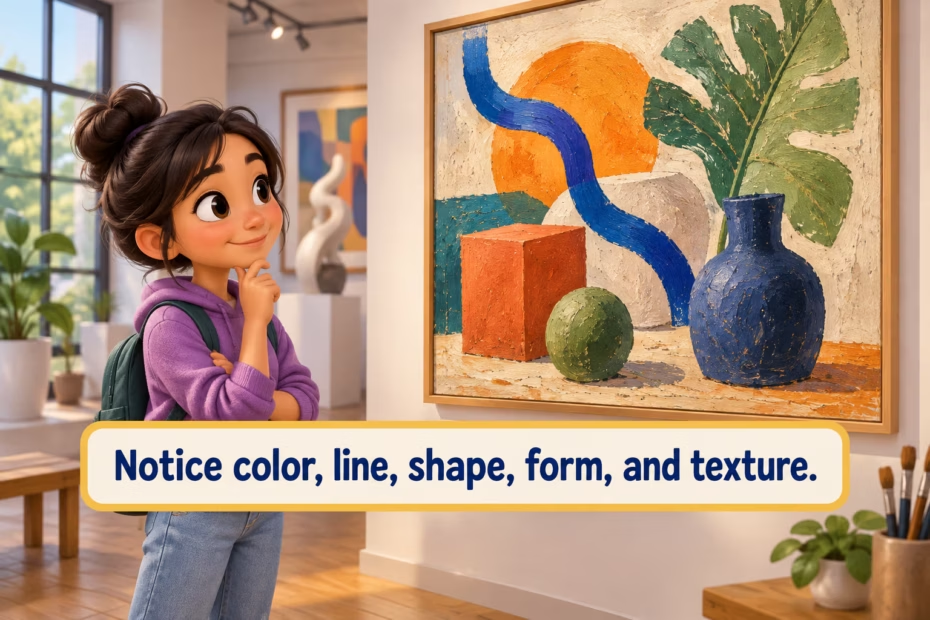
To describe art clearly, identify the medium and subject, then name visible choices in color, line, shape, form, texture, or composition. Words such as intricate can point to observable detail, while serene or captivating often report a viewer’s response. Treat terms such as fine art and masterpiece as a category or judgment, not interchangeable synonyms for art.
Quick guide
- Begin with the artwork’s subject and medium when known; then describe details a reader could locate in the image.
- Use angular for sharp-edged shapes, layered for overlapping forms, and intricate for abundant detail.
- Words such as serene, evocative, and captivating can express a viewer’s reaction; attribute or explain that response.
- Keep categories and evaluations distinct: visual art is a broad category, while masterpiece is a judgment of a work.
- Use a concrete detail to support critique instead of calling an artwork objectively good, bad, confusing, or timeless.

How Can You Describe Art Clearly?
Start with what the work is and what it shows: for example, “a charcoal drawing of two cups” or “a small bronze sculpture of a seated figure.” Name a medium only when you know it; otherwise describe the visible marks, material, or surface without guessing. The National Gallery of Art’s image-description guidance uses an overview and identifies medium, composition, details, style, and visual qualities as useful information.
Then notice visual elements. The National Gallery’s learning material groups color, line, shape, form, and texture as elements people can identify and analyze. These are practical starting points, not a required checklist for every artwork. The Gallery’s collection description guidance and drawing lesson also show how to focus on visible details and mark-making.
Which Adjectives Describe Visible Art Details?
Choose a word that points to a particular feature. Intricate suits a surface with many details; angular can describe sharp-edged lines or forms; muted can describe subdued colors; and layered can describe overlapping shapes. A precise noun helps readers know whether you mean color, texture, brushwork, a figure, or the arrangement of the whole composition.

| What you notice | Possible adjectives | Evidence-led example |
|---|---|---|
| Color | vibrant, muted, monochromatic | “Muted blue and gray tones cover most of the print.” |
| Line and mark-making | curving, angular, expressive | “Angular charcoal lines outline the roof and windows.” |
| Shape and form | geometric, rounded, elongated | “Rounded forms repeat across the ceramic bowl.” |
| Texture and detail | rough, smooth, intricate | “The painted surface has rough, layered brush marks.” |
| Arrangement | balanced, asymmetrical, crowded | “A large red shape balances several smaller forms.” |
| Viewer response | serene, thought-provoking, captivating | “I find the scene serene because its lines are soft and the water is still.” |
When Does an Art Adjective Express an Opinion?
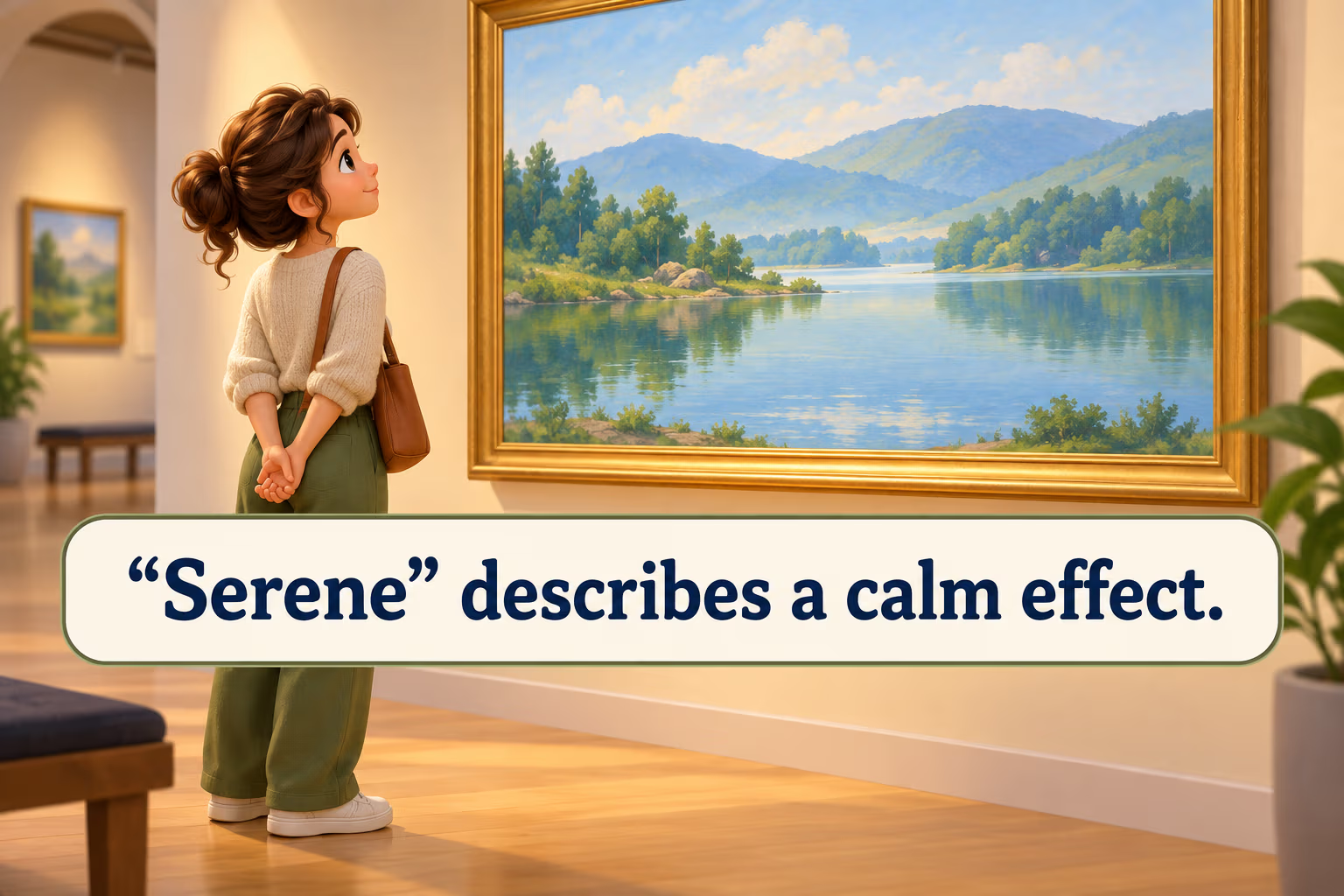
Some words mix observation and interpretation. Vibrant may point to vivid colors, while playful, evocative, dreamy, and thought-provoking usually describe an effect a viewer perceives. Serene means calm in the response being described; it does not prove that every visitor will feel calm. Attribute the reaction or show the visual details that led to it.
Compare “The print uses repeated diagonal lines and warm colors” with “The print feels energetic to me.” The first reports visible features; the second names one person’s response. Both can be useful. A claim such as “This is a masterpiece” is an evaluation; the Cambridge Dictionary defines a masterpiece as a work made with great skill, so explain the choices or skill you are praising rather than presenting the label as an objective measurement.
The source’s dynamic example describes a dance performance, where the dancers’ movement is visible. If you are describing a still image, specify what creates a sense of movement—for example, “sweeping diagonal lines make the composition feel dynamic.”
Are “Fine Art” and “Masterpiece” Synonyms for Art?
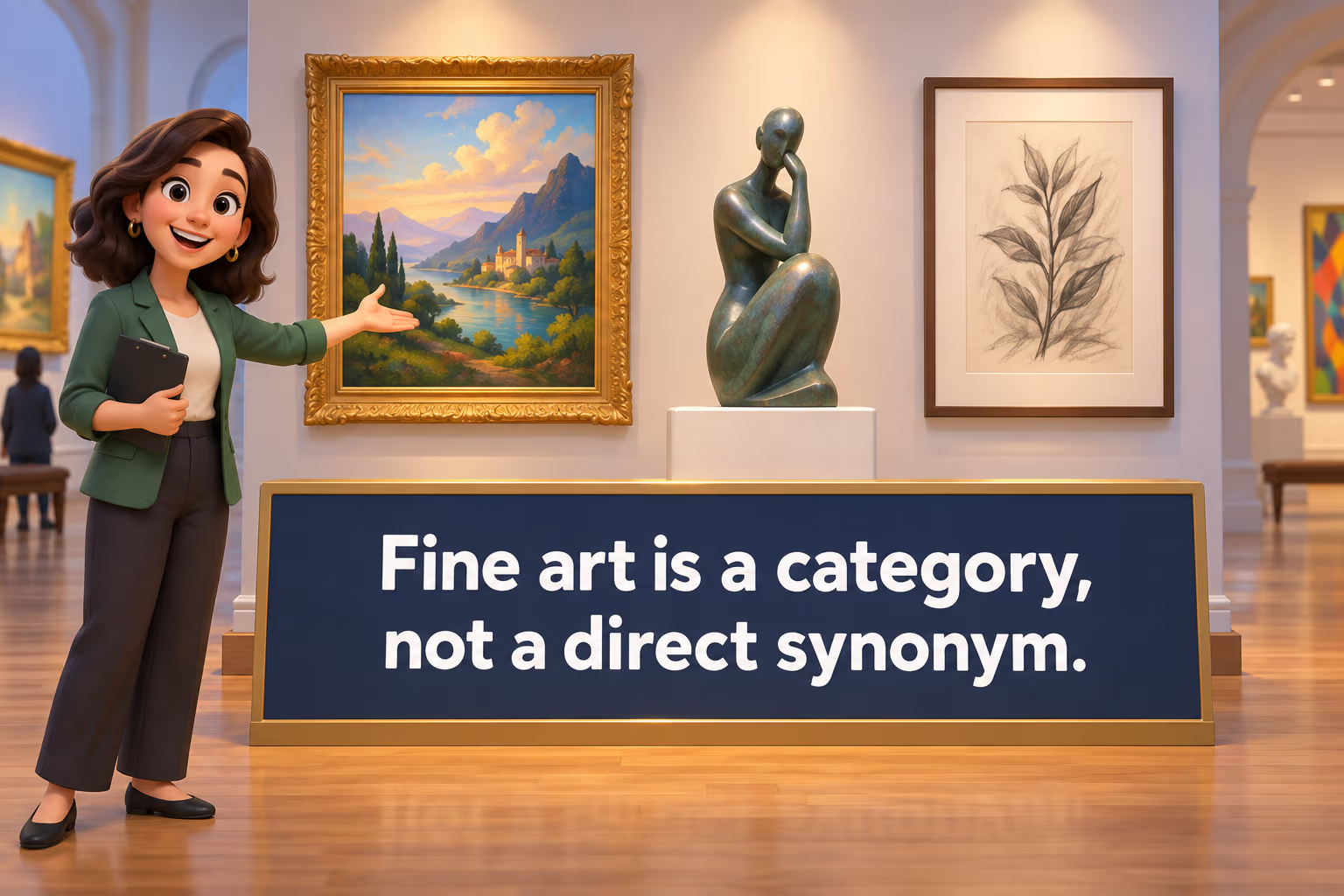
They are related terms, but they do not all substitute for the broad noun art. Visual art and fine art name categories or areas of practice. Masterpiece evaluates a particular work. Cambridge describes craft as a skill or activity that needs skill and experience, as well as something produced using those skills; it may overlap with art, but it has its own meanings. Creation is a broad noun, and work of genius is a strong evaluation.
The source’s “antonyms” table also groups judgments and qualities, rather than lexical opposites of art. Mediocrity, banality, stagnation, and sterility can criticize a work or describe a perceived state; they are not antonyms for the general noun. The entry for diligence reverses its meaning: Cambridge defines diligence as careful work done with effort, not an absence of skill or attention.
The source HTML is preserved exactly below, including the encoding artifact clich√©s. In corrected new prose, the standard spelling is clichés. The source’s “Synonyms and Antonyms” heading remains as written; the guide after it explains the word-class and meaning differences.
The complete original examples, lists, and tables follow unchanged. The added guide after that source block supplies examples, qualifications, and corrections without altering any original entry.
When it comes to appreciating art, words have the power to transport us to another world. As an art enthusiast, I’ve always found that the right adjectives can elevate my understanding and enjoyment of a piece. In this article, I’ll be sharing a curated list of adjectives that will help you describe art with precision and nuance. Whether you’re a seasoned art critic or a casual observer, these descriptive words will enrich your vocabulary and deepen your connection with the art world.
How to Describe art? – Different Scenarios
When it comes to describing art, there are different scenarios to consider. Whether you’re an art critic, a curator, or just someone who appreciates art, having the right words to describe what you see can enhance your understanding and enjoyment of the artwork. Here are some scenarios and adjectives to use when describing art:
1. Describing Artwork in a Museum or Gallery Setting
When you’re in a museum or gallery, it’s important to accurately describe the artwork you’re viewing. Here are some adjectives that can be used in this scenario:
| Adjectives | Examples |
|---|---|
| Majestic | The painting depicts a majestic mountain range. |
| Vibrant | The colors in this artwork are vibrant and lively. |
| Intricate | The sculpture’s design is incredibly intricate. |
| Serene | The landscape painting evokes a sense of serenity. |
| Expressive | The artist’s brushstrokes are bold and expressive. |
2. Describing Artwork in a Casual Conversation
When discussing art with friends or colleagues, you may want to use more relatable adjectives. Here are some examples:
- Striking: The artwork has a striking composition that catches your eye.
- Evocative: This piece of art is highly evocative, stirring up emotions.
- Playful: The artist’s use of colors and shapes gives the artwork a playful vibe.
- Thought-provoking: This sculpture sparks deep and thought-provoking conversations.
3. Describing Artwork for Educational Purposes
If you’re teaching art to children or students, it’s essential to use age-appropriate and engaging vocabulary. Here are some examples:
- Colorful: The artwork is filled with bright and colorful shapes.
- Silly: This painting has silly characters that make you laugh.
- Imaginative: The artist’s imagination is showcased in this artwork.
- Patterned: The artist used different patterns and repeated shapes.
Remember, no matter the scenario, using descriptive adjectives can bring artwork to life and deepen your connection with the art world.
Describing Words for art in English
When it comes to describing art, choosing the right words can make a big difference in how we understand and appreciate a piece. In this section, I’ll provide you with a variety of descriptive adjectives that can help bring art to life. Whether you’re discussing artwork with friends, teaching a class, or simply looking to enhance your own knowledge and connection with the art world, these adjectives will surely come in handy.
Here are some commonly used adjectives to describe art:
- Vibrant – Full of life and energy. Examples: “The painting was filled with vibrant colors that immediately caught my eye.”
- Expressive – Conveying strong emotions or thoughts. Examples: “The artist’s expressive brushstrokes added depth and meaning to the artwork.”
- Stunning – Extremely impressive or beautiful. Examples: “The sculpture took my breath away with its stunning craftsmanship and intricate details.”
- Captivating – Holding one’s attention and interest. Examples: “The art exhibition was filled with captivating pieces that left a lasting impression.”
- Dreamy – Having a quality of being ethereal or otherworldly. Examples: “The artist’s use of soft colors created a dreamy atmosphere in the painting.”
- Bold – Strong and confident in style or execution. Examples: “The mural showcased the artist’s bold brushwork and daring color choices.”
- Serene – Calm and peaceful. Examples: “The landscape painting portrayed a serene, tranquil setting.”
- Intriguing – Fascinating and mysterious. Examples: “The abstract artwork left me intrigued, trying to decipher its hidden meanings.”
- Timeless – Not affected by the passage of time. Examples: “The classical sculpture continues to be admired for its timeless beauty.”
- Dynamic – Full of energy and movement. Examples: “The dance performance was dynamic, with the dancers effortlessly flowing across the stage.”
Remember, using descriptive words can greatly enhance your understanding and appreciation of art. By incorporating these adjectives into your discussions and reflections on artwork, you’ll be able to convey your thoughts and emotions more effectively. So go ahead and explore the art world with these descriptive tools at your disposal.
Adjectives for art
As someone who has spent years immersed in the world of art, I understand the importance of being able to effectively describe and discuss artwork. It not only helps us appreciate the beauty and intricacies of a piece but also allows us to communicate our thoughts and emotions about it. In this section, I will provide you with a range of adjectives that can be used to describe art, whether you’re discussing it with friends, teaching a class, or simply deepening your own connection with the art world.
Positive Adjectives for Art
When it comes to describing art, there are a plethora of positive adjectives that can be used. These words not only convey our admiration for a piece but also shine a light on its unique qualities. Let me share with you 12 examples of positive adjectives that can bring an artwork to life:
| Adjective | Definition |
|---|---|
| Captivating | Fascinating and hold one’s attention |
| Vibrant | Energetic and full of life |
| Serene | Peaceful and calming |
| Exquisite | Extremely beautiful and delicate |
| Expressive | Full of emotion and meaning |
| Harmonious | Balanced and pleasing to the eye |
| Intricate | Highly detailed and complex |
| Majestic | Grand and awe-inspiring |
| Enchanting | Delightfully charming and spellbinding |
| Evocative | Provoking strong emotions and memories |
| Whimsical | Playful and imaginative |
| Timeless | Classic and never goes out of style |
These adjectives not only help us appreciate art but also give us a way to communicate our thoughts and feelings about a piece. Whether it’s the captivating nature of a painting or the exquisite details of a sculpture, these adjectives allow us to delve deeper into our understanding and connection with art.
Negative Adjectives for Art
While we typically associate art with beauty and positivity, there are also instances where negative adjectives can be used to describe artwork. These words indicate elements that might not be as pleasing or appealing. Here are 5 examples of negative adjectives that can be used to describe art:
| Adjective | Definition |
|---|---|
| Dull | Lacking in interest or excitement |
| Chaotic | Confusing and disorganized |
| Repetitive | Lack of variation or originality |
| Clumsy | Awkward and unrefined |
| Confusing | Difficult to understand or make sense of |
Although we might prefer to focus on the positive aspects of art, using negative adjectives can provide valuable insights and critique. These words allow us to objectively evaluate and analyze art, helping us understand its strengths and weaknesses.
As we discussed the positive and negative adjectives for art, I hope you found them useful in enhancing your understanding and appreciation of artwork. These adjectives provide a powerful tool for communicating our thoughts and emotions about art, whether it’s expressing our admiration or offering constructive criticism. So the next time you encounter a beautiful masterpiece or a thought-provoking artwork, remember to use these adjectives to fully capture their essence.
Synonyms and Antonyms with Example Sentences
Synonyms for Art
As an art enthusiast, it’s always helpful to have a variety of words to describe and appreciate different artworks. Here are some synonyms for the word “art” that you can use to enhance your vocabulary:
| Synonym | Definition |
|---|---|
| Fine art | Expressive and skillful creations that evoke emotions and thoughts |
| Visual art | Creative works primarily appealing to the sense of sight |
| Masterpiece | An outstanding and highly accomplished piece of art |
| Craft | Skillful creation of objects by hand, often with functional and decorative purposes |
| Creation | The act of bringing something into existence, often through artistic expression |
| Work of genius | An exceptionally brilliant and creative creation |
Utilizing these synonyms for art will not only diversify your language but also allow you to express a more nuanced understanding and appreciation of artworks when discussing them with others or reflecting on them personally.
Antonyms for Art
While synonyms allow us to describe art in a positive light, exploring antonyms also plays a valuable role in understanding and critiquing artworks. Here are some antonyms for the word “art” that can help provide contrasting perspectives:
| Antonym | Definition |
|---|---|
| Mediocrity | The state of being average or lacking exceptional qualities |
| Diligence | The absence of skill, effort, or attention to detail in artistic creation |
| Banality | Art lacking originality or freshness, often characterized by clichés or triteness |
| Stagnation | Lack of growth or progress in artistic development |
| Sterility | The absence of artistic vitality or creativity |
These antonyms can be useful when providing constructive critique or when analyzing artworks that may fall short of expectations.
By utilizing both synonyms and antonyms, we can enhance our understanding and ability to describe art in a more comprehensive and nuanced way. These words provide a broader range of vocabulary to effectively communicate our thoughts and emotions towards various artworks.
Keep exploring and practicing with these adjectives, and you’ll find yourself deepening your connection to the art world and expressing your artistic experiences more powerfully.
Conclusion
In this article, I have explored the importance of using adjectives to describe art and provided a list of synonyms and antonyms that can be used to enhance one’s vocabulary in the art world. By utilizing a variety of descriptive words, such as “fine art,” “visual art,” and “masterpiece,” we can paint a more vivid picture of different artworks and deepen our understanding of their unique qualities.
Additionally, I have emphasized the significance of incorporating both synonyms and antonyms when describing art. By using antonyms like “mediocrity” and “banality,” we can effectively contrast and highlight the exceptional aspects of a particular artwork. This approach allows us to communicate our thoughts and emotions towards art in a more nuanced and comprehensive manner.
By exploring and practicing with these adjectives, we can develop a stronger connection to the art world and express our artistic experiences more powerfully. So, whether you’re an artist, an art enthusiast, or simply someone who appreciates the beauty of art, expanding your vocabulary with these descriptive words will undoubtedly enhance your ability to articulate your thoughts and feelings about different artworks.
How Can You Turn a General Adjective Into a Useful Description?
Keep the adjective, but connect it to evidence. Instead of leaving beautiful or chaotic unsupported, name the color, line, form, or arrangement you mean. A description may also distinguish what is visible from what you infer or feel.
| Word | How to make its meaning clear | Example |
|---|---|---|
| Intricate | Point to dense detail or a complex arrangement. | “Intricate curls and dots cover the rim of the bowl.” |
| Harmonious | Describe parts that seem balanced or coherent; whether they are pleasing is a judgment. | “The repeated greens and curved forms make the arrangement feel harmonious to me.” |
| Repetitive | Use the adjective for repeated elements or limited variation, and name what repeats. | “The same small square appears in every panel, making the pattern repetitive.” |
| Timeless | Signal an evaluation about lasting appeal; it is not a fact guaranteed for all viewers. | “I find the simple silhouette timeless, though tastes can change.” |
| Dull or confusing | Attribute the response and explain which feature contributed to it. | “I found the layout confusing because the labels overlap the images.” |
| Dynamic | For a still work, describe the features that suggest motion or energy. | “Curved brushstrokes and diagonal forms give the painting a dynamic feel.” |
Which Source Definitions Need a Usage Note?
- Captivating: the source definition “Fascinating and hold one’s attention” has a grammar mismatch. A clear paraphrase is “fascinating and able to hold someone’s attention.”
- Repetitive: define the adjective as “showing repetition or little variation,” rather than the noun phrase “lack of variation.” The word does not automatically prove that a work lacks originality.
- Harmonious: balanced or coherent relationships among elements may seem harmonious; “pleasing to the eye” is one possible response, not the only definition.
- Timeless: this is an evaluation of lasting relevance or appeal. Continued admiration can support that description, but it does not establish that every viewer will admire the work.
- Dynamic: the original example is about dancers moving onstage. For a static picture, name visual features that create an impression of energy or movement.
What Are Better Alternatives to Calling Art “Good” or “Bad”?
Use a specific observation and, if relevant, identify the response as your own. For example: “The crowded composition places six figures close together, which I find tense.” This separates the count and arrangement from the viewer’s interpretation. A useful critique can be direct without claiming that a subjective reaction is an objective fact.
“Negative adjective” does not mean “objective adjective.” Words like clumsy, confusing, and dull can be apt criticism, but explain what feels awkward, difficult to follow, or uninteresting to you. “The repeated lines make the left side feel crowded” gives a reader more to evaluate than “the artwork is bad.”
For a broader A–Z vocabulary, see the related guide to art words that start with A to Z. For art-description principles, consult the National Gallery of Art’s guidance on the elements of art, describing a collection image, and drawing and mark-making; the definitions of masterpiece, craft, and diligence are linked to Cambridge Dictionary.
Frequently Asked Questions About Adjectives for Art
What are good adjectives to describe art?
Choose words that match a visible feature or clearly state a response. Angular can describe sharp-edged forms, intricate can describe abundant detail, and muted can describe subdued colors. Words such as serene or captivating express an effect; explain what you see or attribute the feeling to a viewer.
What does intricate mean when describing art?
Intricate means highly detailed or complex in arrangement. When you use it for a drawing, sculpture, or pattern, point to the lines, shapes, marks, or repeated elements that make it detailed. This helps readers picture the feature instead of treating intricate as a general compliment.
Does serene describe an artwork or a viewer’s response?
Serene describes a calm effect, so it can express how a viewer experiences a work or scene. Readers may respond differently to the same image. You can write “I find the landscape serene” and then cite details such as still water, soft colors, or open space.
Is fine art a synonym for art?
Fine art names a category or area of artistic practice, so it does not replace every broad use of art. Visual art is also a category, while masterpiece praises or evaluates a particular work. Craft has related but distinct meanings involving skill, activity, or an object made with skill.
What are the antonyms of art?
There is no simple antonym for the broad noun art in the source’s list. Words such as mediocrity and banality are negative judgments, and stagnation describes lack of progress. Diligence is not negative: it means careful work done with effort.


