Choose a descriptor for the thing you mean: Australia, Australian people or connections, a named region, a landscape, a climate, or a particular experience. The word Australia may refer to the country or the continent of the same name; this guide uses the country context and discusses its regions. Australian can describe something coming from or relating to Australia, or be a noun for a person from Australia.
Cambridge’s Learner’s Dictionary entry for Australia gives the country and continent uses. Its Australian entry lists an adjective meaning “coming from or relating to Australia” and a noun for a person from Australia; the grammar guide also shows the forms Australia / Australian / an Australian. Use capitals for both proper names and national adjectives.

Name the region or landscape
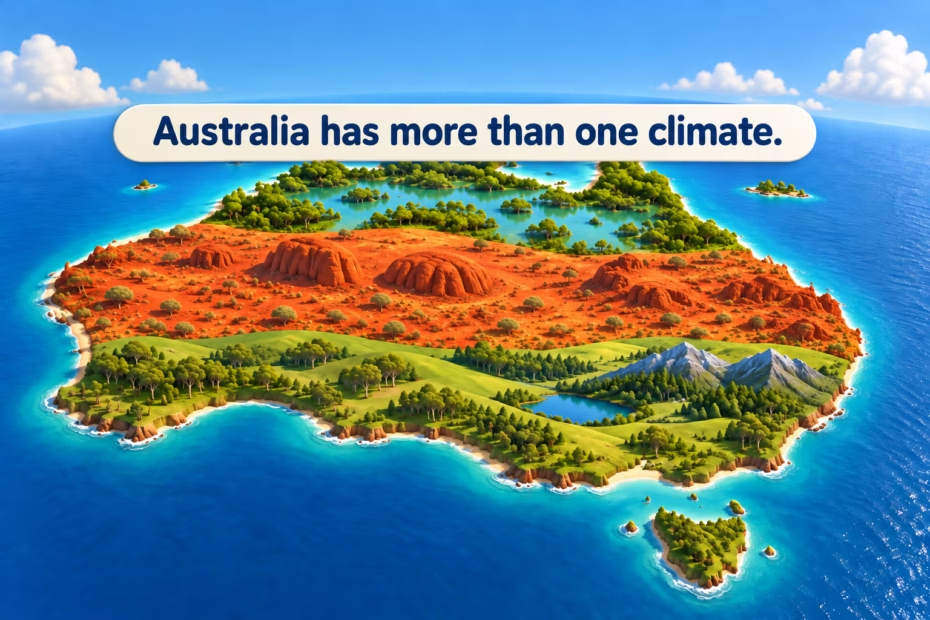
Australia has several climate regions rather than one uniform climate. The Bureau of Meteorology describes tropical areas in the north, subtropical areas across much of the centre, and temperate zones in the south; much of the interior is desert, with other regional variation. For simple classroom examples, write a tropical wetland in Kakadu, an arid interior, a subtropical city such as Brisbane, or a temperate city such as Hobart. These point to particular places or conditions; they do not describe every part of Australia. See the Bureau’s Australian climate zones guide.
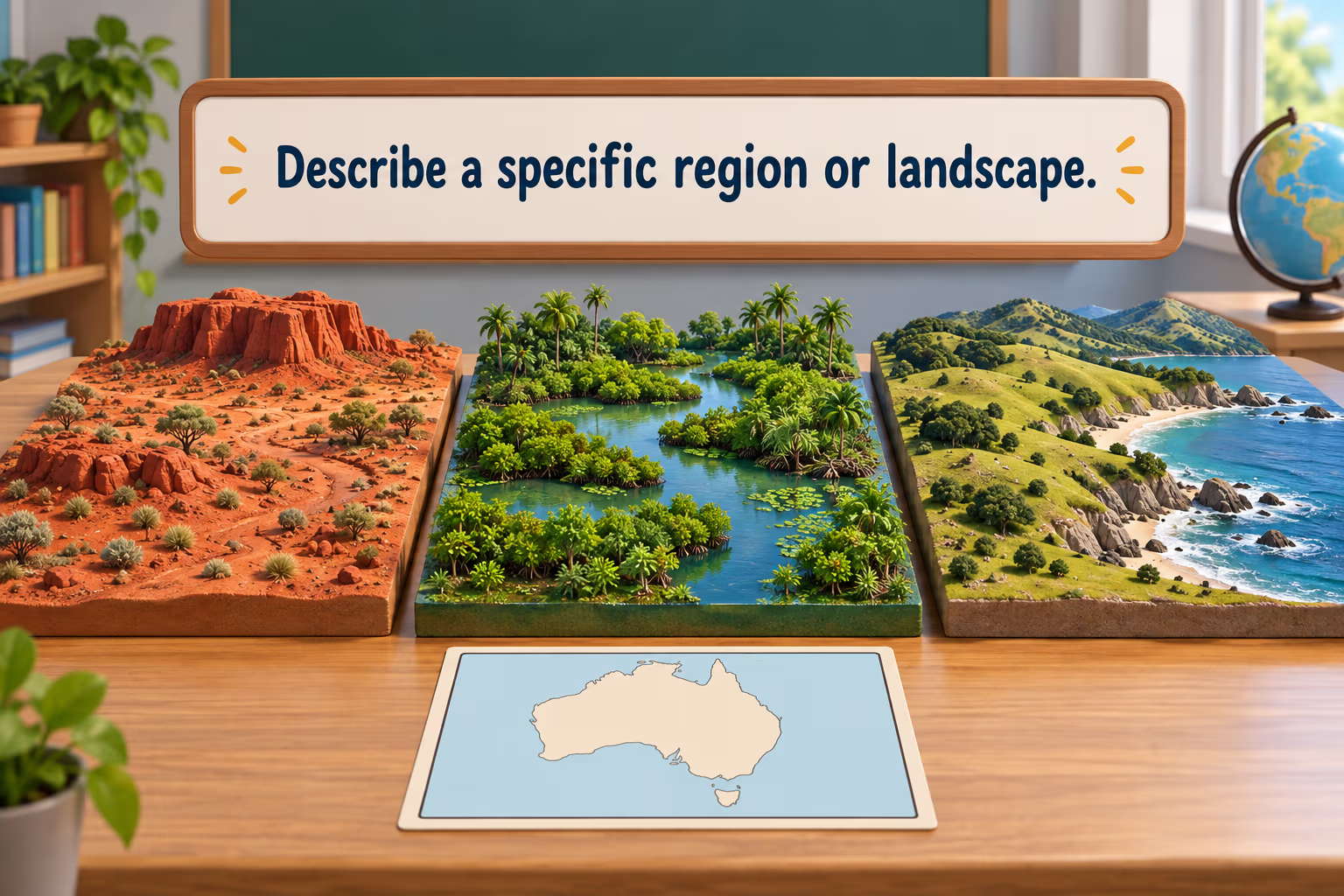
Scorching may describe a specific hot day or inland place in summer, but it is not a summary of the national climate: Some inland areas can be scorching in summer. Likewise, coastal, urban, crowded, or remote fits only a named place or situation when evidence supports it. The Outback is a broad term, so avoid calling it “untouched” or “far from civilization” as a blanket description; name the location and explain the particular condition you mean. The source examples below remain intact, while this guide narrows those claims to a place and context.
Use Australian as a word, not a personality label
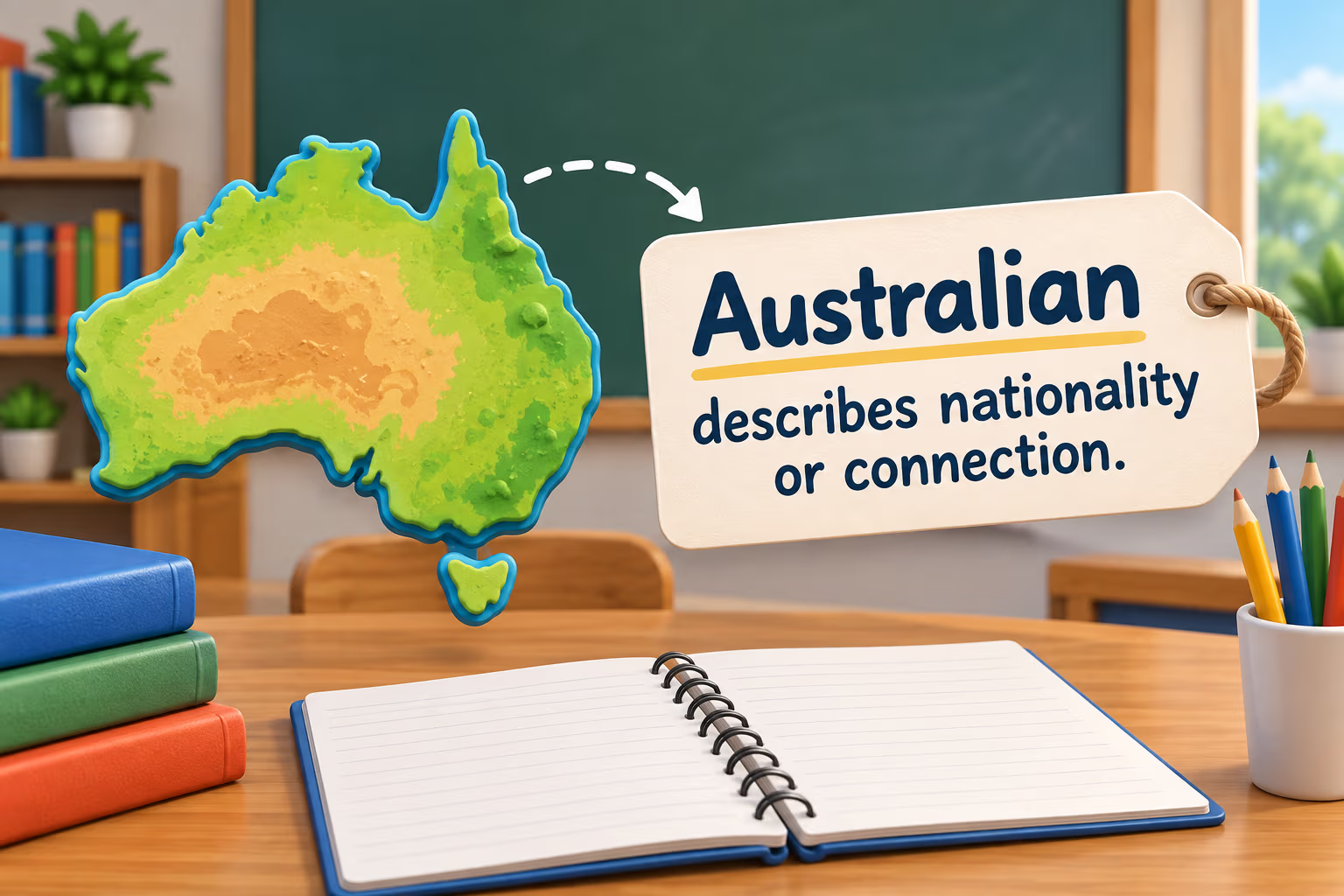
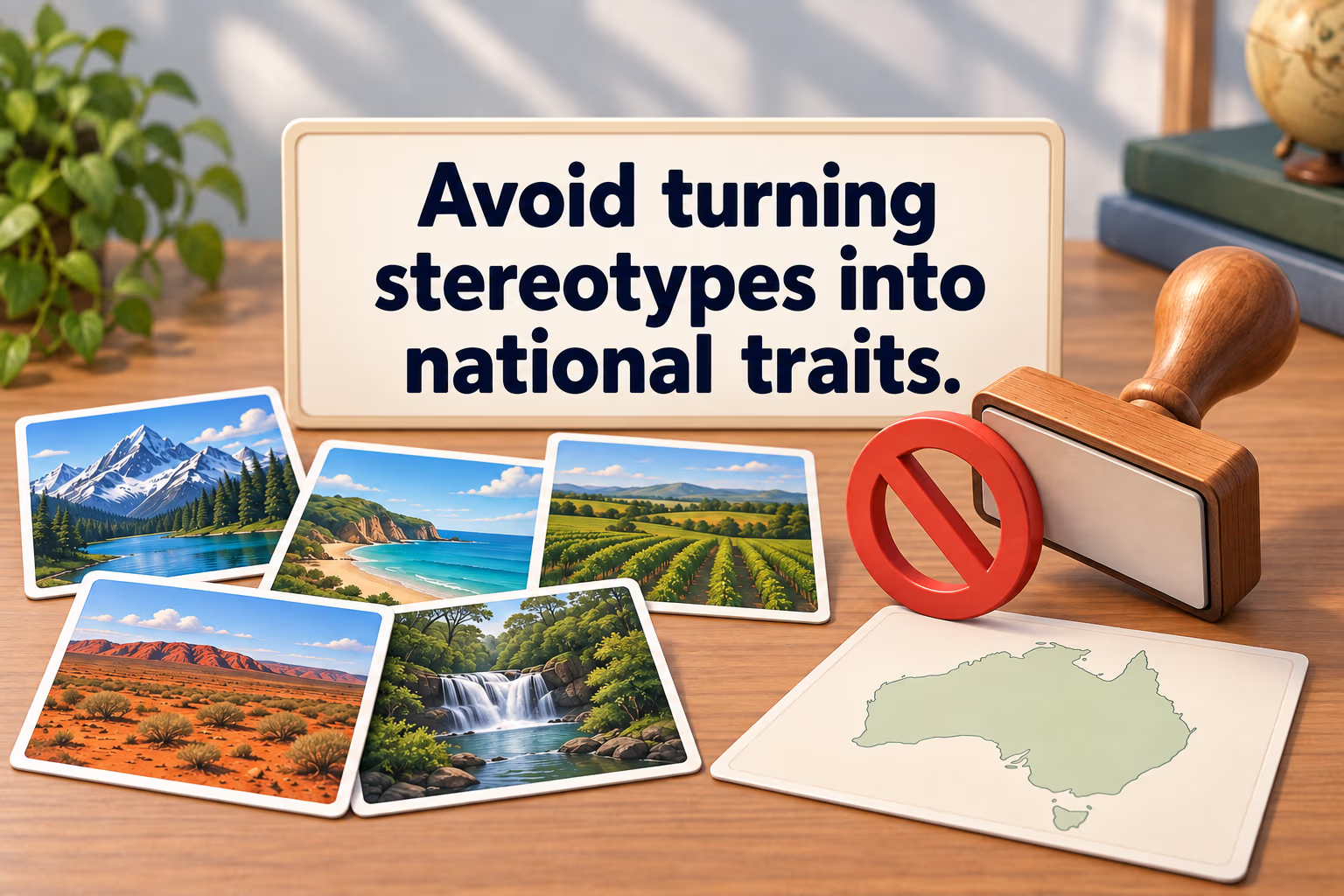
Australian can describe nationality or a connection: an Australian city, Australian weather data, or an Australian writer. It can also be a noun for a person. It does not mean “friendly,” “adventurous,” or any other personality trait. The source calls Australians universally warm and welcoming; that is a generalization, so describe a specific person’s words or a particular welcome instead of assigning one trait to everyone.
Use adjectives such as vibrant, serene, or diverse for a named place, event, or experience when the context supports them. For people or communities, use self-chosen terms or attribute a sourced description. For wildlife, name a species or state a sourced comparison instead of calling the country’s wildlife “unparalleled” as a whole.
Australia includes many distinct Aboriginal and Torres Strait Islander peoples and communities, not one culture or set of practices. AIATSIS explains that these groups have their own cultures, languages, beliefs, and practices. Use the terms communities use for themselves, and ask specific people their preference when referring to them. Avoid turning an individual encounter, visitor impression, or cultural practice into a claim about all Australians. Read AIATSIS’s First Peoples of Australia guidance for context and terminology.
Describe features; reserve synonyms and antonyms for words
The original section titled “Synonyms for Australia” groups words such as scorching, isolated, unpredictable, crowded, and expensive. These describe possible features, conditions, or experiences in particular places; they are not synonyms that can replace the country name. Its “Antonyms for Australia” group (cold, urban, predictable, spacious, affordable) gives contextual contrasts on several different scales, not antonyms of a country. For clear comparisons, name the attribute and place: a crowded event versus a quiet one, or an expensive stay versus an affordable option.
The source text, headings, all 42 list items, and all 15 table rows follow below unchanged. The notes above explain how to use the examples without presenting regional conditions or cultural generalizations as universal national traits.
Australia, a land of breathtaking landscapes, unique wildlife, and vibrant cities. As an avid traveler and language enthusiast, I have always been captivated by the diverse beauty of this incredible country. In this article, I’ll be sharing a collection of adjectives that perfectly capture the essence of Australia, allowing you to paint a vivid picture with your words. Whether you’re writing a travel blog, creating content for a brochure, or simply want to expand your vocabulary, these descriptive words will help you convey the magic and allure of Australia in all its glory. From the vast expanses of the rugged Outback to the stunning coastal wonders, Australia is a land of contrasts. One adjective that comes to mind is “breathtaking.” Imagine standing on the edge of the Great Barrier Reef, gazing at the kaleidoscope of colors beneath the crystal-clear waters. Or hiking through the ancient rainforests of Daintree, surrounded by towering trees and exotic wildlife. These experiences truly leave you breathless and in awe of Australia’s natural wonders. So, join me on this linguistic journey as we explore the adjectives that bring Australia to life.How to Describe australia? – Different Scenarios
Australia is a country that offers a diverse range of experiences, from stunning landscapes to vibrant cities. Let’s explore some different scenarios and discover the perfect adjectives to describe Australia in each situation.1. Exploring the Outback
When venturing into the vast Australian Outback, one can’t help but be awestruck by its immense beauty and ruggedness. Here are some adjectives to describe this unique landscape:- Vast: Endless stretches of land that seem to go on forever.
- Untamed: Untouched and wild, with raw natural beauty.
- Harsh: Extreme conditions, with scorching temperatures and arid environments.
- Breathtaking: Awe-inspiring, leaving you speechless at its grandeur.
- Remote: Secluded and far from civilization, offering a sense of solitude.
2. Enjoying the Beaches
Australia is famous for its stunning beaches, where crystal-clear waters meet golden sands. Here are some adjectives to describe the beach experience in Australia:- Idyllic: Picture-perfect, like a scene from a postcard.
- Sun-drenched: Bathed in sunlight, perfect for sunbathing and swimming.
- Serene: Calm and peaceful, providing a sense of tranquility.
- Invigorating: Energizing and refreshing, with the invigorating sea breeze.
- Paradisiacal: Like a little piece of paradise on Earth.
3. Exploring the City Life
Australian cities offer a dynamic and vibrant urban experience. Here are some adjectives to describe the city life in Australia:- Cosmopolitan: A melting pot of cultures and influences from around the world.
- Thriving: Full of energy and bustling with activity.
- Modern: With sleek architecture and cutting-edge infrastructure.
- Lively: Vibrant and full of excitement, with a vibrant nightlife.
- Multicultural: A diverse blend of cultures, reflected in its food, festivals, and people.
4. Discovering Unique Wildlife
| Adjective | Definition |
|---|---|
| Cute | Adorable and endearing, capturing hearts with their charm. |
| Adaptive | Successfully adjusting to various environments and conditions |
Describing Words for australia in English
Australia’s landscapes are nothing short of captivating. From the vast and rugged Outback to the stunning beaches that stretch for miles, every corner of this country is a sight to behold. The natural beauty of Australia will leave you mesmerized and in awe of its grandeur.1. Vibrant
The cities of Australia are vibrant and full of life. Whether you find yourself exploring Sydney, Melbourne, or Brisbane, you’ll be immersed in a rich tapestry of culture, art, and entertainment. The bustling streets, vibrant markets, and lively festivals make Australia’s cities a hub of excitement and diversity.2. Diverse
Australia is a land of incredible diversity. Not only does it boast a diverse population with people from all around the world, but it is also home to a wide range of unique wildlife. From kangaroos and koalas to the mesmerizing Great Barrier Reef, the diversity of Australia’s flora and fauna is unparalleled.3. Welcoming
Australians are known for their warm and welcoming nature. The friendly locals will make you feel right at home, whether you’re exploring the bustling city streets or venturing into the peaceful countryside. The welcoming spirit of Australia will leave a lasting impression on you.4. Adventurous
If you’re seeking adventure, Australia has it all. From surfing on the breathtaking beaches to snorkeling in the crystal-clear waters of the Great Barrier Reef, there are endless opportunities for adrenaline-pumping activities. The adventurous spirit of Australia will keep you engaged and wanting more.5. Serene
Australia also offers moments of serenity and tranquility. Its vast landscapes provide ample opportunities for peaceful walks, hikes, and explorations. Whether you find yourself gazing at the starry night sky in the Outback or enjoying a serene sunset on one of Australia’s picturesque beaches, you’ll find solace in the peacefulness that this country has to offer. So, whether you’re captivated by its landscapes, immersing yourself in its vibrant cities, or seeking adventure and serenity, Australia has something for everyone. It’s a country that truly embodies diversity and leaves a lasting impression on all who visit.Adjectives for australia
Australia is a captivating country with a wealth of unique experiences to offer. Let’s take a closer look at some adjectives that can be used to describe this remarkable destination.Positive Adjectives for Australia with Example Sentences
- Breathtaking: The stunning beaches of Australia take my breath away.
- Magnificent: The Great Barrier Reef is a truly magnificent sight to behold.
- Vibrant: Melbourne’s street art scene adds a vibrant touch to the city’s atmosphere.
- Picturesque: The Blue Mountains offer picturesque views that are postcard-worthy.
- Enchanting: The lush rainforests of Tasmania are truly enchanting.
- Exhilarating: Surfing along Australia’s famous coastlines is an exhilarating experience.
- Cosmopolitan: Sydney’s cosmopolitan vibe is reflected in its diverse food scene.
- Charming: The charming small towns of Australia offer a welcoming atmosphere.
- Adventurous: Exploring the Outback is an adventurous journey into the heart of Australia.
- Idyllic: The idyllic islands of the Whitsundays are a tropical paradise.
- Captivating: The unique wildlife of Australia is truly captivating.
- Welcoming: Australians are known for their warm and welcoming nature.
- Scorching: The outback can be scorching hot during the summer months.
- Isolated: Some parts of Australia can feel isolated due to their remote location.
- Unpredictable: The weather in Australia can be unpredictable at times.
- Crowded: Popular tourist spots in Australia can get crowded during peak seasons.
- Expensive: Traveling in Australia can be expensive, especially in major cities.
Synonyms and Antonyms with Example Sentences
Synonyms for Australia
When it comes to finding the right words to describe Australia, there is a wide range of synonyms that can beautifully capture its essence. Here are some synonyms that perfectly convey the unique qualities of this captivating country:- Scorching: Australia is known for its scorching summers, with temperatures reaching soaring heights.
- Isolated: Australia’s vast landscape is filled with isolated areas, making it an ideal destination for those seeking solitude and tranquility.
- Unpredictable: Australia’s weather can be quite unpredictable, from sudden rain showers to scorching heatwaves, ensuring that each day brings something new.
- Crowded: While Australia is known for its vast open spaces, some cities and tourist destinations can get quite crowded, especially during peak seasons.
- Expensive: Australia is often associated with a higher cost of living, and it’s important to be prepared for the higher prices of goods and services.
Antonyms for Australia
Antonyms are words that have opposite meanings. They can help us understand Australia by contrasting its characteristics with words that have contrasting qualities. Here are some antonyms that offer a different perspective on Australia:- Cold: While Australia is known for its warm climate, it also has regions that experience colder temperatures, especially during the winter months.
- Urban: While Australia boasts vibrant cities, it also offers plenty of opportunities to explore the natural wonders and escape the hustle and bustle of the urban lifestyle.
- Predictable: While Australia’s weather can be unpredictable in some areas, there are also regions with more stable and predictable climate patterns.
- Spacious: Australia has both densely populated areas and vast open spaces, offering a balance between bustling city life and serene natural landscapes.
- Affordable: While Australia may be seen as an expensive destination, there are also plenty of affordable options for accommodation, food, and activities.
| Adjective | Example Sentence |
|---|---|
| Scorching | It’s a scorching day in Australia, so make sure to stay hydrated. |
| Isolated | The small town in the Outback felt isolated from the rest of the world. |
| Unpredictable | The weather in Melbourne can be quite unpredictable, so always carry an umbrella. |
| Crowded | The beach was crowded with families enjoying the sunny weather. |
| Expensive | Dining out in Sydney can be expensive, but there are also budget-friendly options available. |
| Adjective | Example Sentence |
|---|---|
| Cold | Bring warm clothes if you’re visiting the snowy mountains in Australia. |
| Urban | Melbourne offers a vibrant urban lifestyle with its bustling cafes and cultural events. |
| Predictable | The weather in Perth is more predictable, with hot summers and mild winters. |
| Spacious | The national park provides spacious camping grounds for those seeking solitude. |
| Affordable | There are many affordable accommodation options for backpackers traveling around Australia. |


