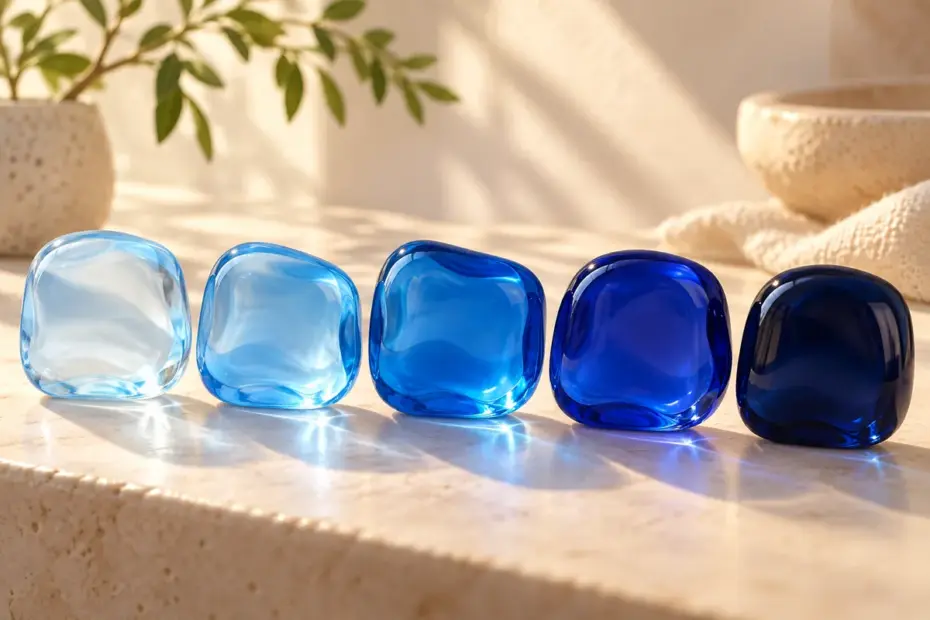
Adjectives for Blue: Shade Words and Examples
Adjectives for blue describe its lightness, depth, intensity, and undertone. “Pale” and “deep” show value, while “cerulean” suggests a sky-like blue and “navy” a very dark one. Because shade names are approximate rather than exact color codes, pair a precise term with an example or visual reference when accuracy matters.
Key facts at a glance
- Lightness words include pale, powder, sky-blue, and icy.
- Depth words include navy, deep, inky, and midnight blue.
- Teal leans greener, while indigo suggests a blue-violet shade.
- Descriptive color names are useful, but they are not exact color specifications.
Which adjectives describe blue?
Choose a word for the blue shade’s most noticeable quality. Color terms overlap in everyday use, so treat these categories as writing guides rather than fixed technical standards.
| Quality | Adjectives | Example phrase |
|---|---|---|
| Lightness | pale, powder, sky-blue, icy | a pale blue curtain |
| Depth | navy, deep, midnight, inky | a deep blue evening sky |
| Intensity | bright, vivid, electric, muted | a vivid blue sign |
| Named shade or undertone | cerulean, azure, cobalt, indigo, teal | a cerulean lake; a teal scarf |
How do shade names differ?
Merriam-Webster describes cerulean as resembling sky blue and notes azure as a clear-sky blue. Cambridge Dictionary defines navy blue as very dark blue. These distinctions are useful in prose, but shade boundaries vary among speakers and references.
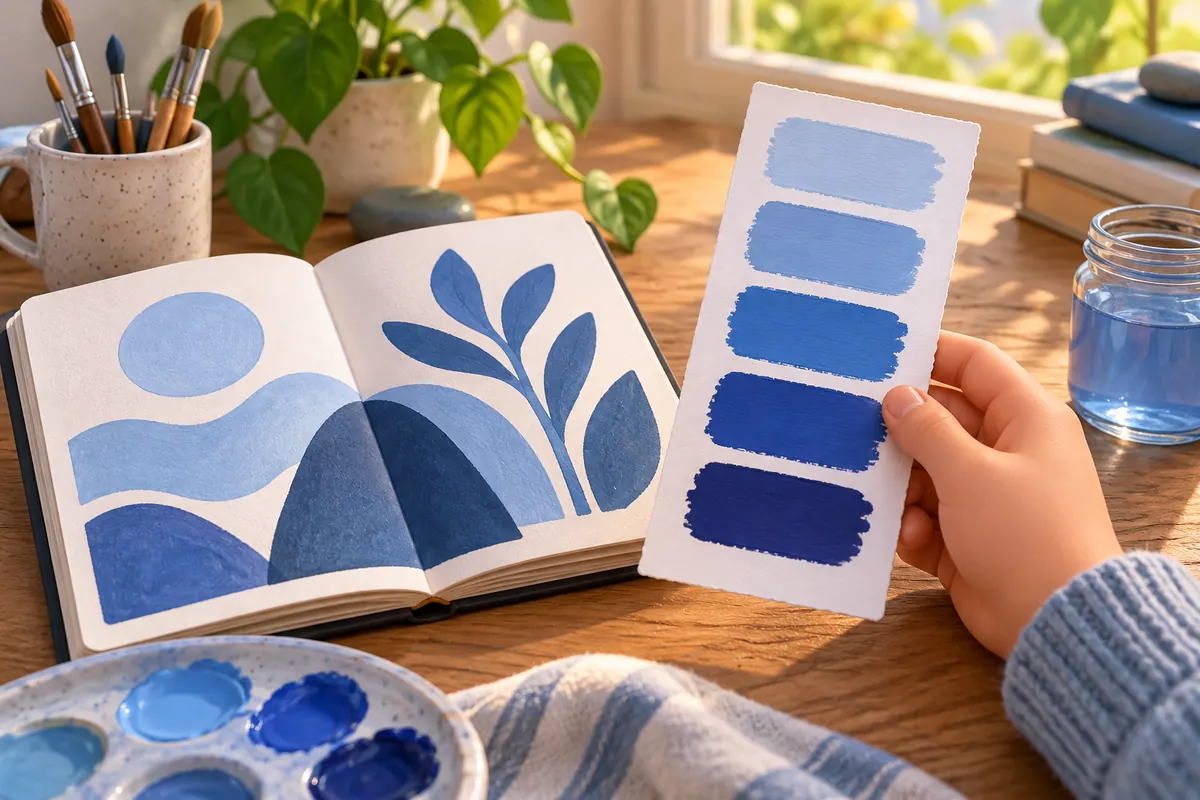
Adjectives for blue in original sentences
- A pale blue ribbon fluttered above the gift box.
- The deep navy door stood out against the white wall.
- Bright cobalt tiles reflected light across the kitchen.
- A muted blue blanket softened the room’s warm colors.
- The artist painted an azure streak across the evening sky.
How can you pick the right blue adjective?
- Decide what matters most. Use pale or deep for lightness, vivid or muted for intensity, and teal or indigo for a noticeable undertone.
- Match the scene. “Icy blue” creates a cool impression; “electric blue” suggests a vivid, high-energy shade.
- Check whether precision matters. For paint, print, or digital design, pair a descriptive name with a sample or color code.

Use mood words as impressions, not shade names
Words such as calm, soothing, or melancholy can describe an effect that blue has on a reader, but they do not tell the reader which shade is present. Combine mood with a concrete color description—“a calm, powder-blue morning”—when both appearance and atmosphere matter.
Blue, the color of the sky and the ocean, is often associated with feelings of calmness, serenity, and tranquility. It’s a color that has captivated artists, designers, and poets for centuries. In this article, I’ll be exploring a variety of adjectives that can be used to describe the color blue, along with examples to help you visualize and understand the different shades and nuances of this beautiful hue.
From the deep and mysterious navy blue to the vibrant and energetic electric blue, there are countless adjectives that can be used to bring the color blue to life. Whether you’re looking for words to describe a stunning blue sky or trying to find the perfect adjective to enhance your writing, this article will provide you with a comprehensive list of descriptive words that will help you paint a vivid picture with your words.
How to Describe blue? – Different Scenarios
When it comes to describing blue, there are various scenarios and shades that can be used to create a vivid picture with words. Here are some different scenarios in which blue can be described, along with examples:
1. Sky Blue
- The sky looks serene and vast in its beautiful blue hue.
- The clouds gracefully float in the clear, baby blue sky.
- The gentle breeze brushes against my face as I gaze at the tranquil, powder blue sky above.
2. Navy Blue
- The midnight ocean shines with a deep, mysterious navy blue color.
- The velvet curtains in the theater exude an air of elegance with their rich, royal blue shade.
- His eyes, as deep as the ocean, were the color of inky, navy blue.
3. Electric Blue
- The neon sign buzzed with vibrant, electric blue light, catching everyone’s attention.
- Her dress, a stunning shade of energetic, electric blue, stood out in the crowd.
- The disco ball reflected beams of dazzling, electric blue across the dance floor.
4. Ice Blue
- The winter morning is embraced by a calmness that matches the icy, pale blue sky.
- The delicate snowflakes fall silently, covering the ground in a blanket of glistening, ice blue.
- The frozen lake sparkles in the sunlight, its surface a mesmerizing shade of crystalline, ice blue.
- The tropical waters shimmered with a bright, captivating teal blue that beckoned me to dive in.
- The peacock’s feathers displayed an exquisite pattern of iridescent, teal blue.
- The living room was adorned with throw pillows in a beautiful shade of elegant, teal blue.
By using these descriptive adjectives, you can paint a vivid picture of different shades of blue in various scenarios. This will not only enhance your writing, but also engage your readers, allowing them to visualize and connect with the imagery you create.
Remember, the key to effective writing is to choose the right words that convey the desired emotions and sensations. So, go ahead, and let your creativity flow as you describe the mesmerizing world of blue.
Describing Words for blue in English
When it comes to describing the color blue, there are a wide variety of words that can help bring this beautiful hue to life. From the lightness of the sky to the depth of the ocean, blue is a color that evokes calmness, tranquility, and even a sense of mystery. Here are some descriptive adjectives to help you capture the essence of blue:
- Sky Blue – This shade of blue is often associated with calm and serenity. It brings to mind a clear, sunny day with a cloudless sky. Examples include:
- Navy Blue – A darker shade of blue that is often associated with sophistication and elegance. It brings to mind images of a dark night sky or a well-tailored suit. Examples include:
- Electric Blue – This vibrant shade of blue is energetic and eye-catching. It brings to mind the glow of neon lights or a bolt of lightning in the sky. Examples include:
- Ice Blue – A cool and icy shade of blue that is reminiscent of frozen water or a frosty winter morning. It brings to mind a sense of purity and calmness. Examples include:
- Teal Blue – This unique shade of blue is a combination of blue and green, creating a refreshing and tranquil hue. It brings to mind images of tropical waters or a calm oasis. Examples include:
By using these descriptive adjectives, you can paint a vivid picture with words and engage your readers. Whether you’re writing a story, describing a scene, or simply trying to capture the beauty of the color blue, incorporating these words will help enhance your writing and bring your descriptions to life.
Adjectives for blue
Positive Adjectives for Blue with 12 Example Sentences
When it comes to describing the color blue, there are numerous positive adjectives that can help bring your writing to life. Here are twelve examples to get you started:
- Calm: The serene blue sky created a calm and peaceful atmosphere.
- Refreshing: The crisp, blue water was incredibly refreshing on a hot summer day.
- Tranquil: I found solace in the tranquil, blue ocean waves.
- Serene: The view of the majestic mountains against the clear, blue sky was simply serene.
- Vibrant: The vibrant blue flowers added a pop of color to the garden.
- Soothing: The soft, blue walls of the nursery created a soothing environment for the baby.
- Elegant: She looked stunning in her elegant, navy blue dress.
- Harmonious: The blue and green hues of the landscape blended together in a harmonious way.
- Invigorating: The crisp, blue morning air filled me with an invigorating energy.
- Peaceful: The sound of the gentle, blue waterfall brought a sense of peace to my mind.
- Euphoric: I felt euphoric as I sailed on the vast, blue ocean.
- Majestic: The blue, cloudless sky made the mountains appear even more majestic.
Negative Adjectives for Blue with 5 Example Sentences
While blue is often associated with positive emotions, there are also negative adjectives that can be used to describe this color. Here are five examples:
- Melancholy: The dark, blue night sky reflected my melancholy mood.
- Dull: The faded, blue paint on the old house gave it a dull appearance.
- Sorrowful: The deep blue sea reminded me of the sorrowful loss I had experienced.
- Cold: The icy, blue water sent shivers down my spine.
- Depressing: The gloomy, blue curtains in the room added to the overall depressing ambiance.
Remember, the choice of adjectives for blue will depend on the specific context and emotion you wish to convey. Whether it’s a positive or negative description, using descriptive adjectives can help captivate your readers and bring your writing to life. So go ahead and dive into the world of adjectives for blue, and let your words paint a vivid picture for your readers.
Synonyms and Antonyms with Example Sentences
Synonyms for blue
When it comes to describing the color blue, there are several synonyms that can be used to add variety and depth to your writing. Here are some synonyms for blue along with example sentences to help you understand their usage:
| Synonym | Example Sentence |
|---|---|
| Azure | The sky on a clear day is a beautiful shade of azure. |
| Cobalt | The artist used cobalt blue to create vibrant strokes on the canvas. |
| Navy | The sailor’s uniform was a deep navy blue. |
| Sapphire | Her eyes sparkled with the intensity of sapphire blue. |
| Cerulean | The cerulean sea stretched out before us, inviting us to dive in. |
Antonyms for blue
In addition to synonyms, it’s also important to be familiar with antonyms ‚Äì words that have the opposite meaning of blue. Here are some antonyms for blue and example sentences to demonstrate their usage:
| Antonym | Example Sentence |
|---|---|
| Red | The fiery sunset turned the sky a deep shade of red. |
| Yellow | The sunflower’s petals were a bright, cheery yellow. |
| White | The snow covered the landscape in a pristine white. |
| Green | The lush trees provided a vibrant contrast against the blue sky. |
Remember, incorporating synonyms and antonyms in your writing can help you paint a more vivid picture and engage your readers. So don’t hesitate to experiment and explore the different shades and tones that these words can bring to your descriptions.
Conclusion
In this article, I have explored a wide range of adjectives to describe the color blue. By providing synonyms and antonyms, I have shown how these words can be used to enhance writing and create more vivid descriptions. Through example sentences, I have demonstrated the versatility and power of these adjectives.
By incorporating these descriptive words into your writing, you can add depth and variety, captivating your readers and making your descriptions more engaging. Whether you’re describing the serene tranquility of a clear blue sky or the vibrant energy of a deep blue ocean, these adjectives allow you to paint a more vivid picture in the minds of your audience.
I encourage you to experiment with different shades and tones of blue, using these adjectives to bring your descriptions to life. Whether you’re a writer, a poet, or simply someone who appreciates the beauty of language, these adjectives will undoubtedly enrich your writing and captivate your readers. So go ahead, dive into the world of blue and let your words soar.
Choose adjectives for blue by the quality you see
The most useful adjectives for blue identify lightness, depth, intensity, or undertone. Use a familiar shade name for vivid writing, and add a visual sample or code whenever readers need an exact match.
Frequently Asked Questions About Adjectives for Blue
What are common adjectives for blue?
Common choices include light, dark, pale, bright, deep, vivid, muted, sky-blue, navy, teal, and icy. Use broad words for quick contrast and shade names for a more specific impression. A short example, such as “a pale blue wall,” helps readers picture the intended color.
What is another word for blue?
Azure and cerulean are useful alternatives when you mean a clear, sky-like shade. Navy describes a very dark blue, while teal leans toward green. These words are not exact substitutes for every blue, so choose one that matches the object and the shade you can actually see.
Is cerulean the same as sky blue?
Cerulean describes a blue resembling the sky, according to Merriam-Webster. It is close in meaning to sky blue, but neither name specifies one universal digital or print value. For a precise design handoff, include a color sample or code alongside the descriptive word.
How do I describe a dark blue shade?
Try navy, deep blue, midnight blue, or inky blue, depending on the tone you want. Navy is the clearest everyday term for a very dark blue. “Inky” adds a literary impression, while “midnight” is evocative rather than a standardized color specification.


