
Adjectives for a Boss: Words for Workplace Behavior
Adjectives for a boss can describe leadership and observable workplace behavior, including whether a manager is supportive, clear, fair, or inconsistent. Choose a word that fits a particular action and situation instead of treating one moment as a complete judgment of a person.
Boss names a workplace role, while bossy is a disapproving adjective for someone who tells others what to do in an overbearing way. A manager can also be an employee, so those role words are not antonyms. The guide below separates role, behavior, and personal judgment.

How to choose a precise adjective for a boss
Start with an action you observed, identify its effect, and then choose a word that fits the evidence. The Center for Creative Leadership’s Situation–Behavior–Impact model uses this order to make feedback more specific: name the situation, describe the behavior, then explain its impact.

- Supportive: a manager shares resources or helps remove a work obstacle.
- Clear: a manager explains a decision, priority, and next step.
- Fair: consistent expectations across comparable situations can be one sign of fairness; context and whether expectations are reasonable matter too.
- Demanding: a manager sets high standards; the word does not by itself show whether the standards are reasonable.
- Controlling: this critical description may fit when a manager repeatedly requires approval for routine decisions without a policy or practical reason.

Specific examples are more useful than broad labels. Instead of writing “my boss is difficult,” describe what happened: “In Monday’s meeting, my manager changed the deadline without explaining the new priority.” The U.S. Office of Personnel Management likewise recommends specific feedback rather than vague comments.
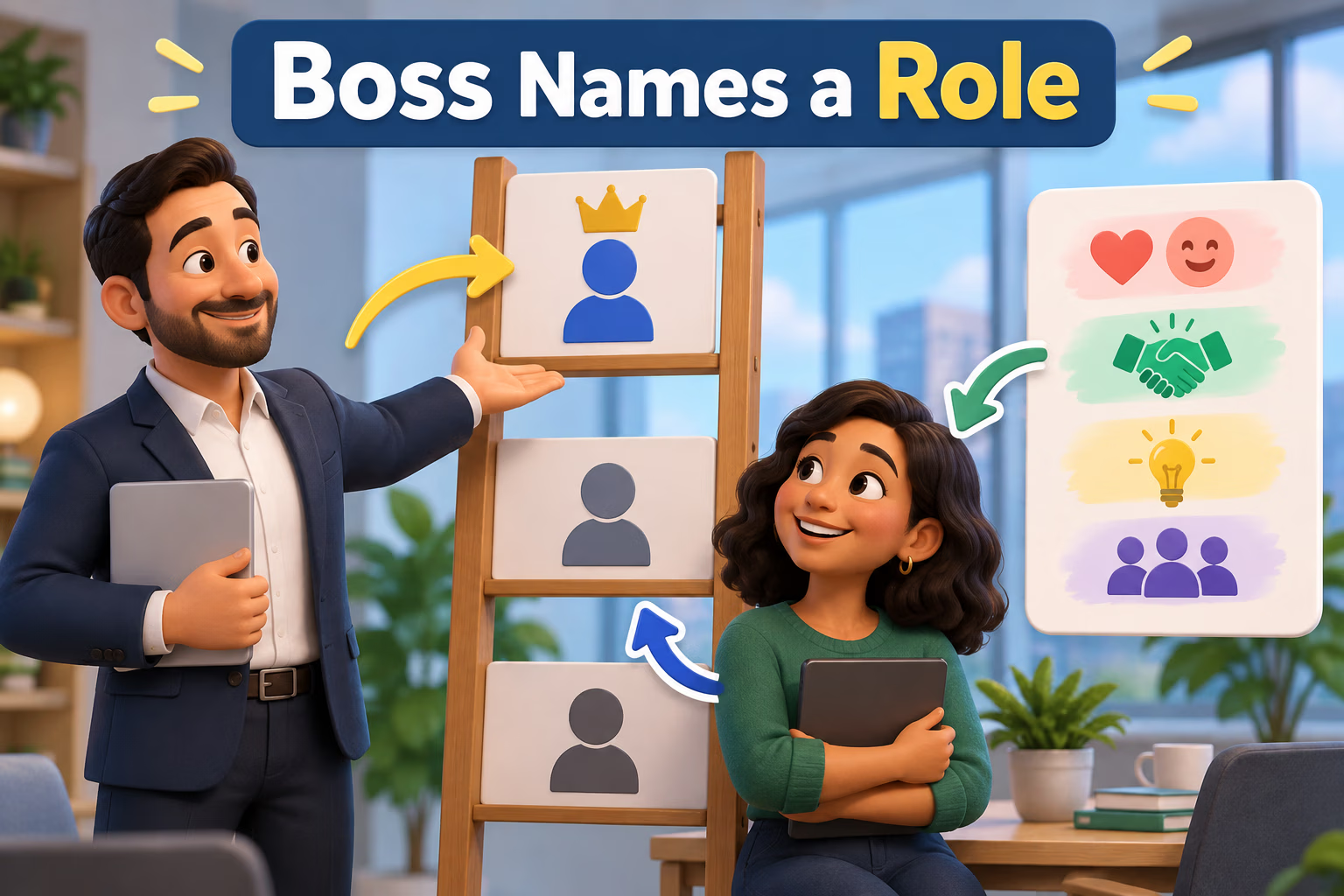
“Bossy” has a disapproving tone, according to Cambridge Dictionary. If you need a neutral description, name the behavior directly—for example, “sets detailed instructions” or “makes decisions without inviting input”—and let the reader assess the evidence.
Original adjectives for a boss: examples and lists
The original article follows in full. Its synonym and antonym lists are retained as published, but they mix related job-role nouns with behavior descriptions rather than exact synonyms, antonyms, or adjectives. “Follower” can describe a contrasting behavior or leadership style, but it is not an antonym for the workplace role boss. The positive and negative groupings are examples, and their fit depends on context. The added guidance explains these distinctions and how to use descriptors with concrete examples.
When it comes to describing our bosses, we often find ourselves searching for just the right words. After all, our bosses play a significant role in our professional lives, and finding the right adjectives to describe them can be crucial. In this article, I’ll be sharing a list of adjectives that you can use to describe your boss, along with examples to help you better understand their meanings.
Having a supportive boss can make all the difference in our work environment. A boss who is encouraging, understanding, and motivating can inspire us to reach new heights. On the other hand, a boss who is demanding, strict, or overbearing can make our workdays feel like a never-ending struggle. In this article, I’ll be providing you with a range of adjectives that can help you accurately describe your boss’s personality, management style, and overall demeanor.
How to Describe boss? – Different Scenarios
As an expert blogger with years of experience, I have learned the importance of finding the right adjectives to describe various aspects of our lives. When it comes to describing our bosses, it is crucial to choose words that accurately capture their personality, management style, and overall demeanor. In this section, I will provide you with different scenarios and examples to help you describe your boss effectively.

1. Describing a Supportive Boss
A supportive boss can greatly impact our work environment, making it a positive and motivating place. When describing a supportive boss, you can use adjectives like:
- Encouraging: my boss always motivates and uplifts the team.
- Reliable: my boss is dependable and always there to support us.
- Positive: my boss brings a positive energy to the workplace.
2. Describing a Demanding Boss
On the other hand, a demanding boss can make work feel like a struggle. Here are some adjectives that can accurately describe a demanding boss:
- Meticulous: my boss pays extreme attention to detail.
- Driven: my boss is highly ambitious and pushes us to excel.
- Perfectionist: my boss expects nothing short of perfection.
3. Describing an Approachable Boss
An approachable boss creates an environment where open communication is encouraged. Use these adjectives when describing an approachable boss:
- Friendly: my boss is always approachable and easy to talk to.
- Understanding: my boss listens to our concerns and provides guidance.
- Open-minded: my boss is receptive to new ideas and suggestions.
4. Describing a Micromanager Boss
Micromanagers tend to closely monitor and control every aspect of their employees’ work. Here are some adjectives to describe a micromanager boss:
- Controlling: my boss wants to have full control over every task.
- Obsessive: my boss becomes fixated on small details.
- Inflexible: my boss is resistant to adapting to new approaches.
Remember, when describing your boss, it is essential to be objective and provide specific examples that demonstrate their behavior. By using these adjectives in the appropriate contexts, you can effectively describe your boss’s personality, management style, and overall demeanor.
Describing Words for boss in English

When it comes to describing our bosses, finding the right adjectives is crucial. These words can paint a clear picture of their qualities and help us communicate effectively. Let’s explore some describing words for boss in English:
- Supportive: A supportive boss is understanding, encouraging, and uplifting. They provide guidance and are available to offer assistance when needed. Some adjectives to describe a supportive boss are:
- Demanding: A demanding boss sets high standards and expects their employees to meet them. They can be perfectionists and challenge their team to deliver exceptional results. Here are a few adjectives to describe a demanding boss:
- Approachable: An approachable boss is easy to talk to and makes their employees feel comfortable expressing their thoughts and concerns. They create an open and inclusive work environment. Here are some adjectives to describe an approachable boss:
- Micromanager: A micromanager boss closely monitors and controls every aspect of their employees’ work. While this style can be challenging, it’s important to provide an objective description. Here are a few adjectives to describe a micromanager boss:
By using specific adjectives to describe your boss, you can effectively convey their qualities and ensure clear communication. Remember to remain objective and provide examples that support your descriptions.
Keep in mind that the above adjectives can be used in various combinations to create a fuller picture of your boss’s characteristics. Use these words as a starting point and tailor them to accurately describe your own unique boss.
For more examples and adjectives, continue reading our article on “Adjectives for Boss – Describing Words With Examples” to gain a deeper understanding and improve your ability to effectively describe different types of bosses.
Remember, the way we describe our bosses can greatly impact how others perceive them. Choose your adjectives wisely and be mindful of conveying accurate and objective descriptions.
Adjectives for boss
As an experienced professional, I understand the importance of finding the right adjectives to describe our bosses. These adjectives not only help us articulate our opinions but also shape how others perceive our bosses. In this section, I will provide you with a list of positive and negative adjectives for describing your boss, along with example sentences to illustrate their usage.

Positive Adjectives for boss with 12 Example Sentences
When describing a supportive boss, it’s crucial to highlight their positive qualities and the impact they have on their team. Here are some adjectives to consider:
- Encouraging: My boss always provides words of encouragement that inspire us to do our best.
- Empowering: Under my boss’s leadership, we feel empowered to take ownership of our projects.
- Supportive: My boss is always there for us, supporting us through both triumphs and challenges.
- Approachable: I appreciate how approachable my boss is, making it easy to discuss any concerns or ideas.
- Respectful: My boss treats everyone with respect, fostering a positive and inclusive work environment.
- Transparent: My boss believes in open communication and keeps us informed about company updates.
- Adaptable: Even in the face of unexpected changes, my boss remains flexible and adapts successfully.
- Collaborative: With a collaborative mindset, my boss encourages teamwork and values different perspectives.
- Knowledgeable: My boss possesses a wealth of knowledge and expertise, guiding us with valuable insights.
- Inspiring: My boss’s passion and dedication are truly inspiring, motivating us to reach new heights.
- Fair: My boss is known for being fair to all employees, ensuring equal opportunities for growth.
- Resilient: In challenging situations, my boss demonstrates resilience and helps us navigate difficulties.
Negative Adjectives for boss with 5 example sentences
Sometimes, we may encounter bosses who exhibit negative traits or behaviors. Here are a few adjectives to describe such bosses:
- Micromanager: My boss tends to micromanage our every task, leaving little room for autonomy.
- Demanding: My boss has exceedingly high expectations, often putting pressure on us to deliver results quickly.
- Unapproachable: It can be difficult to approach my boss with concerns or ideas due to their reserved nature.
- Inconsistent: My boss’s decisions and expectations are often inconsistent, causing confusion among the team.
- Unfair: Unfortunately, my boss shows favoritism towards certain employees, which creates a sense of unfairness.
Remember, when using these negative adjectives, it’s important to provide specific examples or instances to support your description. This way, you can ensure that your feedback remains objective and constructive.
Synonyms and Antonyms with Example Sentences

Synonyms for boss
Finding the right adjectives to describe our bosses is essential. It helps us accurately convey their qualities and strengths. Here are some synonyms you can use to describe your boss:
| Synonym | Definition | Example Sentence |
|---|---|---|
| Leader | A person who guides and directs a group | My boss is a strong leader who inspires us to do our best. |
| Supervisor | Someone who oversees and manages the work of others | Our supervisor is very supportive and always available to help us. |
| Manager | A person responsible for planning, organizing, and controlling | My manager is organized and knows how to set clear goals for our team. |
| Director | A person who directs or manages an organization or department | The director of our company has a clear vision for its future. |
Antonyms for boss
While it’s important to focus on the positive qualities of our bosses, we may also need to express any negative aspects constructively. Here are some antonyms, or opposites, of boss to describe the negative traits of a boss:
| Antonym | Definition | Example Sentence |
|---|---|---|
| Follower | A person who accepts the ideas or opinions of others without question | Our boss is too much of a follower, and lacks the ability to make decisions. |
| Subordinate | A person who is lower in rank or position than someone else | My boss tends to treat us as subordinates rather than equals. |
| Employee | A person who works for someone else | Our boss forgets that he’s also an employee and should listen to our opinions. |
| Worker | A person who performs a job or tasks for an organization | Unfortunately, our boss is more of a delegator and not a hands-on worker. |
Remember, when using negative adjectives, it’s important to provide specific examples to ensure that your feedback remains objective and constructive.
Conclusion
Describing our bosses accurately is crucial for effective communication in the workplace. Throughout this article, we have explored various adjectives that can be used to describe our bosses, both positively and negatively.
By using synonyms such as leader, supervisor, manager, and director, we can highlight the positive qualities and strengths of our bosses. These adjectives help us acknowledge their guidance, expertise, and ability to inspire and motivate their teams.
On the other hand, when it comes to negative adjectives, it is important to provide specific examples to ensure that our feedback remains constructive and objective. Words like follower, subordinate, employee, and worker can be used as antonyms to describe certain aspects of our bosses’ behavior or management style that may need improvement.
Remember, the way we describe our bosses can influence how others perceive them, so it is essential to choose our words wisely. Whether we are praising their leadership skills or providing constructive criticism, using adjectives effectively can help foster better relationships and communication in the workplace.
So, the next time you need to describe your boss, consider the adjectives discussed in this article and choose the ones that accurately reflect their qualities and impact on your work environment.
Are employee and subordinate antonyms of boss?
No. Employee and worker describe people who do work for an organization; a boss can also be an employee or worker. Subordinate describes someone lower in rank relative to another person. These are role relationships, not opposites of the noun boss. Leader, supervisor, manager, and director are related role words, not adjectives.
For an opposite, name the quality rather than trying to reverse the job title: supportive and unsupportive, or consistent and inconsistent, describe contrasting behavior. Those pairs do not establish that a person is a good or bad boss; the context and examples matter.
Describe actions rather than labeling a person
Workplace feedback is clearer when it describes an observable action and its effect. The Center for Creative Leadership’s Situation–Behavior–Impact model asks the speaker to identify the situation, describe the behavior without judgment, and explain the impact. For example: “During Tuesday’s handoff, you changed the task owner without telling the team; we duplicated the work.” That sentence gives more usable information than “You are disorganized.”
A single event may not represent a person’s usual approach. When possible, describe the pattern and its timeframe, distinguish what you observed from what you inferred, and avoid absolute words such as always or never unless the evidence truly supports them. The Center for Creative Leadership’s SBI guide explains the situation, behavior, and impact sequence.
Sources and further reading
Cambridge Dictionary: boss; Cambridge Dictionary: bossy; U.S. Office of Personnel Management: How to Provide Feedback Effectively; Center for Creative Leadership: SBI Feedback Model.


