
Broken can describe an object that is cracked or no longer works, an agreement that was not kept, a relationship that has ended, an interrupted pattern, or rough ground. For a person’s feelings, name the experience they report—such as grief or overwhelm—rather than defining them as broken. The best synonym depends on the noun and situation.
Choose an adjective for the context
“Broken” has several related senses, so its alternatives are not interchangeable. A cracked plate, a faulty switch, an unkept promise, and a night of interrupted sleep describe different kinds of damage or disruption. First name what is affected; then choose the word that describes the specific condition.
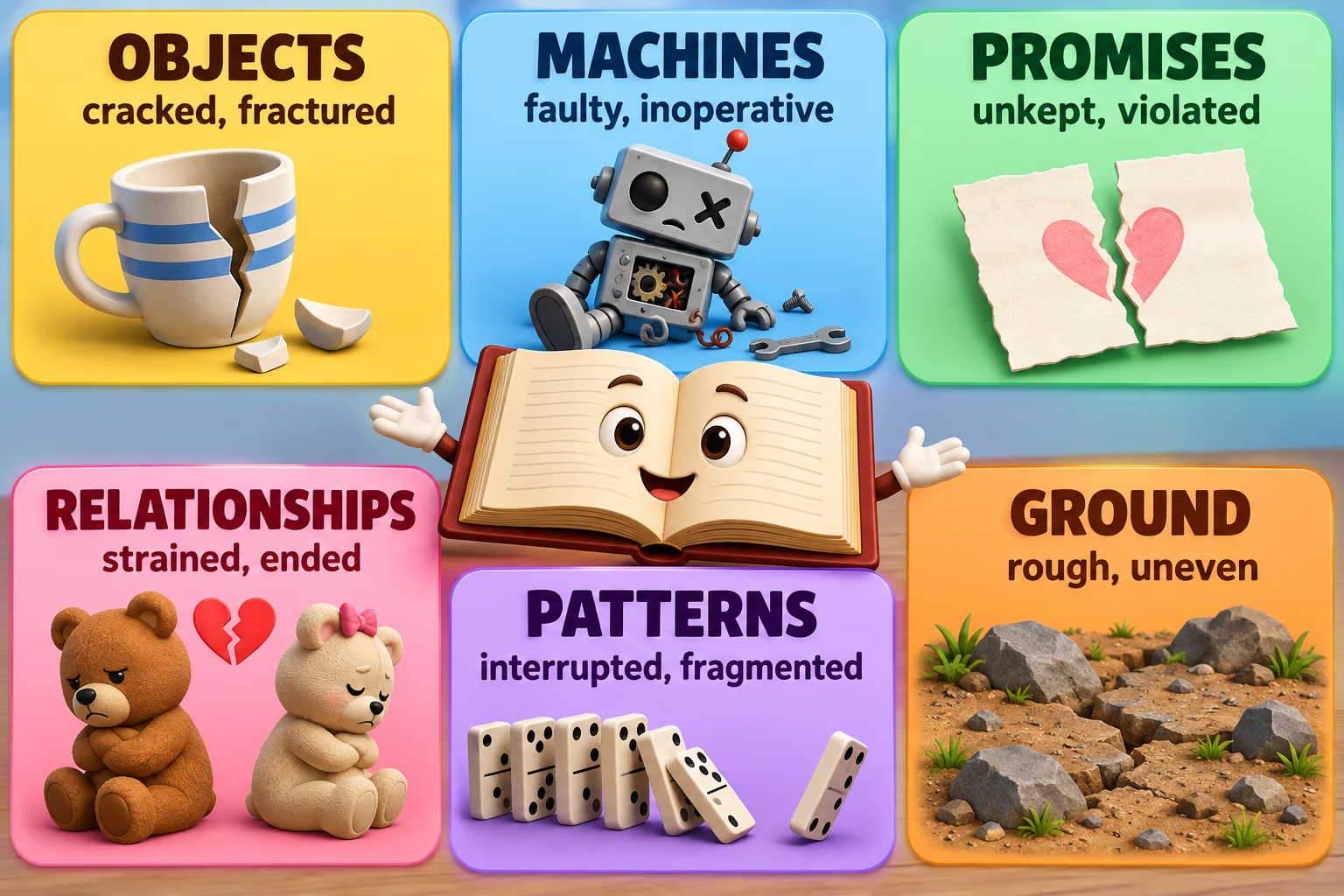
Physical damage to an object
Cracked means a split or fissure is visible, while the object may still hold together. Chipped means a small piece has come away. Fractured emphasizes a break or structural split, and shattered usually suggests many fragments. Splintered fits material such as wood that has broken into narrow pieces. Use smashed when forceful impact matters; it describes how something was damaged as well as its state.
Examples: “The mug has a hairline crack but still holds water”; “a chip is missing from the bowl’s rim”; “the dropped jar shattered across the tile.” These terms make the extent of damage clearer than a broad label alone.
A machine or system that no longer works correctly
Faulty points to a defect; malfunctioning says a device is not operating as intended; and inoperative means it is not functioning. Out of order is a common notice for equipment unavailable for use. If you do not know the cause, report the symptom instead of implying a confirmed fault.
Examples: “The lift is out of order”; “the remote is malfunctioning—the volume button does not respond”; “the heating system is inoperative, and a technician has not yet identified the cause.”
A promise, agreement, or rule that was not kept
A broken promise is a promise not kept. Depending on the context, unkept or unfulfilled may state that plainly. A rule, contract, or duty may be violated or breached; these words can carry formal or legal implications, so use them only when they fit the facts. “Broken” here is figurative: nothing has physically snapped.
Examples: “She apologized for an unkept promise”; “the report describes a breached agreement”; “the referee stopped play after a rule was violated.” Choose the noun that names what happened rather than swapping in a general synonym.
A relationship that has changed or ended
A broken relationship may mean it has ended or been seriously damaged, but the phrase does not say whether people are estranged, separated, or working toward repair. Ended is direct when a relationship is over; strained or damaged can describe difficulty without claiming it is beyond repair. Estranged describes people who are no longer close or in contact.
Examples: “After months without speaking, the siblings had become estranged”; “the disagreement strained their friendship”; “they said the relationship had ended.” These choices report different circumstances, not interchangeable degrees of one condition.
An interrupted line, signal, sequence, or period of sleep
Interrupted means something was stopped and may resume. Fragmented emphasizes pieces or short stretches; disjointed describes parts that do not connect smoothly; intermittent means something occurs with gaps. A broken line can be a line marked with gaps, and broken sleep is sleep interrupted during the night.
Examples: “A tunnel interrupted the radio signal”; “construction left the walking route fragmented”; “she had a night of interrupted sleep.” For a conversation, “disjointed” describes the sequence of ideas, not a diagnosis of the speaker.
Rough or uneven ground
When broken describes terrain, it can mean rough or irregular in surface. Uneven is a neutral choice for changing levels; rocky identifies loose or exposed stones; and rough gives a broad surface description. Use a specific term when it helps someone understand the route or footing.
Example: “The trail crosses uneven, rocky ground, so sturdy footwear may help.” In this sense, “broken” does not mean a path has been smashed apart.
When someone describes their own feelings
People may use broken metaphorically for intense hurt, grief, exhaustion, or discouragement. Respect a person’s own wording, but avoid presenting “a broken person” as a permanent identity or a clinical conclusion. If you are choosing words for someone else, describe what they said or what you observed: overwhelmed, grief-stricken, exhausted, or discouraged may be more specific when accurate.
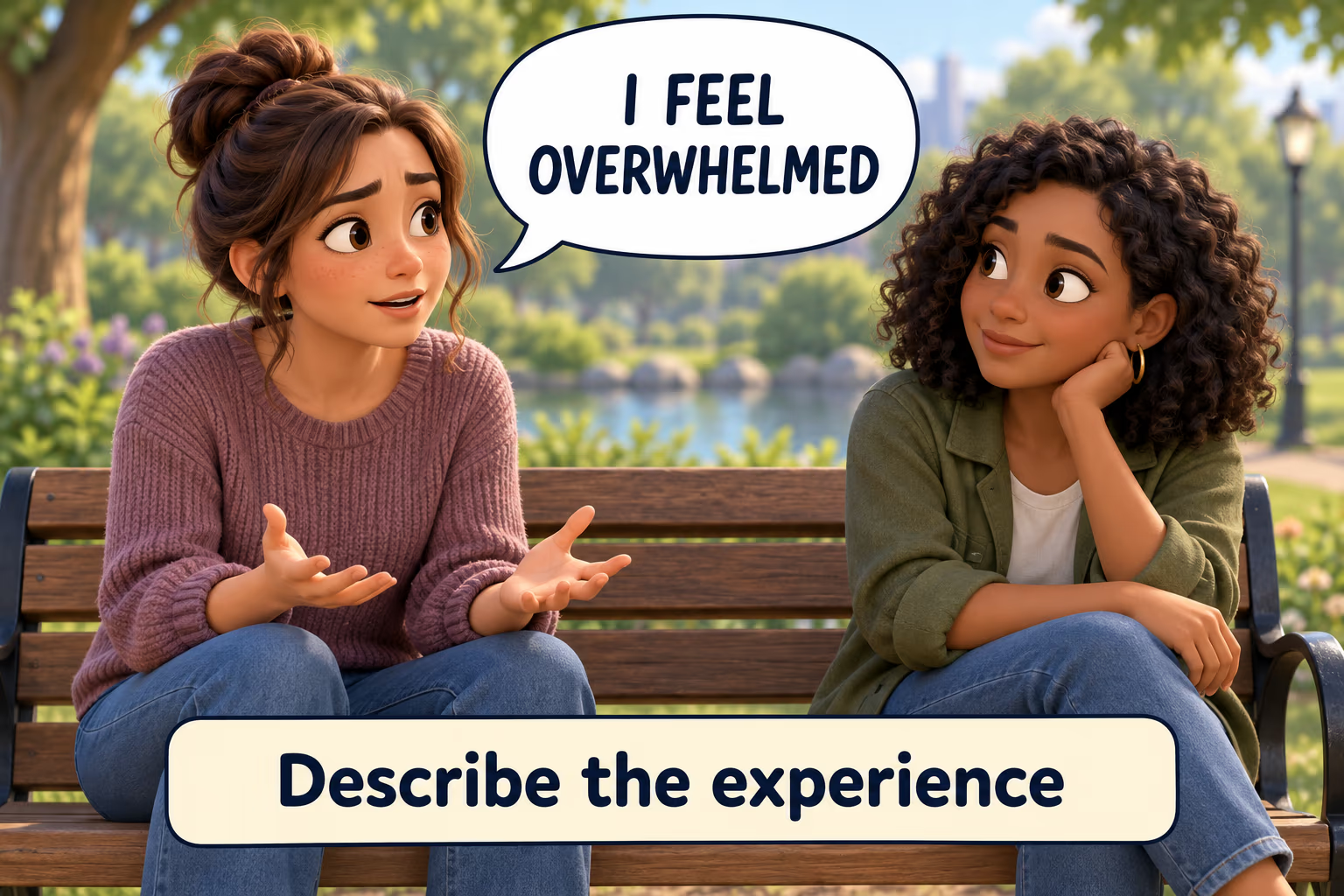
Examples: “After the loss, he said he felt overwhelmed”; “she looked exhausted after several sleepless nights”; “they described the setback as discouraging.” These sentences leave room for a person’s own account and do not diagnose a mental-health condition. For more vocabulary about emotions, see our guide to adjectives for feelings.
Language ability: choose a respectful, specific phrase
The Oxford entry includes broken English for speech that is not fluent. Because this broad phrase can sound dated or dismissive, prefer a precise, neutral description such as beginner-level English, still learning English, or limited English proficiency when accurate. Better still, name the skill: “She reads English well and is still building confidence in conversation.”
Why “broken” often works as an adjective
Broken is the past participle of break and also functions as an adjective: a broken cup, the cup is broken. It often names a state that results from a break or disruption. The noun and sentence tell you which sense is intended: a broken promise is unkept, while a broken signal is interrupted. See Cambridge’s grammar note on past participles.
How to choose among positive and negative descriptions
Positive and negative are not fixed properties of an adjective list. A word can sound factual, sympathetic, critical, or dramatic depending on its noun and situation. Shattered may vividly describe glass but intensify a metaphor about someone’s feelings; damaged may be neutral in a repair report but hurtful when applied to a person. Use the mildest accurate wording that serves the reader, and explain the detail behind it.
Using the original lists below
The original examples and lists below are preserved. Read them according to their headings and context: a word that fits a damaged object may not fit an agreement, a relationship, or a person’s feelings. Some metaphors are vivid but can sound absolute; choose a more specific alternative when it better reflects what happened.
Hey there! Are you searching for the perfect words to describe something that’s broken? Well, you’ve come to the right place! In this article, I’ll be sharing a list of adjectives that you can use to vividly describe broken objects, from shattered glass to cracked mirrors and everything in between.
When something is broken, it can evoke a range of emotions – frustration, disappointment, or even relief. By using the right adjectives, you can paint a clear picture in your reader’s mind and convey the exact intensity of the damage. So, whether you’re a writer looking to add depth to your descriptions or simply someone who wants to express themselves more precisely, this list of adjectives will come in handy.
How to Describe broken? – Different Scenarios
When it comes to describing broken objects, there are various scenarios to consider. Each scenario presents a unique set of circumstances and emotions that can be vividly described. Here are a few ways I can help you describe broken objects in different situations:
- Accidental Breakage: Whether it’s a dropped vase or a shattered window, accidental breakages can evoke a sense of surprise and regret. To describe these scenarios, you can use adjectives such as:
- Deliberate Destruction: Sometimes, objects are intentionally broken, which can convey a range of emotions from anger to liberation. To capture the intensity of deliberate destruction, consider using adjectives like:
- Emotional Breakdown: Objects can also be metaphorically broken to describe emotional states. This can add depth and symbolism to your writing. Here are a few adjectives that can capture the essence of emotional breakdown:
Remember, using descriptive adjectives is essential in creating vivid imagery and engaging your readers. By choosing the right adjectives, you can effectively convey the intensity of the damage and evoke specific emotions in your audience.
Describing Words for broken in English
When it comes to describing broken objects, it’s important to choose the right adjectives to vividly convey the intensity of the damage. By using descriptive words, we can evoke specific emotions in the reader and paint a clear picture of the broken object. Let’s explore the different adjectives that can be used to describe broken objects in English.
Adjectives for Accidental Breakage
Accidental breakage can happen when objects are dropped or bumped, resulting in unexpected damage. Here are some adjectives that can be used to describe broken objects in this scenario:
| Adjective | Meaning |
|---|---|
| Cracked | Partially broken |
| Shattered | Broken into many small pieces |
| Chipped | Small piece broken off |
| Fractured | Broken but still in one piece |
| Smashed | Broken forcefully |
Adjectives for Deliberate Destruction
Sometimes, objects are intentionally broken or destroyed. In these cases, the adjectives used to describe the broken object can convey a sense of purposeful damage. Here are some adjectives that can be used in this scenario:
| Adjective | Meaning |
|---|---|
| Obliterated | Completely destroyed |
| Demolished | Ruined or torn down completely |
| Shattered | Broken into irreparable pieces |
| Mangled | Severely twisted or deformed |
| Splintered | Broken into small fragments |
Adjectives for Emotional Breakdown
In a metaphorical sense, we can also use adjectives to describe a person’s emotional state when they are “broken.” These adjectives can capture the intensity of their emotions and the impact it has on them. Here are some examples:
| Adjective | Meaning |
|---|---|
| Devastated | Overwhelmed by grief or sorrow |
| Shattered | Emotionally broken or deeply affected |
| Fragmented | Feeling disconnected or mentally fragmented |
| Crumbled | Emotionally collapsed or disintegrated |
| Brokenhearted | Suffering from profound sadness or loss |
Adjectives for broken
As a writer, I understand the importance of using descriptive adjectives to vividly portray broken objects and evoke various emotions in the reader. In this section, I will discuss different adjectives that can effectively describe broken objects, categorized as positive and negative adjectives. This will help engage young readers, specifically kindergarten and preschool teachers, in teaching easy words to kids. Let’s dive in!
Positive Adjectives for Broken
Positive adjectives for broken can help convey a sense of resilience, opportunity, or beauty in the face of damage. Here are 12 examples of positive adjectives that can be used to describe broken objects:
| Adjective | Definition | Example Sentence |
|---|---|---|
| Repaired | Restored to working condition | The broken toy was repaired and now looks brand new. |
| Upcycled | Transformed into something new and useful | The broken glass bottle was upcycled into a beautiful vase. |
| Adapted | Modified to fit a new purpose | The broken chair was adapted into a unique bookshelf. |
| Resilient | Able to bounce back after being broken | The broken toy showed its resilient nature by still being fun to play with. |
| Unique | One of a kind due to being broken | The broken necklace became even more unique with its missing bead. |
| Mended | Repaired with care and precision | The broken picture frame was mended and is as good as new. |
| Transformed | Changed into something different | The broken clock was transformed into a stunning piece of art. |
| One-of-a-kind | Exceptional due to being broken | The broken teacup became a one-of-a-kind collectible item. |
| Vintage | Old and broken, but with historical value | The broken typewriter held a certain vintage charm. |
| Delicate | Fragile and easily broken | The broken glass figurine was delicate and required careful handling. |
| Creative | Broken in a way that sparked imagination | The broken crayon became the catalyst for a creative masterpiece. |
| Resurrected | Brought back to life after being broken | The broken guitar was resurrected with a new set of strings. |
Negative Adjectives for Broken
On the other side of the spectrum, negative adjectives for broken capture the sense of damage, loss, or sadness associated with broken objects. Here are 5 examples of negative adjectives that can be used to describe broken objects:
| Adjective | Definition | Example Sentence |
|---|---|---|
| Damaged | Hurt or impaired due to being broken | The broken window was severely damaged by the storm. |
| Shattered | Broken into small pieces | The broken mirror lay shattered on the floor. |
| Useless | No longer functioning or effective | The broken computer was rendered useless. |
| Ruined | Destroyed beyond repair | The broken vase lay in pieces, completely ruined. |
| Heartbroken | Extreme sadness due to the break | The broken toy left the child heartbroken. |
Using these negative adjectives can help children acknowledge and express emotions related to broken objects.
Remember, choosing the right adjectives is crucial to create vivid imagery and engage young readers. By teaching easy words to kids through descriptive adjectives, we can help foster their vocabulary and language skills.
Synonyms and Antonyms with Example Sentences
Synonyms for broken
When it comes to describing broken objects, there are several synonyms that can be used to add variety and make our language more interesting. Here are some alternatives to the word “broken”:
- Damaged
- Cracked
- Shattered
- Fragmented
- Smashed
Using these synonyms can help paint a clearer picture of the broken object and make our descriptions more engaging for young readers. Let me provide some example sentences using these synonyms:
| Synonym | Example Sentence |
|---|---|
| Damaged | The toy car was damaged and missing a wheel. |
| Cracked | The mirror was cracked and reflected a distorted image. |
| Shattered | The vase fell off the table and shattered into many pieces. |
| Fragmented | The puzzle was fragmented into small scattered pieces. |
| Smashed | The window was smashed by a stray baseball. |
Antonyms for broken
To provide a contrasting perspective, let’s take a look at antonyms for the word “broken.” These words describe objects that are intact and undamaged. Here are some antonyms for broken:
- Intact
- Whole
- Unbroken
- Unimpaired
- Undamaged
Including these antonyms in our descriptions can help create a more dynamic range of vocabulary. Below are example sentences using these antonyms:
| Antonym | Example Sentence |
|---|---|
| Intact | The new book arrived in the mail and was still intact and unopened. |
| Whole | The vase on the shelf was whole and without any cracks. |
| Unbroken | The glass in the window remained unbroken after the storm. |
| Unimpaired | The toy car was unimpaired and worked perfectly. |
| Undamaged | The package arrived undamaged, and nothing was broken inside. |
By incorporating these synonyms and antonyms into our descriptions, we can engage young readers and expand their vocabulary.
Conclusion
In this article, I have highlighted the significance of using descriptive adjectives to bring broken objects to life and elicit specific emotions in readers. By incorporating synonyms and antonyms for the word “broken,” we can add variety and depth to our language, making it more captivating and engaging.
By employing these descriptive words, we not only expand our vocabulary but also create a richer reading experience for young audiences. By encouraging them to explore and incorporate these adjectives into their own writing, we can foster their linguistic development and encourage their creativity.
Remember, the power of descriptive language lies in its ability to paint a vivid picture in the reader’s mind. So, whether it’s a shattered vase, a fractured heart, or a cracked mirror, let’s embrace the beauty of descriptive adjectives and breathe life into the broken.
Frequently asked questions
What is another adjective for broken?
It depends on what is broken. Try cracked, chipped, or shattered for physical damage; faulty or inoperative for a device; unkept for a promise; and interrupted for sleep or a signal. The noun determines which word is accurate.
Is “broken” an adjective or a verb form?
It can be both. Broken is the past participle of break, as in “the glass has broken,” and it also functions as an adjective in “a broken glass” or “the glass is broken.” In adjective use, it often describes a resulting state.
What is a respectful alternative to calling someone broken?
Describe the person’s own stated experience instead of defining them by it. Depending on what they say, words such as overwhelmed, grieving, exhausted, or discouraged may be more precise. Avoid diagnosing someone from a description, and let them choose how to characterize their feelings.
What should I say instead of “broken English”?
Use neutral, specific language such as “beginner-level English,” “still learning English,” or “limited English proficiency,” if it fits. When possible, name the actual skill: for example, someone may read English comfortably while continuing to develop speaking confidence. This avoids reducing a person’s abilities to one broad label.
Are “broken,” “damaged,” and “shattered” interchangeable?
No. Damaged is broad; shattered usually suggests many fragments; and broken can refer to physical damage or several figurative senses. For a machine, an operational word may be clearer; for a promise, use unkept. Choose by meaning rather than intensity alone.


