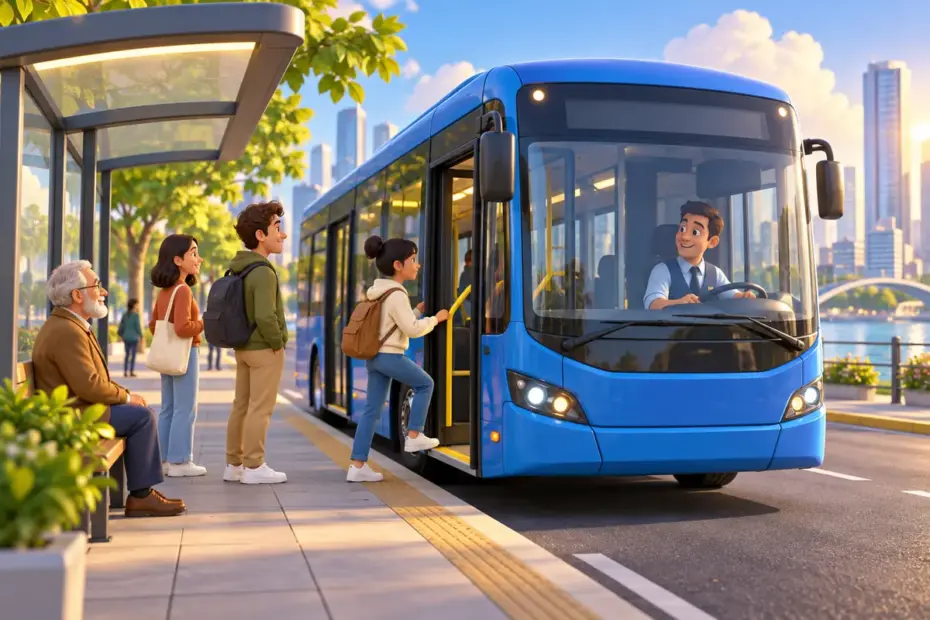
Adjectives for bus describe a vehicle’s size, appearance, condition, service, or passenger experience. Useful choices include spacious, crowded, modern, noisy, accessible, and reliable. Choose the word that identifies the specific feature you want readers to notice, then support it with a concrete detail rather than stacking several general compliments.
- Adjectives For Bus work best when tied to a specific detail.
- Physical adjectives describe visible features.
- Behavior or experience words need supporting context.
- One precise adjective often communicates more than several vague words.
- Use compound modifiers consistently before a noun.
Adjectives For Bus: words grouped by purpose
| Category | Useful adjectives | Example sentence |
|---|---|---|
| Size and layout | large, compact, spacious, narrow, double-decker, single-decker | The compact bus turned into the narrow lane. |
| Appearance | yellow, blue, sleek, boxy, shiny, faded | A faded blue bus waited outside the station. |
| Condition | clean, dusty, battered, modern, old, well-maintained | The well-maintained bus had spotless windows. |
| Passenger experience | crowded, empty, comfortable, noisy, quiet, stuffy | The crowded bus left little room for luggage. |
| Service and access | frequent, reliable, late, accessible, low-floor, express | An accessible low-floor bus stopped beside the curb. |
Which words describe comfort and crowding?
Comfortable, spacious, cramped, crowded, and stuffy describe different parts of the passenger experience. A bus can be spacious but crowded if many riders board it. Support the adjective with an observable detail: “The cramped bus had little room between the seats” is clearer than simply calling the vehicle bad.

How do you distinguish a bus from its service?
A clean bus describes the vehicle; a reliable bus service describes the operation. In everyday speech, “a reliable bus” may mean a dependable route, but formal descriptions should make the subject explicit. Likewise, “frequent buses” describes how often vehicles arrive, rather than a physical property of one vehicle.
When are compound adjectives useful?
Compound adjectives help identify configuration or technology: double-decker, single-decker, low-floor, and well-maintained can modify bus before the noun. Electric and diesel identify propulsion rather than comfort. Do not assume “electric” automatically proves that every ride is silent or that a service meets a particular environmental standard.
Example sentences for descriptive writing
- The spacious bus had room for every suitcase.
- A noisy bus rattled along the cobbled road.
- The electric bus moved quietly away from the stop.
- Our late bus arrived after the rain began.
- The empty bus waited at the depot.
- A battered bus carried the team to the field.
How do you choose the most useful adjective?
Start with the detail the reader needs to picture, then choose a word from that category. Add one observable action or feature that justifies the description. Finally, remove competing adjectives that do not change the meaning. Two words can work together when they describe separate things, such as size and color.

Frequently asked questions
Can an adjective come after the noun?
Yes. An adjective can follow a linking verb rather than stand directly before the noun. For example, “The bus was crowded” places the adjective after was. Both positions are grammatical, but the linking-verb pattern makes the described quality the main statement of the sentence.
How many adjectives should I use together?
Use only as many adjectives as the sentence needs to create a clear picture. One precise word often works; two can identify different features, such as size and color. A long string can slow the sentence and blur its focus. Move additional details into a separate clause if needed.
Is yellow an adjective for a bus?
Yes. Yellow is a color adjective in “a yellow bus.” A color describes appearance without implying the bus’s purpose, location, or legal classification. If you know the role, combine the details carefully: “a yellow school bus.” Avoid assuming every yellow bus is a school bus in every country.
What makes a description more objective?
An objective description connects the adjective to something a reader could observe or check. State a visible feature, an action, or a measurable condition. Words such as wonderful, bad, and amazing mainly express judgment. Replace them with details when the purpose is explanation, reporting, or accurate identification.
If you’re looking to add some color and detail to your descriptions of buses, you’ve come to the right place. As an expert blogger with years of experience, I’ve compiled a list of adjectives that will help you bring your bus descriptions to life. From sleek and modern to vintage and charming, these adjectives will help you paint a vivid picture for your readers. So, whether you’re a writer, a student, or simply a bus enthusiast, get ready to expand your vocabulary and take your bus descriptions to the next level.
When it comes to describing buses, there are countless adjectives that can be used to capture their unique characteristics. From the size and shape to the color and condition, each bus has its own story to tell. In this article, I’ll be sharing a variety of adjectives that can be used to describe buses, along with examples to help you understand how to use them effectively. Whether you’re writing a travel guide, a blog post, or simply want to impress your friends with your descriptive skills, these adjectives will help you create engaging and captivating descriptions of buses. So, let’s dive in and explore the world of bus adjectives together.
How to Describe bus? – Different Scenarios
When it comes to describing a bus, there are various scenarios and contexts in which you might want to use different adjectives. Whether you’re writing a travel guide, a blog post, or even just looking to impress others with your descriptive skills, choosing the right adjectives can bring your bus descriptions to life. Here are a few scenarios and some examples of adjectives you can use to describe buses:
1. The Colorful Bus:
- Vibrant: A bus painted in a variety of bright colors, sure to catch the eye.
- Eye-catching: A bus with a unique and visually appealing design.
- Kaleidoscopic: A bus with a dazzling array of colors, like a kaleidoscope.
- Rainbow-hued: A bus painted in all the colors of the rainbow.
- Graffiti-covered: A bus decorated with colorful and artistic graffiti.
2. The Spacious Bus:
- Roomy: A bus with plenty of space for passengers to move around comfortably.
- Expansive: A bus with a large interior that feels open and airy.
- Uncrowded: A bus with fewer passengers than usual, providing ample personal space.
- Well-spaced: A bus with seats that are arranged far enough apart to give passengers legroom.
- Double-decker: A bus with two levels, providing twice the space for passengers.
3. The Modern Bus:
- Sleek: A bus with a streamlined and stylish design.
- High-tech: A bus equipped with the latest technology, such as touchscreens and Wi-Fi.
- Futuristic: A bus that looks like it belongs in the future, with innovative features and design.
- Sustainable: A bus that is environmentally friendly, using alternative fuels or electric power.
- Accessible: A bus that is designed to be easy for everyone to use, regardless of their abilities.
4. The Historical Bus:
- Vintage: A bus from a bygone era, with a classic and timeless design.
- Nostalgic: A bus that evokes memories of a different time and place.
- Iconic: A bus that is famous and well-recognized, often associated with a particular city or event.
- Restored: A bus that has been carefully preserved or brought back to its original condition.
- Antique: A bus that is very old and valuable, often a collector’s item.
5. The Speedy Bus:
- Fast: A bus that can travel at high speeds, getting you to your destination quickly.
- Agile: A bus that can maneuver easily through traffic and around obstacles.
- Efficient: A bus that uses fuel efficiently, even when traveling at high speeds.
- Streamlined: A bus with a design that reduces wind resistance, allowing it to travel faster.
- Express: A bus that makes fewer stops than other buses, resulting in a faster journey time.
Remember, each bus has its own unique characteristics and story to tell. By using descriptive adjectives, you can bring these characteristics to life and make your descriptions more engaging and memorable.
So, whether you’re writing for young children or simply looking to expand your vocabulary, these adjectives will help you elevate your bus descriptions to the next level. Experiment with different scenarios and find the adjectives that best capture the essence of the bus you’re describing. With the right words, you can make your readers feel as if they’re right there, experiencing the bus firsthand.
Describing Words for bus in English
When it comes to describing buses, there are countless adjectives that can help bring these vehicles to life. Here are some common adjectives to use when describing buses in different scenarios:
- Colorful: Buses come in a variety of vibrant colors that catch the eye. From bright red to sunny yellow, a vivid adjective like “colorful” can paint a picture of a bus that stands out from the crowd.
- Spacious: For those looking to describe a comfortable bus, the adjective “spacious” is perfect. It conveys a sense of ample room, making passengers feel at ease during their journey.
- Modern: Many buses today boast sleek designs and state-of-the-art features. Describing a bus as “modern” highlights its contemporary style and updated amenities.
- Historical: On the other end of the spectrum, some buses have a rich history that adds to their charm. “Historical” is a fitting adjective for these nostalgic vehicles that have stood the test of time.
- Speedy: When describing a bus that moves swiftly, “speedy” is a great choice. It captures the energy and efficiency of a bus that gets you to your destination in no time.
Remember, each bus has its own unique characteristics and story to tell. Experiment with different scenarios and find the adjectives that best capture the essence of the bus you’re describing.
To further illustrate the use of describing words for buses, refer to the examples below:
Examples of Describing Words for Buses:
| Adjective | Example Sentence |
|---|---|
| Colorful | The colorful bus drove through the city streets, brightening up the day. |
| Spacious | The spacious bus allowed the passengers to stretch out and relax. |
| Modern | The sleek and modern bus impressed everyone with its cutting-edge design. |
| Historical | The historical bus tour took us back in time to explore the city’s past. |
| Speedy | The speedy bus zipped through traffic, ensuring an on-time arrival. |
Adjectives for bus
When it comes to describing buses, choosing the right adjectives can really bring them to life. Whether you’re writing a travel guide or a blog post, or simply trying to impress others with your descriptive skills, finding the right words is key. Each bus has its own unique characteristics and story to tell, and using descriptive adjectives can make your descriptions more engaging and memorable.
Positive Adjectives for Bus with Example Sentences
- Colorful: The bus was painted in vibrant shades of red, yellow, and blue, making it a delightful sight.
- Spacious: The bus had ample seating and plenty of legroom, providing a comfortable travel experience.
- Modern: The bus was equipped with state-of-the-art technology, including USB charging ports and Wi-Fi, making it perfect for tech-savvy travelers.
- Historical: The vintage bus, with its antique design and retro interior, transported passengers back in time to a bygone era.
- Reliable: The bus arrived right on schedule, proving its reputation for punctuality and dependability.
- Eco-friendly: The electric bus was a sustainable alternative, emitting zero emissions and reducing our carbon footprint.
- Luxurious: The luxurious bus featured plush leather seats, a minibar, and entertainment systems, ensuring a truly lavish journey.
- Safe: The bus had advanced safety features, such as ABS brakes and airbags, making it a secure mode of transportation.
- Comfortable: The bus was fitted with soft cushioned seats, making long journeys incredibly comfortable.
- Efficient: The bus had an efficient engine, consuming less fuel and reducing operating costs.
- Versatile: The bus was designed with flexible seating arrangements, easily adapting to different passenger capacities and needs.
- Friendly: The bus driver greeted everyone with a warm smile, creating a friendly and welcoming atmosphere on board.
Negative Adjectives for Bus with Example Sentences
- Noisy: The bus had a loud engine and creaking windows, making it a noisy and less pleasant travel experience.
- Crowded: The bus was packed with passengers, leaving very little room to move or breathe.
- Uncomfortable: The bus had hard seats and limited leg space, making it quite uncomfortable for longer journeys.
- Slow: The bus moved at a snail’s pace, causing frustration among the passengers and delaying their arrival.
- Dirty: The bus looked neglected and poorly maintained, with grimy windows and litter scattered on the floor.
Synonyms and Antonyms with Example Sentences
Synonyms for Bus
When describing a bus, it’s important to have a variety of adjectives at your disposal to make your descriptions more engaging and vivid. Here are some synonyms that you can use to portray different aspects of a bus:
- Vibrant: This word can be used to describe a bus that is colorful and eye-catching. An example sentence could be, “The vibrant bus cruised through the city streets, turning heads wherever it went.”
- Spacious: Use this adjective to highlight a bus that offers ample room and comfort to its passengers. For instance, you could say, “The spacious bus allowed travelers to stretch out during the long journey.”
- Modern: When talking about a bus that is equipped with the latest technology and features, the word “modern” can work wonders. Here’s an example sentence: “The modern bus came with USB charging ports and onboard entertainment for a convenient and enjoyable ride.”
- Historical: If you come across a bus that carries significant historical value or has a vintage charm, describing it as “historical” can add depth to your writing. For example, you could write, “The historical bus took visitors on a nostalgic journey back in time, showcasing the rich heritage of the city.”
- Reliable: This adjective highlights a bus that can be trusted to arrive on time and provide a smooth journey. Consider using the phrase, “The reliable bus ensured that commuters reached their destination without any hitches.”
- Eco-friendly: With the rising awareness of environmental sustainability, describing a bus as “eco-friendly” can convey its use of clean energy or low emissions. An example sentence could be, “The eco-friendly bus ran on electricity, reducing its carbon footprint.”
To summarize, having a wide range of synonyms for bus at your disposal enables you to create captivating and memorable descriptions.
Antonyms for Bus
While positive adjectives can help you highlight the best qualities of a bus, it’s also important to be familiar with antonyms to paint a complete picture. Here are some antonyms that you can use to describe different aspects of a bus:
- Noisy: Use this word to describe a bus that may have loud engines or rattling noises. For example, you could say, “The noisy bus made it difficult for passengers to concentrate during the ride.”
- Crowded: When a bus is packed with passengers, you can use the adjective “crowded” to convey a lack of personal space. An example sentence could be, “The crowded bus was filled to the brim with standing passengers, making it a challenging journey.”
- Uncomfortable: If a bus lacks plush seating or climate control, using the adjective “uncomfortable” can accurately describe the experience. Consider using the phrase, “The uncomfortable bus had hard seats and no air conditioning, making the ride less than pleasant.”
- Slow: This adjective is perfect when describing a bus that moves at a leisurely pace. For instance, you could write, “The slow bus inched along the road, causing frustration amongst the time-conscious commuters.”
- Dirty: When a bus is unclean or unkempt, describing it as “dirty” can paint a clear picture. An example sentence could be, “The dirty bus had stained seats and dusty windows, leaving passengers less than impressed.”
By using these antonyms, you can provide a balanced and realistic view of buses, helping readers form well-rounded descriptions.
Remember to choose your adjectives wisely to accurately capture the unique characteristics and stories behind each bus.
Conclusion
Describing buses with the right adjectives can make all the difference in bringing their unique characteristics to life. Whether you’re writing a travel guide, a blog post, or simply trying to impress others with your knowledge, choosing the right words is key. In this article, I’ve provided a comprehensive list of adjectives that can be used to describe buses in various scenarios.
From positive adjectives like vibrant, spacious, modern, historical, reliable, and eco-friendly, to negative ones like noisy, crowded, uncomfortable, slow, and dirty, there are endless possibilities to capture the essence of each bus. By using these descriptive adjectives, you can create engaging and memorable descriptions that truly reflect the stories and experiences behind each bus.
So, the next time you find yourself needing to describe a bus, remember to choose your adjectives wisely. Let them paint a vivid picture in the minds of your readers, allowing them to envision the sights, sounds, and emotions that come with each journey. Happy writing!


