Adjectives for Cactus: Meanings and Examples
Adjectives for a cactus can describe its shape, surface, growth, or flowers: spiny, ribbed, fleshy, columnar, and blooming each point to a different feature. Since cacti vary widely, match a word to the plant you see instead of assuming every cactus is prickly, desert-dwelling, or flowering.
Key facts at a glance
- Use shape words such as columnar, globular, or ribbed for visible form.
- Spiny is more precise than thorny for a cactus’s sharp structures.
- Fleshy and waxy describe features found in many cacti, not every individual plant.
- Flowering, size, and growth habits differ across cactus species.
- Choose an adjective that fits the plant and the purpose of your description.
How to choose adjectives for a cactus
Cacti have varied forms, from compact globes to tall columnar stems. The National Park Service explains that many cacti store water in stem tissue and have spines and flowers that develop from areoles. Those traits provide useful descriptive vocabulary, but a single adjective should not be assumed to fit every cactus.
Describe what is visible: outline, ribs, spines, flowers, or size. In botanical writing, use a species name when known. In creative writing, pair a vivid adjective with a concrete detail so the image feels specific rather than generic.
Adjectives for cactus shape and structure
| Adjective | Meaning | Example phrase |
|---|---|---|
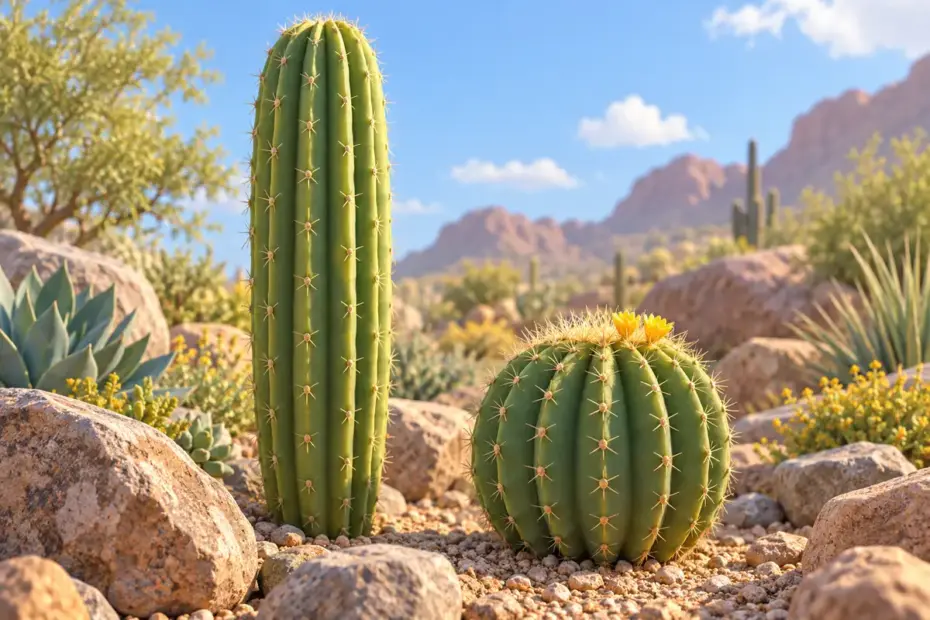
| Columnar | Tall and shaped like a column. | a columnar cactus beside the path |
| Globular | Rounded or ball-shaped. | a globular cactus in a shallow pot |
| Ribbed | Marked by raised ridges running along the stem. | a ribbed cactus catching the afternoon light |
| Branching | Dividing into several stems or arms. | a branching cactus against the rock wall |
| Compact | Small and closely formed. | a compact cactus on the windowsill |
| Towering | Exceptionally tall compared with its surroundings. | a towering cactus on the desert horizon |
| Jointed | Formed from connected segments. | a jointed cactus with flat green pads |
| Spreading | Growing outward over a broad area. | a spreading cactus across the rocky ground |
Adjectives for a cactus’s surface and growth
| Adjective | Meaning | Example phrase |
|---|---|---|
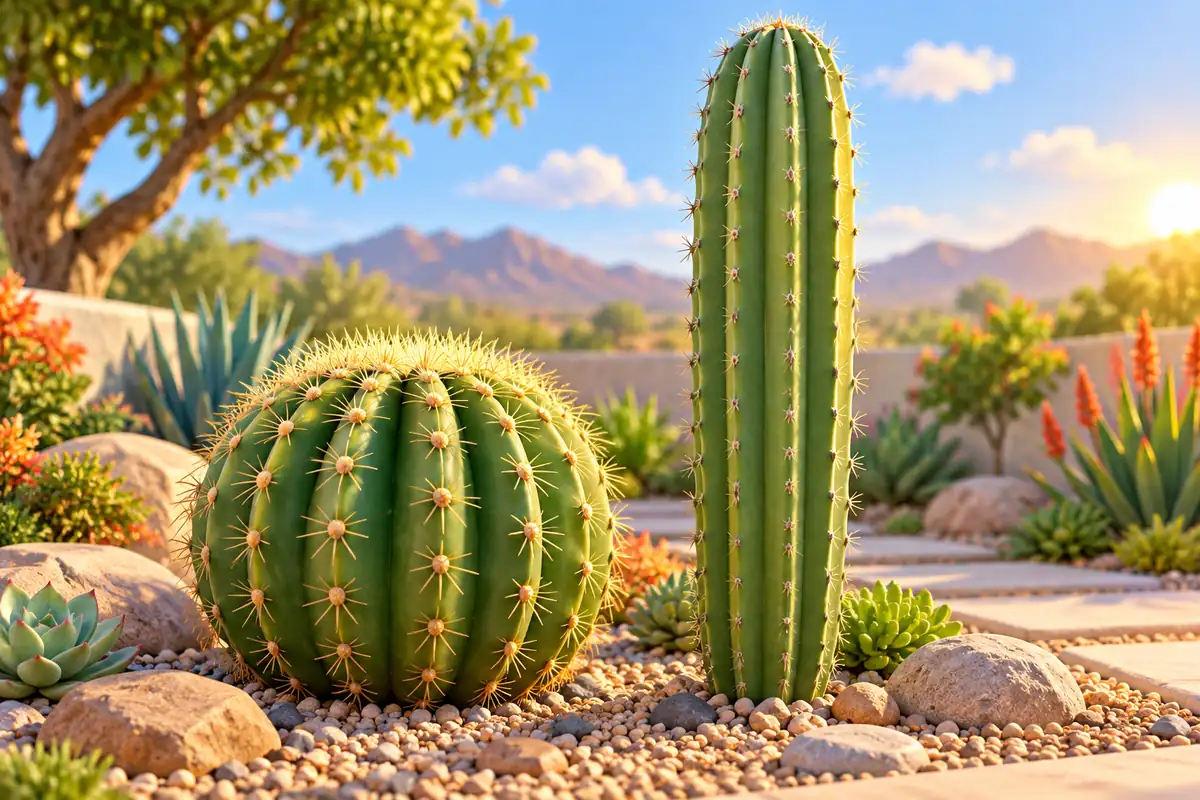
| Spiny | Having sharp spines. | a spiny cactus behind the garden barrier |
| Fleshy | Having thick, substantial tissue that can store water. | fleshy cactus stems after the rain |
| Waxy | Having a smooth coating with a wax-like appearance. | a waxy green cactus surface |
| Succulent | Having thick tissues adapted to store water. | a succulent cactus in a dry garden |
| Slow-growing | Growing gradually over time. | a slow-growing cactus in a sunny container |
| Hardy | Able to withstand particular growing conditions. | a hardy cactus suited to the local climate |
| Arid-adapted | Adapted to conditions with little available water. | an arid-adapted cactus on a dry slope |
| Prickly | Covered with sharp projections; informal and broad. | a prickly plant kept away from the walkway |
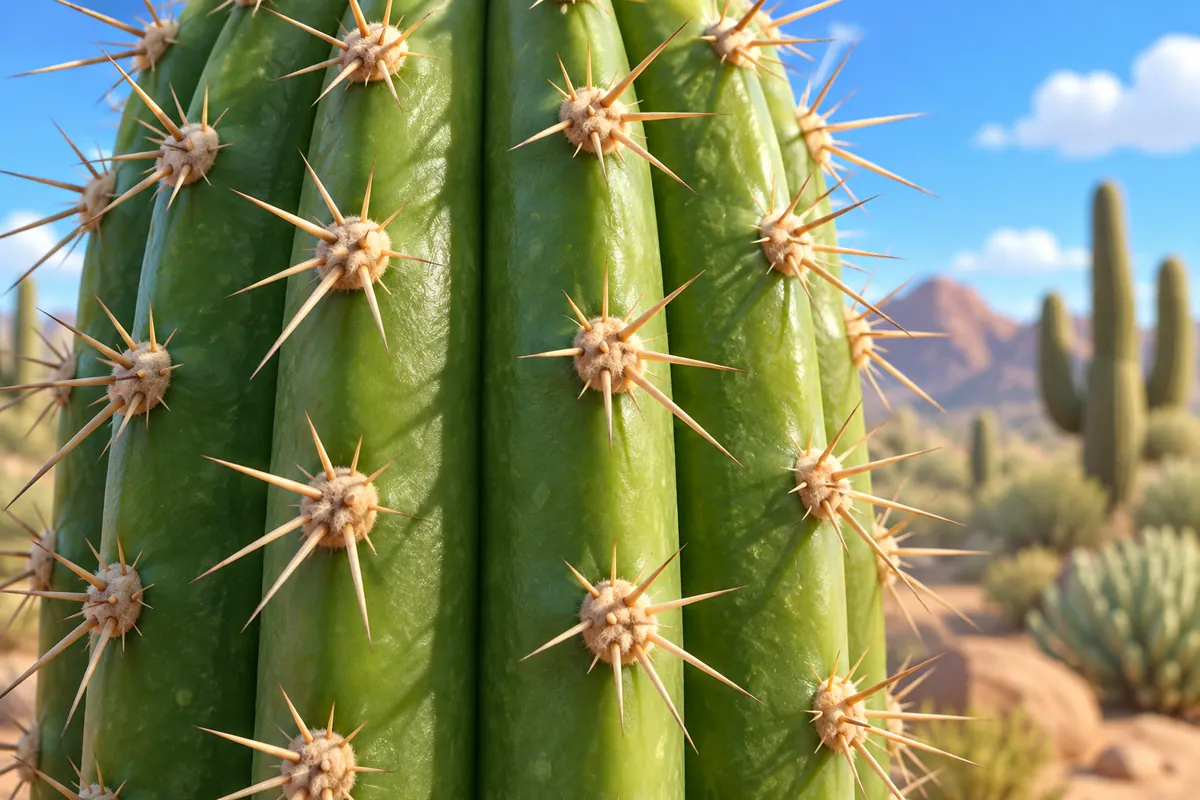
Use spiny rather than thorny when you want botanical precision: cactus spines are modified structures associated with areoles. Thorny is understandable in casual description, but thorns are botanically different structures.
Adjectives for cactus flowers and appearance
- Blooming — bearing flowers at the time described.
- Flowering — producing or bearing flowers.
- Vibrant — showing bright, strong color.
- Showy — striking or conspicuous, often said of blossoms.
- Green — describing stem color, with shades varying by plant.
- Desert-dwelling — suitable when the cactus grows in a desert setting; many species also grow elsewhere.
Adjectives for cactus in sentences
- A ribbed cactus cast a narrow shadow across the greenhouse bench.
- The globular cactus had a ring of bright flowers near its crown.
- A columnar cactus stood beside the winding desert trail.
- Fine spines covered the plant’s broad green pads.
- The fleshy cactus stem held its shape through the dry spell.
- A compact cactus brightened the sunny office window.
- The blooming cactus opened a vivid flower after a warm morning.
- A branching cactus formed a silhouette against the evening sky.
- The slow-growing cactus needed little pruning in its container.
- Visitors admired the showy blossoms from behind the garden rail.
Choose precise plant descriptions
Cactus adjectives are most useful when they point to a feature the reader can picture. Use spiny for the surface, columnar for the outline, and blooming for a plant with flowers. Keep climate and care terms tied to the species and growing conditions rather than implying that every cactus has the same needs.
Frequently asked questions about adjectives for cactus
What is a good adjective for a cactus?
Spiny, ribbed, globular, and columnar are useful when those features are visible. Choose one that matches the particular plant. For a flowering cactus, blooming or showy may fit, while a compact indoor plant might be described as small or slow-growing.
Is a cactus thorny or spiny?
Spiny is the more precise botanical adjective for a cactus. Cactus spines develop from areoles, while thorns are a different kind of plant structure. In casual writing, readers understand thorny, but use spiny when anatomical accuracy matters in educational or scientific contexts.
What adjectives describe cactus flowers?
Depending on the bloom, you might use vibrant, showy, bright, delicate, or tubular. Name a color or shape when it is visible, and use flowering or blooming to describe a cactus that currently has flowers and make the scene clear.
Can all cacti be called drought-tolerant?
Many cacti have adaptations for dry conditions, but care needs depend on species, climate, soil, and container conditions. Avoid using drought-tolerant as a guarantee that a plant needs no water. For plant-care advice, identify the species and follow guidance suited to its growing environment.
How to Describe cactus? – Different Scenarios
When it comes to describing cactus, there are various situations where you might need to find the right words. Whether you’re explaining the distinct features of different types of cactus or discussing the characteristics of a specific cactus plant, having a well-rounded vocabulary will come in handy. In this section, I’ll provide you with some adjectives that can be used to describe cactus in different scenarios.
Adjectives for Physical Appearance
To describe the physical appearance of a cactus, you can use adjectives that highlight its unique features. Here are a few examples:
- Prickly: Cacti are known for their prickly nature, with spines or thorns that cover their surface.
- Spiky: The spikes on a cactus can be sharp and pointy, adding to its characteristic spiky appearance.
- Sturdy: Cacti often have a sturdy structure, enabling them to withstand harsh conditions such as desert heat and limited water resources.
- Compact: Many cacti have a compact form, with their stems and branches growing close together.
Adjectives for Size
Cacti come in various sizes, from small potted plants to towering giants. Here are some adjectives you can use to describe their size:
- Miniature: Some cacti can be described as miniature, with their petite size making them suitable for indoor plant displays or small gardens.
- Giant: On the other end of the spectrum, there are giant cacti that can reach towering heights and dominate the landscape.
- Dwarf: Certain cacti belong to the dwarf variety, characterized by their small size and compact growth.
Adjectives for Color
Cacti can exhibit a wide range of colors, which can add to their overall allure. Here are a few adjectives to describe their color:
- Green: Most cacti are green due to their chlorophyll content, enabling them to photosynthesize and thrive in arid environments.
- Variegated: Some cacti display variegated patterns, with different shades of green or other colors adorning their stems or leaves.
- Blooming: When a cactus is in bloom, it can showcase vibrant and eye-catching colors, such as pink, red, yellow, or orange.
Describing Words for cactus in English
When it comes to describing cacti, there are a variety of adjectives that can capture their unique characteristics. Here are some words you can use to describe cacti in English:
- Prickly: Cacti are known for their prickly nature. The spines on their stems and branches protect them from predators.
- Spiky: Along with being prickly, cacti can also be described as spiky. Their sharp and pointed spines give them a distinct appearance.
- Sturdy: Cacti are often described as sturdy. With their thick and fleshy stems, they are able to store water for long periods and withstand harsh desert conditions.
- Compact: Cacti have a compact growth pattern, with their stems and branches tightly packed together. This makes them well-suited for small spaces and container gardening.
- Miniature: Some cacti are small in size and can be described as miniature. These tiny cacti are perfect for adding a touch of desert charm to your indoor space.
- Giant: On the other end of the spectrum, there are giant cacti that can reach impressive heights. These towering plants command attention with their sheer size.
- Dwarf: Just as there are giant cacti, there are also dwarf varieties. These pint-sized cacti are adorable and can be easily grown in small pots.
- Green: Cacti come in a range of colors, but the most common color is green. Their vibrant green hue adds a refreshing touch to any landscape or indoor setting.
- Variegated: Some cacti have variegated patterns on their stems or leaves. This means they have a mix of different colors, creating a visually interesting effect.
- Blooming: While not all cacti bloom, those that do can be described as blooming. Their colorful flowers add a stunning contrast to the prickly stems.
| Adjective | Example Sentence |
|---|---|
| Prickly | The cactus had prickly spines that kept predators away. |
| Spiky | I carefully touched the spiky cactus and felt its sharpness. |
| Sturdy | The sturdy cactus |
Adjectives for cactus
Positive Adjectives for cactus with 12 Example Sentences
When it comes to describing cacti, there are plenty of positive adjectives that can capture their unique qualities. Here are twelve adjectives that can paint a vivid picture of cacti:
- Sturdy: Cacti have a strong and resilient structure that allows them to thrive in harsh conditions. For example, “The sturdy cactus weathered the desert storm.”
- Compact: Many cacti have a compact form, making them suitable for small spaces. For instance, “The compact cactus is perfect for a windowsill garden.”
- Miniature: Some cacti are tiny in size, adding a touch of cuteness to any collection. As an example, “The miniature cactus fits perfectly in a tiny pot.”
- Giant: On the opposite end of the size spectrum, there are giant cacti that can tower over the landscape. For instance, “The giant saguaro cactus stands tall in the desert.”
- Dwarf: Dwarf cacti, with their small yet captivating appearance, are perfect for those who prefer petite plants. As an example, “The dwarf cactus adds a charming touch to any garden.”
- Green: Green is the most common color of cacti, symbolizing their vibrant and resilient nature. For example, “The green cactus adds a pop of color to the desert landscape.”
- Variegated: Some cacti exhibit variegated patterns, featuring a combination of different colors and textures. As an example, “The variegated cactus displays a stunning blend of green and yellow.”
- Blooming: When in bloom, cacti showcase magnificent flowers in various shades and shapes. For instance, “The blooming cactus attracts bees and butterflies with its vibrant blossoms.”
- Pristine: Cacti have a beautiful and untouched quality that is truly captivating. As an example, “The pristine cactus looks like a work of art in the garden.”
- Hardy: Cacti are known for their ability to adapt and survive in tough environments, making them extremely hardy plants. For example, “The hardy cactus thrives in the desert with minimal water.”
- Iconic: Cacti have become iconic plants that are instantly recognizable in landscapes around the world. As an example, “The iconic silhouette of a cactus evokes images of the desert.”
- Fascinating: Cacti have a fascinating and intriguing nature that sparks curiosity and admiration. For instance, “The fascinating cactus adapts to extreme temperatures and stores water.”
Negative Adjectives for cactus with 5 example sentences
While cacti have many positive traits, there are also some negative adjectives that can be used to describe them. Here are five examples:
- Prickly: Cacti are well-known for their prickly spines that serve as a defense mechanism against predators. As an example, “The prickly cactus should be handled with caution.”
- Sporadic: The growth pattern of some cacti can be sporadic, making it unpredictable to anticipate their next growth phase. For instance, “The sporadic growth of the cactus makes it challenging to predict when it will bloom.”
- Thorny: Similar to being prickly, cacti also have thorns that can cause discomfort if not handled carefully. For example, “The thorny cactus requires gloves to handle safely.”
- Sparse: Some cacti have sparse foliage, with only a few branches or needles. As an example, “The sparse cactus gives a minimalist and airy feel to any space.”
Synonyms and Antonyms with Example Sentences
Synonyms for Cactus
When it comes to describing cacti, there are various synonyms that can be used to add more depth and detail to our descriptions. Here are a few synonyms for cactus along with example sentences:
| Synonym | Example Sentence |
|---|---|
| Succulent | The succulent in my garden is thriving despite the dry weather. |
| Spiky Plant | Be careful not to touch the spiky plant, it’s a cactus! |
| Desert Plant | The desert plant with thick leaves and spines is a cactus. |
Antonyms for Cactus
On the other hand, if we want to express the opposite meaning or characteristics of cacti, we can use antonyms. Here are some antonyms for cactus along with example sentences:
| Antonym | Example Sentence |
|---|---|
| Soft Plant | Unlike the prickly cactus, the soft plant feels smooth to touch. |
| Leafy Plant | The leafy plant requires more water compared to cacti. |
| Moist Plant | While cacti are adapted to arid environments, the moist plant thrives in wet conditions. |
Using these synonyms and antonyms, we can bring variety and richness to our descriptions of cacti. Whether we want to highlight their unique adaptation to drought or contrast them with other types of plants, these words can help us paint a vivid picture for our readers or students.
Conclusion
Describing cacti is an art form that allows us to capture their unique beauty and characteristics. Throughout this article, we have explored a variety of adjectives that can be used to paint a vivid picture of these fascinating plants.
From sturdy and compact to miniature and giant, these adjectives highlight the diverse range of sizes and shapes that cacti can take. We have also explored adjectives like green, variegated, and blooming, which showcase the vibrant colors and stunning blooms that adorn many cacti.
In addition, we have discussed negative adjectives like prickly, sporadic, thorny, and sparse, which shed light on the defensive mechanisms, unpredictable growth patterns, and minimal foliage of some cacti.
Furthermore, we have introduced synonyms and antonyms for the word “cactus,” providing even more options for expanding our descriptions. These words allow us to add depth and detail to our descriptions, creating a more comprehensive and captivating portrayal of these incredible plants.
By utilizing these adjectives, synonyms, and antonyms, we can truly bring cacti to life in our writing, whether it be for educational purposes or simply for our own enjoyment. So go ahead and let your words bloom as you describe the enchanting world of cacti.


