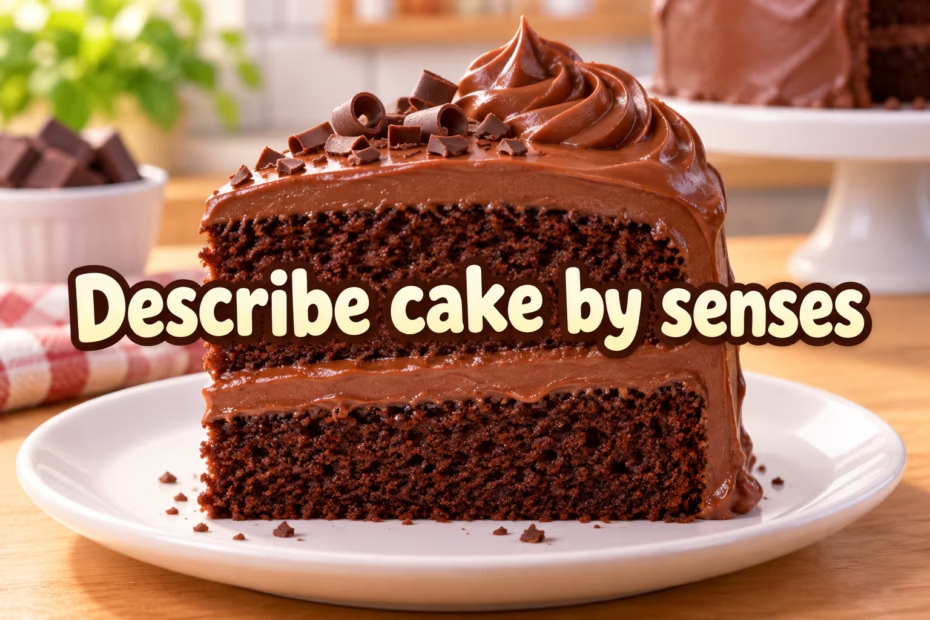
Adjectives for Cake: 50+ Words & Examples
Adjectives for cake describe what a slice looks like, tastes like, feels like, or smells like. Words such as golden, tangy, tender, and fragrant point to different qualities, so choose a word that fits the cake and the evidence you can actually observe.
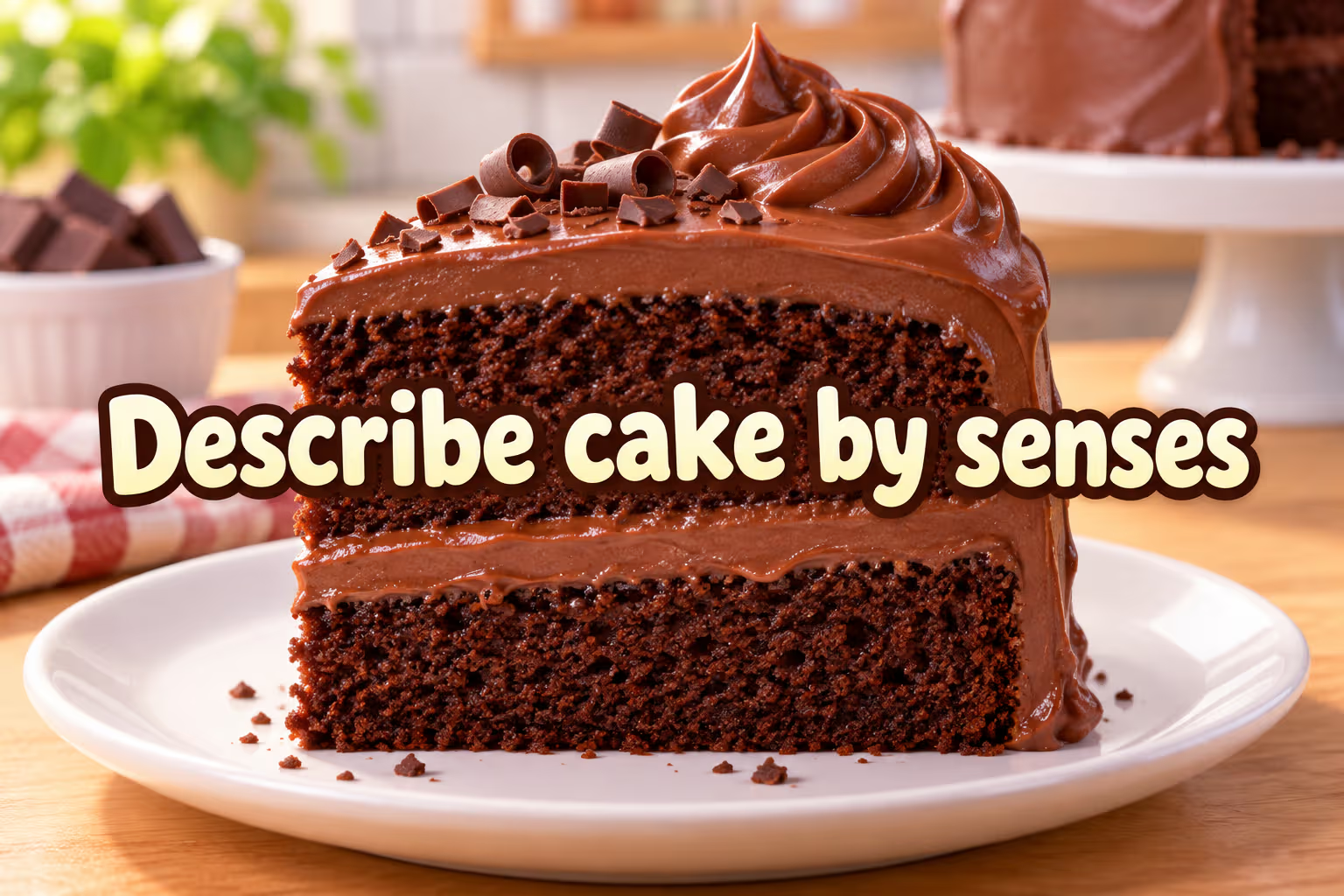
Quick Guide to Cake Descriptions
- Appearance: golden, glossy, layered, frosted, or crumb-coated.
- Flavor: buttery, chocolatey, tangy, nutty, citrusy, or balanced.
- Texture: tender, fluffy, fine-grained, dense, moist, or crumbly.
- Aroma: fragrant, buttery, vanilla-scented, toasted, or cinnamon-spiced.
- Evaluation: delectable or disappointing expresses a judgment; explain why it fits.
How Do You Choose Precise Adjectives for Cake?
Choose a descriptive word by deciding which sense or quality you mean first. Golden describes color, tangy describes a bright tart flavor, tender describes texture, and fragrant describes aroma; a vivid description can combine one word from several categories.
For example, “The golden lemon cake had a tender crumb, a tangy glaze, and a fragrant citrus aroma” gives the reader four distinct clues. “The delicious cake was amazing” tells readers that the writer liked it, but gives little detail about what it looked or tasted like.
Which Adjectives Describe Cake’s Appearance?
Appearance adjectives describe visible features such as color, finish, shape, layers, and decoration. Select observable words rather than guessing about ingredients from a photograph.
| Adjective | What it describes | Example |
|---|---|---|
| Golden | Evenly browned surface or crust | “A golden sponge cake was topped with fresh berries.” |
| Glossy | Shiny glaze or frosting | “Glossy ganache covered the chocolate cake.” |
| Layered | Visible stacked cake layers | “The layered cake showed alternating sponge and cream.” |
| Crumb-coated | Frosting covered with crumbs | “A crumb-coated cake had a rustic finish.” |
| Ornate | Elaborate, highly detailed decoration | “An ornate wedding cake featured piped flowers.” |
| Uneven | Irregular rise, cut, or frosting | “The uneven top made the home-baked cake look informal.” |
What Flavor Adjectives Work for Cake?
Flavor adjectives name a taste impression or a recognizable ingredient note. Use sweet, tart, bitter, rich, nutty, spiced, or balanced when the bite supports that description.
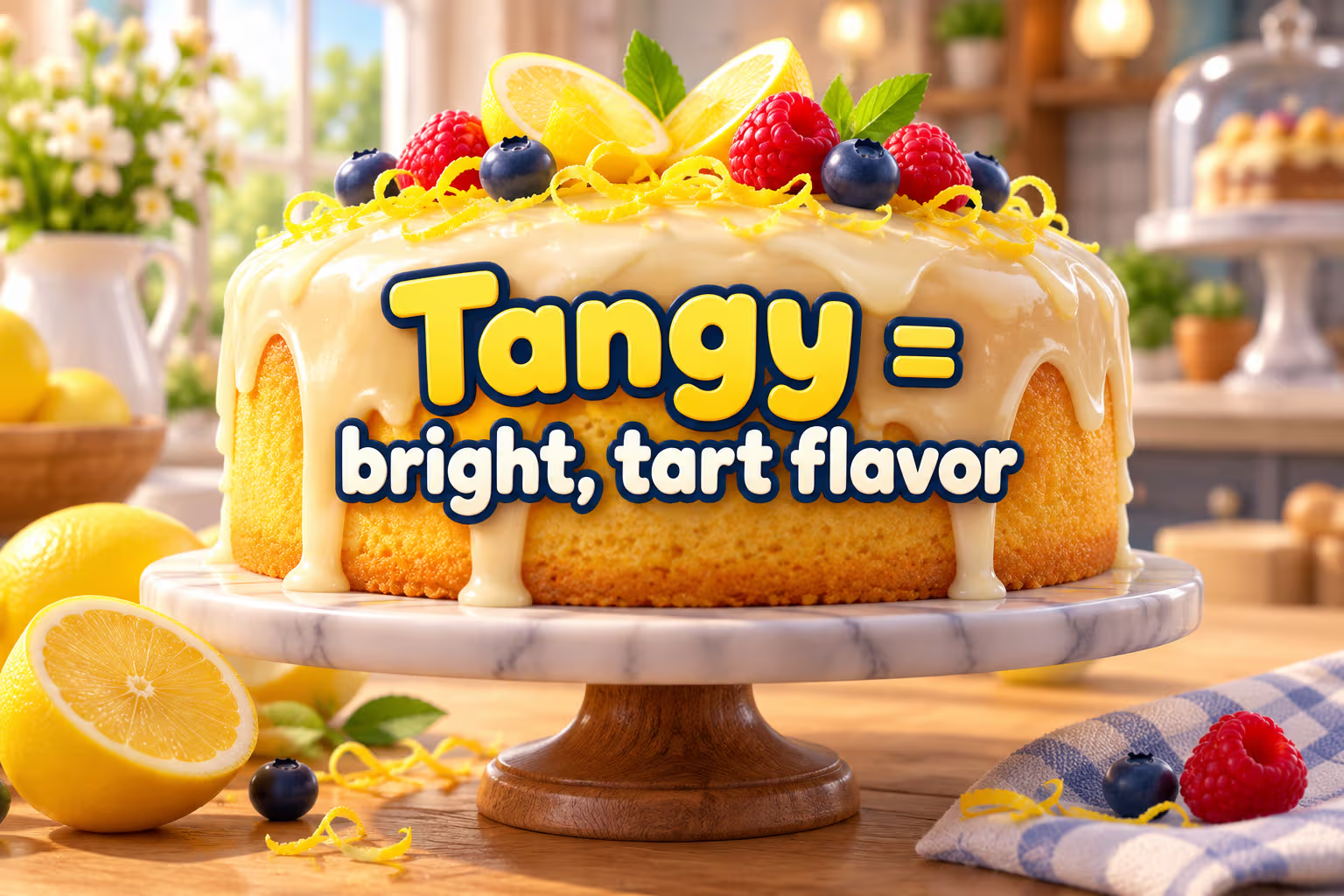
Tangy means having a sharp, pleasantly tart taste; lemon curd or cream-cheese frosting can provide that contrast in a sweet cake. Chocolatey, buttery, vanilla-scented, and nutty suggest familiar flavor notes, while balanced says that no single flavor overwhelms the others. Avoid claiming a cake is “not too sweet” as a fact for every reader: sweetness preference varies.
How Do Texture Words Change a Cake Description?
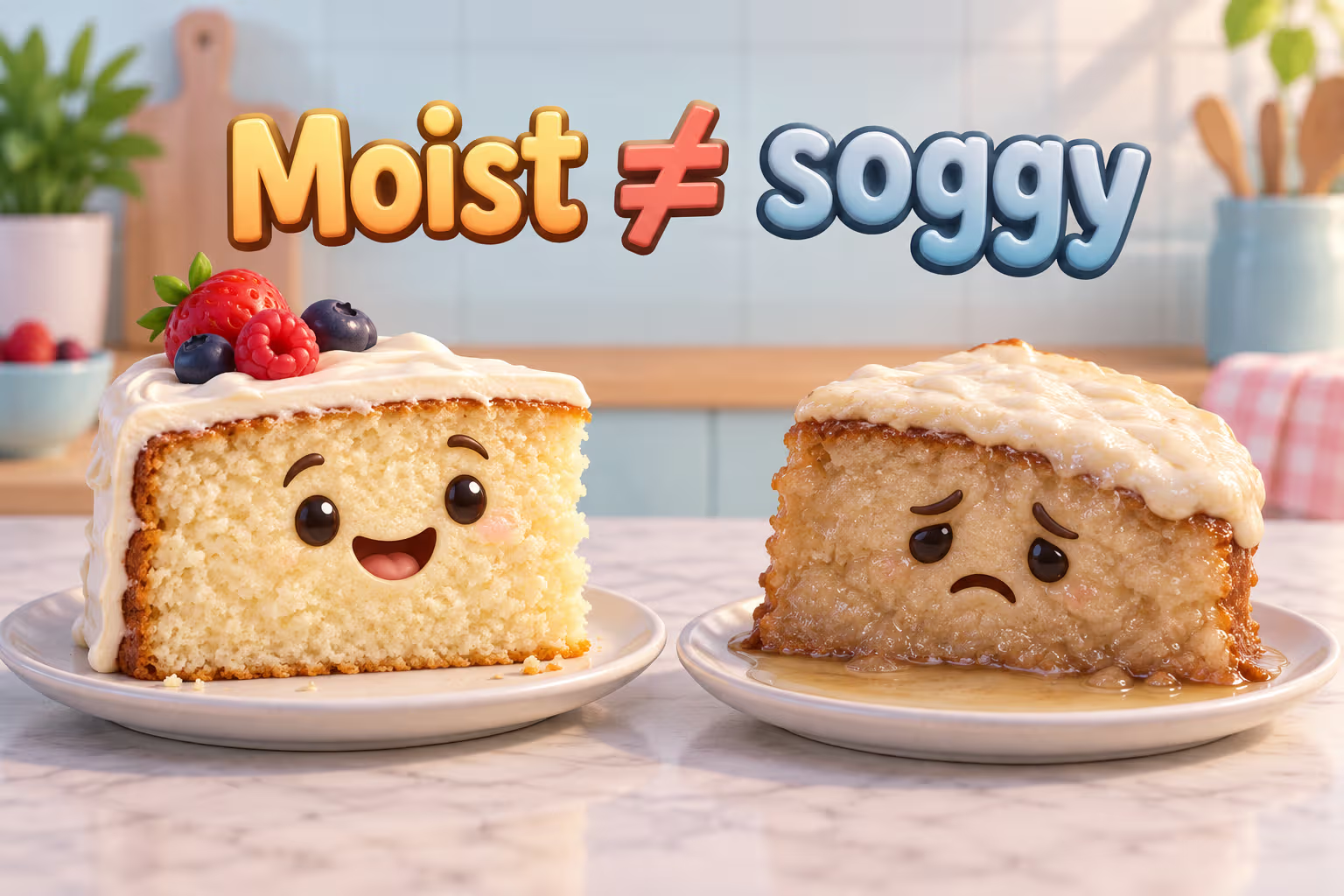
Texture adjectives describe the cake’s crumb, moisture, firmness, and feel as it is eaten. A cake can be tender yet sturdy, moist without being soggy, or dense by design rather than because it failed.
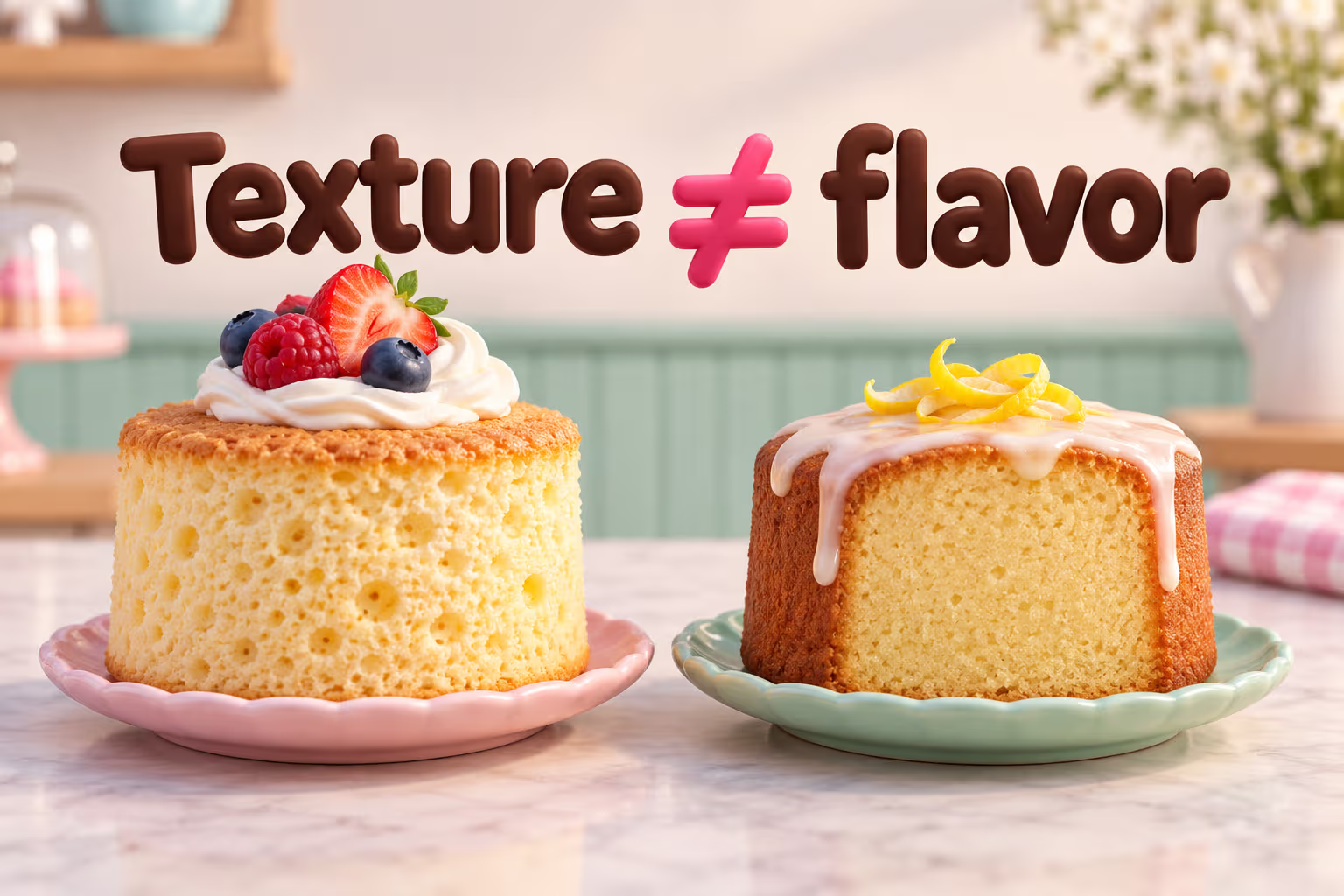
| Word | Texture cue | Useful contrast |
|---|---|---|
| Fluffy | Light, airy interior | Compared with compact or dense crumb |
| Tender | Soft crumb that yields easily | Compared with tough or chewy crumb |
| Fine-grained | Small, even crumb cells | Compared with coarse or irregular crumb |
| Moist | Soft crumb that does not feel dried out | Not the same as wet or soggy |
| Dense | Compact, substantial crumb | Can be intentional in pound cake |
| Crumbly | Breaks into crumbs readily | May be tender, but excessive crumbling can signal poor structure |
| Gummy | Sticky, under-set or compressed interior | Different from a pleasantly moist crumb |
King Arthur Baking describes creamed cakes as light and springy, while its paste-method cakes tend toward a fine, tender, less springy crumb. That means dense or compact is not automatically a flaw: pound cake is expected to feel more substantial than angel food cake. In a cake that should be light, though, a gummy line or tough crumb is a useful criticism, not simply a style preference.
Baker’s distinction: recipes call for different mixing methods and textures. Follow the recipe’s timing and visual cues instead of treating “mix less” as a universal fix: King Arthur’s Test Kitchen reports that both overmixing and undermixing can cause texture problems in some batters.
Which Words Describe Cake’s Aroma?
Aroma adjectives describe what a cake smells like before or during a bite. Words such as fragrant, toasty, buttery, cinnamon-spiced, and vanilla-scented help readers imagine the smell without confusing it with a texture claim.
Aroma and taste contribute to the overall experience of flavor, but they are not interchangeable descriptions. “The kitchen smelled of toasted almonds” names the aroma; “the cake tasted nutty” names a flavor impression. If you have not tasted the cake, describe the smell rather than asserting how it tastes.
How Can You Build a Vivid Cake Description?
A clear description usually needs two or three precise details rather than a long string of near-synonyms. Use this short sequence:
- Start with the cake type or flavor. Name lemon, chocolate, carrot, vanilla sponge, pound cake, or another clear form.
- Add one visible detail. Mention a golden crust, glossy ganache, smooth frosting, or distinct layers.
- Choose a texture word. Use tender, fluffy, fine-grained, dense, moist, or crumbly only when it matches the slice.
- Finish with a flavor or aroma note. Try buttery, tangy, nutty, toasted, or fragrant and support a strong judgment with a reason.
Example: “The small lemon layer cake had a golden edge, a tender crumb, and a tangy glaze that balanced its vanilla buttercream.” Each adjective points to a separate, specific quality.
When Are Positive or Negative Cake Adjectives Useful?
Evaluative words are useful when they state a clear opinion, but a brief reason makes the judgment more informative. Delectable, scrumptious, and irresistible praise enjoyment; dry, stale, soggy, and tasteless identify common disappointments.
“The cake was dry” is a concise judgment; “the outer slice was dry after sitting uncovered overnight” adds a condition. Keep claims proportional: one person may find a frosting cloyingly sweet while another enjoys the same level of sweetness. Terms such as homemade or exquisite may describe origin or presentation, but they do not prove that a cake tastes good.
Sources and Further Reading
For examples of how cake methods affect crumb and tenderness, see King Arthur Baking’s Cake Guide and its explanation of why undermixing as well as overmixing can affect cake texture. The Utah State University Extension 4-H cake judging manual describes observable crumb features such as a fine, even grain and a springy response. Cambridge Dictionary defines tangy as having a strong, sharp taste.
Original Cake Adjectives and Examples
The original article is preserved below in full, including its original wording, examples, lists, headings, and sequence. The new guide above adds sensory categories and context for choosing among those words.
When it comes to cake, there’s no denying its universal appeal. Whether it’s a decadent chocolate cake or a light and fluffy vanilla sponge, the right adjectives can make all the difference in describing its mouthwatering qualities. In this article, I’ll be sharing a variety of adjectives that will help you bring your cake descriptions to life. From rich and creamy to moist and tender, these words will have you salivating at the mere thought of sinking your teeth into a slice of cake perfection. So, let’s dive in and explore the world of adjectives for cake with some delicious examples!
How to Describe cake? – Different Scenarios
When it comes to describing cake, there are various scenarios that can help you paint a picture with your words. Whether you’re discussing a luscious chocolate cake or a fluffy vanilla one, here are some different scenarios and adjectives to consider:
- Visual Appeal: When describing a cake based on its appearance, consider the following adjectives:
- Flavor: The taste of a cake is often the most important aspect. Here are some adjectives to describe cake flavors:
- Texture: The texture of a cake can greatly impact the overall experience. Consider these adjectives when describing cake textures:
-
- Irresistible: A cake with an enticing aroma that makes it difficult to resist taking a bite.
- Buttery: A cake that exudes the mouthwatering scent of butter.
- Fragrant: A cake with an aromatic and pleasing smell, often incorporating spices or floral notes.
- Sweet: A cake with a sugary and alluring scent that invites you
Describing Words for cake in English
When it comes to describing cake, there are numerous adjectives that can be used to convey its visual appeal, flavor, texture, aroma, and overall delight. As a passionate baker and cake connoisseur, I have compiled a list of descriptive words that will help you paint a vivid picture of this delectable dessert.
Visual Appeal
- Whimsical: A cake that is charmingly playful and imaginative.
- Exquisite: A cake that displays exceptional beauty and craftsmanship.
- Luscious: A cake that looks incredibly tempting and mouthwatering.
- Elaborate: A cake that is intricately designed with meticulous attention to detail.
- Delicate: A cake that appears fragile and dainty, like a work of art.
Flavor
- Indulgent: A cake that is rich, luxurious, and absolutely indulgent.
- Decadent: A cake that is sinfully delicious and irresistibly sweet.
- Zesty: A cake that bursts with vibrant and refreshing citrus flavors.
- Velvety: A cake that has a smooth and creamy texture, like velvet on the tongue.
- Balanced: A cake that showcases a perfect harmony of flavors, without one overpowering the other.
Texture
- Moist: A cake that is tender, soft, and moist throughout, with a delightful crumb.
- Fluffy: A cake that is light, airy, and has a delicate, melt-in-your-mouth texture.
- Dense: A cake that is rich, compact, and has a satisfyingly substantial texture.
- Spongy: A cake that is springy and has a slightly elastic texture.
- Buttery: A cake that has a buttery texture, making it rich and smooth.
- Fragrant: A cake that has a pleasant and enticing aroma, filling the air with delight.
- Nutmeg-infused: A cake that exudes the warm and comforting scent of nutmeg.
- Vanilla-scented: A cake that smells of sweet and aromatic vanilla.
- Cinnamon-spiced: A cake that has a captivating aroma of cinnamon, adding warmth and depth.
- Toasty: A cake that gives off a delicious, toasty aroma reminiscent of freshly baked goods.
Adjectives for cake
Positive Adjectives for Cake with Examples
When it comes to describing cake, there’s no shortage of positive adjectives to capture its delightful essence. Here are 12 examples of adjectives that can be used to paint a vivid picture of cake:
- Delicious: This cake is so delicious, it melts in your mouth.
- Delectable: I couldn’t resist another slice of that delectable cake.
- Decadent: Indulging in a slice of this decadent cake is pure bliss.
- Scrumptious: The scrumptious cake left everyone wanting more.
- Moist: This cake is beautifully moist, with every bite bursting with flavor.
- Fluffy: The fluffy texture of this cake is incredibly light and airy.
- Rich: The rich chocolate cake was a true treat for the taste buds.
- Fragrant: The cake filled the room with its fragrant aroma of vanilla.
- Nutty: The nutty cake had a delightful crunch in every bite.
- Velvety: This velvety cake is smooth and luxurious on the palate.
- Homemade: The homemade cake had that extra special touch of love.
- Exquisite: Every detail of this exquisite cake was a work of art.
Negative Adjectives for Cake with Examples
While cakes are generally wonderful, there may be times when they fall short of expectations. Here are 5 examples of negative adjectives that can be used to describe a less-than-perfect cake:
- Dry: Unfortunately, the cake turned out dry and disappointing.
- Stale: The stale cake had lost its freshness and flavor.
- Soggy: The cake became soggy after sitting out for too long.
- Dense: The dense cake was heavy and lacked a light, fluffy texture.
- Tasteless: Despite its beautiful appearance, the cake was surprisingly tasteless.
When it comes to describing cake, positive adjectives abound, capturing its deliciousness, texture, aroma, and more. However, there may be times when a cake doesn’t quite meet expectations, leading to negative descriptions like dry, stale, or tasteless. Use these adjectives to create a vivid picture when talking about cakes.
Synonyms and Antonyms with Example Sentences
Synonyms and Antonyms with Example Sentences
Synonyms for cake
When it comes to describing cake, there are plenty of synonyms we can use to paint a delicious picture. Here are some alternative words to use instead of the generic “cake”:
- Pastry
- Dessert
- Confection
- Baked good
- Treat
For example:
- I couldn’t resist having a slice of that delectable pastry.
- The dessert table was filled with an array of mouthwatering treats.
- She baked a scrumptious confection that everyone raved about.
Antonyms for cake
While cake is often seen as a delightful treat, there are times when it doesn’t quite hit the mark. Here are some antonyms that describe the less desirable qualities of cake:
- Stale
- Dry
- Soggy
- Tasteless
- Dense
Here are a few examples:
- Unfortunately, the cake had turned stale after being left out overnight.
- The dry texture of the cake made it difficult to enjoy.
- The cake was disappointingly soggy and lacked flavor.
Remember, using the right words to describe cake can help create a vivid and enticing image. Whether you’re praising its decadent qualities or critiquing its shortcomings, these synonyms and antonyms can help you find the perfect words to express your thoughts.
Next, let’s explore some descriptive adjectives that can be used to describe the texture, aroma, and flavor of cake.
Conclusion
Describing a cake with the right adjectives can make all the difference in capturing its essence and enticing your readers. In this article, we explored various synonyms and antonyms for the word “cake” to help you paint a more vivid picture. Words like pastry, dessert, confection, baked good, and treat can be used as alternatives to the generic term “cake,” while adjectives like stale, dry, soggy, tasteless, and dense can describe less desirable qualities.
By using these descriptive words, you can create a more engaging and mouthwatering description of your cakes. However, our exploration doesn’t end here. In the next section, we will delve into descriptive adjectives for the texture, aroma, and flavor of cake, allowing you to further enhance your descriptions and captivate your audience.
Remember, the right choice of words can elevate your cake descriptions from ordinary to extraordinary. So, go ahead and experiment with these adjectives to craft enticing narratives that leave your readers craving a slice of your delectable creations.
Frequently Asked Questions About Adjectives for Cake
What is the best adjective to describe cake?
There is no single best adjective for every cake. Choose a word that fits the feature you mean: fluffy for an airy crumb, tangy for a sharp tart note, golden for a browned surface, or fragrant for a noticeable aroma.
Is “moist” a good word for cake?
Yes, when the crumb feels soft and not dried out. Moist does not mean wet or soggy; a cake with a damp compressed layer may be gummy or soggy instead. Add a concrete cue, such as “moist, tender crumb,” when you want to be specific.
What is the difference between tender and fluffy cake?
Tender describes a crumb that yields softly when bitten, while fluffy emphasizes a light, airy texture. A cake can be both, but a dense pound cake may be tender without being fluffy, and an airy sponge can feel springier.
Can “dense” be a positive cake adjective?
Yes. Dense can mean rich and substantial, as in a traditional pound cake or flourless chocolate cake. It sounds negative when the expected cake should be light and the compact crumb comes with tough, gummy, or underbaked texture.
How many adjectives should I use to describe a cake?
Two or three distinct details are usually clearer than a string of synonyms. Combine different categories—for example, “golden, tender, and tangy”—so readers learn about appearance, texture, and flavor rather than seeing repeated praise.
Conclusion
Adjectives for cake work best when each word names a distinct, observable quality: appearance, flavor, texture, aroma, or personal judgment. Combine a few accurate details, explain subjective evaluations, and remember that words such as dense and moist depend on the type of cake and how it feels to eat.


