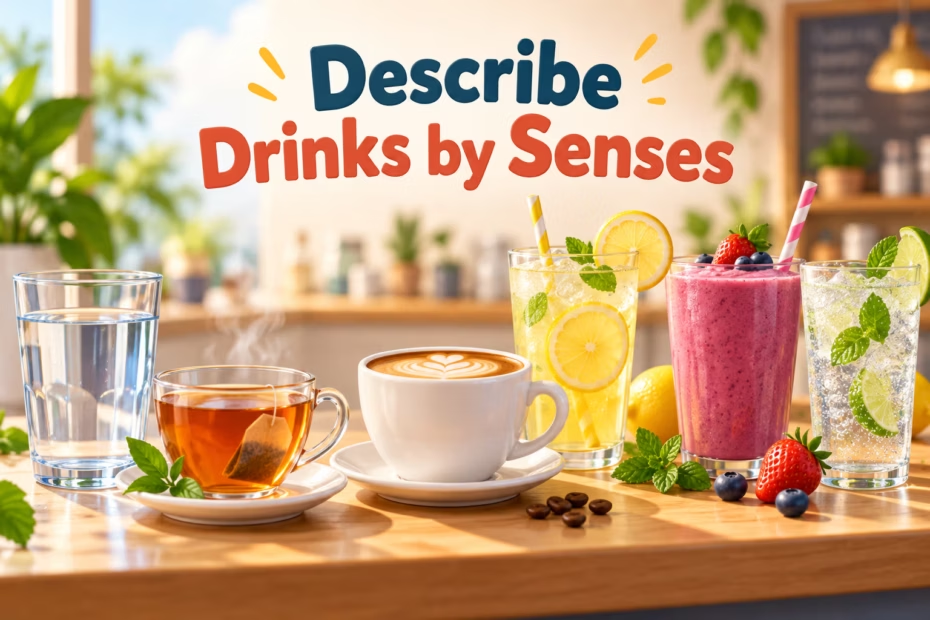
Adjectives for Drinks: Words, Meanings & Examples
Adjectives for drinks work best when they name a specific sensory quality: tart for a sharp flavor, effervescent for lively bubbles, or silky for a smooth texture. A precise description separates what the drink smells, tastes, and feels like from opinions about whether it is good, healthy, or made with a particular ingredient.
Quick Guide to Describing Drinks
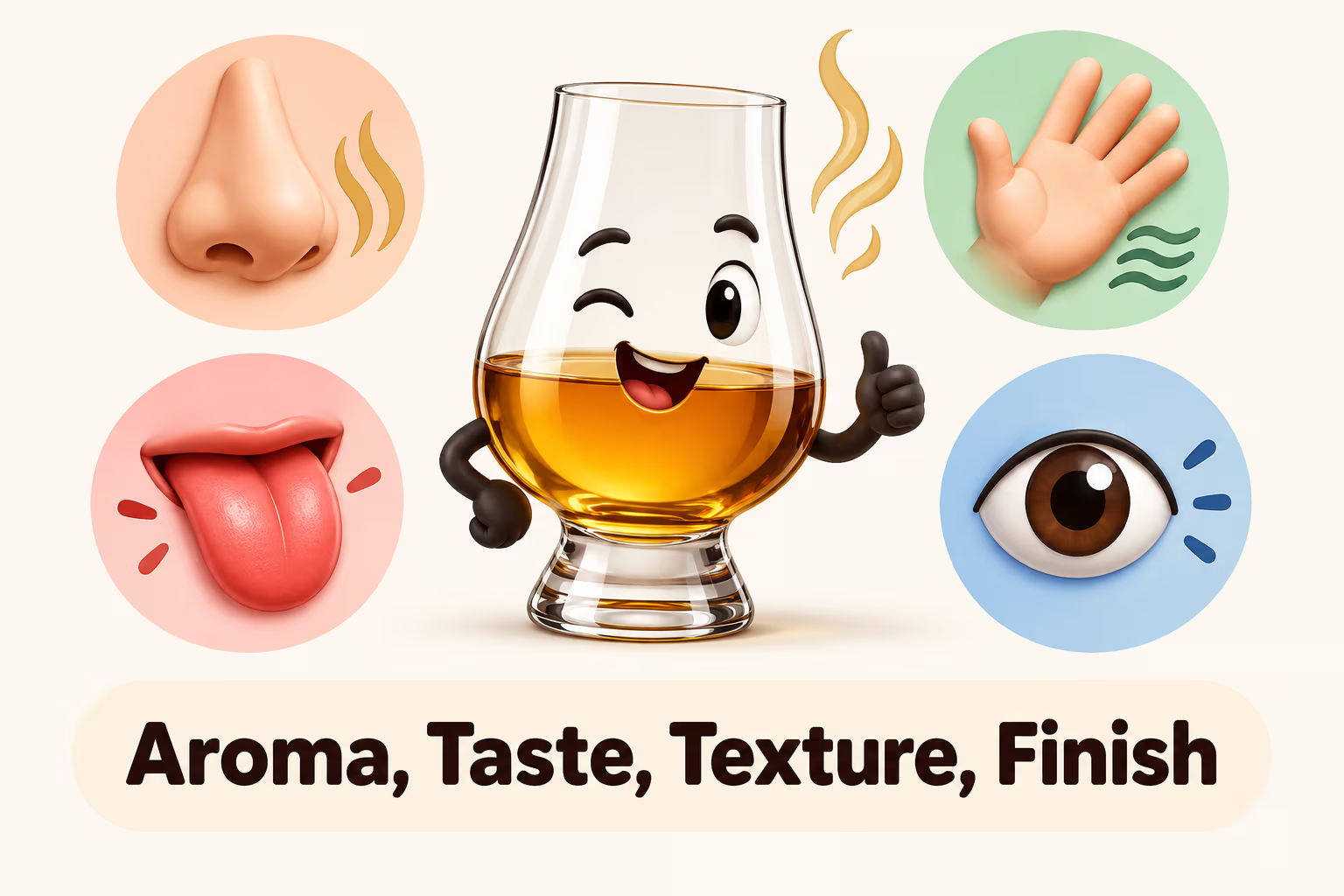
- Aroma: fragrant, floral, citrusy, roasted, or smoky.
- Taste: sweet, tart, bitter, savory, fruity, or spiced.
- Texture and body: creamy, silky, light-bodied, full-bodied, or crisp.
- Temperature and carbonation: chilled, warm, steaming, sparkling, or flat.
- Finish: lingering, clean, dry, or refreshing, with the context made clear.
How do you choose an accurate adjective for a drink?
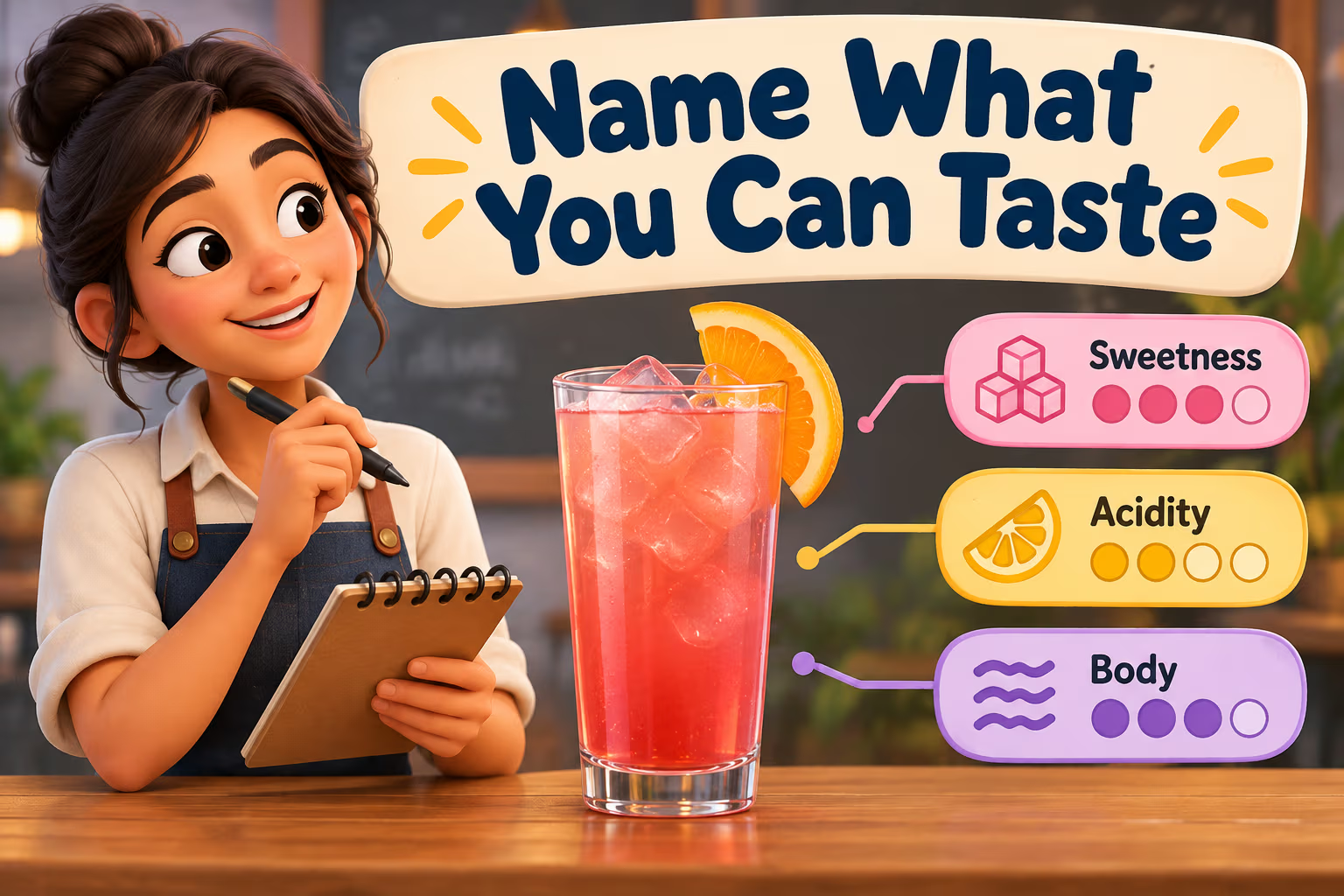
Start with an observable feature, then choose a word from the matching sensory category. The Specialty Coffee Association’s cupping approach separates fragrance or aroma, flavor, aftertaste, acidity, and mouthfeel; that separation is useful in everyday writing because a drink can be aromatic but mild, sweet but thin, or tart with a long finish.
- Notice the aroma before tasting. Use floral, roasted, herbal, or citrusy only when that smell is present.
- Describe the main flavor. Say sweet, tart, bitter, fruity, or spicy, then name a recognizable note when useful.
- Record the texture. Distinguish thin, creamy, silky, foamy, or astringent from flavor itself.
- Add serving conditions. Mention whether it is chilled, warm, still, or sparkling.
- Describe the aftertaste. State whether a flavor fades quickly or lingers, and whether that impression is pleasant or unpleasant.
Which adjectives describe each part of a drink?
| Feature | Useful adjectives | Example | What to check |
|---|---|---|---|
| Aroma | floral, fragrant, roasted, citrusy, herbal, smoky | “The tea smells floral and lightly citrusy.” | Describe the aroma you notice before claiming a specific ingredient. |
| Taste | sweet, tart, bitter, savory, fruity, spicy | “The lemonade tastes tart with a sweet finish.” | Separate the dominant taste from a flavor note. |
| Texture or body | creamy, silky, smooth, thin, full-bodied, astringent | “The cocoa feels creamy and full-bodied.” | Body means perceived weight or fullness, not a measured ingredient. |
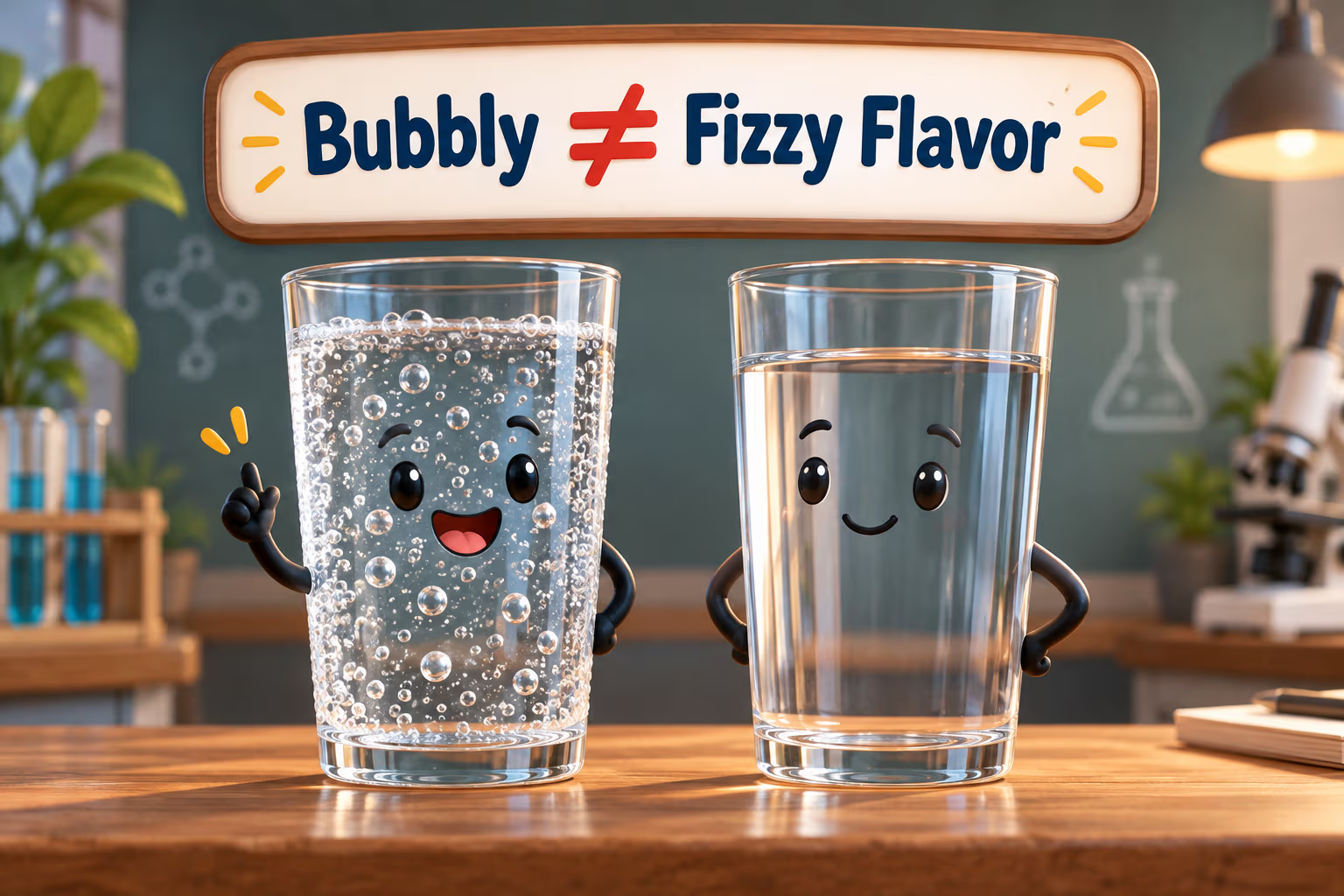
| Carbonation | sparkling, bubbly, fizzy, flat | “The sparkling water is finely bubbled.” | Fizz describes gas sensation; it does not identify flavor. |
| Temperature | chilled, cool, warm, hot, steaming | “The cider is warm, not piping hot.” | Use temperature words for serving condition, not flavor. |
| Finish | clean, lingering, dry, crisp, refreshing | “A tart berry note lingers after the sip.” | Some finish terms mix a sensory observation with a personal judgment. |
How are taste, aroma, and flavor different?
Aroma is what you smell, taste is what your tongue detects, and flavor is the combined impression created during eating or drinking. For example, a coffee may taste bitter while smelling nutty; calling it “nutty” is a flavor or aroma description, not one of the basic tastes.
Professional tasting systems use structured descriptors because tasters can confuse intensity with preference. “Strong” says little by itself: a strong coffee might be intensely aromatic, bitter, or concentrated, so name the dimension and give an example such as “bold, roasted aroma” or “pronounced bitterness.”
What do sweet, tart, bitter, and dry mean?
Sweet signals a sugary or sweet-tasting impression; tart signals a sharp, sour impression; and bitter describes a bitter taste. In beverage writing, dry can mean not sweet, but in tea, coffee, or wine tasting it may also describe a drying mouthfeel, so the surrounding sentence should remove ambiguity.
Do not use acidic as a synonym for “bad” or as a precise pH claim. “Bright” and “lively” often describe perceived acidity positively, while “sharp” or “sour” can describe a more forceful impression. A tasting adjective reports perception; a laboratory pH value requires measurement.
How can you describe drinks in a menu or review?
Build a short description from one or two sensory observations and one serving detail. The most useful menu line tells readers what they can expect without promising an ingredient, nutrition benefit, or flavor that the recipe does not support.
- Specific: “Chilled green tea with a grassy aroma and a clean, lightly bitter finish.”
- Balanced: “Tart cranberry and orange meet a gently sweet finish.”
- Texture-led: “A creamy banana smoothie with a thick, spoonable body.”
- Carbonation-led: “Sparkling water with fine bubbles and a crisp finish.”
- Too vague: “A strong, amazing drink.” Replace it with the actual aroma, flavor, or texture you observed.
“Velvety,” “decadent,” and “invigorating” can add mood, but they are subjective. Pair them with concrete details—such as cocoa aroma, a creamy texture, or a lingering spice note—so readers can picture the drink without treating promotional language as a factual ingredient or health claim.
Which drink adjectives are subjective or easy to misuse?
- Refreshing: a common positive impression, often associated with coldness, acidity, or lightness; it is not a technical flavor category.
- Smooth: may mean low bitterness, a soft texture, or an easy finish. Specify which meaning applies.
- Rich: may refer to full body, strong flavor, or a sweet/creamy impression; name the evidence.
- Natural: a broad claim that does not tell the reader how the drink tastes; use ingredient details only when verified.
- Healthy: a nutrition claim, not a sensory adjective. Packaged beverages list total and added sugars separately on the U.S. Nutrition Facts label, so do not infer healthfulness from words such as “fresh” or “light.”
Adjectives for Drinks: original examples and lists
The source article below is preserved in full, including its 19 original list items and four tables with 37 rows. The new guidance above adds a sensory framework without replacing the original examples.
Are you tired of using the same old adjectives to describe your favorite drinks? Well, look no further! In this article, I’ll be sharing a comprehensive list of adjectives that will help you add a burst of flavor to your descriptions. From refreshing to decadent, these words will take your beverage descriptions to the next level.
Picture this: a tall, icy glass of lemonade on a scorching summer day. Now, imagine being able to convey the crispness and tanginess of that drink with just the right adjective. Whether you’re a writer looking to add depth to your descriptions or simply a beverage enthusiast wanting to impress your friends, this article is for you. I’ll provide you with a wide range of adjectives, along with examples, that will make your drink descriptions come alive.
How to Describe drinks? – Different Scenarios
When it comes to describing drinks, there are various scenarios in which you may find yourself needing to convey their taste, appearance, or experience. Here are a few of those scenarios along with some tips on how to effectively describe drinks in each situation:
1. Writing a Menu Description
If you’re in the restaurant business, crafting enticing menu descriptions is crucial. You want your customers to be captivated by the drinks you offer. Here’s how you can describe drinks on your menu:
- Use powerful adjectives to evoke sensory experiences: “Indulge in our rich, velvety, and decadent hot chocolate.”
- Highlight unique flavors or ingredients: “Savor the refreshing twist of our tropical pineapple-infused lemonade.”
- Be specific about the presentation: “Our refreshing citrus mojito is served with a sprig of fresh mint and a slice of juicy lime.”
2. Writing a Beverage Review
If you’re a food or beverage enthusiast, sharing your thoughts and opinions on drinks is a great way to engage with others. When writing a beverage review, keep these tips in mind:
- Start with a captivating introduction: “As I took my first sip of the smooth and creamy cappuccino, I was transported to the streets of Italy.”
- Describe the taste profile: “The robust Ethiopian coffee boasted notes of dark chocolate and ripe berries.”
- Discuss the overall experience: “The effervescent champagne tickled my palate, leaving a lingering sensation of pure elegance.”
- Detail the steps and ingredients: “To create this refreshing summer mocktail, you’ll need fresh raspberries, sparkling water, and a hint of zesty lime.”
- Use descriptive language to highlight the flavors: “The invigorating blend of tart cranberries and sweet orange in this cocktail creates a harmonious balance of flavors.”
- Mention any visual elements: “Garnish your margarita with a vibrant slice of blood orange for a pop of color
Describing Words for drinks in English
When it comes to describing drinks, choosing the right adjectives can make all the difference in painting a vivid picture of the taste and experience. Whether you’re a menu writer, a beverage reviewer, or simply someone who appreciates a great drink, having a range of descriptive words at your disposal can elevate your descriptions to the next level. Here are some adjectives that can help you describe drinks in an interesting and flavorful way:
- Refreshing: Quench your thirst with a drink that revitalizes and cools you down.
- Bubbly: Experience the effervescence and playful fizz of a carbonated beverage.
- Soothing: Sip on a drink that brings a sense of calm and relaxation.
- Zesty: Delight your taste buds with a drink that bursts with tangy and vibrant flavors.
- Velvety: Indulge in a smooth and creamy drink that glides across your palate.
- Aromatic: Inhale the tantalizing scents that waft from a fragrant and aromatic drink.
- Crisp: Enjoy a drink that has a refreshing and invigorating bite to it.
- Tropical: Transport yourself to a tropical paradise with a drink that captures the flavors of exotic fruits.
- Decadent: Savor a rich and indulgent drink that is a treat for your senses.
- Citrusy: Delight in the bright and tangy flavors of citrus-infused drinks.
These adjectives can be used to describe a wide variety of beverages, such as coffee, tea, cocktails, smoothies, and more. By incorporating these descriptive words into your writing, you’ll be able to create enticing descriptions that engage your readers and leave them eager to try the drinks you’re describing.
Remember, the key to effective beverage descriptions is to be specific and use language that conveys the unique qualities and flavors of the drink. Incorporating sensory details and mentioning any visual elements can also enhance the reader’s experience.
Now that we’ve explored a range of adjectives for describing drinks, let’s move on to the next section to discover how to effectively introduce and describe the taste profile of a drink.
Adjectives for drinks
Positive Adjectives for drinks with 12 Example Sentences
When it comes to describing drinks, using the right adjectives can make all the difference. Adding positive adjectives to your descriptions can make them more enticing and flavorful. Here are 12 examples of positive adjectives that you can use to describe drinks:
| Adjective | Sentence |
|---|---|
| Refreshing | The cool, crisp taste of the lemonade was incredibly refreshing on a hot summer day. |
| Bubbly | The sparkling water had a delightful, bubbly texture that danced on my tongue. |
| Soothing | The warm cup of chamomile tea provided a soothing sensation as I sipped it slowly. |
| Zesty | The tangy orange juice had a zesty kick that awakened my taste buds. |
| Velvety | The smooth, velvety texture of the hot chocolate was pure indulgence. |
| Aromatic | The fragrant aroma of the freshly brewed coffee filled the room, enticing everyone with its rich scent. |
| Crisp | The cold, crisp apple cider had a refreshing bite that made it the perfect fall drink. |
| Tropical | The vibrant colors and tropical flavors of the piña colada transported me to a beach paradise. |
| Decadent | The rich, creamy milkshake was a decadent treat that melted in my mouth. |
| Citrusy | The tangy, citrusy flavor of the lemonade was like a burst of sunshine on my palate. |
| Smooth | The smooth, silky texture of the milk tea made it a delight to sip. |
| Aromatic | The floral scent and aromatic flavors of the lavender-infused drink were simply divine. |
By incorporating these positive adjectives into your descriptions, you can paint a vivid picture that engages the reader’s senses and leaves them eager to try the drinks you’re describing.
Negative Adjectives for drinks with 5 Example Sentences
While we often focus on highlighting the positive aspects of drinks, it’s also important to be aware of negative adjectives that can be used to describe them. These adjectives can indicate qualities that some people may not find appealing. Here are 5 examples of negative adjectives that can be used to describe drinks:
| Adjective | Sentence |
|---|---|
| Bitter | The bitter taste of black coffee may not be everyone’s cup of tea. |
| Flat | The soda had gone flat, losing its fizz and becoming less enjoyable to drink. |
| Watery | The diluted smoothie had a watery consistency that made it less satisfying. |
| Sour | The sour flavor of the lemonade made my mouth pucker with each sip. |
| Sickly-sweet | The sickly-sweet taste of the artificially flavored beverage was overwhelming and cloying. |
These negative adjectives can help provide a balanced perspective when describing drinks and ensure that your readers have a realistic understanding of their taste.
With the use of positive and negative adjectives, you can create well-rounded and engaging descriptions of beverages that capture the unique qualities and flavors of each drink. Remember to be specific, use sensory details, and incorporate visual elements to enhance the reader’s experience.
Synonyms and Antonyms with Example Sentences
Synonyms for Drinks
When it comes to describing drinks, there are plenty of synonyms you can use to make your descriptions more varied and interesting. Here are some synonym options along with example sentences:
| Synonym | Example Sentence |
|---|---|
| Refreshing | The cold lemonade was incredibly refreshing. |
| Bubbly | The champagne had a delightful, bubbly effervescence. |
| Soothing | The warm herbal tea provided a soothing sensation. |
| Zesty | The spicy margarita had a zesty kick. |
| Velvety | The smooth hot chocolate felt velvety on my tongue. |
| Aromatic | The freshly brewed coffee had an aromatic scent. |
| Crisp | The apple juice had a crisp and tangy flavor. |
| Tropical | The pineapple smoothie had a delicious tropical twist. |
| Decadent | The chocolate milkshake was a rich and decadent treat. |
| Citrusy | The orange juice had a bright and citrusy flavor. |
| Smooth | The whiskey went down smoothly, leaving a warm sensation. |
Antonyms for Drinks
In order to provide a balanced perspective, it’s also important to incorporate antonyms when describing drinks. Here are some antonym options along with example sentences:
| Antonym | Example Sentence |
|---|---|
| Bitter | The black coffee had a bitter taste. |
| Flat | The soda had gone flat and lost its fizz. |
| Watery | The diluted lemonade was watery and tasteless. |
| Sour | The spoiled milk had a sour smell. |
| Sickly-sweet | The sugary soda was sickly-sweet and overwhelming. |
Conclusion
In this article, I have provided a comprehensive list of adjectives that can be used to describe drinks. By incorporating these descriptive words into your writing, you can create engaging and enticing descriptions that will captivate your readers. From refreshing and bubbly to soothing and zesty, there are countless adjectives that can be used to convey the unique qualities of different beverages.
I have also emphasized the importance of using both positive and negative adjectives to provide a well-rounded perspective. While positive adjectives highlight the desirable aspects of a drink, negative adjectives add depth and balance to the description. By incorporating both types of adjectives, you can create a more realistic and engaging portrayal of the beverage.
Remember, the choice of adjectives is crucial when it comes to describing drinks. Each word you choose can evoke specific sensations and emotions in the reader. So, be mindful of the adjectives you select and consider the impact they will have on the overall description.
By utilizing the adjectives provided in this article, you can elevate your writing and create vivid and captivating descriptions of drinks. So, go ahead and experiment with different adjectives to enhance your beverage descriptions and make them truly stand out. Cheers!
Frequently Asked Questions About Adjectives for Drinks
What are the best adjectives for a refreshing drink?
Use chilled, crisp, light, or tart when those qualities are present. Refreshing is a useful overall impression, but it is subjective; add the specific temperature, flavor, or carbonation that creates it.
Is “bubbly” the same as “fizzy”?
Both can describe visible or felt carbonation, and they are often interchangeable in casual writing. Bubbly can sound playful, while fizzy often emphasizes a sharper sensation. Neither word tells the reader whether the drink tastes sweet, tart, or bitter.
Can “dry” describe a drink that is not alcoholic?
Yes. Dry can describe an unsweetened or not-sweet impression in many drinks, and it can also describe a mouth-drying sensation. Clarify the meaning with wording such as “dry and unsweetened” or “a dry, tannic finish.”
What is the difference between strong and bold?
Strong can refer to intensity or concentration, while bold is a broader impression of pronounced flavor. Neither word identifies a specific sensory feature by itself. Say “strong coffee aroma,” “bold roasted flavor,” or give the measured concentration when that is what you mean.
How can I describe a drink without guessing its ingredients?
Describe the sensation you can verify: “citrusy aroma,” “tart finish,” or “creamy texture.” Avoid naming lemon, vanilla, or dairy unless the recipe or label confirms those ingredients; similar sensory notes can come from different sources.
Sources and Further Reading
The Specialty Coffee Association’s overview of coffee sensory assessment separates aroma, flavor, aftertaste, acidity, and mouthfeel. UC Davis Continuing and Professional Education’s descriptive wine analysis explains structured sensory description. For claims about packaged drinks, the FDA’s added-sugars label guide distinguishes total sugars from added sugars. Explore related vocabulary in our guides to adjectives for coffee and adjectives for food.


