How to Choose the Right Camping Adjective
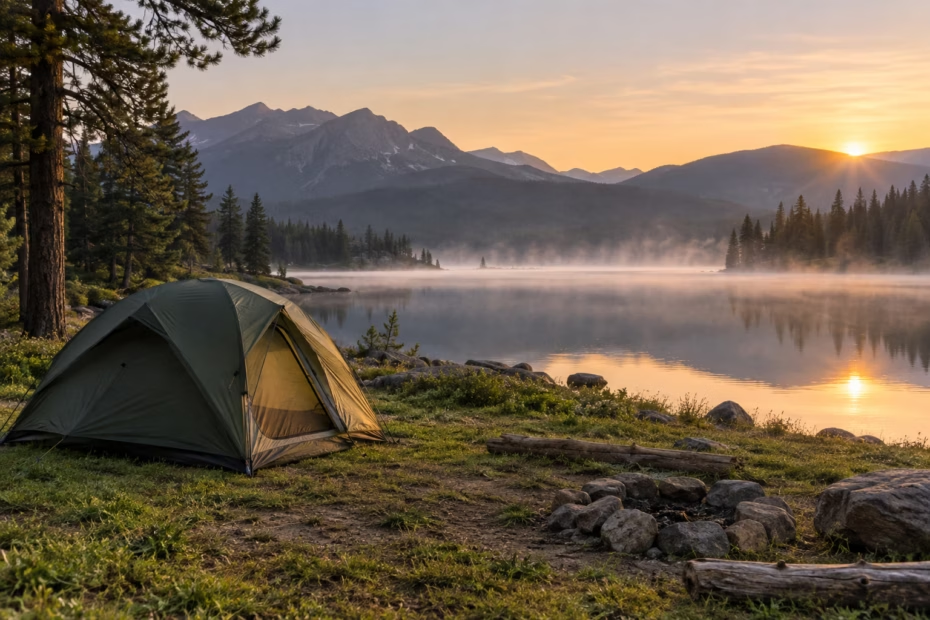
The best adjective for camping depends on the detail you want readers to picture. A campsite can be secluded because it feels private, scenic because of its view, or well-equipped because it has useful facilities. Those words describe different things. Instead of calling every enjoyable trip “amazing,” name the landscape, weather, comfort, activity, or mood that made it memorable.
Camping can mean staying outdoors in a tent, while a campsite may refer to one place to pitch a tent or to a larger area with facilities, depending on regional usage. That distinction helps you make the sentence specific: describe the campsite, the campground, the trail, or the whole camping trip.
Adjectives for a Campsite and Its Surroundings
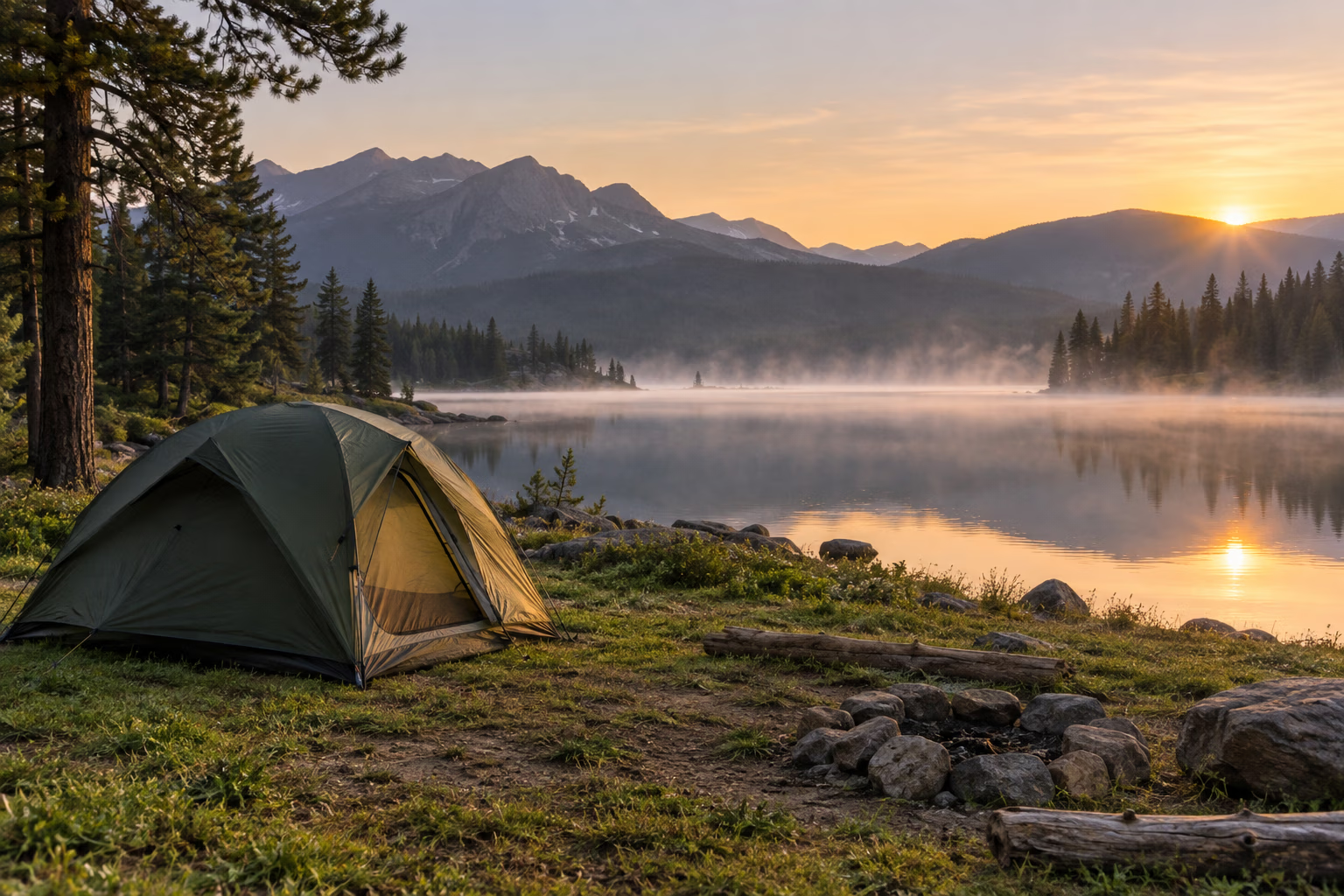
Use place words to show what someone would notice on arrival. A single modifier can suggest privacy, appearance, terrain, or convenience:
- Secluded: away from busy roads or crowds. “We found a secluded pitch beneath a stand of pines.”
- Scenic: attractive because of its natural views. “The scenic campground overlooked a wide valley.”
- Picturesque: especially pretty in a way that resembles a painting or postcard. “A picturesque footbridge crossed the stream beside our tent.”
- Wooded: covered or surrounded by trees. “The wooded campsite offered shade through the warm afternoon.”
- Open: exposed or spacious, with few trees or barriers. “The open field gave us a clear view of the evening sky.”
- Riverside, lakeside, or coastal: beside a particular kind of water. “Their lakeside pitch was close to a quiet swimming area.”
- Remote: far from towns and everyday services. “The remote site felt quiet, but we planned our supplies carefully.”
- Well-equipped: provided with useful facilities or amenities. “The well-equipped campground had drinking-water taps and marked pitches.”
- Crowded: containing many people or tents in a limited space. “The crowded campground was lively but offered little privacy.”
- Rugged: rough, uneven, or wild in appearance. “A rugged trail led to the rocky tent site.”
Notice that these adjectives are not interchangeable. A remote place may be quiet but not scenic; a well-equipped one may be busy rather than secluded. A good description can combine two details—“a secluded, wooded pitch” or “a crowded but well-equipped campground”—when both are true.
Words for Weather, Terrain, and Comfort
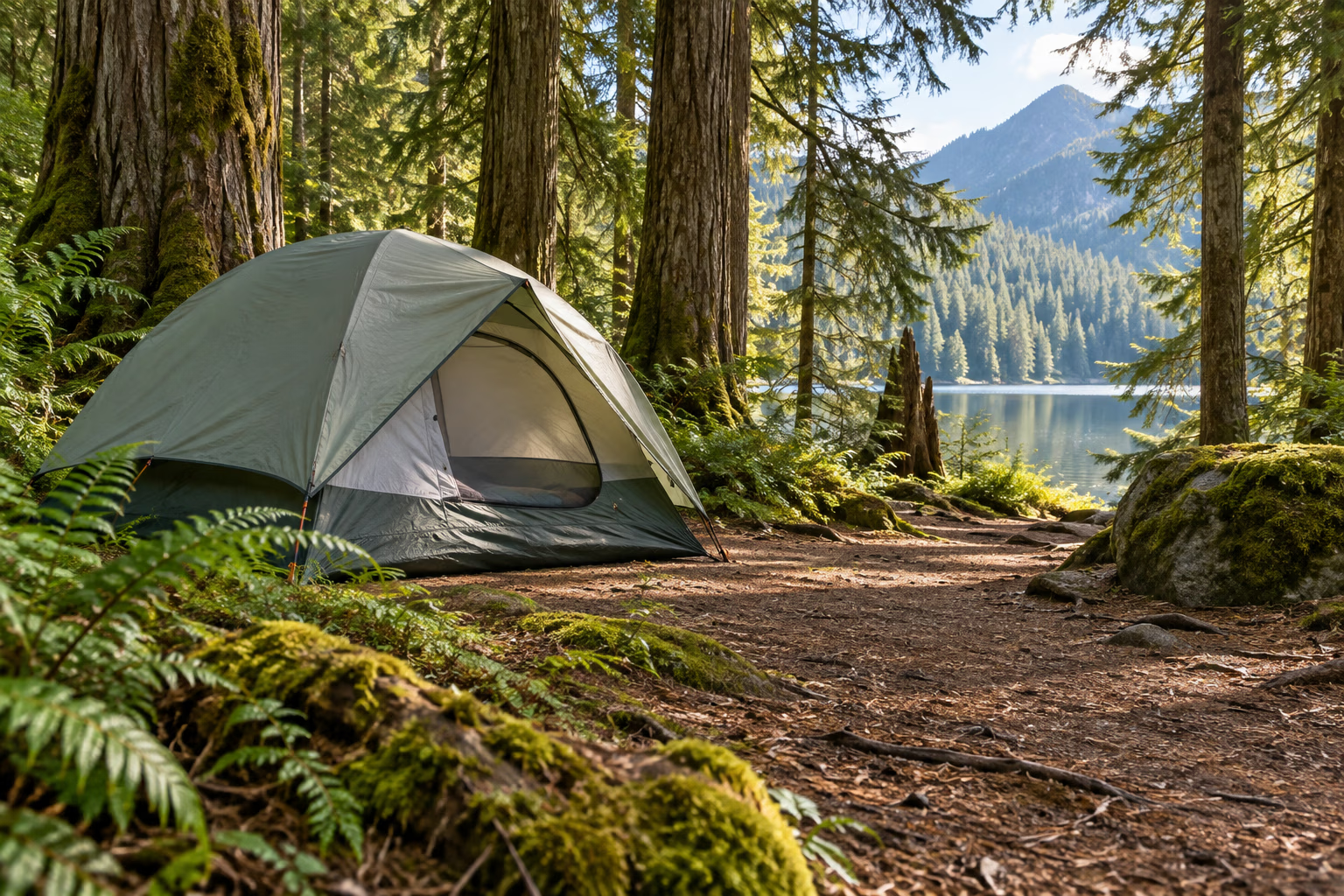
Outdoor conditions often shape how a trip feels. Choose a word that describes what happened instead of labeling the entire experience. A breezy evening may be pleasant near a fire and chilly in an exposed tent; the adjective should match the scene.
- Breezy: pleasantly or noticeably windy. “A breezy afternoon kept the tent cool.”
- Blustery: strongly windy, often in an uncomfortable or unsettled way. “Blustery weather rattled the loose tarp.”
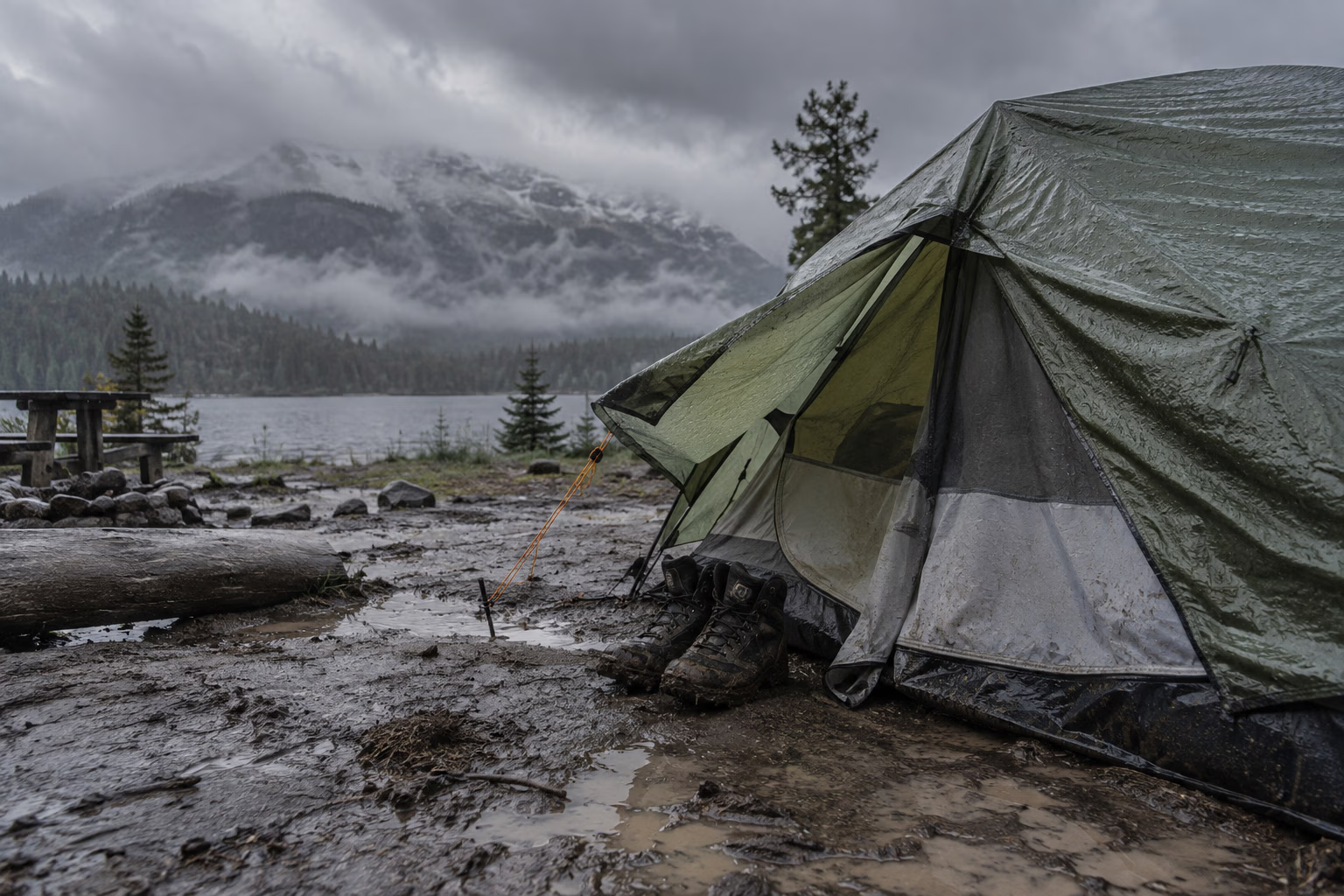
- Drizzly: marked by light, fine rain. “A drizzly morning softened the colors of the forest.”
- Rain-soaked: thoroughly wet from rain. “We packed our rain-soaked groundsheet separately.”
- Sunny: bright with sunshine. “The sunny clearing warmed quickly after breakfast.”
- Chilly: uncomfortably cool. “The chilly night made an extra layer welcome.”
- Balmy: pleasantly warm, especially when the air is mild. “A balmy evening made dinner outside comfortable.”
- Muddy: covered with or full of wet earth. “The muddy path slowed our walk back from the lake.”
- Uneven: not level or smooth. “The uneven ground made finding a flat tent spot difficult.”
- Sheltered: protected from wind or weather by surrounding features. “A sheltered corner behind the trees felt calmer.”
Some words carry stronger feelings than others. Wet is neutral; sodden suggests thoroughly soaked. Cool may be comfortable, while chilly usually suggests that someone feels cold. For a fair review, describe the condition and its effect: “The path became muddy after the overnight rain, so the walk to the washrooms took longer.”
Positive and Negative Words for the Camping Experience
These adjectives help describe how a trip felt overall. Match each one to a clear reason so a reader knows whether you mean the place, the activity, or the company.
- Tranquil: calm and still. “The tranquil lakeshore was quiet before sunrise.”
- Restful: allowing someone to relax or recover. “The restful weekend included slow mornings and easy walks.”
- Invigorating: making someone feel lively or refreshed. “An invigorating morning hike took us to the ridge.”
- Adventurous: involving new, exciting, or challenging experiences. “Their adventurous route crossed two high passes.”
- Rustic: simple and country-like, sometimes with fewer modern conveniences. “The rustic cabin had a wood stove and a long porch.”
- Unforgettable: so distinctive that it is likely to be remembered. “The unforgettable view appeared when the clouds lifted.”
- Uncomfortable: not physically pleasant. “The thin sleeping pad made the rocky ground uncomfortable.”
- Inconvenient: causing extra effort or difficulty. “The distant water tap was inconvenient after dark.”
- Chaotic: very disorganized or confused. “Our chaotic first evening improved once we sorted the gear.”
- Disappointing: less satisfying than expected. “The disappointing view was hidden by low cloud.”
Positive and negative adjectives can belong in the same account. “The remote campsite was peaceful but inconvenient because the nearest store was far away” gives a balanced impression. This is more useful than calling a trip simply “good” or “bad.”
Camping Adjectives by Scene
Build a vivid description by choosing words for a particular moment. Here are concise combinations you can adapt:
- At dawn: “A misty, peaceful morning settled over the lake.”
- On a hike: “The steep, rocky trail opened onto a spectacular view.”
- At the tent: “Our compact, sturdy tent fit neatly into the sheltered pitch.”
- At dinner: “We shared a simple, satisfying meal beneath the trees.”
- On a wet day: “The rainy afternoon was inconvenient, though the forest smelled fresh.”
- At a busy campground: “The lively site felt sociable but less private than we expected.”
- After a long walk: “The quiet, comfortable sleeping area was welcome after the strenuous hike.”
How to Write More Natural Camping Descriptions
- Attach the adjective to a specific noun. “A sheltered pitch” is more informative than “camping was sheltered.”
- Show the evidence. Replace “beautiful campsite” with “a wooded site beside a clear stream.”
- Use precise intensity. “Drizzly” and “rain-soaked” describe different amounts of rain; “breezy” and “blustery” suggest different wind strength.
- Separate your feeling from the fact. “I found the early start tiring” makes the personal reaction clear; it does not imply that every camper would feel the same.
- Vary the senses. Describe what the place looked, sounded, or felt like: “a shadowy forest,” “a still lake,” or “a crisp morning.”
- Avoid piling on synonyms. “A tranquil, peaceful, calm campsite” repeats one idea. Pick the word that best fits, then add a different kind of detail, such as “a tranquil, lakeside campsite.”
Quick Reference: Camping Adjectives
| What you describe | Useful adjectives |
|---|---|
| Setting | scenic, secluded, wooded, remote, riverside |
| Facilities | well-equipped, basic, spacious, crowded |
| Weather | sunny, breezy, blustery, drizzly, chilly |
| Ground or trail | rocky, muddy, uneven, rugged, sheltered |
| Mood | tranquil, lively, adventurous, restful, chaotic |
| Comfort | cozy, comfortable, cramped, inconvenient, uncomfortable |
Frequently Asked Questions About Camping Adjectives
What are positive adjectives for camping?
Words such as scenic, tranquil, invigorating, adventurous, and restful can describe enjoyable parts of a camping trip. Choose the one that matches the actual detail: a view may be scenic, while a quiet evening may be tranquil.
What are negative adjectives for a camping trip?
Uncomfortable, muddy, crowded, blustery, and inconvenient can describe difficult conditions. They are most useful when paired with a concrete reason, such as a crowded pitch or a muddy trail after rain.
What is the difference between “scenic” and “picturesque”?
Scenic broadly means having attractive natural views. Picturesque suggests a particularly pretty, picture-like scene. A trail can be scenic over a long distance, while a picturesque bridge may be one striking detail along it.
What is the difference between “tranquil” and “restful”?
Tranquil describes a calm or peaceful setting or mood. Restful describes something that helps a person relax. A lakeside campsite may be tranquil, and a restful break may happen there.
How can I describe a camping trip in one sentence?
Combine a precise setting word with one experience detail: “Our secluded, wooded campsite was peaceful, although the uneven ground made the first night uncomfortable.” That sentence gives both a clear image and a balanced impression.
For more examples, including the original positive and negative lists, continue to the original guide below.
Planning a camping trip? Whether you’re a seasoned camper or new to the great outdoors, finding the right words to describe your camping experience can be a challenge. That’s why I’m here to help you level up your camping vocabulary with a list of descriptive adjectives that will bring your camping adventures to life. From serene and picturesque to adventurous and exhilarating, these adjectives will help you paint a vivid picture of your camping experience. So, grab your tent, pack your bags, and get ready to explore the world of adjectives for camping!
- Picture-perfect: Imagine waking up to a breathtaking sunrise over a tranquil lake, surrounded by lush greenery. That’s the picture-perfect camping experience that awaits you. Use this adjective to describe those idyllic camping spots that seem straight out of a postcard.
- Thrilling: Are you an adrenaline junkie seeking adventure in the great outdoors? If so, look no further than thrilling camping experiences. From white-water rafting to rock climbing, these heart-pounding activities will make your camping trip an unforgettable one.
- Cozy: There’s nothing quite like snuggling up in a cozy sleeping bag, roasting marshmallows over a crackling campfire, and sharing stories with friends and family. Use this adjective to describe the warm and inviting atmosphere of your camping setup.
How to Describe camping? – Different Scenarios
Describing a camping experience can be a fantastic way to transport someone to the great outdoors. Whether you’re trying to paint a vivid picture for a captivating story or simply enhance a conversation, using descriptive adjectives can make your descriptions more engaging and memorable. Let’s explore how to describe camping in different scenarios using a variety of descriptive words.

1. Serene and Peaceful Camping Spots:
Imagine sitting by a crystal-clear lake, surrounded by towering trees and lush greenery. The air is crisp and refreshing, and you’re enveloped in a sense of tranquility. Here are some adjectives that can best describe such serene and peaceful camping spots:
- Idyllic: A perfect blend of beauty and peacefulness.
- Picturesque: Resembling a scene of natural beauty, like a postcard.
- Serenel: Calm and undisturbed, providing a sense of tranquility.
- Tranquil: Quiet and peaceful, free from disturbance or turmoil.
- Enchanting: Completely captivating and mesmerizing.
2. Thrilling Outdoor Adventures:
For the adventure seekers, camping provides the perfect opportunity to engage in thrilling outdoor activities. Imagine the rush of adrenaline as you tackle challenging trails, conquer steep cliffs, or embark on daring water sports. Here are some adjectives to describe such thrilling camping experiences:
- Exciting: Full of action, adventure, and intense emotions.
- Adventurous: Involving risk or daring activities.
- Heart-pounding: Exciting to the point where your heart races.
- Exhilarating: A feeling of intense excitement and joy.
- Riveting: Holding your attention in an exciting way.
3. Cozy and Inviting Camping Setups:
Camping is also about creating a warm and inviting atmosphere at your campsite. Imagine gathering around a crackling campfire, savoring delicious food, and enjoying the company of loved ones. Here are some adjectives to describe the cozy and inviting aspect of camping:
- Cozy: Providing a warm and comfortable feeling.
- Inviting: Welcoming and encouraging interaction and relaxation.
- Intimate: Creating an atmosphere of closeness and familiarity.
- Homely: Having a comfortable, familiar feeling, like home.
- Welcoming: Making you feel comfortable and at ease.
When it comes to describing a camping experience, the right adjectives can bring your words to life and paint a vivid picture for your readers. From the serene beauty of nature to the exhilaration of outdoor activities, here are some descriptive words that will enhance your camping descriptions:
- Mesmerizing: Imagine waking up to a mesmerizing sunrise over the mountains, its vibrant colors lighting up the sky.
- Idyllic: Picture yourself in an idyllic campsite, surrounded by lush green trees and a peaceful river flowing nearby.
- Invigorating: Engage in invigorating hiking trails that take you through breathtaking landscapes and leave you feeling refreshed.
- Rustic: Experience the charm of a rustic camping setup, with cozy cabins, crackling campfires, and the scent of pine in the air.
- Majestic: Be awe-struck by the majestic sight of towering waterfalls cascading down cliffs, their power and beauty captivating every onlooker.
- Exhilarating: Feel your heart race as you go exhilarating white-water rafting or zip-lining through the treetops, seeking that adrenaline thrill.
- Tranquil: Find serenity in tranquil camping spots, away from the hustle and bustle of city life, where the only sounds are the rustle of leaves and the chirping of birds.
- Cozy: Enjoy the cozy warmth of a sleeping bag as you snuggle up next to a crackling fire, sharing stories and laughter with friends and family.
- Enchanting: Get lost in the enchanting beauty of starry nights, with the milky way arching across the sky, painting a breathtaking scene.
- Thrilling: Embark on thrilling rock climbing adventures, conquering challenging cliffs and feeling the rush of adrenaline as you reach the summit.
Remember, using the right adjectives in your camping descriptions can transport your readers to the great outdoors, evoking emotions and creating a memorable experience in their minds. Choose your words wisely and let the beauty of camping come alive through your writing.
Adjectives for camping
Positive Adjectives for Camping
When it comes to describing a camping experience, there are numerous positive adjectives that can truly capture the essence of the great outdoors. Here are twelve examples of positive adjectives for camping:
- Peaceful: The serene beauty of nature can create a peaceful atmosphere at the campsite.
- Scenic: From picturesque mountains to tranquil lakes, camping offers breathtaking scenic views.
- Cozy: Snuggling up next to a campfire or in a warm sleeping bag can create a cozy feeling.
- Adventurous: Camping is an opportunity to engage in thrilling activities like hiking, fishing, or star-gazing.
- Magical: The twinkling stars at night and the rustling of leaves can make a camping experience feel truly magical.
- Refreshing: Breathing in the fresh forest air can be incredibly refreshing for the mind and body.
- Invigorating: Exploring the wilderness and engaging in outdoor activities can be invigorating.
- Relaxing: Camping allows you to unwind and escape the stresses of everyday life.
- Spectacular: Witnessing a mesmerizing sunset or a stunning waterfall can be a truly spectacular experience.
- Idyllic: A campsite surrounded by lush trees and the sounds of chirping birds can be idyllic.
- Wholesome: Enjoying simple pleasures like roasting marshmallows or going for a nature walk can create a wholesome camping experience.
- Memorable: Camping experiences are often filled with moments that create lasting memories.
Negative Adjectives for Camping
While camping can be an incredible adventure, there can also be some negative aspects to consider. Here are five examples of negative adjectives for camping:
- Uncomfortable: Sleeping on a hard ground or dealing with bugs can make camping uncomfortable.
- Messy: Cooking and eating outdoors can sometimes create a messy campsite.
- Unpredictable: Weather conditions during camping trips can be unpredictable and potentially challenging.
- Inconvenient: Being away from modern conveniences like electricity and running water can be inconvenient for some.
- Noisy: Depending on the campsite, noise from nearby campers or wildlife can disturb a peaceful night’s sleep.
Remember, when describing your camping experience, it’s important to choose the adjectives that truly capture the mood and atmosphere. Whether you’re highlighting the positive aspects or acknowledging the challenges, adjectives can help transport readers to the splendor of the outdoors.
Synonyms and Antonyms with Example Sentences
Synonyms for camping
When it comes to describing a camping experience, there are several synonyms for the word “camping” that can help paint a vivid picture. Here are some alternative words you can use to describe camping:
- Outdoor adventure: Camping is the perfect outdoor adventure for nature enthusiasts like me.
- Wilderness excursion: Embarking on a wilderness excursion is a great way to disconnect from the hustle and bustle of everyday life.
- Camping trip: Going on a camping trip with friends and family is always a memorable experience.
- Outdoor getaway: I love to escape the city and go on an outdoor getaway to recharge my batteries.
Antonyms for camping
While camping can be an incredible experience, it’s important to acknowledge that there are also people who may not enjoy it as much. Here are some antonyms that describe the opposite of camping:
- Indoor comfort: Some people prefer the cozy comforts of home rather than roughing it in the great outdoors.
- Urban living: For those who thrive in the hustle and bustle of city life, camping might not be their cup of tea.
- Luxurious accommodations: While camping is often associated with simplicity, there are those who prefer luxurious accommodations with all the amenities.
- Elegant retreat: An elegant retreat in a fancy hotel or resort is a tempting alternative for those who value comfort and convenience over the rustic charm of camping.
Now that we have explored some synonyms and antonyms for camping, you can choose the right words to accurately describe the camping experience or communicate the opposite sentiment. Remember, utilizing the appropriate adjectives can help capture the mood and atmosphere of camping.
Conclusion
Describing a camping experience is all about capturing the essence of nature and the emotions it evokes. From peaceful and scenic landscapes to cozy and magical moments, camping offers a wide range of positive adjectives to paint a vivid picture. The adventure and excitement, the refreshing and invigorating feeling, and the relaxation amidst spectacular and idyllic settings are all part of the camping experience.
On the other hand, it’s important to acknowledge that camping can also have its challenges. Uncomfortable sleeping arrangements, messy surroundings, unpredictable weather, and inconvenient situations are some of the negative aspects that can arise during a camping trip. However, these challenges can be overcome, and they often add to the overall adventure and create memorable experiences.
Choosing the right adjectives to describe camping is crucial in conveying the atmosphere and mood accurately. The words we use have the power to transport readers to the campsite, allowing them to visualize and feel the beauty and serenity of nature or the excitement and thrill of an outdoor adventure.
So, whether you’re writing a camping blog post, sharing your experiences with friends, or simply trying to capture the essence of camping, selecting the perfect adjectives will help you create a compelling and engaging narrative that brings the camping experience to life.